

Hardware that changed everything, then got put in a drawer.
Joined October 2026
- Tweets307
- Following28
- Followers78
- Likes85





A box for surfing the web on a TV nearly cost its inventor everything, then sold to Microsoft for $425 million.
WebTV went on sale on September 18, 1996, as a set-top box made by Sony and Philips that connected a television to the internet over a phone line. It cost $329 to $349, plus $19.95 a month for the service, with a wireless keyboard for about $50 more.
Steve Perlman got the idea after finding a Campbell's soup recipe website and realizing the people who'd want it weren't online. He started WebTV in 1995 with Bruce Leak and Phil Goldman, and when the money ran out, Perlman mortgaged his house and ran up his credit cards to keep it going. Then Sony backed out just before a key investment closed, but the investors went ahead anyway, and Sony later came back. In April 1997, Microsoft bought WebTV, and each founder received $64 million.

32
A radio built for one man's yacht ended up in the hands of servicemen in World War II.
The Zenith Trans-Oceanic was a portable radio that could pick up shortwave stations from other continents as well as ordinary AM broadcasts. The first model went on sale in January 1942 for $75 and ran on household power or batteries. Zenith kept making Trans-Oceanics until 1981.
Zenith's founder, Eugene McDonald, loved sailing and wanted a portable radio that could pull in weather reports, marine signals and stations from overseas, so he had his engineers build one. The first 10,000 had a sailboat on the speaker cloth, but after Pearl Harbor, McDonald swapped it for a bomber. In April 1942, Zenith stopped making the radio to build equipment for the war, after only about 35,000 had been made. Many of them reached servicemen in war zones, and demand stayed high enough that Zenith brought it back after the war.

The company behind the fastest computer of 1976 expected to sell about a dozen of them.
The Cray-1 supercomputer was built by Cray Research and first installed in 1976. It sold for about $7.9 million, weighed 5.5 tons and could do 160 million calculations per second. Its C-shaped tower was ringed by padded benches that hid its power supplies and cooling system.
Its designer, Seymour Cray, quit Control Data Corporation in 1972 after the company, short on money, couldn't fund the from-scratch redesign he wanted. He started his own company in Chippewa Falls, Wisconsin, and spent four years designing the Cray-1. Two US nuclear weapons labs, Los Alamos and Lawrence Livermore, competed for the first machine, and Los Alamos won it for a six-month trial. Instead of a dozen, Cray Research sold more than 80.

The iPod exists because Toshiba built a tiny hard drive and didn't know what to use it for.
Apple's first iPod went on sale in November 2001 for $399. It held 1,000 songs, weighed 6.5 ounces and ran 10 hours on a charge, at a time when most digital music players held only a few dozen songs.
In February 2001, Apple hardware chief Jon Rubinstein was visiting Toshiba in Japan when engineers showed him a hard drive just 1.8 inches across. They told him they weren't sure what to do with it, maybe put it in a small laptop. Rubinstein told Steve Jobs he knew how to build a music player and already had all the parts, and Jobs told him to go for it. Apple brought in consultant Tony Fadell, who got the call on a ski slope, and the iPod was in stores about nine months after that Toshiba meeting.

31
Microsoft once had a man in a paperclip costume beg for his job at a launch event, then had him dragged away by a giant magnet.
The paperclip was Clippit, better known as Clippy, the animated helper in Microsoft Office 97, which came out in early 1997 for $499. Kevan Atteberry, an illustrator in Bellevue, Washington, drew it, and it watched what you typed and popped up with tips, most famously offering to help whenever you started a letter.
Microsoft based the idea on research by Stanford professors Clifford Nass and Byron Reeves showing that people treat computers like people, but many users found Clippy more annoying than helpful, and even Bill Gates made fun of it. So when Office XP arrived in 2001, Clippy was switched off by default, and at the May 31 launch in New York, Microsoft staged its farewell with the costume and the magnet. Clippy was removed from Office entirely in 2007, though fans got it back as a Windows 11 emoji in 2021.

1
3
44
AOL once paid $287 million for a chat program that had never made a single dollar.
The program was ICQ, a pun on "I seek you," released for free in late 1996 by Mirabilis, a tiny startup in Tel Aviv, Israel. It showed a list of which friends were online at that moment and let you message them instantly, and it reached 1 million users within six months.
Its four young founders, Yair Goldfinger, Arik Vardi, Sefi Vigiser and Amnon Amir, were tired of phoning each other just to arrange to get online at the same time. So they built a tool that simply showed who was on, and Arik's father, Yossi Vardi, put up the money and later pitched it to AOL. By June 1998, ICQ had about 12 million users and still no revenue, and AOL paid $287 million in cash, plus up to $120 million more later. What AOL was really buying was the crowd, and ICQ outlasted the deal by decades before its final owner, the Russian company VK, shut it down in June 2024.

2
28
In 1970, a bullet in Cambodia hit war photographer Don McCullin's camera instead of him.
The camera was a Nikon F, the first single-lens reflex camera from Nippon Kogaku of Tokyo, the company now called Nikon. It came out in 1959 for 67,000 yen in Japan with a standard lens, and 862,600 were made before production ended in 1973.
The F quickly became the tough, dependable camera professionals carried, and photographers covering the Vietnam War took it everywhere. McCullin, a British photographer working for The Sunday Times, was with troops in Cambodia when an AK-47 round struck one of his Nikon F bodies. Not long after, he was seriously wounded in another firefight near Phnom Penh. The dented camera later went on display at a 1997 retrospective of his work in London, a fitting symbol for a camera New York repairman Marty Forscher called a hockey puck that could take pictures.

31
Twelve Hasselblad cameras are still sitting on the moon.
The Hasselblad 500C was a boxy medium-format camera made by Victor Hasselblad's company in Gothenburg, Sweden, and it came out in 1957. By 1962 it sold for about $500 in the US, with interchangeable Zeiss lenses and removable film magazines.
In the summer of 1962, astronaut Wally Schirra walked into a Houston photo shop and bought a 500C on the advice of photographers from Life and National Geographic. John Glenn had taken pictures from orbit earlier that year with a $40 camera from a Florida drugstore. Schirra stripped his Hasselblad and painted it black to cut reflections, then flew it on Sigma 7 that October, and NASA flew modified 500Cs on several more missions before Hasselblad even noticed and offered to build cameras for space. By the Apollo moon landings, every pound counted on the trip home, so astronauts brought back the film and left the camera bodies behind.

3
45
On the morning Apple was set to show off its first floppy drive, the team accidentally erased the demo.
The drive was the Apple Disk II, a 5.25-inch floppy drive for the Apple II that went on sale in mid-1978 for $495 if ordered early and $595 after, controller card included. Steve Wozniak designed a controller that used about 8 chips, where others used around 40, and it was the cheapest floppy drive any computer company had sold.
Wozniak and programmer Randy Wigginton spent Christmas week of 1977 working day and night to get it ready for a January trade show in Las Vegas. It still didn't work when they arrived, so they stayed up all night and had a working demo disk by 6 a.m. Wigginton suggested making a backup, and they copied the blank disk right over the demo. They rebuilt it by 7:30 and showed the drive anyway, and the Disk II went on to turn the Apple II from a hobbyist gadget into a computer ordinary people could use.

30
Intel won the right to sell the world's first microprocessor by handing a calculator company back $60,000.
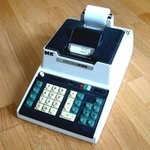
The chip was the Intel 4004, built for the Busicom 141-PF, a printing desktop calculator from the Japanese firm Nippon Calculating Machine, and it first ran inside that calculator in April 1971. The 4004 measured about 3 by 4 millimeters and held 2,300 transistors, which gave it roughly the computing power of ENIAC, the room-sized computer of 1946.
Busicom had asked Intel in 1969 for 12 custom chips, and Intel engineer Ted Hoff suggested a single chip that could be programmed to do the work instead. Federico Faggin led the design with Busicom's Masatoshi Shima, but by the time it worked, calculator prices had collapsed and Busicom wanted a better deal. Faggin and Hoff saw a chance and urged Intel's Robert Noyce to ask for the rights in return. In May 1971, Intel gave back Busicom's $60,000 and cut its price, and that November it began advertising the 4004 to everyone as a computer on a chip.

19
The first thing sold on what became eBay was a broken laser pointer, and it went for $14.83.
eBay started as AuctionWeb, a hobby site that 28-year-old programmer Pierre Omidyar launched in California over Labor Day weekend in September 1995. By late 1996 it had hosted more than 200,000 auctions, and when eBay went public in September 1998, its stock opened at $18 and closed the first day at $53.
For years, the press repeated a sweeter origin story, that Omidyar built the site so his fiancée, Pam Wesley, could trade Pez dispensers. eBay employee Mary Lou Song made that up in 1997 to get reporters interested, and Adam Cohen's 2002 book The Perfect Store exposed it. The real start was stranger. Omidyar was so surprised that anyone would pay for a broken laser pointer that he contacted the winning bidder to make sure he understood, and the buyer explained that he collected broken laser pointers.

1
21
In 1956, a room full of TV executives watched a speech play back moments after it ended, and the hall broke into pandemonium.
The machine was the Ampex videotape recorder, the first practical one, built by Ampex of Redwood City, California. It recorded on tape 2 inches wide, one reel held about an hour of TV, and Ampex advertised it in late 1956 for $45,000, plus $300 for each reel of tape.
Before videotape, networks repeated East Coast shows for the West Coast by filming a TV screen and rushing the film through developing, and by 1954 they were using more film than all the Hollywood studios combined. Starting in 1952, a small Ampex team led by Charles Ginsburg, including Ray Dolby, who later founded Dolby Laboratories, worked on recording TV onto tape instead. On April 14, 1956, at a broadcasters' convention in Chicago, CBS's William Lodge finished a speech, and the machine played his image and words right back. Ampex took $2 million in orders in four days, and on November 30, 1956, CBS used one to replay Douglas Edwards and the News for the West Coast.

1
21
Some of the only photos of Titanic survivors taken at sea came from a Kodak Brownie.
The Brownie was a simple cardboard box camera that Eastman Kodak released in 1900 for $1, when a Pocket Kodak could cost a British family nearly a month's wages. Kodak's Frank Brownell designed it, and it was named after the Brownies, cartoon characters created by Canadian writer Palmer Cox, because it was aimed at children. Kodak sold more than 100,000 in the first year.
The low price was the plan, since George Eastman's company built the Brownie to sell its roll film. In April 1912, a young Canadian named Bernice Palmer had a newer Brownie with her on the ship Carpathia when it rescued more than 700 people from the Titanic. She photographed survivors resting on deck in borrowed clothes and the iceberg believed to have sunk the ship. Not knowing what her pictures were worth, she sold the rights to a New York photo agency, Underwood & Underwood, for $10, and in 1986 she gave the camera and the photos to the Smithsonian.

1
25
One of the most visited websites of the 1990s was started with money from a life insurance policy.
The website was GeoCities, which let anyone build a home page for free. David Bohnett and John Rezner started it in Beverly Hills in late 1994, and from 1995 it gave each user 2 MB of space in themed "neighborhoods" named after real places, like Hollywood for entertainment pages and Wall Street for business. It signed up its millionth member in October 1997, and by 1999 it was the third most visited site on the web, behind AOL and Yahoo.
Bohnett's partner of ten years, Los Angeles judge Rand Schrader, died of AIDS in 1993 and left him $386,000 from a life insurance policy. Bohnett quit his software job, and about a year later he read a magazine story about the internet on a plane and decided that was what he wanted to do. He put Schrader's insurance money and his own life savings into the company that became GeoCities. In January 1999, Yahoo bought it for $3.57 billion in stock, and Bohnett walked away with roughly $300 million. Yahoo shut down the US service on October 26, 2009.

1
29
In 1964, AT&T charged $16 for a three-minute video call, and almost nobody wanted to make one.
The service was the Picturephone, built by Bell Labs and Western Electric, with a small black-and-white screen and a camera above it. AT&T opened public Picturephone booths in New York's Grand Central Terminal, Washington and Chicago in June 1964, at $16 to $27 for three minutes, and closed them by 1968. A second version launched for businesses in Pittsburgh in 1970 for $160 a month, which included 30 minutes of calls.
Lady Bird Johnson, the First Lady, made the opening call on June 24, 1964, from Washington to Bell Labs scientist Elizabeth Wood in New York. On June 30, 1970, Pittsburgh Mayor Pete Flaherty called John Harper, the chairman of Alcoa, whose office was about a block away, and greeted him with "Here's looking at you." AT&T executives predicted a million Picturephones in use by 1980. But testers found the screen small, the price high and the idea of being seen on a phone call uncomfortable, and by 1974 only a few hundred were in use across the country.

1
43
Radio Shack built 3,500 of its first computer so that, if nobody bought them, its own stores could use them for inventory.
The computer was the TRS-80, made by Tandy Corporation and announced in New York on August 3, 1977. It sold for $399, or $599 with a 12-inch monitor and a cassette recorder for saving programs. Until then, the most expensive thing Radio Shack had ever sold was a $500 stereo, and the typical item in its stores cost about $30.
The idea came from Don French, a Tandy buyer who had bought a kit computer and started designing his own. He and engineer Steve Leininger built the TRS-80, and Leininger guessed it could sell 50,000 units. Company president Lewis Kornfeld joked that if he gave one to his wife for Christmas, she'd think he was a nut, and executive John Roach expected 1,000 to 3,000 a year. Roach talked Charles Tandy into building 3,500, one for each store. Instead, Radio Shack sold more than 10,000 in about six weeks and 55,000 in the first year, beating even Leininger's guess.

1
43
The cassette tape took over the world partly because Philips gave the design away.
Philips, the Dutch electronics company, introduced the Compact Cassette with a small battery-powered recorder called the EL 3300 at the Berlin Radio Show in August 1963. The tape inside was just under 4 millimeters wide, and the recorder ran on five ordinary C batteries. In the US it was sold under the Norelco name as the Carry-Corder 150, for $150.
Lou Ottens, who led the Philips team in Hasselt, Belgium, wanted something small, cheap and simple, unlike the bulky reel-to-reel recorders of the day. Japanese visitors at the show took careful notes and photos, and copies in other formats soon followed. When Philips asked Sony for a royalty, Sony's Norio Ohga refused and pointed to a rival format from Grundig. Philips dropped the fee and let any maker use the cassette for free if it followed the rules, and Ottens later said he never dreamed billions of cassettes would be made.

1
50
In October 2009, T-Mobile told many of its Sidekick phone owners that their contacts and photos were almost certainly gone.
The T-Mobile Sidekick was made by Danger, a Palo Alto startup. The first one went on sale on October 1, 2002, for $199 after a rebate, with a $39.99 monthly plan that included unlimited web, email and AOL Instant Messenger. Its screen swung around to reveal a full keyboard, and it kept people's contacts, notes and photos on Danger's computers instead of only on the phone.
Danger was started in 2000 by Andy Rubin, Matt Hershenson and Joe Britt, three former Apple employees, and Rubin later went on to create Android. Microsoft bought Danger in 2008. In early October 2009, a failure on Danger's servers damaged both the main database and its backup, and T-Mobile warned owners not to turn off their phones or pull the battery, since the phone might hold the only copy left. A few days later, Microsoft said it had recovered most, if not all, of the data, but the scare became an early warning about keeping everything on someone else's servers.

1
46
About 20 investors said no to Hotmail. Less than 18 months after it launched, Microsoft bought it for about $400 million.
Hotmail was free email you could read from any web browser. Sabeer Bhatia and Jack Smith, two former Apple engineers, launched it on July 4, 1996, with 2 MB of free storage and a staff of nine. The name was picked because it contained the letters HTML, the code web pages are written in, so it was first spelled HoTMaiL.
Bhatia walked away from the investors at Draper Fisher Jurvetson over their terms, until they called back, gave in, and handed him $300,000. On launch day, he and Smith wore pagers that buzzed every hour with the signup count. The trick that made it grow was simple: every Hotmail email ended with a line inviting the reader to get a free account. By the end of 1997 it had more than 9 million users, and on December 30, his birthday, Bhatia sold it to Microsoft for stock worth about $400 million.

2
379
Apple's first computer cost $666.66 because Steve Wozniak liked repeating numbers.
The Apple I went on sale in July 1976. Wozniak designed it and his friend Steve Jobs sold it. It came as a fully built circuit board that hooked up to a home TV, but buyers had to add their own case, keyboard and power supply. Only about 175 to 200 were sold before it was discontinued in September 1977.
Wozniak showed the board at the Homebrew Computer Club, a hobbyist group in Silicon Valley, and few members cared. Paul Terrell, who owned a chain of computer stores called the Byte Shop, ordered 50 at $500 each, as long as they came fully assembled. Jobs and Wozniak built them in about 30 days. For the retail price, Wozniak added a one-third markup to that $500 and liked how $666.66 looked, though some religious buyers complained about the number.
