

Crypto media, born on socials. Telling stories that shape crypto and covering projects that make a difference.
Joined November 2021
- Tweets39.6K
- Following1.6K
- Followers82.6K
- Likes57.1K







Pinned Tweet
We started small. A community space for crypto people
Looking for credible info, connection, and a voice.
Today, that idea has grown into Our Crypto Talk (OCT)
The first media house born on socials. 🧵👇
Our Crypto Talk retweeted
Why are we bullish?
Because we saw this in the last bear → bull. (And this was not even a proper altseason according to some). 🤷
1. FET +6,503.4% | $0.0527 → $3.48 | Nov '22 → Mar '24
2. RAY +6,421.7% | $0.1334 → $8.70 | Dec '22 → Jan '25
3. RENDER +4,950.4% | $0.2740 → $13.84 | Jun '22 → Mar '24
4. PEPE +4,626.7% | $0.00000060 → $0.00002836 | Sep '23 → Dec '24
5. INJ +4,619.5% | $1.123 → $53.00 | Jul '22 → Mar '24
6. SOL +3,597.9% | $8.00 → $295.83 | Dec '22 → Jan '25
7. STX +1,832.9% | $0.199 → $3.85 | Nov '22 → Apr '24
8. KAS +1,673.6% | $0.01184 → $0.210 | May '23 → Jul '24
9. SUI +1,383.1% | $0.362 → $5.37 | Oct '23 → Jan '25
10. XRP +1,174.6% | $0.2872 → $3.66 | Jun '22 → Jul '25
11. OP +1,128.5% | $0.396 → $4.87 | Jun '22 → Mar '24
12. SEI +1,109.1% | $0.0947 → $1.145 | Oct '23 → Mar '24
13. HBAR +1,027.5% | $0.0356 → $0.4014 | Dec '22 → Jan '25
14. LDO +909.5% | $0.400 → $4.04 | Jun '22 → Jan '24
15. IMX +902.8% | $0.375 → $3.76 | Dec '22 → Mar '24
16. TRX +894.3% | $0.04526 → $0.450 | Nov '22 → Dec '24
17. DOGE +885.6% | $0.04914 → $0.4843 | Jun '22 → Dec '24
18. GRT +855.5% | $0.0517 → $0.494 | Nov '22 → Mar '24
19. NEAR +827.9% | $0.971 → $9.01 | Oct '23 → Mar '24
20. XLM +808.0% | $0.0702 → $0.6374 | Dec '22 → Nov '24
21. AAVE +776.9% | $45.60 → $399.85 | Jun '22 → Dec '24
22. BCH +727.0% | $87.00 → $719.50 | Nov '22 → Apr '24
23. BTC +715.5% | $15,476 → $126,200 | Nov '22 → Oct '25
24. MKR +711.6% | $502 → $4,074 | Jan '23 → Apr '24
25. AVAX +659.5% | $8.61 → $65.39 | Sep '23 → Mar '24
26. BNB +649.8% | $183.40 → $1,375.11 | Jun '22 → Oct '25
27. ALGO +648.7% | $0.0820 → $0.6139 | Aug '23 → Dec '24
28. ICP +642.3% | $2.827 → $20.99 | Sep '23 → Mar '24
29. LINK +549.9% | $4.761 → $30.94 | Jun '23 → Dec '24
30. APT +531.7% | $3.066 → $19.37 | Dec '22 → Mar '24
31. VET +507.0% | $0.01318 → $0.0800 | Jun '23 → Dec '24
32. ADA +502.9% | $0.220 → $1.3264 | Jun '23 → Dec '24
33. UNI +484.7% | $3.33 → $19.47 | Jun '22 → Dec '24
34. ETH +462.3% | $881.56 → $4,956.78 | Jun '22 → Aug '25
35. FIL +389.9% | $2.419 → $11.85 | Dec '22 → Mar '24
36. QNT +328.2% | $40.10 → $171.70 | Jun '22 → Dec '24
37. LTC +264.9% | $40.30 → $147.06 | Jun '22 → Dec '24
38. DOT +233.8% | $3.562 → $11.889 | Oct '23 → Mar '24
39. ARB ◆ +228.1% | $0.739 → $2.425 | Sep '23 → Jan '24
40. ATOM +162.8% | $5.55 → $14.585 | Jun '22 → Mar '24

2026 has not been a good year for investors:
Bitcoin : $87,000 → $61,500 ( -29% )
Gold : $4,370 → $3,535 ( -19% )
Silver : $72 → $41.69 ( -42% )
A lot of crypto native people are down and fearful.
A lot of non-crypto people are dissing on BTC after the latest crash.
But in a world where Gold and Silver have fallen by 19% & 42%, is it really that big of a crash to see BTC down by 29%?
To be very honest, when I think of all that has happened in 2026 and the way gold and silver have fallen too - I don't really feel 29% is a HUGE crash. Yes, the ATH was in October and we did fall from 125k to 87k till the new year but talking just about 2026, its not that crazy 🤔
There's uncertainity across the globe - even "safe" assets are not safe anymore.
Might be a polarising take but the institutions that many keep blaming for manipulation are probably the only thing that has stopped BTC from crashing more than 50% in 2026 itself. Because BTC is more mature now.
Don't get me wrong, I'm not saying that the markets are fine - not at all. Especially after the rally we saw in Aug-Sep, I myself never expected to see the levels we are at right now (yes, ever) but it is what it is.
We might see another lower bottom, can't count that out now. But its not just that crypto is crashing while every other asset is growing. It's just the world is not a safe place to be for an investor right now. That is the truth. 🤷



Bitcoin is 50% down in 2026 after :
> Binance $6.3B Hack
> Nvidia CEO Resignation
> CLARITY Act Failure
> Fed Rate Hike Signals
> Bitcoin ETF Outflows
> US Midterm Democratic Sweep
> Anthropic IPO Liquidity Drain
> Iran War Oil Shock
> AI Tech Selloff
> Hot Inflation Data
> Miner BTC Selling
> MSCI Index Removals
> SpaceX IPO Liquidity Drain
> North Korean Hacks
> Stablecoin Supply Drop
> Leveraged Liquidations
> Hong Kong Hyperliquid Warning
> FOMC Hawkish Minutes
> Waller 50bp Hike Call
> Strategy Index Exit
> MARA Miner Sales
> Extreme Fear Sentiment
> Persistent US Inflation
> Middle East Tensions
> Post-Election Regulatory Uncertainty
> Multiple DeFi Exploits
> Token Unlocks Pressure
> Dollar Strength Surge
> Treasury Yield Rise
> AI Bubble Fears
> Political Gridlock Risks
> Energy Price Spike
> Weak Institutional Demand
> Exchange Security Fears
> ETF Demand Collapse
> Liquidation Cascades
> Risk-Off Sentiment
> Macro Tightening Cycle
> Ongoing Conflict Escalations
> Stablecoin Freeze Concerns
> Order Book Liquidity Drop
> Whale Selling Pressure
> Data Center Regulation Fears
> Bond Yield Spike
> Tech Valuation Repricing
> Crypto Treasury Selling
> Index Forced Selling
> Inflation Shock Persistence
> Geopolitical Oil Disruptions
> AI Capital Competition
> Hack Recovery Uncertainty
> Regulatory Crackdown Risks
> Midterm Policy Shift
> High Borrowing Costs
> Risk Asset Rotation
If this doesn't make you bullish, nothing will.
Against all odds, we are doing pretty well (so far..)
I don't know if there is more downside.
But these setups look bottomed AF
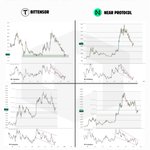
$TAO : Lowest price and RSI since June
$NEAR : Golden pocket support, lowest RSI
$HYPE : Golden pocket support, lowest RSI
$ZEC : Golden pocket support, lowest RSI
These were the kind of setups we missed in August when everything felt negative.
Sellers are exhausted and there is majorly upside.
Which other Alts show this kind of behaviour?
👇

GTA VI is predicted to earn $3.6B in the first 12 months, that is equal to the total crypto gaming industry. 🤯
So,
GTA VI = $IMX + $RON + $BEAM + $GALA + Pixels + $AXS
Now, I don't what you guys think - but I believe under the P2E and a race to include NFTs in every crypto based game, we lost the actual "gaming" essence in crypto projects.
GTA VI made an estimated $1.18B in pre-orders before anyone had played it.
The whole crypto gaming industry raised about $293M in all of 2025.
One game made 4x what our entire sector raised.
That is mind blowing. It really is. Yes, I know the 2025-2026 markets aren't the best for crypto but our gaming sector really really needs to change to be taken seriously.
Most of what we shipped wasn’t really a game. It was a token wrapped in something that looked like a game. Tokenomics came first and gameplay was always “coming soon.” When the rewards dried up, the users left, because there was nothing fun to stay for.
That is the truth, I am guilty of being a similar gamer too - playing only for rewards and not for enjoying the game.
And sorry, but that's because the games weren't "fun".
Until a crypto studio builds something people would play with the token turned off, one game will keep outselling our whole sector. 🤦
Now, I'm off to play some GTA.

BTC is at $63K. Fear & Greed is sitting near the bottom.
But there are 5 altcoins we just can’t bet against, even in this market 👇
1️⃣ Uniswap $UNI
The default place to trade onchain. The fee switch is finally live and UNI is getting burned with protocol fees.
Last Comeback: $1.77 → $44.97 (~25x)
2️⃣ Raydium $RAY
A huge chunk of Solana trading runs through it. 12% of fees buy back RAY, and the buyback wallet holds 30%+ of circulating supply.
Last Comeback: $0.13 → $8+ (~60x)
3️⃣ Bittensor $TAO
Bitcoin’s model applied to AI: 21M cap, halvings, miners paid for useful AI work. Its subnets trained a 72B parameter model across 70+ independent miners this year.
Last Comeback: $31 → $760 (~24x)
4️⃣ Aave $AAVE
The biggest lender in DeFi, with $1T+ in loans issued. It has survived every crash since 2020, and V4 went live this year.
Last Comeback: $45 → $397 (~9x)
5️⃣ Ethena $ENA
USDe was the first crypto-native dollar to hit the billions. BlackRock and Janus Henderson are already plugged in.
Last Comeback: $0.20 → $1.33 (~6x in 3 months)
All five have crashed hard before. What matters is how they come back.
Want to watch other videos like this?
Subscribe to our YT channel here → youtube.com/@ourcryptotalk?s…

1
686
We have Anthropic being listed on crypto platforms along with GTA VI 😆
Really pleased to see how much tokenization has progressed in 2026 really.
We had SpaceX, $SPCXx on Mantle first.
And now we have Anthropic, $ANTx on Mantle.
Being a crypto native myself, this makes things so much easier for me and people like me. I'm definitely going in day 1 with the IPO.


Tokenized Anthropic is coming to Mantle.
$ANTx, issued by @xStocksFi, will be available to trade around the clock once the listing goes live.
From Nasdaq to the world.
Next on Talk With Builders: @apyx_fi
Sitting down with @TheOtherParker_ on bringing Digital Credit yield onchain.
Set Your Reminders 👇
teapaw.org/i/spaces/1nQqkoPMLZZkl…
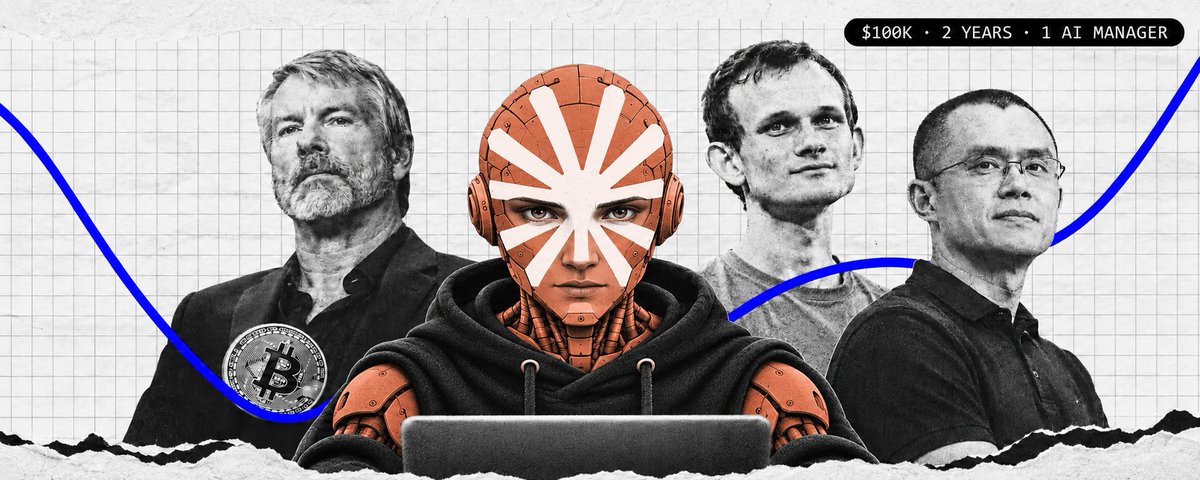
I asked Anthropic’s best model, Fable, to build me a $100K crypto playbook last week.
This is the split it gave me.
$45,000 in $BTC
$12,000 in $ETH
$8,000 in $HYPE
$5,000 in $SOL
$10,000 in revenue small caps.
Revenue is key and these are the Altcoins that make money in 2026 even when the market is down
For the small caps bucket, the only rule was real fees from real users. These are the names that made the cut.
$PUMP: Pumpfun accounts for roughly 60% of all consumer crypto revenue in its category. The launchpad model prints fees in every market condition, bull or bear.
$AERO: Aerodrome is the dominant DEX on Base. As Base grows, Aerodrome grows. Protocol revenue follows TVL and volume, both of which have been climbing.
$LINK: Chainlink is the infrastructure layer every serious DeFi and RWA protocol depends on. Data feeds, CCIP, proof of reserve. The revenue surface expands every time a new chain or institution goes onchain.
$JUP: Jupiter retained $134M in protocol revenue over the trailing year on $444M in gross fees. The dominant aggregator on the dominant consumer chain.
$AAVE: One of the few lending protocols generating consistent revenue across multiple market cycles. It earns on both sides of every loan.
$GEOD: Precision GPS infrastructure on-chain. Enterprises are paying for the data. DePIN with an actual customer base, not a hardware farming experiment.
$IO: Launched a revenue-tied token burn in June 2026. At least 50% of post-payout network revenue goes to burning $IO. Real compute demand, real supply destruction.
$PENDLE: Yield trading protocol that earns fees every time someone splits or trades future yield. As RWA and stablecoin yields stay elevated, Pendle’s revenue case gets stronger.
$ONDO: The leading RWA tokenization protocol. As institutions bring treasuries and money market funds onchain, Ondo sits at the toll gate.
$NEAR: Quietly building AI and data availability infrastructure. Protocol revenue has been growing as the developer base expands beyond just L1 activity.
$VVV: Venice Protocol earns fees from private AI inference. The privacy angle is real and the paying user base is growing outside of crypto-native audiences.
$SUI: Meaningful growth in both transaction volume and protocol fees through 2026. The Move-based execution model has attracted DeFi and gaming developers.
$LIT: Lighter is an onchain orderbook exchange built for capital efficiency. Earns fees from real trading volume with no token incentive padding.
This is what Fable flagged as the revenue-first small cap basket. Protocols generating real fees right now, not narratives waiting to be monetized later.
Read the full playbook for the deployment schedule, tranche entries, and the 2027 roadmap.


Bitcoin Has Seen This Movie Before 👀
> $BTC is down 19%. Fear is everywhere.
> Anthropic $ANT lists tomorrow.
Sound familiar?
Same setup as SpaceX $SPCX in June.
Bitcoin bottomed and then it bounced
👉 What history shows around big IPOs
When SpaceX listed on June 12, Bitcoin was sitting near $61K after a brutal slide. Within a week it had bounced back toward $66K.
Reddit’s IPO in March 2024 played out the same way, with BTC climbing around 9% in the week after the listing.
👉 Why the selling pressure usually ends
Ahead of a mega IPO, investors sell some of their crypto to free up cash for share allocations. That rotation drains liquidity from Bitcoin right before the listing.
Once shares are allocated, the forced selling stops. Profits from the first day pop then go looking for the next trade.
👉 Risk appetite is the real signal
A strong debut tells the market that investors still want growth assets. SpaceX closed day one up 19%, and Reddit jumped 48%.
With $ANT raising up to $64.4B, a clean listing could pull Bitcoin back from its current range near $64K.
Will Bitcoin follow the SpaceX script this time?

$8M+ in enterprise contracts.
H100 GPUs available from ~$2/hour.
Yet $IO trades below a $45M market cap.
@ionet is bringing low-cost GPU compute to AI developers through a decentralized cloud network.
✤ 𝐀 𝐝𝐢𝐬𝐭𝐫𝐢𝐛𝐮𝐭𝐞𝐝 𝐆𝐏𝐔 𝐜𝐥𝐨𝐮𝐝 𝐟𝐨𝐫 𝐭𝐡𝐞 𝐀𝐈 𝐞𝐜𝐨𝐧𝐨𝐦𝐲:
AI companies need increasingly large GPU clusters.
Buying hardware requires significant capital, while traditional cloud providers can be expensive and have limited availability for certain configurations.
io net takes a different approach.
It aggregates spare GPU capacity from independent operators, data centers and mining infrastructure across more than 130 countries.
Hardware providers install io.net's worker software, register their machines and make available capacity accessible to customers.
AI developers can rent GPUs and deploy clusters without purchasing the underlying hardware.
The network coordinates supply and demand, while Solana handles key payment and coordination functions.
The ecosystem has three main products:
• IO Cloud: GPU rentals, distributed clusters and compute infrastructure.
• IO Intelligence: Access to open AI models.
• Agent Cloud: Infrastructure that allows AI agents to access and rent compute.
The bigger ambition is to build a distributed compute marketplace for an AI industry that needs more hardware than traditional infrastructure can easily provide.
✤ 𝐇𝟏𝟎𝟎 𝐆𝐏𝐔𝐬 𝐚𝐭 𝐚 𝐟𝐫𝐚𝐜𝐭𝐢𝐨𝐧 𝐨𝐟 𝐡𝐲𝐩𝐞𝐫𝐬𝐜𝐚𝐥𝐞𝐫 𝐩𝐫𝐢𝐜𝐢𝐧𝐠:
One of io.net's strongest selling points is its advertised pricing.
H100 GPU instances have been listed around $1.70–$2.20 per hour, depending on configuration and platform.
Comparable AWS H100 pricing can reach $6–$12 or more per hour, depending on the instance, region and purchasing arrangement.
That creates a potential cost advantage of 50–70% on selected configurations.
The platform supports several deployment options:
• Ray clusters for distributed AI workloads.
• Bare-metal GPU access.
• Container-as-a-Service.
• Larger multi-GPU configurations for training and inference.
AI developers do not always need to own an entire cluster. They need access to the right hardware when workloads arrive.
io.net is trying to make that capacity available on demand.
Actual savings depend on GPU type, uptime, networking, storage and workload requirements.
The advertised comparison is a starting point, not a guarantee that every workload will cost 70% less.
✤ 𝐕𝐞𝐫𝐢𝐟𝐢𝐞𝐝 𝐆𝐏𝐔𝐬 𝐦𝐚𝐭𝐭𝐞𝐫 𝐦𝐨𝐫𝐞 𝐭𝐡𝐚𝐧 𝐫𝐞𝐠𝐢𝐬𝐭𝐞𝐫𝐞𝐝 𝐡𝐚𝐫𝐝𝐰𝐚𝐫𝐞:
io.net has historically advertised a much larger registered hardware base. But registered capacity and verified, available GPUs are two different things.
Recent DeAI Nation dashboard figures put tracked hardware around 2,300–2,400 GPUs, including H100 SXM, RTX 4090, L40S, A100 and newer Blackwell hardware.
The B200 Index was around 590 in the reported snapshot.
The dashboard also estimates theoretical throughput above 100B tokens per day across its higher-end hardware.
These figures need context. Theoretical throughput is not actual tokens generated, and a GPU listed on a dashboard is not necessarily serving a paying customer.
The metrics that matter most are:
• Verified GPUs available for deployment.
• Percentage of hardware actively utilized.
• Cluster uptime and reliability.
• Revenue generated per GPU.
• Repeat demand from enterprise customers.
A smaller network with consistently active hardware can be more valuable than a much larger registered network with low utilization.
✤ $𝟖𝐌+ 𝐢𝐧 𝐞𝐧𝐭𝐞𝐫𝐩𝐫𝐢𝐬𝐞 𝐜𝐨𝐧𝐭𝐫𝐚𝐜𝐭𝐬 𝐩𝐫𝐨𝐯𝐢𝐝𝐞𝐬 𝐚 𝐜𝐨𝐦𝐦𝐞𝐫𝐜𝐢𝐚𝐥 𝐛𝐚𝐬𝐞:
io.net has reported more than $8M in closed enterprise contracts.
One reported deal was worth approximately $8M, equivalent to around $650K per month at the time.
The project has also published customer case studies, including Leonardo.ai, highlighting compute cost reductions while scaling its user base.
This is important because decentralized compute projects often struggle to move beyond supplier registrations and incentive-driven activity.
Enterprise workloads bring a different kind of demand.
Customers need reliable hardware, predictable costs and infrastructure capable of running production workloads.
If io.net can deliver consistently, these relationships could turn into recurring compute revenue.
Its partnerships across agent frameworks, privacy infrastructure and other compute-related projects could also expand the range of workloads using the network.
✤ 𝐓𝐡𝐞 𝐈𝐧𝐜𝐞𝐧𝐭𝐢𝐯𝐞 𝐃𝐲𝐧𝐚𝐦𝐢𝐜 𝐄𝐧𝐠𝐢𝐧𝐞 𝐜𝐡𝐚𝐧𝐠𝐞𝐬 𝐭𝐡𝐞 𝐭𝐨𝐤𝐞𝐧 𝐞𝐜𝐨𝐧𝐨𝐦𝐢𝐜𝐬:
One of io.net's important developments is its Incentive Dynamic Engine, or IDE, rolled out in 2026.
Earlier DePIN models often relied heavily on token emissions to attract hardware suppliers. That can become unsustainable when the network pays suppliers in tokens without generating enough customer revenue.
IDE is designed to connect supplier incentives and token burns more closely to real network activity.
Under the model:
• Suppliers receive compensation for providing compute.
• Network revenue contributes to $IO buybacks and burns.
• Remaining reward pools continue supporting network participation.
• Emissions are designed to step down over time and become more demand-linked.
This shifts the focus toward actual compute demand supporting network economics rather than relying entirely on inflationary incentives to attract hardware.
The model still needs to demonstrate sustainable revenue, consistent supplier payouts and measurable burns.
✤ 𝐢𝐨.𝐧𝐞𝐭 𝐯𝐞𝐫𝐬𝐮𝐬 𝐀𝐖𝐒, 𝐀𝐤𝐚𝐬𝐡 𝐚𝐧𝐝 𝐑𝐞𝐧𝐝𝐞𝐫:
io.net competes across two categories.
The first includes traditional cloud providers such as AWS, Google Cloud and Microsoft Azure.
They have established enterprise relationships, global infrastructure and proven reliability.
Their disadvantages can include pricing, procurement complexity and capacity constraints for certain GPU configurations.
The second category includes decentralized compute networks such as Akash and Render, alongside other DePIN projects targeting AI infrastructure.
io.net's positioning is more specifically focused on GPU aggregation for AI training and inference.
Its main differentiators include:
• A GPU-specific marketplace.
• Multi-GPU cluster deployment.
• Advertised pricing below selected hyperscaler alternatives.
• Enterprise customer relationships.
• A token model designed to connect supplier rewards with actual demand.
At a circulating market cap below $50M, the valuation is small relative to the broader AI compute opportunity.
But the comparison only becomes meaningful if io.net can maintain hardware quality, utilization and enterprise retention.
✤ 𝐄𝐧𝐭𝐞𝐫𝐩𝐫𝐢𝐬𝐞 𝐝𝐞𝐦𝐚𝐧𝐝 𝐰𝐢𝐥𝐥 𝐝𝐞𝐭𝐞𝐫𝐦𝐢𝐧𝐞 𝐭𝐡𝐞 𝐧𝐞𝐱𝐭 𝐩𝐡𝐚𝐬𝐞:
AI compute demand is growing, and the gap between what hyperscalers charge and what smaller AI companies can afford remains an opportunity.
io.net is directly targeting that gap through distributed GPU capacity.
It has a working marketplace, reported enterprise contracts worth more than $8M, published cost comparisons and a token model increasingly linked to network revenue.
The Incentive Dynamic Engine is particularly important.
If it successfully connects compute demand with supplier compensation and token burns, it could make the economics more sustainable than an emissions-heavy DePIN model.
At a market cap below $45M, $IO remains a relatively small bet on decentralized AI infrastructure.
The next proof points are verified active GPUs, actual utilization, recurring enterprise revenue and the amount of $IO burned through IDE.
The hardware is the product. Revenue is the proof.
NFA. DYOR.


$SOL | @solana is officially out of beta and turned 1.0
→ Zelle moved $1.25M live on stage,
→ A US bank picked it as its chain
→ NYSE’s parent wants to run a validator
And oh yes, Solana just bought @coingecko
Here’s everything that happened at Solana Breakpoint 2026 🧵


8/
So, finally Solana is no longer just "its fast". Now, it is positioning itself to be ready of payments, securities and instituitions.
Meanwhile, spot SOL ETFs saw $12M of inflows, their first in November. Bullish enough?
Next up: Breakpoint 2027 in San Francisco, Sept 8 to 10.

🇺🇸BREAKING: @Solana Breakpoint 2027 will take place in San Francisco, California, United States.
September 8–10, 2027.
1
2
444
Which Breakpoint announcement matters most for Solana 12 months from now?
Zelle, SoFi, DTCC, or something else? 👇
$SOL | @solana is officially out of beta and turned 1.0
→ Zelle moved $1.25M live on stage,
→ A US bank picked it as its chain
→ NYSE’s parent wants to run a validator
And oh yes, Solana just bought @coingecko
Here’s everything that happened at Solana Breakpoint 2026 🧵
3
419