

_“Open letters to history’s loose ends. Public records. Logic gaps. No claims — just questions.
Joined November 2025
- Tweets6.9K
- Following219
- Followers413
- Likes2.7K



Pinned Tweet
Rewinding to November 1953 — Frank Olson
Long before Congress ever heard of MKUltra, one of its first casualties came from inside the government's own ranks.
Dr. Frank Olson was a civilian biochemist at Fort Detrick working on programs tied to CIA operations. On November 19, 1953, during a meeting of Army and CIA personnel at Deep Creek Lake, Maryland, CIA staff slipped LSD into his drink without his knowledge or consent—telling him roughly 20 minutes later.
Within days, Olson spiraled into severe anxiety, paranoia, and acute psychological distress.
#MKUltra #FrankOlson #ColdWar #History

21

The Paper Trail That Escaped the Shredder (1973 → 1977)
The public only knows what it knows of MKUltra because of a clerical routing error.
In January 1973, outgoing CIA Director Richard Helms and program chief Sidney Gottlieb ordered all MKUltra files destroyed. For four years, investigators in the Rockefeller Commission and Church Committee only saw fragments.
Then in 1977, a Freedom of Information Act request uncovered seven boxes of financial records—roughly 20,000 pages—at a Retired Records Center. They had been misfiled by the Budget and Fiscal Section in 1970, keeping them outside the branch archive Gottlieb purged.
Below: Seated left Sidney Gottlieb
#MKUltra #Declassified #History #FOIA


16
The Methods & The Aftermath
Dr. Cameron built his Montreal protocol around "depatterning" and "psychic driving"—using extreme measures to erase established habits and memory, then repeat recorded messages continuously to re-imprint behavior.
The protocol combined prolonged drug-induced comas (heavy sedatives and antipsychotic drugs, sometimes paired with LSD or paralytics), intensive electroshock regimens, sensory reduction, and looped audio played for hours on end over weeks.
The cost on real people was severe: deep memory gaps, lost years of personal history, and lasting disruption to everyday life—followed decades later by lawsuits and settlements after the intelligence funding came to light.
#MKUltra #MedicalHistory #Declassified #History

1
1
21
Here's one of the many faces behind the infamous Project MKUltra: Dr. Donald Ewen Cameron, a top-tier psychiatrist who ran experiments at Montreal's Allan Memorial Institute with funding routed through CIA front channels.
He wasn't an obscure fringe figure—he led major psychiatric associations and held senior roles at McGill University. Between 1957 and 1960, Subproject 68 sent tens of thousands of dollars to his work via the Society for the Investigation of Human Ecology, a CIA front organization.
Patients checked in looking for help with issues like depression, anxiety, or chronic pain. Instead, they became test subjects in a program trying to strip away existing mental patterns and force new ones.
#MKUltra #History #ColdWar #Declassified


36
Neanderthals were far more than simple cave dwellers—they were sophisticated engineers of their environment:
• Birch Bark Tar: They manufactured the first known synthetic glue, heating bark in low-oxygen conditions to create adhesive for hafting stone tools.
• Controlled Fire: They built structured, stratified hearths for warmth, cooking, and even heat-treating materials, mastering fire deep in caves.
• Symbolic Life: They collected and perforated marine shells and ground red ochre pigment, pointing to complex symbolic behavior and personal adornment.
#Neanderthals #Archaeology #IceAge #HumanEvolution #Prehistory #StoneAge #Anthropology

23
Deep in Ice Age Eurasia, Neanderthals relied on serious craftsmanship and smart shelter choices to survive: Pre-planned Mousterian stone tools shaped for scraping, cutting, and processing game
• Balanced wooden spears and throwing sticks preserved from ancient hunting grounds
• Massive limestone caves and rock shelters offering refuge from freezing winds and shifting climates #Neanderthals #Archaeology #IceAge #Prehistory #StoneTools #HumanEvolution


37
Neanderthals were built for brutal Ice Age conditions—this will be breaking down their world across a few posts:
• Shorter, heavily muscled frames (males ~5'5", females ~5'1") with wider ribcages and shorter limbs to conserve heat
• Brain capacity averaging ~1,500–1,600 cc (larger on average than modern humans' ~1,350–1,400 cc)
• Next up: stone tools, wooden spears, birch tar, and daily survival in deep prehistory
Below: left modern human right neanderthal.
#Neanderthals #HumanEvolution #Archaeology #IceAge #Anthropology #Prehistory

43
Long before bows and arrows reached North America, early hunters relied on precision-engineered throwing systems—the atlatl and dart: Fluted Clovis stone points, some reaching nearly 9 inches in length, knapped from translucent chalcedony and agate
• Detachable wooden foreshafts bound tightly with sinew so hunters could quickly swap broken tips without losing the main dart shaft
• Preserved in dry caves and Ice Age caches across the American West #Archaeology #IceAge #Clovis #PaleoIndian #AncientWeapons #Prehistory #NorthAmerica


23
Long before modern borders, early Indigenous peoples adapted to ancient North America's lost lakes and submerged landscapes with extraordinary ingenuity:• 10,000-year-old woven sagebrush sandals preserved in dry Oregon caves
• 9,000-year-old stone caribou drive lanes now resting 100 feet beneath Lake Huron
• 2,000-year-old tule reed duck decoys crafted to hunt Great Basin marshes
#Archaeology #AncientHistory #IceAge #PaleoIndian #IndigenousHistory #NorthAmerica


29
The King of Palenque: Inside the Legacy and Tomb of Lord Pakal
Taking the throne of the Maya city-state of Palenque at just 12 years old, K'inich Janaab' Pakal (Lord Pakal the Great) ruled for nearly seven decades, transforming his city into an architectural and artistic powerhouse. When archaeologists finally uncovered his hidden crypt deep inside the Temple of the Inscriptions in 1952, the treasures inside changed Mesoamerican archaeology forever.
Take a look at three pieces that tell his entire story—from living ruler to cosmic ancestor:
The Sarcophagus Lid (First Image): This intricate relief carving shows Pakal poised right at the threshold between the earth and the underworld. Framed by the Cosmic Tree and celestial serpents, it captures the exact moment of his transition—a visual map of Maya cosmology that people still debate and study closely today.
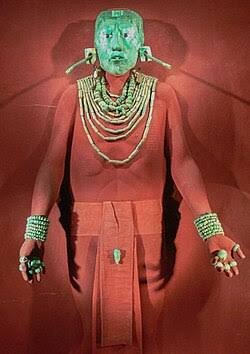
The Mosaic Jade Mask & Burial (Second Image): Inside the sarcophagus, Pakal’s remains were covered in brilliant red cinnabar and adorned with heavy jade necklaces, wrist cuffs, and rings. Over his face rested a breathtaking mask pieced together from hundreds of individual jade fragments, complete with shell-and-obsidian eyes and long jade ear spools.
The Stucco Portrait (Third Image): Found beneath the sarcophagus, this lifelike sculpture captures Pakal’s actual facial features—his distinct brow, prominent nose, and serene expression—crowned with a sweeping, maize-inspired headdress that linked him directly to the gods of rebirth and abundance. From a child king who rebuilt a shattered dynasty to a ruler buried like a living deity, Pakal left behind one of the most unforgettable time capsules in the ancient world. Which of these three pieces catches your eye first?
#MayaHistory #LordPakal #Palenque #PreColumbianArt #Archaeology #AncientArtifacts #Mesoamerica


54
Crafted around 2600–2400 BCE, this bearded bull's head once adorned a ceremonial lyre from the Royal Tombs of Ur in ancient Mesopotamia. Hammered sheet gold over a wooden core meets imported lapis lazuli for the beard, curls, and horn tips. In Sumerian culture, the bull stood for raw strength, kingship, and a deep, resonant voice.
#Mesopotamia #Sumer #AncientHistory #Archaeology #ArtHistory #Ur

42
Anesthesia (his own bass solo) isn’t just speed. Cliff wrote lines with range and shape, treating the bass like a lead instrument. That same focus showed up after he lost Scott. He died at 24 having already put real composition into the music. He didn’t waste the window.
#metallica #bass #cliffburton


46
At 13, Cliff Burton Metallica's former bassist told his parents he wanted to learn bass after his brother Scott died. He practiced for hours every day, treating it like something he owed. Eleven years later he was gone at 24. The dedication never looked like a phase.
#CliffBurton #Metallica #ScottBurton


45

Alignments and Astronomy
The builders of Chaco Canyon's structures were master astronomers as well as architects. Their grand structures, underground kivas, and petroglyphs are intricately aligned with solar and lunar cycles, tracking solstices and equinoxes with remarkable precision across the high desert landscape.
#AncientAstronomy #NewMexico #PreColumbian #CulturalHeritage #HistoryThreads


35
The Monumental Great Houses
Rising from the remote New Mexico desert, Chaco Culture National Historical ParkClick to open side panel for more information is home to engineering marvels like Pueblo Bonito—a massive, D-shaped Great House featuring hundreds of multi-story rooms and intricate stone masonry. Built over a thousand years ago, these complexes served as the ceremonial and cultural heart of the ancient Southwest.
#ChacoCanyon #AncientArchitecture #AncestralPuebloan #Archaeology #History


1
47
Vespasian’s Rebirth of Rome
By December 69 CE, Vespasian emerged as the fourth and final ruler of the chaotic year, establishing the Flavian Dynasty.
He restored order to the frontiers, rebuilt the empire's shattered finances, and commissioned an iconic monument to mark Rome's new era: the Colosseum.
#Colosseum #RomanHistory #Archaeology #AncientRome #Vespasian

29
Vitellius’s Gluttonous Fall
Vitellius entered Rome unopposed, only to squander his authority on extravagant feasts and political negligence.
Meanwhile, the eastern legions—who controlled Egypt’s vital grain shipments—backed Vespasian, a seasoned commander campaigning in Judea. Vespasian’s forces invaded Italy, crushing Vitellius’s army and dragging the fallen emperor from hiding to his death.
#RomanEmpire #AncientHistory #History #Rome


18
Otho’s Short Reign
Backed by the mutinous guards, Otho seized power next—but his rule lasted barely ninety days.
On the German frontier, battle-hardened legions had already proclaimed their own general, Vitellius, emperor and marched south. Defeated in northern Italy, Otho chose suicide over prolonging a bloody civil war, hoping his death would spare Roman lives.
#MilitaryHistory #RomanHistory #AncientWorld #ImperialRome

19