

Web3 Content Creator
DM For Colllab
Joined February 2023
- Tweets93.3K
- Following9.3K
- Followers9.5K
- Likes1K




GN Everyone
1.1M GRVT just got bought back and burned
A lot of projects buy tokens and just move them into a treasury. It reduces circulating supply on paper, but those tokens can always come back later if the team wants to use them. Burning is different. Once they’re burned, they’re gone for good. No way to reverse it. That’s a stronger form of commitment than simply holding them
They’ve described future buybacks as intended monthly and discretionary, so it’s not a fixed schedule. It depends on conditions at the time
What I’m more interested in is how this ties into the broader @grvt_io 2.0 vision. They’re trying to build a unified, self-custodial platform where trading and earning sit together instead of being separate
The feature that stands out most to me is Yield as Margin. Normally, capital that’s earning yield is locked up, and capital used for trading sits separately as margin. Being able to use eligible Earn balances as trading margin while still earning yield means the same capital is doing both jobs. That overlap is what actually improves capital efficiency
On the fixed-income side, they’re targeting yields of up to 11%, though they’ve been clear it’s a target, not a guarantee. The percentage itself isn’t the main point for me. The more interesting part is whether they can reduce the friction of moving capital between earning and trading
There’s also Stable Funding Perps coming (stocks, FX, commodities, indices with zero trading fees and once-daily funding), and a redesigned app later in November with a unified self-custodial balance. Put together, it feels like they’re trying to cut down on how fragmented capital is across different products
The burn is done. Now it comes down to whether the rest of the pieces actually make capital move more efficiently than it does today

A civilization can expand too early.
In a system like @projectspherexy, expansion isn't just about reaching the next star. It's also about whether the resources accumulated so far can support that next step.
Move too soon, and you may lack the capacity to sustain growth. Wait too long, and accumulated resources may not create progress on their own.
That tension between saving and expanding is what makes progression systems interesting.
The real strategic question is not simply “How fast can we grow?”
It’s “When do we have enough to grow sustainably?

One thing I find interesting about @projectspherexy is the order of progression.
Building infrastructure comes first, but expansion requires accumulated energy to make the next step possible.
That creates a different way to think about progress: not just how far you’ve built, but how much capacity you’ve prepared for what comes next

A good trading route isn't necessarily the one with the best quoted price.
I've been looking into @uxuycom and one technical detail caught my attention: cross-chain routing has to account for more than price alone.
Liquidity, slippage, and network costs can all change the final outcome of a trade.
That makes route selection an optimization problem, not just a search for the cheapest swap.
The real challenge is finding an executable path where the overall cost makes sense for the trader.
This is what makes UXUY's approach interesting to me. Abstracting away chains and bridges is one part of the experience.
Making the route efficient underneath is the harder engineering problem.
The best trading experience hides complexity without ignoring it

A megastructure isn't truly powerful just because it can collect enormous amounts of energy.
What matters is how efficiently the entire system works together.
That’s an engineering angle I find interesting about @projectspherexy
A Dyson Sphere concept raises questions beyond construction:
→ How is collected energy distributed?
→ How are failures isolated without disrupting the wider system?
→ How does the infrastructure remain useful as it expands?
These are design questions, not confirmed Project Sphere mechanics. But they reveal an important distinction between building a structure and operating a civilization-scale system.
The real challenge isn't just capturing a star's energy.
It's making that energy reliably useful

GM Everyone
Good 3D reconstruction isn't just about visual realism. It's about preserving the geometry a machine needs to make decisions.
I've been thinking about this in the context of @vangrid_io
A robot planning through a corridor doesn't need a beautiful model. It needs reliable estimates of wall positions, obstacle boundaries, and available clearance.
This creates an engineering challenge: reconstruction errors can become navigation errors.
A surface hidden during capture may be interpolated incorrectly. Small geometric inaccuracies can distort clearances. And without uncertainty estimates, downstream systems may treat guessed geometry as ground truth.
That’s why spatial data quality should be evaluated beyond appearance:
→ Geometric accuracy
→ Coverage of critical areas
→ Consistency across viewpoints
→ Confidence in reconstructed geometry
The real test isn't whether a 3D environment looks convincing.
It's whether a machine can safely and reliably act on the information it contains.
That’s the engineering problem worth watching in spatial AI

GN everyone


A big win deserves a memorable reward
Petr Yan gets a well-earned victory, and now @Owner1win is gifting him a Rolls-Royce Cullinan. That’s a serious way to celebrate a fighter’s achievement
Respect to the hard work behind the win
Congratulations, Petr Yan
@1win @Owner1win


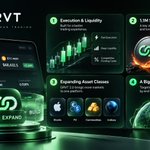
The more I look at @grvt_io the more I think a trading platform needs to prove itself on several fronts
Execution and liquidity shape the actual trading experience, while funding costs can quietly affect results over time
Beyond trading, GRVT has completed its first 1.1M ethereum:0xad29f2723fcdbcf665f210f25e06f97477e417cf buyback and permanent burn, with activity visible through its public dashboard
Then there’s the GRVT 2.0 roadmap, which aims to expand into stocks, FX, commodities, and indices
For me, the interesting part is how these pieces come together: a better trading experience, transparent token activity, and access to more markets
The real test is how well GRVT delivers on each one

A universe can have an ambitious story. What makes it worth exploring is what you can actually do inside it
That’s what I’m curious about with @projectspherexy
The Dyson Sphere concept sets the scale, and the Genesis narrative gives the project a bigger vision. But the real test is how that vision translates into player decisions
What can you build, what changes because of your actions, and how will progress become visible?
Those details are what could turn an interesting sci-fi concept into a meaningful interactive experience
I’ll be watching how Project Sphere connects its worldbuilding to actual gameplay

gZeru
Looking at the $KIMCHI launch highlighted by @zerufinance one thing stands out to me: ticker confusion can become a market risk of its own.
When a new token launches with the same ticker as an existing one, speed and wallet coordination can shape the outcome before most traders understand what’s happening.
The deeper issue isn’t just who buys first. It’s whether traders can reliably distinguish what they’re buying
In meme markets, verification may matter just as much as timing
That’s a problem worth paying attention to

One question I keep coming back to with @projectspherexy is: who gets access to the next frontier?
If stored energy can eventually help unlock new worlds or routes between stars, then collecting energy is only part of the story.
The bigger question is how that energy translates into access.
Will progression depend on how much energy a player has stored, what they’ve built, or the choices they make along the way?
Those mechanics aren’t clear yet, but they could shape the entire experience
For me, the most interesting part of Project Sphere isn’t just building around a star. It’s discovering what that achievement makes possible next

Expanding into more markets sounds exciting, but I think the more interesting question is how well those markets actually work.
@grvt_io plans to expand GRVT 2.0 into stocks, FX, commodities, and indices, with a target of 1,000+ markets by the end of December 2026.
That’s a broad ambition.
But market count alone won’t tell the whole story. Liquidity, execution quality, and the experience across different asset classes will matter too.
I’ll be watching how the roadmap translates into a product traders can actually use

A big win deserves a memorable reward
Petr Yan gets a well-earned victory, and now @Owner1win is gifting him a Rolls-Royce Cullinan. That’s a serious way to celebrate a fighter’s achievement
Respect to the hard work behind the win
Congratulations, Petr Yan
@1win @Owner1win
GM Everyone
AI agents can process data, but what happens when they need something from the physical world?
That’s what caught my attention about @vangrid_io
An agent can request a real-world capture through an HTTP call, pay a USDC bounty using x402, and receive a 3D model created from footage captured by someone nearby.
No traditional account setup or API key in the described flow.
What makes this interesting is the connection between autonomous software and human effort.
The agent handles the request and payment, while people provide the physical-world data.
The bigger challenge now is verification: can agents reliably evaluate submissions and decide when a task is complete?
Because automating the payment is one thing. Trusting the result is another

GN Everyone
See you again tomorrow
A token sale with a different kind of twist 👀
@1winToken is adding a Lamborghini Urus SE Lucky Drive to its token sale
Every full $100 spent earns 1 ticket, with a maximum of 32 tickets per user. Previous qualifying token purchases count too
The draw is set for November 15, but make sure to check the full eligibility rules before participating
Curious to see who gets the keys

I've always felt that in crypto, the difference between a promise and real progress comes down to one thing: verification
That’s why GRVT’s first completed buyback and burn caught my attention
1.1M GRVT tokens were purchased on the open market and permanently burned, representing nearly 1% of the circulating supply at the time of purchase
But the number alone isn’t the most interesting part
The tokens weren’t simply moved into a treasury. They were permanently burned. And with a public dashboard tracking purchases, cumulative burns, supply percentages, and transaction hashes, the process can be checked onchain rather than taken at face value
To me, that’s an important distinction. Transparency isn’t just about sharing an announcement; it’s about giving people a way to verify what actually happened
GRVT also intends to conduct future buybacks monthly, at the token issuer’s discretion. I’ll be watching how consistently that commitment is followed by verifiable action
Buybacks don’t guarantee price appreciation, and I wouldn’t judge the whole project by a single burn
What matters more is whether this level of transparency becomes part of how @grvt_io builds trust as GRVT 2.0 brings trading and earning closer together
In Web3, trust becomes stronger when claims can be checked. That’s the standard I want to see more projects meet

Building a Dyson Sphere is one milestone. What comes after it is even more fascinating
With @projectspherexy I’m curious how stored energy could unlock new stars, new worlds, and further exploration.
The real story may begin after the first sphere is complete

gZeru
I've been looking into @zerufinance and its latest research raises an important question about meme tokens.
Creating a token takes minutes. Building a market that survives beyond the initial hype is much harder.
ZeruAI analyzed 3,374 token launches, examining early ownership, developer selling, and how quickly trading activity fades.
What caught my attention is the gap between launching an asset and creating lasting demand.
A token’s launch is only the beginning. Who holds it, how insiders behave, and whether activity continues after the hype fades can tell a much bigger story.
That’s why I think onchain behavior is worth studying beyond transaction counts.
The real signal may not be how much attention a token gets at launch, but what people do after it. zerufinance

The more I think about @projectspherexy the more interesting its idea of progression becomes.
A Dyson Sphere isn’t just the end goal. In the Genesis concept, each cell collects energy from a star and adds to a growing reserve.
Even when one sphere is complete and the journey moves toward another star, the previous cells keep harvesting energy.
That creates an interesting cycle:
→ Build around a star.
→ Accumulate energy.
→ Use that reserve to unlock the next stage of exploration.
What caught my attention is how each milestone could become the foundation for something bigger, rather than simply marking the end of a level.
Genesis is presented as the starting reserve for this journey. The real question is how that stored energy will connect to future worlds, interstellar routes, and discoveries beyond the next sphere.
That’s the part of projectspherexy I’m curious to see unfold
