

Official journal of @CHESS_liver. #OpenAccess to cutting-edge advances in cirrhosis, IF: 1.8 #hepatology #medicine #liver #healthcare #liverdisease
China
Joined May 2022
- Tweets137
- Following512
- Followers111
- Likes129
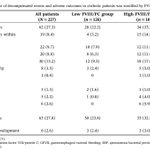




A crucial clinical distinction: While the FVIII/PC ratio is a key predictor for decompensation, it does not correlate with Portal Vein Thrombosis (PVT). For assessing PVT risk, FVIII activity alone remains the recommended significant predictor.
onlinelibrary.wiley.com/doi/…

Using an optimal cutoff of 2.86, Kaplan-Meier analysis shows that patients in the high FVIII/PC group faced a significantly higher risk of further decompensation (16.2% vs. 3.3%), specifically in variceal rebleeding, jaundice, and recurrent ascites.
🔗onlinelibrary.wiley.com/doi/…

The FVIII/PC ratio shows enhanced predictive ability within 12 months with an AUC of 0.717. Time-dependent ROC analysis demonstrates its superior accuracy compared to traditional indicators like HVPG, Child-Pugh, and MELD scores for 1-year outcomes.
🔗 onlinelibrary.wiley.com/doi/…

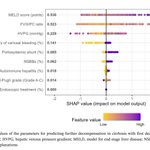
According to SHAP analysis, the MELD score and the FVIII/PC ratio are the two most influential variables, carrying more prognostic weight than HVPG or Child-Pugh grades in this cohort.
🔗 onlinelibrary.wiley.com/doi/…

Now online ! 🩺 Further decompensation events significantly increase mortality in cirrhosis. This study identifies the FVIII/PC ratio as a novel and powerful independent risk factor for predicting these critical events.
onlinelibrary.wiley.com/doi/…

Portal hypertension & Cirrhosis (PH&C) retweeted

New online! Therapeutic targets for metabolic dysfunction-associated steatohepatitis: a personalized approach to disease management dlvr.it/TRb1CM

Portal hypertension & Cirrhosis (PH&C) retweeted
Our MARCH ISSUE is live! Surgery in HCC, abdominal pain in IBD, WNT–β-catenin signalling in HCC, liver disease and HIV infection, and much more!
nature.com/nrgastro/volumes/…

ALT COVER: Improving surgery for liver cancer, inspired by the Review starting on p208.
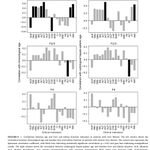
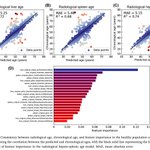
Multivariate analysis identifies advanced fibrosis stage and low platelet count as independent predictors of accelerated organ age. Radiological age also correlates with clinical indicators like albumin and bilirubin, reflecting systemic health.
🔗onlinelibrary.wiley.com/doi/…

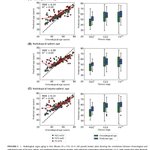
Fibrosis is more than scarring—it's accelerated aging. Across all stages, radiological organ ages are consistently higher than chronological ages. This deviation highlights how chronic liver disease forces the liver and spleen to "age" prematurely.
🔗 onlinelibrary.wiley.com/doi/…

Analysis of feature importance shows that organ shape is a key indicator of aging. Specifically, the liver's surface area-to-volume ratio played the most significant role.
🔗 See the findings: onlinelibrary.wiley.com/doi/…

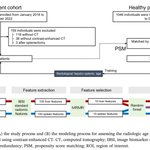
How do we measure "organ age"? Researchers developed models using contrast-enhanced CT images and random forest machine learning from 700 healthy controls. They created a combined hepato-splenic age model that accurately predicts biological status.
🔗 onlinelibrary.wiley.com/doi/…

Now online! 🩺 This study reveals that liver fibrosis significantly accelerates the biological aging of both the liver and spleen. Radiological organ age offers a promising noninvasive biomarker for assessing the impact of chronic liver disease.
🔗onlinelibrary.wiley.com/doi/…
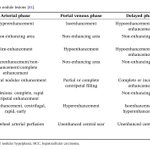
Diagnostic features of HCC: 🔸 HCC: Arterial hyperenhancement with "washout." 🔸 Hemangioma: Peripheral nodular enhancement & centripetal filling. 🔸 FNH: Rapid centrifugal enhancement.
🔗onlinelibrary.wiley.com/doi/…

Flow diagram for screening low-risk vs. high-risk populations. It guides clinicians based on nodule size (<1cm, 1–2cm, >2cm) and history to determine when to monitor, biopsy, or move to MDT care.
🔗onlinelibrary.wiley.com/doi/…

The histological spectrum from Cirrhotic Nodules (CN) to High-Grade Dysplastic Nodules (HGDN) and HCC. It compares size, cytological atypia, and the presence of vascular invasion.
🔗 onlinelibrary.wiley.com/doi/…

Navigating LI-RADS Management
The LI-RADS management pathway: ✅ LR-1/2: Return to 6-month surveillance. ✅ LR-3: Enhanced 3–6 month surveillance. ✅ LR-4/5/M: MDT discussion and biopsy consideration for tailored treatment.
🔗 onlinelibrary.wiley.com/doi/…


Portal hypertension & Cirrhosis (PH&C) retweeted
Save the date!
We are really pleased to announce our 1st annual meeting, to be held on the morning of 28th May in Barcelona at the EASL International Liver Congress!
We will be inviting abstract submissions shortly for consideration in the scientific program.

Our review online by Gao et al. provides the latest insights into the definition, classification, and clinical management of liver nodules. A must-read for optimizing patient outcomes.
🔗 Read here: onlinelibrary.wiley.com/doi/…
