

Comparative PIE phoneme inventory an IE sound law system digitised. Reading some Hieroglyphic Luwian while introducing improvements on PIE. Tweets @JounaPyysalo
University of Helsinki
Joined December 2012
- Tweets15.4K
- Following3.8K
- Followers7.8K
- Likes6.5K




Pinned Tweet
Hittite Mountain God Statue electrum (a gold-silver alloy): The iconography mixes elements of portrayals of the Storm-Gods, and so one can interpret it also as Tarhunza/Teshub, but the scales making the long kilt definitely point to a Mountain-God:

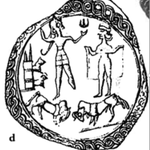
A seal supporting the idea that the Hittites were also involved in the ‘bull-jumping’, traditionally attributed to the Minoans. Boehmer & Güterbock (BoHa 14.147):

One of the most beautiful Hieroglyphic Luwian seals of all, Ras Šamra (RŠ 17.74): If you can read it, you can read a lot:

Proto-Indo-European Lexicon retweeted

Lost Hittite Royal Archive Reveals 3,400-Year-Old Epidemic, Princess’s Death and Military Crisis
anatolianarchaeology.net/los…

Proto-Indo-European Lexicon retweeted

As part of the ISAC Museum's special exhibition, "Hartapu: The Forgotten King of Anatolia," ISAC Museum Curator and Special Exhibits Coordinator, Kiersten Neumann (@knpazuzu), has curated a case in the ISAC Museum Orientation area in the Mesopotamian Gallery. This case tells the


Proto-Indo-European Lexicon retweeted

Tarihte yazılı ilk kelime "TANRI" :
Göbeklitepe'de CHƆ Sembolü "Tanrı" anlamına gelmektedir,
Luvi Hiyeroglifindeki Tanrı işareti ile aynıdır,
“World’s First Known Written Word at Göbeklitepe on T-Shaped Pillar 18 Means God”
M. Seyfzadeh and R. Schoch, Archaeological Discovery

Proto-Indo-European Lexicon retweeted
New Fragment of One of the World’s Oldest Peace Treaties Found in Hattusa Reveals Ancient Rules for Fugitives
anatolianarchaeology.net/new…

Proto-Indo-European Lexicon retweeted

More than 100 rock carvings of mountain goats, deer and other animals in Türkiye's northeastern Kars province are giving researchers a window into how early communities lived alongside nature.
turkiyetoday.com/culture/anc…

Proto-Indo-European Lexicon retweeted
Three new works by SaraNoa Mark are on exhibition in the ISAC Museum in connection with the special exhibition, "Hartapu: The Forgotten King of Anatolia." Displayed in the Syro-Anatolian Gallery and the Special Exhibit Gallery and curated by Kiersten Neumann, these works reflect


A charming photo from Karatepe, the site of the legendary Hieroglyphic Luwian KARATEPE inscription of Aza-Tiwada with a part of sculpture visible on the front of the forest line (apologies for the lack of credit, I do not know who took the photo or when):

Proto-Indo-European Lexicon retweeted
Painted steatite female figurines from Neolithic Hacılar in present-day Türkiye, dated to 5600–5300 BCE. Collection of the Neues Museum, Berlin.

A detail of Tudhaliya’s Temple 5 relief in Hattusa. The excavator Neve demonstrated that the author was Tudhaliya IV, but the relied portrays one of his forefathers, Tudhaliya III (or Tudhaliya II?), deified with the horns of the crown.

There is a good photo of the seldomly shown YALBURT fragment of King Tudhaliya endorsed by a mountain god included: dailysabah.com/arts/3000-yea…

Proto-Indo-European Lexicon retweeted

Hittite relief sculpture depicting a lion hunt with dogs carved in andesite, Alacahöyük, Çorum, Turkey, 14th century BC

Proto-Indo-European Lexicon retweeted

Archaeologists Discover 4,000-Year-Old Seeds of Ankara’s Endemic Flower in Hittite Vessel
arkeonews.net/archaeologists…

Proto-Indo-European Lexicon retweeted
Boxwood diptych writing tablet from the Uluburun shipwreck, near Kaş, Turkey, c. 1320 +/- 15 BC
This example from the Uluburun wreck is earliest archaeologically attested example of wax writing tablets of this style. Wax was melted and held in the recessed area of the wood where a scribe could write a temporary message by scratching the now hardened wax. This technology had a long life extending into the medieval period.

A slice of Hieroglyphic Luwian text from the KARATEPE inscription authored by Aza-Tiwada (his name means ‘loved by the Sun-God) in the lower section beneath a lion.

Proto-Indo-European Lexicon retweeted

Christopher Nolan’s The Odyssey has sparked a resurgence of interest in the Sea Peoples. But who were they and should they be blamed for the fall of the Bronze Age? Read the newest ANE Today article by Eric Cline here: buff.ly/RaN5Jlw
#Odyssey #SeaPeople #BronzeAge

Hieroglyphic Luwian seal impression of Tudḫaliya (III), Great King, and his queen Šadandu-Ḫeba from Maşat Höyük.

Proto-Indo-European Lexicon retweeted
Part of a pitcher or rhyton from the Assyrian trading Karum at Kaneš (Kültepe, Turkey), 19th century BC

Proto-Indo-European Lexicon retweeted

Archäologen finden 11.000 Jahre alten „Leopardenreiter“ in Karahan Tepe damals.de/artikel/archaeolog… #Archäologie #KarahanTepe #Türkei
