

The Peterson Institute for International Economics is a nonpartisan, independent research institution devoted to studying international economic policy.
Washington, DC
Joined March 2009
- Tweets50.2K
- Following4.7K
- Followers115K
- Likes9.5K




Reducing the magnitude of global imbalances is a desirable goal, but it is best achieved through international cooperation & not unilateral action, Nicholas Lardy writes in response to @MikeFroman in @ForeignAffairs.
foreignaffairs.com/guest-pas…

China reports exporting more goods to America than the US says it imports—particularly since early 2025, when the Trump admin sharply increased tariffs on China. Tariff evasion appears to be an important contributor to that gap. piie.com/blogs/realtime-econ…

The main effects of a drop in international students & workers in the US will take years to materialize, but will likely result in "fewer inventions, fewer new businesses & fewer new industries, at a time when we desperately need all of those things to adjust to the AI shock," @m_clem says. pbs.org/newshour/politics/ho…

Future studies trying to judge magnitude of Chinese industrial subsidies should improve methodology, including fully disclosing the data on which they base their estimates & explaining why their estimates differ from prior studies, Nicholas Lardy says. piie.com/publications/policy…

Despite his original skepticism about central bank asset purchases, Klaas Knot, a former president of De Nederlandsche Bank, now sees them as an integral part of the monetary policy toolkit. But effectiveness depends on economic context & fiscal policy. piie.com/publications/policy…

Although China’s current account surplus has grown explosively in the past few years, this is not necessarily because of Beijing’s industrial subsidies, Nicholas Lardy writes in response to @MikeFroman in @ForeignAffairs. The growth of China’s surplus, beginning in 2024, he writes, is more likely explained by a rise in the imbalance between domestic savings & investment. foreignaffairs.com/guest-pas…
Peterson Institute retweeted

Henry Farrell, Abraham Newman, and @YelingT explain how the global race to weaponize chokepoints could “lead to collective disaster.”
foreignaffairs.com/united-st…

Peterson Institute retweeted

New video.@cnbc
U.S. has a K-shaped stock market, China a K-shaped economy: PIIE's Adam Posen cnb.cx/4i5vMKt

Given the shifting geopolitical order—including Russia's invasion of Ukraine & recent trade & institutional frictions with the US—Klaas Knot believes a bigger international role for the euro would be desirable & achievable, under certain conditions.
piie.com/publications/policy…
Seeing the world economy as a chokepoints system leads policymakers to focus on capabilities, not strategy—fixate on leverage they have, & what others have over them, rather than considering what happens when many build up chokepoint power all at once.foreignaffairs.com/guest-pas…
China reports exporting more goods to America than the US says it imports—particularly since early 2025, when the Trump admin sharply increased tariffs on China. Tariff evasion appears to be an important contributor to that gap. piie.com/blogs/realtime-econ…
The more governments create bureaucracies devoted to identifying & controlling economic chokepoints, the more a chokepoint logic becomes the default lens through which they make even routine economic policy. foreignaffairs.com/guest-pas…
Peterson Institute retweeted
Explore our November/December issue, featuring Nicholas Lardy and Michael Froman on the roots of the next economic crisis, Ali Vaez on why the war in Iran is far from over, Niall Ferguson on how AI is shaping a new age of empires, and more.
foreignaffairs.com/issues/20…

Future studies trying to judge magnitude of Chinese industrial subsidies should improve methodology, including fully disclosing the data on which they base their estimates & explaining why their estimates differ from prior studies, Nicholas Lardy says. piie.com/publications/policy…
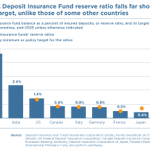
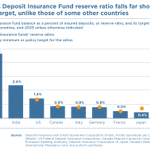
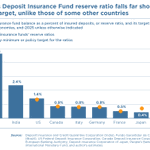
China's Deposit Insurance Fund has a remarkably small financial buffer relative to the deposits it protects. At the end of 2025, its reported balance was RMB130 billion, an estimated 0.1% of insured deposits—far below the fund's 1.5% target.
Read: piie.com/blogs/realtime-econ…

Although China’s current account surplus has grown explosively in the past few years, this is not necessarily because of Beijing’s industrial subsidies, Nicholas Lardy writes in response to @MikeFroman in @ForeignAffairs. The growth of China’s surplus, beginning in 2024, he writes, is more likely explained by a rise in the imbalance between domestic savings & investment. foreignaffairs.com/guest-pas…
Despite his original skepticism about central bank asset purchases, Klaas Knot, a former president of De Nederlandsche Bank, now sees them as an integral part of the monetary policy toolkit. But effectiveness depends on economic context & fiscal policy. piie.com/publications/policy…
Peterson Institute retweeted

📣 Our Westminster Insider podcast is back.
So are the Brexit wars.
🎙️ On this week’s show, @saschaosullivan + @patrickxrbaker explore how the row over Europe will play out in the next few years.
Ft.
@danny__kruger
@MalmstromEU
@joncstone
🎧 Tune in: politico.eu/podcast/westmins…

Canada is not & will not become a candidate country to the European Union, nor does it want to be. But there are still strong prospects for deepening EU-Canada ties.
By @MalmstromEU & @inumanak: piie.com/blogs/realtime-econ…

Viewing the world economy as a system of chokepoints has its own deadly blind spot, Yeling Tan & coauthors write in @ForeignAffairs. It is leading policymakers to focus on capabilities rather than strategy—to fixate on what leverage they have, & what leverage others have over them, rather than considering what happens when many countries build up their chokepoint power all at once. foreignaffairs.com/united-st…