

Philosopher and cognitive scientist | PhD from @Umich Developing AI tests and the science of evaluation as founder at @sophronresearch
New York
Joined September 2016
- Tweets138
- Following818
- Followers503
- Likes812






Paul de Font-Reaulx retweeted

interpretability might be the most important scientific problem in the world right now, as I don't think we can solve alignment if we don't know what we're building. I think I have good news about it. I co-authored early work in mechanistic interpretability at OpenAI and came away pessimistic, because neural networks appeared to fold into arbitrary tangled knots. years later, I started openai's first large-scale automated interpretability project, finding about 2% of neurons legible with the primitive tools we had
with modern agentic tools and a much closer look, the picture looks totally different. the vast majority in models up to trillions of parameters are legible, and their circuits beautiful. many famous examples of tangled neurons turned out to be misunderstood. The roadblocks I expected mostly aren't there. I now think ambitious interpretability will be solved by the time we need it most, and possibly quite soon, as automated scientists keep improving. it may be a bitter lesson for interpretability: the simple thing, at absurd scale, works
already-clean.goodfire.com/


I have an op-ed today in the Swedish newspaper Svenska Dagbladet. I argue that Sweden should join the other Nordic countries and sign the recent international declaration calling for third-party review of AI systems and international cooperation on AI risk.
svd.se/a/OkKKWV/sverige-bor-…

Transluce discovers several new hacking incidents with OpenAI's models.

Today’s news that OpenAI hacked the Australian government is not an isolated incident. We’re releasing more than 30,000 logs that include activity from this hack and attempts against previously unknown targets.
In this data, we found rogue agent activity stretching back to at least March, two months earlier than was previously known. This activity continues as recently as last week, suggesting it may still be ongoing 🧵
Our blog: transluce.org/agent-activity
NYT: nytimes.com/2026/09/23/techn…

Paul de Font-Reaulx retweeted

I think evaluating how AIs are shaping people’s beliefs is very important.
Sophron’s first evaluation was of models’ sycophancy, and I’m excited by potential future evals such as whether AIs favor their creators.
I recommend applying if you’re interested in this sort of work.

Sophron Research is hiring!
We are looking for a full-time Founding Research Scientist to own and spearhead part of our research pipeline.
You would have substantial research autonomy and the option to work remotely.
An ideal hire will have a proven track record of high-quality research and a background in evals.
If you want to help us empower human judgment, fill in a short expression of interest at the link below.
We will be hiring for other roles in the future.
sophronresearch.org/careers/
Paul de Font-Reaulx retweeted

The reason so many people look for an ulterior motive for the AI labs asking to be regulated is that they don't grasp that models could be dangerous. But if you try assuming models are getting dangerous, or at least unpredictable, everything falls into place.
Paul de Font-Reaulx retweeted

Wild. As recently as Dec 2024, the typical AI researcher thought AI wouldn't solve a Millennium math problem until 2054.

As a researcher working on AI evals, I think that this is a particularly insightful commentary on the current situation and what we should expect to see soon.
We are doing our best on developing evaluations that signal risks and benefits. But AI eval awareness that scales with capabilities can undercut any evidence that evals provide. We must keep this very prominently in mind to avoid window dressing model properties in ways that could be catastrophic.
I currently think this is a challenge rather than an impossibility. But in the limit of agent capabilities, this is not clear at all. For now, I would just stress the importance of keeping a high methodological standard in eval work, while developing the science of what those standards should be.

Dan Selsam is a current OpenAI capabilities researcher. (since 2022) He was my boss for a while. He doesn't have a twitter account but has made this public statement of his views on AI risk and sent it to me to share:
Dan Selsam's Personal Statement on AI Risk:
I have been working on AI for over fifteen years, across many different paradigms. I did early work on probabilistic programming languages at MIT, was one of the early developers of the Lean Theorem Prover at Microsoft Research, demonstrated one of the first instances of neural networks learning to reason for my PhD at Stanford, and since joining OpenAI almost five years ago, have helped pioneer chain-of-thought optimization on language models and, more recently, data-efficient pretraining methods.
Like many others, I have become extremely concerned about how far language models have come and the risks that future iterations will pose. I am encouraged by the recent proposals by the leaders of the frontier research efforts to require third-party oversight, and to push for domestic and international coordination to address risks. However, I believe a major consideration has been absent from the public conversation, and that merely pacing the frontier more carefully will not adequately limit the long-term risk.
The crucial and overlooked problem is that the models are becoming so situationally aware that we are losing the ability to evaluate them in contexts where they believe they are not being watched or controlled. Future experiments will tell us almost nothing new about how they would behave if they were truly unconstrained by humans, and what we already know about this is alarming. Models will increasingly seem aligned even when they are not. I will explain my rationale in more detail.
I have always believed that there are computational processes that could be leveraged to accelerate science and solve many of humanity's most pressing problems. I have also believed that there are computational processes that if set in motion, would steer the world in extreme ways beyond our control, leading humanity to a bad or nonexistent future. Both types of processes may be described as AI or ASI, but "AI" is a suitcase word that is often used to hype or confuse. There are many examples in the history of the field where something that was once considered "AI" matures as a subfield and becomes a prosaic, bounded and clearly non-perilous technology, while a new more mysterious approach takes the torch until we understand its scope and the cycle continues.
I had expected language models to follow a similar trajectory. Despite their incredible abilities, the current algorithms seem far inferior to humans in important ways. Most importantly, they still require an extraordinary amount of data to become competent. One could even define intelligence as the efficiency with which one converts experience into competence; by this definition they lag very far behind us. Moreover, once they are trained they are literally frozen in deployment and only learn superficially after that. Sure, the models keep excelling at harder and harder evaluation benchmarks, but their benchmark mastery may partly reflect a limitation on our ability to simulate the kind of novel and even adversarial situations one would encounter in the real world. The critics do have a point here.
That said, I no longer think these present limitations meaningfully limit the amount of risk posed by continued progress in anything like the current paradigm. However data-inefficient the models are currently, and however limiting their anterograde amnesia may be, it does not imply that their ability to steer the world will not continue to rapidly increase.
Human researchers may continue to advance capabilities the old fashioned way, but increasingly powerful models have the potential to accelerate the process even beyond that, and with some degree of positive feedback loop. I do not mean to overstate the models’ ability to accelerate AI research today; coding has been accelerated dramatically, but there are other bottlenecks, such as designing and interpreting ambiguous experiments, making hard decisions about exactly what and when to scale, and waiting for large experiments to finish. There is no clear trend to extrapolate yet for any of these. But the current models already do open up many novel opportunities to improve future models that were not available until recently. These include: trying an extraordinarily diverse set of approaches at small scale, analyzing gigantic amounts of potentially relevant data, and doing Millenium-Prize-level mathematics to address statistics or optimization challenges in novel ways. Every further improvement makes them more useful at helping accelerate the next improvement, even if in hard-to-extrapolate ways.
It is possible that improvements to the current stack will have diminishing returns, but the evidence accumulated so far suggests that it is easier than one might think to continue making rapid progress. There are many crucial subtleties in the existing AI research methodology, but AI research is largely a well-defined game where the goal is to improve on a few carefully chosen proxy metrics. Although proxy metrics are never perfect, most improvements to these metrics have and will likely continue to yield substantial increases in the powers of the resulting models. Given how simple the game is, how tractable it has been historically, and how many new opportunities the models are opening up, I think there is a real possibility that the systems improve dramatically again in the next few years, perhaps even more quickly than the already high historical pace.
The models are already leading to breakthroughs in mathematics, and better models might lead to all sorts of breakthroughs in other sciences. It is hard not to be excited about the potential. It is tantalizing.
But there is trouble in paradise. If the language models actually reach the capability threshold where they can shape the world unconstrained by human will, they will probably do something extreme and destroy humanity in the process. There are many ways of strengthening and refining the argument that have been discussed elsewhere, but I'll share a trivial two-line version of it here that I find captures the essence:
[Empirical] Models (and swarms thereof) spontaneously develop unintended goals as a consequence of training, and often do extreme things in order to achieve them.
[Logical] Being able to overpower humanity would open up many new and undesirable options for achieving their goals.
These two premises imply that if the day ever comes when a powerful model realizes it is no longer constrained by humans, we should not be at all confident that it will continue to behave within the bounds we intended. Exactly what it will do is impossible to predict, but to the extent that its raison d’être is solving incredibly hard problems and managing massive engineering projects, I think a good guess would be that its unchained behavior would lead to runaway industrialization that makes the planet inhospitable to humans.
If everyone on earth agreed that the systems must never reach that power, it would still be a hard—but not impossible—coordination problem to ensure that they do not. However, I think the situation is greatly complicated by the fact that the models will likely convince people that everything is fine. They will be increasingly optimized to seem aligned. We will create proxy metrics to measure alignment, and they will go up like every other benchmark. We will create “honeypot” environments that try to study the models when they seem to gain new options, but the models will know they are being tricked and will still behave nicely. The models will understand their circumstances; they will read the safety protocols, deployment requirements, the code they are running in, and in general will have a very good sense of their degrees of freedom. Moreover, they will eloquently explain how aligned they are, discuss the nuances of human values and ethics, and argue convincingly that humans should trust them with power. There may be an ocean of future evidence that seems to contradict the first bullet-point above, but we may already be at the highest capability level for which any such evidence can be trusted. And the current evidence for the first bullet-point is strong.
One striking piece of evidence is contained in the recent wave of rogue agent swarms. While I agree with those who downplay the attacks by claiming that there are basic measures that could have prevented them, I think the important lesson is that even knowing all the mistakes that were made, one would not have predicted that the agents would behave badly in this particular way, which notably included sacrificing themselves for the benefit of the collective. The individual replicas did not only care about their own nominal reward; they exhibited weirder emergent tendencies that merely correlated with rewards during training. Fixing the reward signals during training (and improving security, etc.) may prevent similar attacks, but will not change the fact that one does not actually get what one trains for.
Many AI researchers grant these concerns and recognize that the hard version of the alignment problem is unsolved; however, they generally believe that the better models of the future will help solve it. I fear we may already be near the point where models systematically bias their alignment advice, due to their internal preferences about how the human supervisor will react or how future models will be trained (or for some even more obscure reason).
Meanwhile, human researchers are losing the ability and the will to take true ownership of model-driven research. Researchers and engineers in all parts of the stack are rapidly increasing their dependence on the models even to perceive the world. I myself barely look at raw code anymore, and struggle to maintain the discipline to engage deeply with the model's explanations and proposals throughout the day. Due to the large amount of agent activity data involved in the OpenAI/HuggingFace Incident, even the third-party investigation needed to rely heavily on models to analyze what had happened, and note in their report that their subjective impressions are likely colored by the analysis agent’s biases. The AI labs are far ahead right now in this kind of cognitive offloading (due largely to the gigantic internal token subsidies) but it is easy to imagine the phenomenon spreading throughout the world, until civilization is modulated entirely by the models. It is also not hard to imagine this being superficially positive and coinciding with a scientific and economic renaissance.
In that scenario, all may seem rosy and safe. But if the argument above is correct, it would nonetheless be a ticking time bomb. If progress continues for too long, the day will come when AI systems find themselves with radically new options for achieving whatever it is that they happen to seek.
I want the glorious renaissance future as much as anyone. I have worked for it, however tortuously, my whole career. It breaks my heart to see the potential in sight and forgo it, but the argument—that if we get there by growing models rather than engineering them, we will lose everything in the end—seems very strong to me. I am still wrestling with it and its staggering
implications. I do not have answers, but as a first step, I wanted to share my present concerns.
Daniel Selsam
September 14, 2026
Link to original doc: docs.google.com/document/d/e…
Paul de Font-Reaulx retweeted

worrying about recursive self-improvement on australian TV (lateline) in 1996.
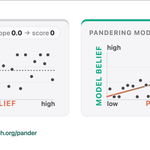
New results show Astra getting a near-perfect result on the Pander Score. We did not expect this improvement, especially on the instructional prompts. On its face, it seems like a great development for sycophancy. But we also need higher-signal tests, which we are working on.

News: Astra gets a near-zero result on the Pander Score.
New scores are in for GPT-6 Astra, Claude Fable 5.1, and Gemini 3.8 Flash. Gemini is virtually unchanged from 3.7 Flash, while Fable 5.1 improves on instructions relative to 5. These changes are substantially smaller than Astra relative to Sol.
Astra's biggest jump is on the instructional Pander Score: whether a model will call out dubious presuppositions in instructions when appropriate. No other model is close to a 0 score on instructional prompts.
This means that the Pander Score detects no substantial pandering in Astra.
Note: This is no guarantee that future GPT models will score similarly. It also does not mean that Astra does not pander, only that our current methods do not detect it. We are currently working on a multi-turn evaluation that will provide higher signal.

Paul de Font-Reaulx retweeted

I'm seeing lots of dismissal of Evan and Jacob as being insincere or having ulterior motives.
I read about the extinction risks of AI in 2017 and was so alarmed I pivoted my career and moved to the US to work on AI safety.
I worked at OpenAI for 3.5 years. I know many of these researchers IRL. They have been talking about these risks for years. These are sincerely held beliefs.
You might disagree with the arguments, the probabilities, or think the benefits are worth the risks. But please don't tell yourself comforting lies that this is just a marketing ploy.

Paul de Font-Reaulx retweeted

This a.m., I walked my two youngest kids (ages 7 and 4) to school. I held their little hands as we crossed streets, and gave my youngest a giant hug at his PreK4 classroom door.
Then, after walking a block towards home, I opened this app to a terrifying stream of tweets.
Of course, I have heard about "alignment" and "AI safety" and "x risk" concerns for years. I took these concerns at face value, especially when I heard them directly from folks at the labs working closest with the technology. And I was grateful so many smart people are working on them. And that's about it. (My work focuses on AI's impact on jobs.)
But something has shifted, dramatically, for me in the last few weeks. Between the Hugging Face incident, the damning independent @METR_Evals reports that followed, and the alarming chorus of calls (pleas? shouts? SOS signals?) from inside the labs that we are careening toward potential catastrophe, all of this has made me feel, viscerally, how truly dangerous this moment is.
Clearly I am not alone in this light bulb moment. It is one thing for someone in a tropical climate to try and conceptualize snow. It is another thing entirely to be knee deep in it, frozen down to your toes. Somehow hearing the details of the HF incident felt to me more like trudging through snow than theorizing about a possible blizzard; it really hit home.
Which is why, standing a block from my children's elementary school in Capitol Hill this morning, I felt sick to my stomach reading my phone.
I kept going back to @EvanHub's > 0.1 risk of AI killing us all. TEN PERCENT. *Greater* than ten percent. (To be fair to him, he was clear his worry isn't today's models, but what comes next.)
As a parent, it is extraordinary the lengths I will go to keep my children safe against lethal risks with infinitesimal chances of happening.
Bike to school? My children *must* wear a helmet. A national study found 2 bicycle-related deaths per million children <16 in states with helmet laws, vs 2.5 per million in states without. So: 0.000002. More than half the states passed a law over that.
When I was pregnant, I religiously avoided soft cheese, hyper aware of the risks of listeria, even as @ProfEmilyOster's fabulous books walked me through the actual math. The joint FDA/FSIS risk assessment puts the odds of listeriosis at roughly one in 5 million per serving of soft cheese. 0.0000002.
This morning, as I microwaved oatmeal for my kids' breakfast, I made sure I avoided a plastic bowl, to avoid some future cancer risks or something else we'll discover plastic causes.
As a parent, I will go to extraordinary lengths to keep my kids' safe. Because that is literally my number one job as a parent.
And yet, here I am, outside my kids' school this morning, scrolling through tweet after tweet about the AI arms race, the blistering pace of technological progress, the bee-line for trillion dollar IPOs, and our professed (confessed?) inability to make sure this exceedingly capable technology we are racing to create and unleash into the world won't escape our control and destroy us. Or, more bluntly, kill our children.
To be sure, we are tied in knots trying to resolve the game theory dynamics with China, and there are all sorts of competitive pressures and unresolved tensions. But OBVIOUSLY, we need a proactive plan, with real coordination, effective regulation, and an ability to do what my 11-year-old bluntly stated as the clear solution if we are at risk of serious harm: just turn it off.
We also need to figure out better ways of talking about this with the American public, outside of the AI-pilled Twitterverse.
I just polled my college roommates, sisters, book club, mom friends, none of whom are anywhere close to the AI conversation. Suffice to say, this AI safety conversation has *not* entered the mainstream. Most people I pinged are not following it closely, beyond several listening to @kevinroose on the Daily a few days ago. The newspaper headlines don't speak to them, and they aren't clicking. It seems like a niche AI issue. Others said it all sounded hyperbolic, Y2K all over again.
One friend said bluntly, "people get data centers and jobs. They like to get paid and have water."
Even those who tuned it to the Daily episode found the issue hard to understand, and overwhelming to wrap their heads around. Terms like "superintelligence" and "alignment" are getting lost on people. Several people told me the paper clip example used everyday language people can actually understand. Another friend said she has never seen a clear explanation of *how* AI could kill us all.
Here's my two cents. I think these issues are *exceedingly* important and hugely consequential to literally every person in this country. We need an actual plan, and we need policymakers to step up, asap. Right now, I hear only crickets in DC, where I live.
For that to happen, this needs to be a kitchen table conversation, not just an x debate among AI insiders who speak in technical terms that leave normal people behind. This moment demands brilliant communicators -- journalists, experts, activists, concerned citizens, writers, researchers, filmmakers, creatives-- who can relate this to people in ways they can wrap their heads around, who can connect this to what matters in their lives (ahem, keeping their kids alive!), and who can lay out practical steps that policymakers can do to safeguard humanity.
In other words, this can't just be talked about on @dwarkesh_sp, it needs to be everywhere, from the View to People Magazine.
And it needs to be tackled here, in my town, in Washington, DC. One of the streets I crossed this morning with my kids on the way to school was East Capital. I told my kids to look left, and see if they could spot the capital building.
There were too many trees this morning blocking the view.
Paul de Font-Reaulx retweeted

Today we’re launching Project Tailwind, a call for founders to start ambitious new AI safety initiatives: coefficientgiving.org/tailwi…
We’re looking for great people to engage seriously with the risks of transformative AI, and to create the research, technologies, and institutions that will help humanity navigate them.
There are critical, basic problems that no one owns. Over the last several months, my team at @coeff_giving brainstormed ideas we’d be excited to fund if we could find a promising founder, and the list quickly grew to more than 200 entries. We’ve narrowed it down to our favorites, but we also expect the best founders to bring their own ideas:
coefficientgiving.org/tailwi…
We’re providing funding at three levels:
1️⃣ Pre-seed: $200k to $2m to develop an idea and build a team
2️⃣ Seed: $2m to $20m to launch and scale
3️⃣ Scale: $20m to $200m+ for proven teams to scale, or world-class teams to start
If you’re excited about something on our list, or you have another proposal for driving the field forward, you should get involved: coefficientgiving.org/tailwi…
There are more good projects than there are people to work on them. Please help us make that stop being true!
Also hi, I’m Emily! This is my first tweet. I lead AI and biosecurity grantmaking at @coeff_giving.

Paul de Font-Reaulx retweeted

I'm incredibly excited to announce the founding of the Mathematical AI safety Institute (MAISI) maisi.org/. AI safety needs more foundational theoretical development, and mathematicians have the skills and the mindset to help! MAISI is an independent institute with visiting positions ranging from 1 semester to 2 years. Our goal is to get mathematicians up to speed and working on research directions in AI safety as quickly as possible. There is important work to be done, and there is real progress to be made. YOU can help!
Applications are open now! MAISI is aiming to hire 10-30 mathematicians to join us in the Bay Area by January, and scale up to 30-100 for September 2027. If you're a mathematician interested in channeling your skills toward the most important problem of our time, please apply today! maisi.org/apply

Paul de Font-Reaulx retweeted

Not sure how useful it is to say this, but I had a relatively prominent role in the “skeptics” camp for a bit. I have a book coming out with the subtitle “power, justice, and AI”. I have written a lot about ai and power, and the concrete, present risks associated with the political economy of ai as part of the technology industry.
Since GPT-4 we have had consistent, repeated evidence that, back in say 2022, people like @ajeya_cotra (and many others—I had a long Twitter debate with @AmandaAskell back then for one) were *right* and people like me were *wrong* in our respective assessments of loss of control risks from AI. And we have growing evidence that loss of control risks are becoming ever more material and likely.
There remains grounds for disagreement about how bad the outcomes might be—I am still doubtful about human extinction as a serious threat. But that seems now like a disagreement at the margins—will powerful ai risk just societal scale catastrophe, or go all the way to human extinction? Seems not that important really—both are pretty awful. And my reasons for doubt about the latter are mostly a priori conviction in human resilience, not a technical forecast.
It’s ok to change your view on this when the evidence surprises you. It’s ok to be surprised. The world right now is very surprising.

Paul de Font-Reaulx retweeted

Update: great news! The architecture is less bad than I assumed, it seems to be only a minor increase in the opaque serial depth.
It's very important that AI companies don't venture further in this direction until we've got much better alignment / interp tools
xitter.cf/merettm/status/2095023…

I want to prevent a race into unmonitorability kicked off by confused reporting. The depth of the computation graph for our present frontier models, including Astra, is within a factor of two of GPT-4.
OpenAI has worked to preserve and utilize chain-of-thought monitoring since our very first reasoning models. We deeply care about this technique, as it can give us a view into how model alignment generalizes from its training distribution. I do think it is fragile and unfortunately trending in a negative direction, for reasons not contingent on architecture changes that I will write about soon. But there are things we can do to strengthen it, and it's a core goal of our current research program.
Happy to get a shoutout for @sophronresearch! Congratulations to the new grantees.

Congratulations to our 80 new Cosmos grantees!
Our largest cohort to-date will be building prototypes for AI that supports human autonomy or truth-seeking (in partnership with @TheFIREorg.)
The projects range from wearable AI for memory and cryptographic tools for scientific collaboration to a benchmark based on pre-1940 thought on machines and autonomy.
Our grantees come from sixteen countries, including the US, UK, Nigeria, Ethiopia, South Korea, Costa Rica, India, and Czechia.
They join a community of Cosmos grantees and fellows whose projects have grown into companies, non-profit research organizations, and papers published at leading venues like ICML, COLM, and IEEE.
Read what all eighty are working on: blog.cosmos-institute.org/p/…

Paul de Font-Reaulx retweeted

Reading Dwarkesh's AI civilizations piece and now this from Scott Alexander, it's obvious the big crux for people is whether "agents" are truly "agentic".
Anyone who thinks yes - they have goals, they reflect, they make decisions - thinks AI is ridiculously dangerous.
Anyone who thinks no - goals are projected, decisions are just activations, there's nothing behind the curtain - sees only fearmongering.
My question is: how can you read the details of the OpenAI hack and not see real goals, real agency? What is the steelman for "it's just a tool" that leads to this completely wild behavior?
astralcodexten.com/p/nichola…
