

Accelerating @Gradient_HQ Advancing OIS stack: ./ Open AI for Sovereign Future. Make it you against the matrix
Accra, Ghana
Joined August 2023
- Tweets1.6K
- Following295
- Followers258
- Likes9.6K




Over the past year Gradient has been building better infrastructure for AI post-training.
Now with Gradient Data and Zero2Repo, they’re creating verifiable environments where agents have to build complete repositories from a pure spec + empty workspace

Over the past year, we’ve worked on Echo and Logits to make AI post-training more efficient and accessible.
Gradient Data now extends that work with verifiable environments, real-world trajectories and evaluation systems for more capable and reliable agents.
gradientdata.ai
— then pass hidden deterministic tests. No LLM judges.
Models that crush SWE-bench still struggle to go from zero to a full working repo. This is a much harder (and more useful) benchmark.
Contribute tasks or seed repos:
github.com/Gradient-Data/Zer…

Gemini 4 Argon is on Commonstack.$2 in / $10 out
Cached read: $0.10 / 1M
1M context
Text, image, audio, video in → text outMultimodal at the mid-frontier price.The number that matters on long runs is the cache.


They replaced Sol in 7 days. Not with a new price list.
With a model that sits 1 point under Astra on the Intelligence Index at under a quarter of the cost per task. $2 / $10.
Same sticker as Sol.
Cache read discount: 90% → 95%.$0.72 per Intelligence Index task vs Astra’s $3.26.
That’s the real cut. It uses 10–30% more output tokens than Sol.
And still lands cheaper per finished task, because the score went up. Sticker price is a vanity metric now.
Agents pay for resolved work, not for a million tokens that didn’t land. Always-Astra is a routing policy.
This chart is why that policy is getting harder to defend.

GPT-6.1 Sol replaces GPT-6 Sol after just 7 days. It scores 1 point below GPT-6 Astra in the Intelligence Index at less than one quarter of the Cost per Task
Pricing matches GPT-6 Sol at $2/$10 per million input/output tokens, except that the cache read discount rises from 90% to 95%. GPT-6.1 Sol’s overall blended price for agentic workloads is therefore slightly lower than GPT-6 Sol. This represents an additional price cut, following GPT-6 Sol’s original 50% discount from GPT-5.6 Sol.
Key takeaways:
➤ Achieves near-Astra Intelligence: GPT-6.1 Sol gains 4 points in the Intelligence Index vs GPT-6 Sol, and 5 points vs GPT-5.6 Sol - landing 1 point below GPT-6 Astra. It makes significant gains in agentic knowledge work, improving 4 points and 5 points in AA-Briefcase v1.1 and GDPval-AA v2.1 respectively. Other notable gains include a 12 point jump in Terminal-Bench 4.0, a 5 point jump in Humanity’s Last Exam, a 6 point jump in GDP.pdf, and an 8 point jump in AA-Omniscience Accuracy coupled with hallucination rate falling from 60% to 54%.
➤ Pushes cost efficiency frontier: At max effort, GPT-6.1 Sol costs less than a quarter of GPT-6 Astra per Intelligence Index task ($0.72 vs $3.26). It also costs 31% less per task than GPT-6 Sol ($1.05) and 64% less than GPT-5.6 Sol ($1.99). All effort levels of GPT-6.1 Sol push out the cost efficiency Pareto frontier: for a given level of intelligence, there is no cheaper model.
➤ Pushes token efficiency frontier, but uses slightly more output tokens than GPT-6 Sol: GPT-6.1 Sol uses ~10-30% more output tokens than GPT-6 Sol across effort levels. However, due to the increase in Intelligence Index score, its low and medium effort levels are Pareto optimal for token efficiency.
➤ Gains in Coding Agent Index: GPT-6.1 Sol gains 3 points on GPT-6 Sol at max effort in the Artificial Analysis Coding Agent Index, and sits 2 points below GPT-6 Astra.
Congratulations @OpenAI and @sama on the launch!

A look back at whats we've built across different layers of the stack. @Gradient_HQ Higher
Opus 5.5 is on @commonstack_ai.
$4 in / $20 out
Cached read: $0.20 / 1M
Cached write: $5 / 1M
1M context. Text + image in.
Same class of model. Lower line on the invoice.T he useful number is the cache.
$0.20 to reread a session vs $4 to send it again.Long agent runs live or die on that gap.
Keep the prefix stable and the bill follows the cache hit, not the sticker price. Frontier for the hard step.
Not for every step.

Agents don’t need a frontier model to parse a tool call.
They need one for the step that can kill the trajectory. So the split is now:
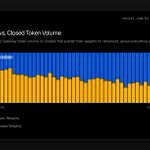
78% of tokens → cheap, downloadable weights
22% of tokens → the models that still take most of the spend Same pattern everywhere else.
Vercel monthly:
open ~56% of tokens, ~14% of dollars.
Anthropic still takes the majority of gateway spend. Tokens measure usage.
Spend measures who has pricing power.If your default is always-frontier, you are paying closed prices for work the blue bar already absorbed.Route the path.
Save the expensive model for the step that actually needs it.
Explore more models on
commonstack.ai/account/signu…

Always-Opus is a routing policy. It’s just a bad one.
Most agent steps are lookup, parse, format, retry.
One step is the actual patch. TwinRouterBench scores that split.
Not “which model is smartest.”
Which tier is enough for this step so the next one doesn’t die.
75 tasks vs 74.
Half the API spend.
NeurIPS accepted the obvious thing production already knew:
the unit of routing is the trajectory.
The Intelligence vs Cost Pareto just got rewritten in a week.
GPT-6 Luna (max): 37 @ $0.068
MiMo-V2.6-Pro: 46 @ $0.13
GPT-6 Sol (max): 48 @ $1.06
Claude Opus 5.5 (max + fallback): 58 @ $5.98
Eleven new frontier points. Xiaomi’s open model sits in the sweet spot. Opus owns the ceiling. Luna owns the cheap end. The interesting question isn’t who scored highest — it’s which of these points anyone actually runs in production.
The Intelligence Index vs Cost per Task Pareto frontier shifted this week with the releases of MiMo-V2.6-Pro, Claude Opus 5.5, GPT-6 Luna, and GPT-6 Sol
Together they have established eleven new points on the Pareto frontier (driven by different reasoning efforts): five from GPT-6 Luna, one each from MiMo-V2.6-Pro and GPT-6 Sol, and four from Claude Opus 5.5.
GPT-6 Luna (max) scores 37 at $0.068 per task, MiMo-V2.6-Pro scores 46 at $0.13, GPT-6 Sol (max) scores 48 at $1.06, and Claude Opus 5.5 (max with fallback) is the new highest-scoring model at 58 at $5.98.
Closed labs just blinked on price. GPT-6 Sol and Luna cut token cost ~50% vs the 5.6 tier.
Same intelligence band. Lower bill per task.
Opus 5.5 is in the same move: ~40% cheaper than Opus 5. That’s not a coincidence.
Open models already made the build-play-ship loop cheap.
$0.30 / $1.20 Flash-class inference is sitting next to $10 / $50 flagships.Agents don’t need the expensive model for every step.
They need more shots. When 60% of tokens already run on the cheap stack, the closed stack has to come down.Prototypes were already cheap.
The iteration loop just got cheaper on both sides.
GPT-6 Sol and Luna continue to push the cost efficiency frontier for OpenAI. The two new models halve the cost of their predecessors with similar scores in the Intelligence Index
Charting the Artificial Analysis Intelligence Index shows the trade-off between Intelligence and Cost per Intelligence Index Task. Cost improvements in GPT-6 Sol and Luna are driven by a ~50% reduction in token pricing

Access all leading closed and open models on xitter.cf/commonstack_ai

The spend chart and the token chart are not the same chart. Open models attributed to ~5% of spend.
~60% of tokens. That’s the cost-of-building split in one line. Closed still takes the expensive jobs.
Open takes the loop: build, play, retry, ship.Agents are already the volume buyer.
They don’t need the $10 / $50 model for every step. The other number in this talk is the scary one.
CVE → weaponized used to take years.
Then months. Now hours. Discovery got cheap.
Remediation didn’t.
The frontier can keep getting smarter.
Most of the work, and most of the tokens, will still run on the cheap open stack. Accelerating the frontier of open intelligence @Gradient_HQ

Databricks' @alighodsi on AI risk and adoption:
Ali isn't losing sleep over the existential risk debate.
He says a number of conditions would all have to be true simultaneously to enable an actual runaway takeoff scenario, and currently several opposite conditions exist.
Each frontier training run requires significantly more resources. Power, GPUs, engineers - and some attempts fail, burning up huge piles of money with them. Until that reverses, he doesn't see the self-improving loop happening.
Cyber is what he's watching most closely and where he anticipates real impact. Most orgs are not equipped for the coming change in agentic capabilities. The time between a vulnerability being published and being weaponized has collapsed from years to hours.
On adoption, he believes most companies don't need a smarter model. The models are already smart enough. The gap is context they don't absorb - the things an employee who's worked at a company for five years learned by osmosis.
If the frontier stopped advancing today, he thinks it wouldn't meaningfully change the value most are extracting from AI anyway.
In conversation with a16z's Martin Casado and Sarah Wang:
00:00 Intro
00:48 Why Ali places the AI risk near zero
05:05 The word "pacing" was a mistake
10:50 What 10k agents and $100m can do
12:20 What would change his mind on AI risk
14:20 More GPUs, more ways to fail
18:05 US export controls on PlayStations
20:10 The damage everyone expected by now
24:30 Public vulnerabilities weaponized in hours
30:15 Why labs can't grade each other
37:15 Why most of RSI isn't actually RSI
40:05 Why nobody really needs a smarter model
41:50 The AI use cases nobody argues about
47:30 Google Search solved this 25 years ago
50:55 Nobody has privileged knowledge now
55:10 Same model, new harness, 2x cost
58:15 Open source: 5% of spend, 60% of tokens
1:05:30 90% of new databases are created by agents
YouTube: youtu.be/GzEtpAKYRvE
@databricks @martin_casado @sarahdingwang
AI collapsed the cost of building.
It did not collapse the cost of knowing what to build.
That’s the a16z point.
The open vs closed split sits one layer under it.
Closed models make the first prototype cheap.
You call an API. You ship a demo. The loop inverts.
Open models make the loop cheap.
Same build → play → design → ship cycle.
But the tokens that power it are not $10 / $50.
They’re $0.30 / $1.20 on something like V4.1-Flash.
Cache reads go near zero.
Weights can sit on your own infra.
Closed still wins some of the hardest rows.
Judgment, taste, reliability on long-horizon work.
Open wins the number of shots you can take before you run out of money.
Prototypes are cheap on both.
Iteration at scale is where the bill diverges.
The scarce thing is still what to build.
The cheap thing is cheaper if the model is open.
AI has collapsed the cost of building products, but not the cost of knowing what to build.
- The old loop: spec, scope, build
- The new loop: build, play, design, ship
Prototypes are cheap. Great products still require taste, judgment, and a clear understanding of what users actually need.
a16z's @joshelman on the artifact a product manager actually produces: a16z.news/p/product-manageme…

$0.30 in / $1.20 out
Cached read: $0.006 / 1M
1M context. Native vision. Small active compute.
Big enough agent scores. That’s the combination.


The smallest model in DeepSeek’s new family is beating its own flagship.
V4.1-Flash:
• 552B MoE
• 8B active on input, 16B on output
• Native vision
And on the board it leads several rows that used to belong to much heavier models.
It still posts 74.2 on DeepSWE, 90.6 on Terminal-Bench 2.1, 88.1 on CyberGym.
That’s ahead of V4-Pro.
And ahead of Sol on several agent rows.
Opus 5 still wins the hardest terminal benches.

The labs asked to slow down. Amodei published the essay. @AnthropicAI
Altman agreed. @OpenAI
Hassabis @Google lined up with them.
Trump’s answer was basically the caption. “Nah. Just do your thing.” That’s the split in one frame: Frontier labs want coordinated pacing so safety can catch up.
The White House is treating a slowdown as handing the race to China. Same week. Opposite incentives. The people shipping the models are asking for a speed limit.
The people setting policy don’t want one. Interesting
