

Science will win!
Rockville, Maryland, USA
Joined May 2022
- Tweets256
- Following325
- Followers152
- Likes2.1K


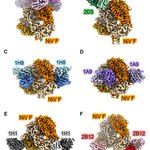
Please check out a paper from my postdoc @McLellan_Lab @ut_mbs, “Prefusion stabilization of the Hendra and Langya virus F proteins”, now available online @JVirology. This was a collaboration with Rebecca Loomis @NIAIDNews and @BarneyGrahamMD @MSMEDU
journals.asm.org/doi/10.1128…

Patrick Byrne retweeted

This essay is a tribute to my friend Lee, who was the last person to have ever wanted a tribute written about her. Lee changed the world and I miss her: theatlantic.com/ideas/archiv…

Patrick Byrne retweeted

Excited to collaborate on this study! Very interesting new antibodies that potently neutralize CMV.

Excited to share our latest publication @ImmunityCP: "Analysis of the Human B Cell Response to HCMV in Top Neutralizers from a cohort of 9,000 Individuals"!
Congrats to @zehner_matthias, @Ashurov_Art and Mira and thanks to all collaboration partners!
sciencedirect.com/science/ar…

Patrick Byrne retweeted

My first, first-author research article was published yesterday in @JVirology! doi.org/10.1128/jvi.01414-23
Excited to share our work measuring the effects of single flavivirus mutations on antibody neutralization, led by me w/ @jbloom_lab and @lesliegoo_lab guidance
🧵...

Patrick Byrne retweeted

Jane S. Richardson et al.: The bad and the good of trends in model building and refinement for sparse-data regions: pernicious forms of overfitting versus good new tools and predictions #CaBLAMValidation ... #IUCr scripts.iucr.org/cgi-bin/pap…
Patrick Byrne retweeted

Although tryptophans form the most pi-pi interactions per 100 residues (~48) only 15% of tryptophans on average form pi-pi interactions. Tyrosine, phenylalanine, arginine (all ~25%) and glycine (~20%) all have higher frequencies per pi-pi interaction.

Patrick Byrne retweeted

👀
"Structural basis of dimerization of chemokine receptors CCR5 and CXCR4"
nature.com/articles/s41467-0…


Patrick Byrne retweeted

A virus called RSV is the #1 reason babies are hospitalized—yes, ahead of flu and COVID—but we couldn't do much about it until now.
I nerded out a bit on how we went from zero vaccines for RSV in 2022 to multiple vaccines in 2023. This science is cool.
theatlantic.com/health/archi…

Patrick Byrne retweeted

We finally got our long-awaited rain. Time to release some bats!
.
.
#easternredbats #lasiurusborealis #leafbats #urbancanopy #batslivehere #batsaregoodneighbors #austinbats
Patrick Byrne retweeted

Twitter may be dying, but the Starr lab is coming to life! We put out the first preprint from the lab @UofUBiochem, where we performed deep mutational scans on the SARS-CoV-2 BQ.1.1 and XBB.1.5 variant RBDs 🧵 biorxiv.org/cgi/content/abst…
Patrick Byrne retweeted

The corner of 24th and Nueces post Texas’ victory over Alabama – at Austin, TX
Patrick Byrne retweeted

How does the malaria parasite, Plasmodium vivax get inside human blood cells? In this manuscript we reveal the essential interaction between the parasite PvDBP protein and the human receptor DARC. The final paper is now on line if you missed the preprint.
rdcu.be/deTaO

Patrick Byrne retweeted

My new favourite chart:
A timeline of how many vaccines weʼve discovered & when.
Note: 80 year gap between the 1st & 2nd vaccine. The vaccine against smallpox virus was developed before people knew what viruses were, *before germ theory had developed*
Then discovery took off.

Patrick Byrne retweeted

This is a great day for @UTAustin, @UTDiscoveries and Austin as the next major hub for life sciences! I am thrilled that UT and Karlin can be at the forefront of this movement and make an enormous impact on the city and the world #WhatStartsHere utex.as/3ZaISei

Patrick Byrne retweeted

Our paper is finally out in Cell!
cell.com/cell/fulltext/S0092…
During the revision, we solved one more structure (H225F or KALI), performed more electrophysiological, computational, spectroscopic, and biochemical experiments, and conducted optogenetics experiments using KALI. (1/n)
Patrick Byrne retweeted

For six decades, there was no approved vaccine for one of the most common causes of severe illness in infants, young children and older adults: RSV. Until now.
Among the scientists responsible for this discovery is @UTAustin professor Jason McLellan. l8r.it/psHG
