




Hi @grok in the history of agricultural and industrial societies how long was the period where women didn’t work and stayed at home and estimate the % of women who didn’t work and what class they came from.
Egyptians decided to build the Great Pyramid at a latitude of 29.9792458°N matching the speed of light to send a sign to all of humanity. They got lucky there is loads of convenient limestone right there, it was close to their capital, and it was elevated above the annual floods.
Imagine in Ancient Egypt sailing three days down the Nile to see her and there’s another chariot outside.
Red Square wasn't named after communism.
The name for the well-known Moscow landmark dates back centuries before the Soviet Union. In Russian, Red Square is Krasnaya Ploshchad. Today krasnaya means “red,” but historically the word could also mean “beautiful.”
The square acquired its present name in the 17th century, during the reign of Tsar Alexei Mikhailovich Romanov (reigned 1645–1676), father of Peter the Great, long before the Bolsheviks, the Soviet Union or the red flag became associated with communism.
So despite the perfect communist-sounding name, Red Square wasn't named after the Soviets at all.
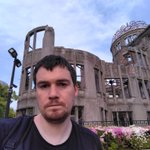
Here's a picture of me in St Basil's Cathedral in Red Square from 2017.

Halloween has roots going back over 2,000 years, to ancient Ireland!
2000 years ago The Celts celebrated Samhain, marking the end of the harvest and the beginning of winter. But 2,000 years before that the people building Grange Stone Circle, the largest stone circle in Ireland, aligned it so the sun would shine though on sunset in Early November, suggesting End of Harvest celebrations were important to them.
Crops had been gathered, cattle returned from summer pastures, and animals that couldn’t be fed through winter were slaughtered.
As the days grew shorter, Samhain also became associated with the supernatural, a time when the boundary between the living and the dead was believed to grow thin.
Centuries later, Christianity brought All Saints’ Day, celebrated on November 1st, most likely to replace the Pagan festival of Samhain.
The night before became known as All Hallows’ Eve — eventually shortened to Halloween. Old traditions died hard and the folklore around honoring the dead continued.
In Ireland and Scotland, people dressed in disguises and went from house to house.
And forget pumpkins! The Irish originally carved terrifying faces into turnips, placing candles inside to create lanterns.
During the 19th century, Irish and Scottish immigrants carried their Halloween traditions across the Atlantic to America.
There, pumpkins replaced turnips, and Halloween gradually evolved into the celebration we recognise today.
By the 20th century, trick-or-treating, costumes and sweets had become Halloween staples.
So this Halloween, remember that one of the world’s most famous celebrations has its roots in ancient Ireland!

Was Hitler actually a socialist?
Well, his party was called the National Socialist German Workers’ Party (NSDAP) so case closed?
Socialist was added to the name in 1920 over Hitler's initial objections at the suggestion of Rudolf Jung. But he was convinced to do so, as it was popular with ordinary workers and would help the party draw from a larger base. Instead of rejecting socialism altogether, knowing it was popular, he sought to redefine it as a term covering nationalism, race and collective obligation to the German nation, rather than workers owning the means of production or conducting a class struggle. In a 1923 interview Hitler said:
"Socialism is the science of dealing with the common weal. Communism is not Socialism. Marxism is not Socialism. The Marxians have stolen the term and confused its meaning. I shall take Socialism away from the Socialists."
"Socialism is an ancient Aryan, Germanic institution. Our German ancestors held certain lands in common. They cultivated the idea of the common weal. Marxism has no right to disguise itself as socialism. Socialism, unlike Marxism, does not repudiate private property. Unlike Marxism, it involves no negation of personality, and unlike Marxism, it is patriotic."
Hitler's National Socialism was very different to Marxist socialism.
As he said over and over again in interviews and speeches, Hitler was fiercely anti-Marxist, anti-Bolshevist, and anti-communist. From the same 1923 interview:
"The Treaty of Versailles and the Treaty of St Germain are kept alive by Bolshevism in Germany. The Peace Treaty and Bolshevism are two heads of one monster. We must decapitate both."
After Hitler took power in 1933, the Nazis banned or destroyed socialist and communist political opposition and abolished independent trade unions.
They did not abolish private ownership of businesses. Private companies continued operating and making profits. Following pressure from rich industrialists who were financing the Nazi party, including Albert Vögler, Gustav Krupp, Friedrich Flick, Fritz Thyssen, Emil Kirdorf and especially Hjalmar Schacht, Hitler decided to move the party away from the socialist economic views of people like Gottfried Feder. To appease German industry and keep them on side as he prepared for war, he used the Night of the Long Knives to get rid of the Nazi wing led by Ernst Röhm, which was advocating for nationalisation of industry. Another senior member of the socialist wing, Gregor Strasser, was also killed.
The Nazi dictatorship did increasingly control what businesses produced, as Germany prepared for war and even more during the war. Japan, America and Britain did the exact same thing during WW2, but one key difference is that Germany allowed those companies to keep their wartime profits whereas Britain taxed excess profits during the war at 100%, America at 95% and in Japan dividends were heavily taxed. German businesses such as IG Farben, Krupp, Thyssen, Siemens, Mercedes, BMW, Volkswagen, Porsche and Hugo Boss grew greatly during WW2 and their leaders became very rich.
People conflating government wartime measures with socialism don't know what they are talking about. Every country takes measures during war or when preparing for war to control production. And Hitler was preparing for war from the moment he became chancellor in January 1933. Saying that makes Germany, Japan, Britain or America socialist during the 1930s or 1940s is absurd.
In truth, I doubt Hitler spent more than two seconds thinking about economics in any kind of theoretical sense. He was interested in what could build the strongest possible German military that could win a huge war and avenge WW1. If he thought that nationalising industry as Stalin had done would have been the quickest route to that, he probably would have done it. But he thought Marxism made countries weak, one of the reasons he thought he could easily defeat the USSR. He quickly realised he was better off working with the existing powerful German industry and he was right. The German military turnaround from where they were when he took over during the Treaty of Versailles era to where they were in 1939 is unprecedented.
What grouped Nazis together was not economic policy, for which there were many different opinions, but a strong German nationalism, a rejection of the WW1 armistice, anti-semitism, and a belief that Germany needed to rebuild its military to have another go. Many German soldiers who had fought in WW1 thought Germany was doing OK in 1918, and couldn't understand why their leaders surrendered when they did and then accepted total capitulation in the Versailles treaty. In reality, Germany had good reasons to surrender. But to the German soldiers who went on to join the Nazi party, they thought they had been betrayed by Jews. That was the common thread. They hated capitalism where they believed it was being controlled by Jews, but not if native Germans were in charge.
Social welfare? Unemployed people were forced to work, disabled people were killed, pensions and any other benefits were removed from anyone not considered a pure German. Any benefits the Nazis introduced were to encourage women to stay at home and have more children so Germany would have more soldiers in future, hardly a left-wing policy, and anyhow those were reversed as the military rearmament got into full gear and suddenly there was a labor shortage.
So no, he was not a socialist in any kind of left-wing definition of the term.
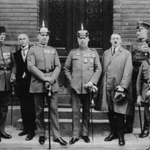
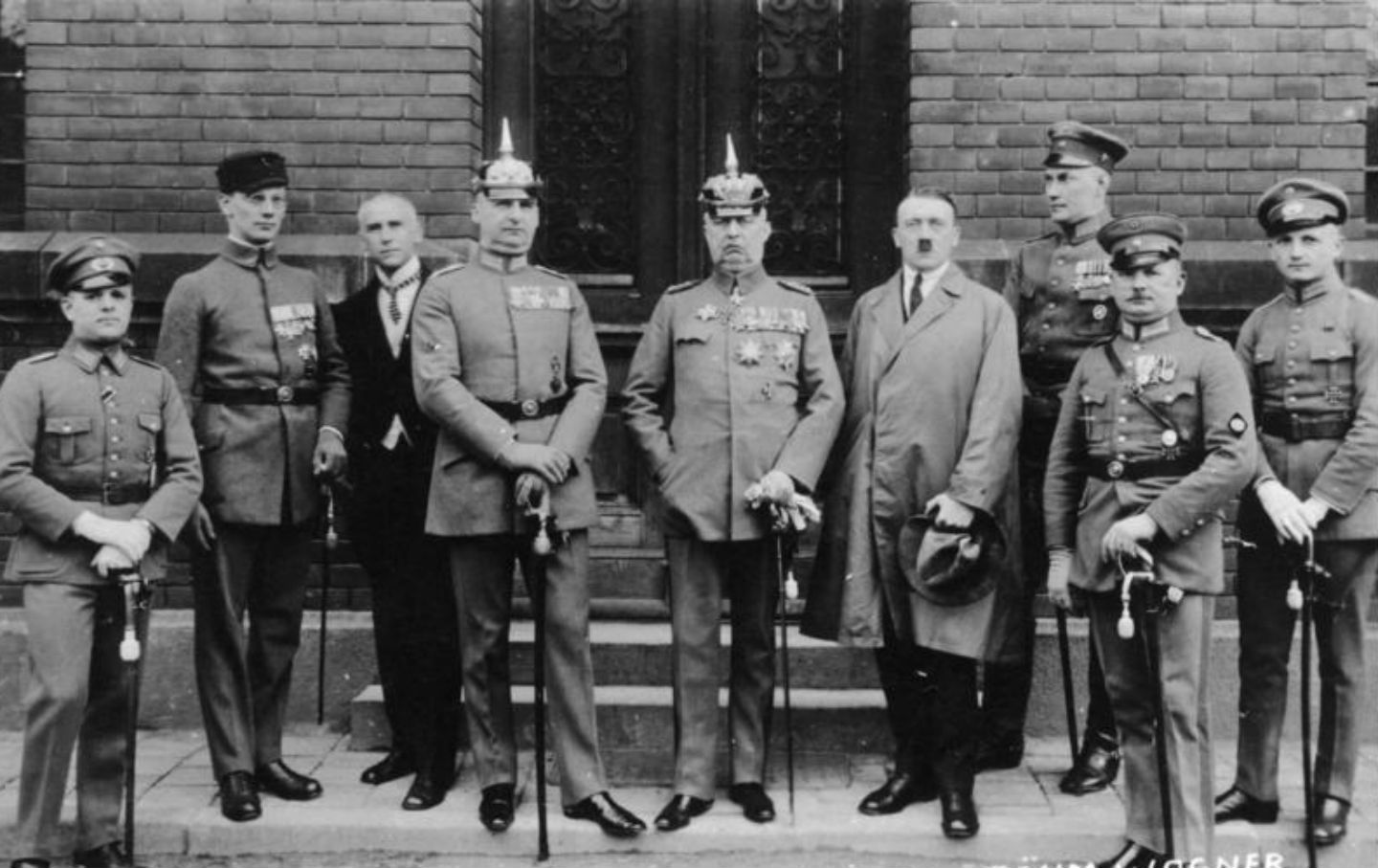
Below are defendants in the Beer Hall Putsch trial which took place in 1924 from left to right: Pernet, Weber, Frick, Kiebel, Ludendorff, Hitler, Bruckner, Röhm, and Wagner.
The first European to ever smoke was arrested and jailed for being possessed by the devil.
His name was Rodrigo de Jerez and he sailed with Columbus on his first voyage to the Americas in 1492. In Cuba, he watched the Taino people roll dried leaves, light them, and "drink the smoke."
He returned to Seville. Imagine the scene in 1493 as Rodrigo is walking down the street, puffing a cigar, with smoke coming out of his mouth and nose.
People lost their minds. They'd never seen a human breathe smoke. The only thing that breathed smoke was the devil.
His own neighbors were frightened and reported him to the Spanish Inquisition who jailed him.
He was charged with witchcraft and being possessed. Because "only the devil can give a man the power to breathe fire."
The same tribunals that were burning conversos and witches for heresy looked at a man smoking and thought: that's satanic.
The Taino thought smoking was sacred, healing, talking to the gods, whereas the Spanish thought it was the devil entering you.
By 1500, everyone in Seville was smoking as other sailors had brought it back. Realising he wasn't the devil, they let him out of prison in 1500.
The story of how Jerez first encountered smoking makes the whole thing more absured. Christopher Columbus, insisting that Cuba was part of China, had sent Jerez in search of either the Emperor of China, Hongzhi Emperor Zhu Youcheng, or the court of the Great Khan.

This is 200,000 year old chemistry.
Neanderthals were making glue from birch bark long before modern humans even showed up. No lab. No chemistry degree. Just fire, rocks, and insane ingenuity.
We really need to stop calling them dumb.
Would you have figured this out? 👇
On May 22, 1520, the "civilised" Spanish massacred the supposedly "uncivilised" Aztec elite in Tenochtitlan.
The Spanish first arrived in the Aztec capital, Tenochtitlan, in November 1519. The Aztecs welcomed them as honored guests.
Moctezuma II housed Spanish conquistador Hernan Cortés and his 500 men in the palace of Axayacatl. He fed them, gave them gifts of gold, and allowed them to stay in the sacred heart of the island city, even as tensions grew. However the occupying Spaniards took Moctezuma prisoner in order to exert control over the Aztecs leading to tensions between the two sides.
Then came the Feast of Toxcatl, one of the most sacred Aztec festivals. The temple courtyard was full of unarmed nobles, priests and warriors dancing in ceremonial dress.
Cortés had left the city to fight rival Spaniards. His deputy Pedro de Alvarado was in charge with about 80 men. During the festival, Alvarado locked the gates of the temple precinct and ordered his men to attack.
Hundreds of Aztecs were killed in a few hours. The Florentine Codex, written from Aztec survivors' testimony, says they cut off hands, heads, and struck down drummers first so the alarm couldn't be raised. Bodies piled in the courtyard, in the temple doorways where people tried to escape. Nobles, spectators and performers were all targeted.
Aztec sources called it a slaughter for gold. Spanish sources said Alvarado thought a revolt was planned but there is no evidence for that.
The Aztecs rose up in response the next day. A month later, Moctezuma II was killed, with differing accounts as to whether he was killed by locals angry about his deals with the Spanish or whether the Spanish killed him for failing to control his people. The Spanish were forced to flee the island during the night: La Noche Triste, losing more than half their force.
Cortés returned a year later with over 100,000 indigenous Tlaxcalan allies. Smallpox was already spreading among the Aztecs, and after a 93-day siege Tenochtitlan fell on August 13, 1521.
Which side was uncivilised again?
On a positive note, Alvarado was crushed by a horse in 1541 while attempting to quell a native revolt in Mexico, dying a few days later.

The opening battle of the Irish Civil War destroyed centuries of Irish history including priceless census records from before the Great Famine.
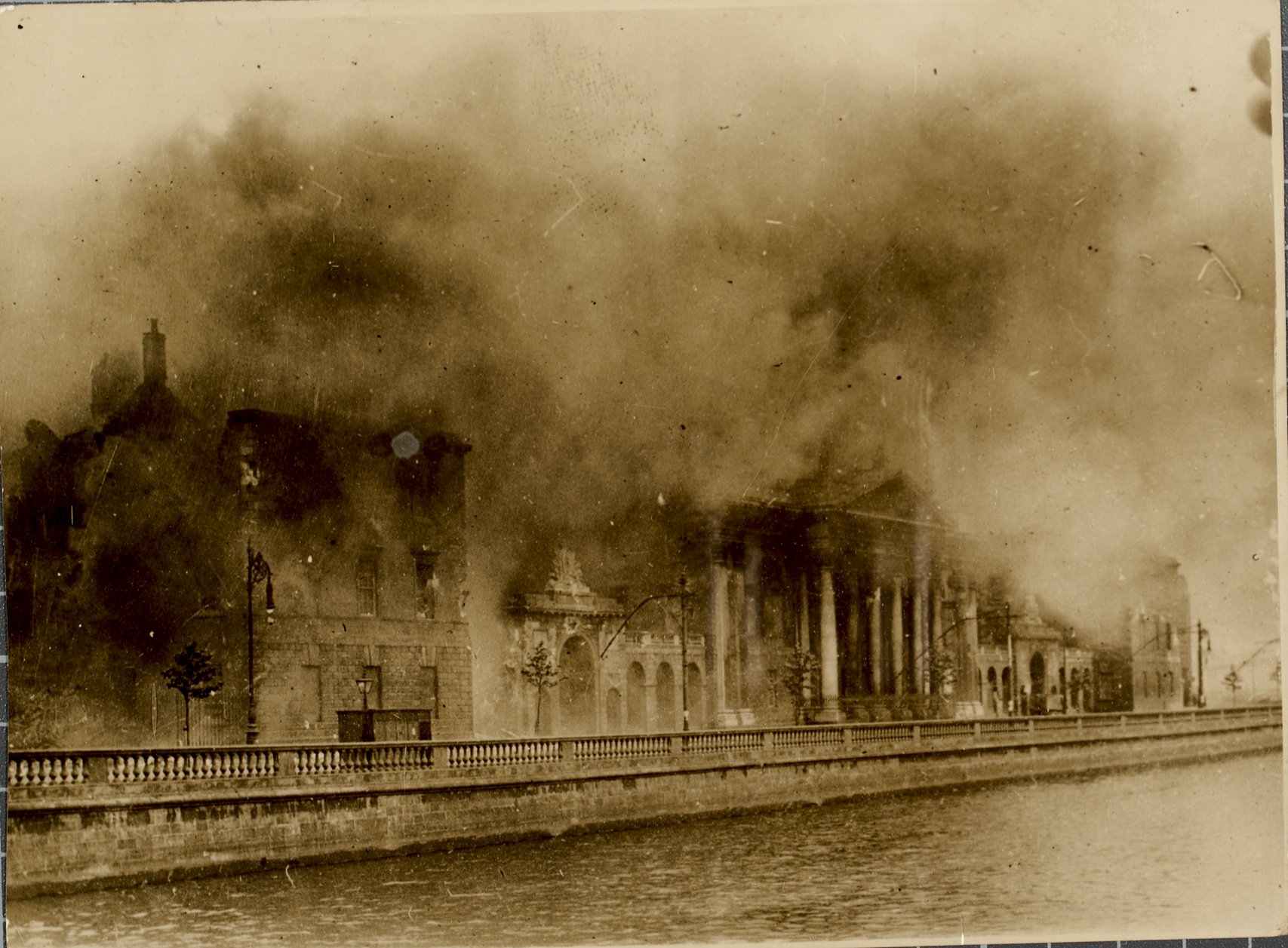
On 28 June 1922, the Irish Civil War began when the pro-Treaty National Army opened fire on anti-Treaty IRA forces occupying the Four Courts in Dublin since April 14. Beside the Four Courts stood Ireland's Public Record Office, containing an extraordinary collection of historical documents.
On 30 June, a massive explosion and fire devastated the Record Treasury, just before the anti-Treaty garrison at the Four Courts surrendered. What triggered the explosion and who caused it remains disputed.
Among the records lost were most of the surviving returns from the Irish censuses of 1821, 1831, 1841 and 1851.
I've thought often about how amazing it would have been to see these records.
The 1841 census recorded Ireland immediately before the Great Famine. The 1851 census recorded the country immediately afterwards. Ireland's population fell catastrophically between them through death and emigration, the worst years of the Famine.
Those original census returns could have allowed us to trace individual families and communities through one of the most important events in Irish history, and see who died and who survived.
Oscar Wilde's father, William Wilde, was assistant census commissioner for 1851 and used the data to compile a table of deaths, including how many died in each county. That data survives. More information here:
rte.ie/history/post-famine/2…
Who built the Great Pyramid? And what was its purpose?
Here's what we know:
About 90% of the core blocks for Khufu's pyramid came from the Giza Plateau itself, next to the pyramids. The Great Pyramid has 2.3 million of these limestone blocks averaging 2.5 tons each.
The brilliant white outer casing came from the Tura Quarries about 13km southeast of Giza, across the Nile. The tunnels there still have ancient inscriptions and tool marks. The Great Pyramid was encased in 144,000 highly polished white limestone casing stones which would have been visible for miles. A diary was found from a foreman named Merer who, in 2500 BC, wrote about delivering limestone to from Tura to the artificial harbour Ro-She Khufu at "Giza Horizon" for Pharaoh Khufu by boat.
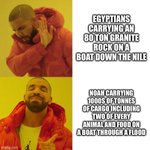
The giant granite blocks for the King's Chamber came from Aswan, 900km south of Giza along the Nile. This is the same quarry where the massive Unfinished Obelisk was quarried 1,000 years later. There were around 50 of these huge rose granite blocks inside the King's Chamber alone, weighing 40-60 tons each, plus another 43 massive beams at 70-80 tons stacked in 5 relieving chambers above it to stop the whole pyramid crushing the room.
All three quarries have the tool marks still in them today.
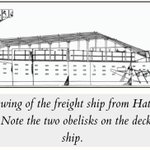
We can see from Egyptian drawings, such as in the Tomb of Djehutihotep (1900BC) how colossal statues, heavier than these granite blocks, were moved using wet sand sleds, ropes, and a lot of men, and a relief of Hatshepsut's expedition (1470 BC) showing her two 30m obelisks on a barge with 30 rowing boats towing it. No aliens, or people from an advanced civilisation, were depicted in the drawings. But from both of those we can learn how the blocks were moved by water and then by land.
The white limestone from Tura was floated straight down the Nile to Khufu's own articifical harbor known as Ro-She Khufu at the foot of the Giza Plateau, using man-made canals and dykes to bring the river to the pyramid.
They heavy granite from Aswan was floated down the Nile and they then took the same final leg as the white Tura limestone: through the canals to the artificial harbor at the foot of the plateau.
They used a straight external ramp for the base of the pyramid, zig-zag ramps hugging the sides for the middle, and an internal spiral ramp for the top, the shadow of which we can still see on scans today. Wet sand, ropes, and 20 to 30 men per block, about one block every two and a half minutes for 20 years.
What was the Great Pyramid's purpose? The massive sarcophagus inside might be a clue. The sarcophagus is 2.27m long, 0.98m wide, weighs about 3.75 tons and is made from the same rose granite from Aswan. Given it's too big to bring in through the chamber opening, it had to be placed there before the other rocks were put in place around it. So the Egyptians could not have added it later after they "found" the pyramid. Obviously, this sarcophagus was the centre point of the pyramid. There is zero evidence it's a data center or a power station. As someone who has been inside the pyramids, and for work, numerous data centers and power stations, I can confirm It looks absolutely nothing like those.
In 1837 Egyptologist Howard Vyse found red ochre graffiti in the relieving chambers above the King's Chamber. These rooms had been sealed since construction; he blew a hole using gunpowder to access them,. Thus, the graffiti had to be done during construction not later after the pyramid was "found". It says "The gang, The White Crown of Khufu is powerful" and "Khufu".
I have no idea where this "we couldn't build the pyramids today" nonsense comes from. A modern Big Carl crane can lift 5,000 tonnes to a height of 250m. The Great Pyramid is 146m tall and the heaviest stones are 80 tonnes. Our ships can carry 1,500 tons along a river. So yes we could build The Great Pyramid again pretty easily.
If we can only use the technologies available to ancient Egyptians, it would be difficult to find the manpower with the skill to make it today. But that goes for lots of things. It would also be difficult to find the manpower to run farms or hunt wild animals like ancient humans did without modern technology. What modern humans could hunt a mammoth using 15,000-year-old spears?
And please stop calling Ancient Egyptians primitive. They were as smart as us, but they had different skills. If someone from our era got in a time machine and went back to 2,500 years BC, Egyptians might call us primitive because of our inability to hunt, navigate by the stars, move heavy blocks, work the fields with our hands, throw a spear far, etc.
So yes, the ancient Egyptians built the Great Pyramid as a burial place for the Pharaoh Khufu in 2500BC.
Why did they stop building pyramids? I'll cover that in a post next week.

Why did Neanderthals carry Homo sapiens DNA 200,000 years before we settled in Europe?
It's well known now that humans and Neanderthals mixed 45,000 years ago right before they vanished.
But 200,000 years before that, an ancient group of Homo sapiens overwrote Neanderthal genetics.
Neanderthals and Denisovans are sister species, so their mitochondrial DNA should look identical. Instead, late Neanderthal fossils show maternal DNA and Y chromosomes that look almost modern human.
Because Neanderthals lived in small, isolated family bands, harmful mutations piled up in their genomes over generations (Muller’s ratchet). When we crossed paths with them 250,000 years ago, our cleaner, more diverse genetic lines were an evolutionary upgrade. Natural selection favored the sapians lines so strongly that they completely wiped out and replaced the original Neanderthal versions across Eurasia. Even though we homo sapians didn't last long in Eurasia back then, our DNA did.
When modern humans expanded into Europe 50,000 years ago, we weren't meeting strangers. We were meeting distant cousins who had already been carrying our DNA for hundreds of thousands of years. Which is why mating may have been so common at that time: we weren't that different.
Neanderthals even looked different from how they had 200,000 years earlier. The infamous Neanderthal brow ridge had become far more pronounced, and they had gone from being tall with long limbs to having short shins and forearms, thick-walled bones and a wide barrel ribcage. Amazingly, their brains had gone from being smaller than those of Homo sapiens to now being larger. It's possible there were other changes to their behaviour that we may never know about.

Nearly 2,000 years ago, one of Rome’s wealthiest men ordered a slave to be thrown into a pool of predatory fish, for the crime of breaking a drinking cup.
The wealthy Roman was Vedius Pollio, a friend of Emperor Augustus. Pollio kept a pool of ravenous fish, traditionally identified as moray eels, which he reportedly used to execute enslaved people.
During a dinner attended by Augustus, an enslaved servant accidentally broke a valuable crystal cup.
Pollio was furious. He ordered the servant thrown into the pool to be devoured.
Terrified, the slave escaped his guards and threw himself at Augustus’s feet, begging for mercy.
He didn’t even ask to be spared death. He simply begged to die in a less horrific way.
The emperor ordered the slave released.
Then, to humiliate Pollio, he commanded that all his valuable crystal drinking vessels be smashed in front of him.
According to the ancient accounts, Augustus also ordered the fishpond filled in.
The slave’s life was spared.
But there’s an important twist: Augustus himself owned slaves. His intervention was an extraordinary act of mercy within a society where slavery remained completely legal.
The incident occurred sometime before Vedius Pollio died in 15 BC, although the exact year is unknown.
Ironically, Pollio himself was the son of a freed slave. You might think that would provide him with empathy for his own slaves. Actually, former slaves and their families often became the most cruel of slave masters in Ancient Rome.
The Christian writer Tertullian stated that after executing slaves, Vedius had his eels "cooked straight away, so that in their entrails he himself might have a taste of his slaves' bodies too"
Cicero wrote of Pollio “I never saw a more worthless man”.

This is Ireland’s largest stone circle. It is over 4,000 years old and has at least one stone is 40 tons, as large as some of the granite rocks used for the King’s Chamber in the Great Pyramid.
Grange Stone Circle, near Lough Gur in County Limerick, measures approximately 45 metres across and contains over 100 standing stones.
Built during the Bronze Age, it may have been a place for ceremonies, rituals and community gatherings.
But why did ancient people go to such enormous lengths to build it?
The first real world war was the Seven Years' War (1756–1763), and Irishmen fought on both sides.
Ireland was the Kingdom of Ireland, ruled by Britain under the same king. Ireland itself was not a battlefield during the Seven Years' War but Irish people were everywhere in the war:
1. They fought for Britain
Thousands of Irishmen served in the British Army forces. Many were poor Protestant and Catholic recruits who joined because the Irish economy collapsed during the war as France cut off trade and linen prices crashed. The regiments that took Canada from France at Quebec in 1759 had hundreds of Irish-born soldiers.
2. Against Britain — the Wild Geese (pictured in service of Spain)
On the other side were descendants of the Wild Geese. These were Irish Catholics who had entered continental European military service following the Williamite War and the Treaty of Limerick and resulting Penal Laws against Catholics. France maintained its famous Irish Brigade known as La Brigade Irlandaise.
In the Seven Years' War they fought against Britain:
At Rossbach in 1757, where they were in the French army that Frederick the Great destroyed.
At Lutterberg and other battles in Germany, where Irish names are on the French casualty lists.
They still had the motto: "Cuimhnigí ar Luimneach" — Remember Limerick.
War with France disrupted centuries-old commercial and family connections between Ireland and France. In 1757, for example, a ship carrying 125 private letters from the Irish community around Bordeaux to families and associates in Dublin, Cork, Limerick and Galway was intercepted during the wartime crackdown on trade with France.

No, Hitler wasn’t a socialist. He exerted less control over private property during WW2 than US, Britain and Japan. They all confiscated war profits through very high taxes whereas German businessmen got very rich.
Anyway the idea that left and right is defined by how much government controls society is a recent American thing.
The concept of left and right goes back to the French Revolution and the right has always, by definition, sought to have a lot of control over society via dictatorship and monarchies and Hitler epitomised that with his control over society.
The American right has tried to re-define what right wing means by saying they don’t interfere with private property even though they don’t live by it. Trump has exerted plenty of pressure on companies when it suits him.