

Protein Peter 🍳 PhD at Stanford Ting lab
Joined January 2021
- Tweets37
- Following242
- Followers164
- Likes640



Peter E Cavanagh retweeted

Next Tues (3/3) at 4PM ET, @PeterECavanagh
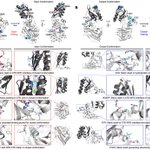
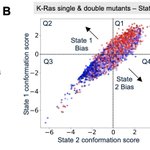
and Andrew Xue will present "Computational design of conformation-biasing mutations to alter protein functions"
Paper: science.org/doi/10.1126/scie…
Then, on Wed (3/4) at 4PM ET, @sarahgurev will give an early-career talk!
Peter E Cavanagh retweeted

Excited to share the first paper from my lab in @Nature ! We repurposed the widely used research tool, proximity labeling, to demonstrate its therapeutic potential in antigen amplification for immunotherapy using mouse tumor models and patient samples.
nature.com/articles/s41586-0…

Peter E Cavanagh retweeted

So excited to share our work developing a new class of modular synthetic GPCRs, out today @Nature! Check it out nature.com/articles/s41586-0…
Synthetic receptors that mediate antigen-dependent cell responses are transforming therapeutics, drug discovery and basic research. However, established technologies such as chimeric antigen receptors can only detect immobilized antigens, have limited output scope and lack built-in drug control. Here we engineer synthetic G-protein-coupled receptors (GPCRs) that are capable of driving a wide range of native or non-native cellular processes in response to a user-defined antigen. We achieve modular antigen gating by engineering and fusing a conditional auto-inhibitory domain onto GPCR scaffolds. Antigen binding to a fused nanobody relieves auto-inhibition and enables receptor activation by drug, thus generating programmable antigen-gated G-protein-coupled engineered receptors (PAGERs). We create PAGERs that are responsive to more than a dozen biologically and therapeutically important soluble and cell-surface antigens in a single step from corresponding nanobody binders. Different PAGER scaffolds allow antigen binding to drive transgene expression, real-time fluorescence or endogenous G-protein activation, enabling control of diverse cellular functions. We demonstrate multiple applications of PAGER, including induction of T cell migration along a soluble antigen gradient, control of macrophage differentiation, secretion of therapeutic antibodies and inhibition of neuronal activity in mouse brain slices. Owing to its modular design and generalizability, we expect PAGERs to have broad utility in discovery and translational science.
Huge thanks to my advisor and mentor @aliceyting, fellow Ting lab members and co-authors @ReikaTei, @MatthewRavalin, Bo Cai, and of course, our amazing collaborators @yulonglilab, Yuqi Yan, @SolteszLab, and Peter Klein.

Could one envision a synthetic receptor technology that is fully programmable, able to detect diverse extracellular antigens – both soluble and cell-attached – and convert that recognition into a wide range of intracellular responses, from transgene expression and real-time fluorescence to modulation of innate cell behavior (excitation or inhibition of neurons, induction of cell migration, etc.)?
Today we report in Nature a new technology platform that provides a step in that direction: PAGERs, for Programmable Antigen-gated G protein-coupled Engineered Receptors, convert recognition of extracellular soluble or cell-attached antigens into diverse user-selected responses. PAGERs are based on G-protein coupled receptors (GPCRs), which themselves are not structurally modular, but we were able to build in modular antigen gating by fusing an antagonist peptide to the extracellular N-terminal end, and then gating the antagonist with a fused antigen-binding nanobody. When antigen binds, it sterically interferes with the antagonist, leading to relief of receptor inhibition. Drug or agonist can then turn on PAGER.
nature.com/articles/s41586-0…

Peter E Cavanagh retweeted

And it’s out! Our lab’s very first paper is published today @naturemethods!
Our calcium-activated split-TurboID (CaST) can biochemically tag activated neurons within 10 minutes, enabling a molecular handle on functionally relevant cell ensembles: tinyurl.com/ddyecxze

Excited to share the first paper from our lab! tinyurl.com/5n7fvwvh We engineered a new kind of time-gated calcium integrator, CaST, that can rapidly and non-invasively tag activated neurons in vivo with a small, biochemical handle. What makes this tool special and unique? 1/6

Peter E Cavanagh retweeted

We're proud to announce #BaseFold, an #AI model that improves 3D protein structure prediction by up to 6X and small mol docking by up to 3X when compared to #AlphaFold2 - DM us to see how we can accelerate your #drugdiscovery / #proteinengineering efforts: pharmaphorum.com/news/baseca…

Peter E Cavanagh retweeted

We are recruiting! Open projects related to enzyme engineering, protein directed evolution, computational protein design, spatial proteomics, RNA tools, protein therapeutics, and molecular technology development for cell biology and neuroscience.
We especially welcome trainees with backgrounds in chemical biology, machine learning, enzyme biochemistry, and molecular biology to join our team! We value diversity and aim to foster an inclusive and supportive environment for trainees. Please reach out to [email protected] to learn more!
Peter E Cavanagh retweeted

In some new work (the first from the new lab!), we lay out a vision for a biological foundation model that unites DNA, RNA, and protein modalities and operates at molecular, systems, and genome levels of scale.
Blog: arcinstitute.org/news/blog/e…
Preprint: arcinstitute.org/manuscripts…

Peter E Cavanagh retweeted

I’m proud to share my new research in @Nature this week, co-led by @hammy_oh, where we develop blood tests to track how your organs age! “But Jarod, why should I care? What can we really do with this?” Here are 3 ways we think this will be useful in science and medicine! 1/10

Peter E Cavanagh retweeted

Check out our paper and the accompanying perspective by Kuhlman published today in @ScienceMagazine about the surprising role of short tandem repeats in regulating eukaryotic transcription!
science.org/doi/10.1126/scie…
science.org/doi/10.1126/scie…
A thread (1/11):

Peter E Cavanagh retweeted
Delighted to share that I will be starting a research laboratory as a professor at @StanfordEng ChemE and @StanfordData, in collaboration with @arcinstitute. The lab will work on aligning biological AI with human good. evodesign.org/

Peter E Cavanagh retweeted

thrilled to see TransitID out! It has been an incredible and unforgettable journey collaborating with an amazing team. A million thanks to my mentor, Alice. This marks a great milestone as a postdoc, and I am eagerly looking forward to embarking on new adventures at Tsinghua.
TransitID is out today in Cell! This is a proximity labeling method for unbiased discovery of endogenous proteins that traffick from a defined “source” location to a defined “destination” location. TransitID uses sequential labeling by TurboID in the source, followed by a chase period (minutes to hours) and then 1-minute APEX tagging in the destination compartment. Proteins tagged by both enzymes are enriched with streptavidin and anti-fluorescein antibody, and identified by mass spec.
We explore 4 intracellular and intercellular applications of TransitID:
- discovery of locally translated mitochondrial proteins (translated at OMM, then imported into mito matrix)
- mapping proteins whose cytoplasm-to-nucleus shuttling is dampened by stress
- discovery of proteins that transit between nucleolus & stress granules during stress & stress recovery
- analysis of proteins that traffic intercellularly bw tumor cells & macrophages
Work of amazingly talented co-first authors @WeiQinChemBio and @CheahJoleen, and collaborators Steve Carr @namude & Paul Taylor
authors.elsevier.com/a/1hKLc…

Peter E Cavanagh retweeted

Our work about superPLD is now published! In this paper, we describe how we can harness mammalian cell-based directed evolution to engineer a membrane editor (phospholipase D; PLD) with superior performance in mammalian cells. 1/n nature.com/articles/s41557-0…

Peter E Cavanagh retweeted
I was taken by surprise this morning when congratulatory emails started arriving in my inbox. I'm incredibly honored, grateful, and humbled to be included among such an esteemed group of scientists, many of whom I’ve admired for decades.
While this recognition is individual, science is fundamentally a collaborative and team effort. I wish to express my heartfelt gratitude to my extraordinary trainees whose talent, creativity, resourcefulness and persistence have built everything that our lab is known for and taken our research in directions I had never imagined; to my mentors who ignited my curiosity and led by example; to my collaborators who have introduced me to new fields and inspired me with the beauty of their science; to my colleagues who have so generously supported and advocated for me time and again; and to the community of cell biologists, molecular biologists, and neuroscientists who have trusted and incorporated our technologies into their research, given us invaluable feedback, and inspired us to continue building.
Being able to do science, to expand human understanding of the natural world, is an enormous privilege and joy. I can't wait to see what the future holds for molecular technologies that enable scientists to probe proteins, RNA, and living systems in new ways!
This Post is from an account that no longer exists. Learn more
Peter E Cavanagh retweeted
The ESM-2 + ESMFold + ESM Atlas paper is now published!

In a Science study, @MetaAI researchers show the power of a large language model, #ESMFold, to enable protein structure prediction and analysis.
Using ESMFold, they generated a database—the ESM Metagenomic Atlas—of over 600 million metagenomic proteins. scim.ag/1Uv

Peter E Cavanagh retweeted

Out online today @J_A_C_S. A big thank you (again) to co-first author @heegwangroh, our mentor the inimitable @aliceyting, and our awesome collaborators @TheOttLab @GladstoneInst and John Pak @czbiohub. pubs.acs.org/doi/10.1021/jac…

Peter E Cavanagh retweeted
Want to learn about modern tools for quantifying aging? Check out this review I wrote for @NatureRevGenet with @wysscoray and @hammy_oh! nature.com/articles/s41576-0…
Peter E Cavanagh retweeted
We wrote a proximity labeling (PL) review to highlight all the exciting applications of PL to protein-protein & protein-RNA/DNA interaction mapping. See examples of PL applied to enzyme-substrate interactions, insoluble baits, dynamic PPI networks & multifunctional proteins.
