



tx:native
Very Awesome Finding @EireeCrypto
Link 🔗
a-teaminsight.com/category/s…
Still People dont understand what the ATS integration from Texture Capital have to do with Solotex! 3..2..1 Let’s GO👇🏻👇🏻👇🏻👇🏻👇🏻
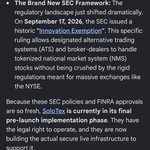
A classic Alternative Trading System (ATS) is inherently designed as an exclusive marketplace for institutional investors. This setup is rooted in fundamental regulatory and structural factors. Only with the emergence of SoloTex has this rigid framework been broken open for everyday retail investors.
The Institutional Foundation: Why a Classic ATS Excludes Retail Investors
A traditional ATS (such as the Tradecraft ATS developed by Texture Capital and Obsidian Systems) operates as a private, regulated trading venue separate from public stock exchanges. It is optimized strictly for institutions for three core reasons:
• Preventing Market Impact (Dark Pools): Institutional players trade massive blocks of shares. If they placed these orders on a public exchange, the stock price would instantly spike or crash. An ATS allows them to match buyers and sellers anonymously, keeping the trade hidden until execution to preserve market stability.
• Exemption from Prospectus Requirements: Most assets on a crypto-native ATS are unregistered securities, such as private placements, tokenized real estate, or fund shares. Regulators permit these to be traded without expensive, publicly disclosed prospectuses only if the participants are professional entities (banks, hedge funds) who do not legally require retail-level consumer protection.
• Complex Infrastructure: Accessing a traditional ATS requires connecting to private, permissioned ledgers (like the Canton Network) and navigating intricate clearing and settlement protocols that a retail investor cannot technically or legally support.
Why Exactly SoloTex is the Only Viable Solution for Retail
Bringing the benefits of tokenization—such as 24/7 trading, instant on-chain settlement, and self-custody—to retail investors causes most projects to fail under strict US securities laws.
SoloTex (a joint venture between Texture Capital and the TX Ecosystem) is the only model that fits because it completely re-engineered the regulatory foundation of an ATS for the public market:
• FINRA Retail Approval: Texture Capital secured explicit approval from FINRA to facilitate retail equity trading. Instead of limiting their broker-dealer license to institutions, they use it to cover the strict investor protection, KYC (Know Your Customer), and AML (Anti-Money Laundering) requirements mandated for everyday retail users.
• Real Backing vs. Synthetic Derivatives: Offshore crypto platforms often offer retail users synthetic tokens that merely mimic a stock's price. SoloTex mints genuine Stock Tokens. When a retail investor buys a token, a real US equity share is purchased and held 1:1 at a traditional US custodian (like the DTCC). The retail investor retains true shareholder rights, including dividends.
• Seamless Stablecoin Bridge: The platform is natively built for the Web3 public, allowing users to buy stock tokens directly with USDC. SoloTex handles the automated backend conversion into fiat US dollars to purchase the underlying assets at Wall Street execution speeds.
In summary: A traditional ATS remains a locked club for institutions. SoloTex is the only model that opens this door because it merges the heavy-duty compliance framework of a US broker-dealer with the consumer-facing Web3 technology of the TX Ecosystem.

tx:native
20 companies have opposed OKXICE’s TSV while none have opposed TSV LLC’s (Obsidian). There’s a key distinction here:
🔹 OKXICE: Plans to tokenize existing U.S. equities through a third party, without requiring issuer authorization. Multiple companies have objected, raising concerns about unauthorized tokenization and shareholder rights.
🔹 TSV LLC (Obsidian): Plans to work directly with issuers and their transfer agents to tokenize shares, preserving legally recognized ownership, voting rights and corporate actions before enabling secondary trading through an AMM.
Obsidians compliant first approach is very in line @txEcosystem’s and this may not be a coincidence.
We know that Obsidian is linked to Texture Capital. This could be @SoloTex_com’s link to testing secondary trading through Obsidians TSV.
SoloTex is ready to go with 5k tokenized equities from day one. The team has spoke a lot about wanting approval for secondary trading - Could the link to Obsidian and their TSV be the planned approach?
$TX
The new Regulation under Genius Act for Stablecoins should not be underestimated.👇🏻👇🏻
Industry estimates suggest that a significant portion of smaller issuers (roughly 50–70% of today’s small ones) will either:
• shut down,
• get acquired, or
• operate only outside the U.S.
Brale-issued stablecoins (like USTX) are being built to comply with the GENIUS Act from the start.
This is important because starting January 18, 2027, only “permitted” stablecoin issuers will be allowed to issue payment stablecoins in the U.S.
By designing their infrastructure to meet GENIUS Act requirements early, Brale makes their stablecoins more future-proof and more attractive for banks, institutions, and regulated platforms that will need compliant dollar instruments.
After that US considers plan to promote dollar-backed crypto stablecoins worldwide.
Means Liquid comes into the choosen one, means also first Time in History with Real Life Usecase of Banks ore Stock Exchanges 🚀🌋


Im out of Gold but very interesting ore just noice? If it works and Peace comes out of nothing in Ukraine&Iran. Gold🛑 BTC🟢

Last month, we demonstrated high-rate alchemy: turning mercury into real, stable gold, beating CERN’s record by a factor of 10.
Last week, we enriched isotopes in the world’s most powerful plasma centrifuge, beating the Soviet record that stood for 40 years.
Now, we’re building a fusion reactor in San Francisco to achieve record power density.
tx:native
RWA & Scale Mode incoming🚂💭

USTX is live. Now we build on it.
Yesterday’s launch brings another piece of our tokenization vision to life.
Wallet ✅
Native liquidity ✅
RWAs & scale mode: incoming 🚀
Issued by @brale_xyz, USTX brings native dollar liquidity to tx - our next step in building TVL and a settlement layer for tokenized stocks and other RWAs.
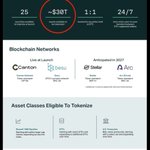
The opportunity is substantial: roughly $300 billion in stablecoins today, with trillions projected in the next few years.
We’re building tx to compete for that capital.
Our plans include USTX integrations and listings, vault opportunities, and additional user rewards. We also plan to support more chains and stablecoins, giving capital more ways into the tx ecosystem. USTX will continue to evolve and grow, serving as the foundation for everything to come.
These pieces are coming together with one goal: make tx a destination for capital and the assets people want to own.
tx:native
Retail via SoloTex / tx
👇🏻👇🏻👇🏻
texture.capital/public-stock…
Institutional via Tradecraft ATS / Canton
👇🏻👇🏻👇🏻

Coming soon: Tradecraft ATS.
A U.S.-regulated secondary market for tokenized securities, native to Canton.
Operated by Texture Capital (member FINRA). Built with Obsidian Systems @tradecraftfi.
FINRA BrokerCheck: brokercheck.finra.org/firm/s…

tx:native canton-network:native
Texture Capital is actively expanding the Canton connection – with the Tradecraft ATS as a regulated trading platform for tokenized securities directly on Canton.
At the same time, the partnership with tx (SoloTex) remains in place. They are expanding in both directions:
• Retail via SoloTex / tx
• Institutional via Tradecraft ATS / Canton
Is Tradecraft for Retail? No! Read Below


tx:native
binance.com/en/square/post/3…

tx:native
@Charpy2os amazing Research😂🕵️♂️
Get Rdy for something Big🥵


The hidden architecture is locking into place. This BBVA/Santander update links directly into the U.S. banking framework via Webster Bank and Texture Capital.
In August 2026, global banking giant Santander (a key Ripple partner) swallowed Webster Financial for $12.3B, anchoring an institutional blockchain ally to a major U.S. balance sheet.
Crucially, Webster Bank is an investor in Texture Capital, which is building out the SoloTex tokenization platform on the tx:native network. By also operating a validator node on the Canton Network, Texture quietly bridges these asset layers straight into the DTCC's tokenization platform.
The roots are unifying. #MarketStructure


tx:native
As part of its institutional architecture of @txEcosystem , the network relies on @FireblocksHQ to provide secure, institutional-grade multi-party computation (MPC) wallet infrastructure and digital asset custody.
The Role of Fireblocks in the Ecosystem
Fireblocks serves as one of the central pillars for institutional custody and security within the platform:
•Direct Wallet Integration: Fireblocks provides full MPC wallet and custody solutions for the ecosystem.
•Institutional Liquidity: Banks, asset managers, and crypto exchanges utilizing Fireblocks' infrastructure can natively hold assets and securely execute transactions on the tx network.
•Protocol-Driven Compliance: Integrating Fireblocks (alongside partners like BitGo) ensures that the custodied tokens meet the strict standards required by traditional financial markets.
‼️THE DTCC’S TOKENIZATION SERVICE GOES LIVE OCTOBER 28TH‼️
This is the first public confirmation from a participant of the DTCC Working Group regarding the official launch date.
10/28✅
This is directly from Fireblocks’ own John Hallahan. 🤝
Remember, Fireblocks directly supports XRP, XLM and HBAR 😏💨
He also goes on to state that:
"We're working with several of the participants along with Citadel and being READY FOR THAT DATE”🗓️
"You'd expect to see some really interesting trades happening from the end of this month."🔥
A golden discovery that remained unknown to 99%.😶🌫️
Until now.☝️
Watch closely.🍿👇


tx:native
📖very nice writen @IBSvalidator

A TOKEN is not a MARKET.
Tokenizing an asset is getting easier.
Making it actually trade? That's another story.
@PanteraCapital 's September 2026 report reveals a striking gap:
41% of tracked tokenized asset value generated 99.8% of observed spot trading.
What does this tell us about the future of RWAs, and why is @txEcosystem building around this challenge?
Let's unpack it. 🧵👇
--
1️⃣ 🏗️ A token is not a market
Imagine building an entire city.
Beautiful buildings. Modern infrastructure. Everything connected.
But there's a problem.
The roads are empty.
That's what can happen with tokenized real-world assets.
Putting stocks, bonds or funds onchain creates digital representations.
But functioning markets also need:
• Eligible buyers and sellers
• Trading venues
• Market makers
• Reliable settlement
• Sufficient liquidity
A token can exist without a meaningful secondary market around it.
--
2️⃣ 📊 The 99.8% paradox
Pantera studied 110 non-stablecoin tokenized products, each worth at least $10M.
In June 2026:
🟢 Open-access products:
• 41% of tracked value
• 99.8% of observed spot trading
🔒 Permissioned products:
• 59% of tracked value
• Just 0.2% of observed spot trading
And 46 of 48 whitelist-only products recorded less than 1% monthly spot turnover.
An enormous difference.
But there's an important nuance. 👇
--
3️⃣ 🚧 Why do permissioned markets struggle?
Imagine a financial highway where every vehicle needs special authorization.
The buyer is approved.
But what about the seller? The trading venue? The liquidity pool? Its settlement address?
For whitelist-only assets, these restrictions can prevent ordinary public trading pools from operating.
Yet permissioned doesn't automatically mean illiquid.
Many Treasury funds are designed to earn yield and offer redemptions, rather than trade constantly.
Different assets need different market infrastructure.
--
4️⃣ 💧 Liquidity needs more than an open road
Only 29 of the 110 products passed Pantera's trading-activity and holder-distribution tests.
All 29 were open-access.
But unrestricted transfers don't guarantee liquidity.
Someone still needs to provide capital, quote prices and absorb orders.
And for assets that rarely trade, traditional AMM incentives may not be enough.
The familiar chicken-and-egg problem:
Low volume → fewer fees → less liquidity → even less trading.
Solutions may include dedicated market makers, request-for-quote execution or reliable issuer redemptions.
--
5️⃣ ⚙️ This is where TX enters the picture
@txEcosystem approaches this challenge from the infrastructure side.
Born from the convergence of Coreum and Sologenic, TX aims to bring together:
🔐 Identity and compliance
🏦 Institutional custody
🤝 Market making
📈 Regulated trading infrastructure
⚡ Blockchain settlement
TX identifies BitGo for custody, Keyrock for market making, and SoloTex under development with SEC-registered broker-dealer Texture Capital.
The ambition?
Connect the pieces needed to turn tokenized assets into usable financial markets.
Not just create more tokens.
--
6️⃣ 🛂 Compliance at the entrance
Imagine entering an airport.
Your identity and eligibility are checked before you enter the secure area.
Once inside, you don't repeat the entire process at every shop.
TX proposes a similar principle:
Verify eligibility at the access layer, then allow supported assets to circulate within an appropriately controlled ecosystem.
Its Cosmos-based Layer 1 also inherits Smart Token capabilities, including programmable transfer restrictions and issuer controls.
Financial rules don't magically disappear, of course.
Every asset and venue must still satisfy applicable requirements.
The goal is to make compliance compatible with efficient market activity.
--
7️⃣ 💵 Why USTX matters
Stablecoins represented $295.5B, or 89.1% of tracked tokenized market value at the end of June, according to Pantera.
Why?
Because the dollar remains the common language of onchain finance.
Assets are priced in dollars.
Liquidity is quoted in dollars.
Collateral and settlement frequently rely on dollar-denominated instruments.
This helps explain TX's introduction of USTX as a native dollar settlement asset.
A marketplace needs assets to trade.
It also needs reliable money to trade them against.
--
8️⃣ 📈 Demand exists. But where is it going?
Pantera uncovered another fascinating contrast.
In June:
• $67.8B in equity perpetual trading on Hyperliquid and Lighter
• $4.2B in observed tokenized-equity spot trading
That's approximately 16× more activity in synthetic exposure.
Perpetual traders can speculate on equity prices without owning tokenized shares.
Leverage and repeated trading amplify these figures, so they don't represent equivalent invested capital.
But the contrast is revealing:
Demand for onchain financial exposure is growing, while liquid markets for direct tokenized ownership remain a challenge.
--
9️⃣ 🌉 From tokenized assets to functioning markets
The next phase of RWA adoption will be measured by more than issuance announcements.
The questions become practical:
• Can investors access the asset?
• Can they trade it at a reasonable price?
• Can they redeem it?
• Can they use it as collateral?
• Can the infrastructure support these activities reliably?
This is the challenge @txEcosystem is positioning itself to address.
Its architecture and partnerships provide a roadmap.
Actual liquidity, adoption and market activity will determine how successfully that vision translates into reality.
For validators and infrastructure operators, the lesson is clear:
A financial market needs more than tokens. It needs dependable rails, participants and liquidity.
The next chapter of tokenization won't be written by issuance numbers alone.
It will be written by what those assets can actually do. 🌐
#TX #RWA #Tokenization tx:native

tx:native
Mein erster und einer der wenigen Posts hier auf X mit meinen Gedanken 💭 Sich jetzt nicht für Blockchain zu interessieren und investieren ist wie 1993 als Mosaic das erste mal World Wide Wep massentauglich machte.
Vll ist es immernoch zu früh aber 2027 sollen die ersten Digitalen IDs kommen. Ob mir das gefällt? Nein aber ich kann es nicht verhindern. Ich muss sehen was lässt sich in eine 🆔 integrieren ein Bankkonto eine Wallet? $TX hat den focus die Real Worl Assets in deiner eigenen Wallet zu verwalten. Das sind Schritte die werden auf uns zu kommen genauso wie Elon Musk heute das erste mal mit einem Auto einen Sideflip macht😂
Was man mit der ID dann später alles machen kann ist und wird erschreckend.
Der gläserne Mensch voll Programmiert.
