

⏳ Clocking in daily while building a way out 📈 Swing trading & stock investing to accelerate my FIRE journey 🎯 9-5 → Financial freedom ⚠️ NFA | DYOR
🌎 Anywhere from the world
Joined May 2024
- Tweets1.9K
- Following106
- Followers122
- Likes10.7K


Catherine retweeted

These ridiculous articles about Jensen being a tough boss make me optimistic that he will be back soon. Especially given the NYT and FT articles about how the US Government approved their China sales. What are we even talking about?
I will also say that in @atreidesmgmt venture practice we have invested in companies that successfully recruited good people out of almost every major semiconductor company, but we essentially never see good people leave Nvidia. This is the ultimate testament to Jensen as a CEO along with the quantitative Glassdoor data.
Obviously the negative articles about Jensen’s family are in incredibly poor taste and a deeply negative reflection on what seems like an organized effort to prevent Jensen’s return.
Whoever is leaking this stuff to the press is helping Jensen with shareholders. Just terrible judgment.
Also funny that immediately after the Nvidia call where they said they were not considering reinstating Jensen as CEO that Semafor ran an article about how a faction of the board wanted him back.
If you are at Nvidia, I think the odds are growing by the day that Jensen is back sooner rather than later.

Catherine retweeted

BREAKING: Gold falls below $3,550/oz and silver falls below $42/oz as the selloff gains momentum.
Gold and silver have now lost a combined -$15 trillion in market cap from their record highs.


Catherine retweeted

Thrilled to announce $5B in funding for @IsomorphicLabs to accelerate our mission to Solve All Disease. We continue to make rapid progress reimagining drug design from first principles with AI to radically cut the time & cost to find new medicines. Gradually, then all at once...
Catherine retweeted

I believe the @nvidia board is not acting in the best interest of shareholders nor in a manner consistent with their fiduciary duties.
What we know is that the board fired Jensen or forced his resignation for violating company policy and/or in response to the accusation of an affair with a spy.
They did so without careful consideration of the impact on the company, its customers, its shareholders or other stakeholders.
They rushed to judgment without the benefit of careful due diligence or even with a basic understanding of the facts.
How do we know this?
We know this by how quickly Jensen was fired and how little was known at the time of his firing.
It takes time to convene a board meeting. There was time, maybe, for one Zoom.
And this is a decision that should have been made by a board sitting in person and carefully deliberating the facts once they are known.
And they should have slept on the decision and met again the day after to discuss the facts, the risks and the other implications of their decision.
The timing and lack of information did not allow for careful board deliberation.
While boards can fire a CEO for an inappropriate relationship with a subordinate, it should not be an automatic decision. That is why we have boards comprised of humans and not agents.
A board should consider whether or not such a relationship was consensual or whether it was an abuse of power dynamics. And a board has to consider what the impact of the firing is on all stakeholders.
If I were in this board, I would not have rushed to judgment based on articles in the media. I would have made sure the board had all of the facts so it could make a careful and informed decision.
Boards of Delaware companies have a duty of care which means they must make informed, prudent and good faith decisions. This clearly did not happen here.
What law firm is advising this board?
Or is the board even taken good legal advice?
It doesn’t look like it.
And now the board is compounding its failures by insisting that there is no possibility for Jensen’s return as CEO.
Why is it in the best interest of the company to foreclose the possibility of Jensen’s return and to do so before all of the facts are known? This is yet another breach of their duty of care.
Furthermore, the board has launched an investigation whose scope is unknown. Investigations can be extremely damaging to a company and should be carefully targeted to address whatever facts need to be known rather than be overly broad in scope.
In short, this looks like a series of major governance failures by directors that panicked due to headlines in the media. They likely felt compelled to do something because they were afraid of looking bad in the media, not because it was the right thing for them company.
They couldn’t stand the heat.
The board’s conduct here is shocking for a company of this scale and importance to our country and the world at large, particularly at this moment in history.


Catherine retweeted

Missed the neocloud topic,
I think many neoclouds will be fucked up next year due to the tight financial conditions and will be acquired by CSPs with the asset price.
So that I’m not expecting a big disaster from the credit market.

1/25
As promised, English summary of my interview with @168X_Fortune and @168MrZ.
My stance at the interview: mostly covered directional shorts, looking for a rebound into Jan, still bearish on 2027 semis, very bullish on AI longer term.
A lot depends on the time frame and price.
Catherine retweeted
Retail is buying the dip in chip stocks on leverage:
The 3x leveraged long US semiconductor ETF, $SOXL, attracted +$5.1 billion in inflows last week, its 2nd-largest weekly intake on record.
This was only exceeded by the +$6.1 billion recorded in the week ending October 16th.
This comes despite $SOXL falling -40% over the same period.
Over the last 4 weeks, the fund has attracted +$13.4 billion in inflows.
Subsequently, $SOXL prices surged +22% on Monday.
Meanwhile, the Nasdaq 100 ETF, $QQQ, attracted +$3.7 billion last week and +$5.7 billion the week before, marking its largest 2-week inflow since August.
Retail investors are aggressively buying the dip.

Catherine retweeted

Repetition rewires the brain.
Repetition rewires the brain.
Repetition rewires the brain.
Repetition rewires the brain.
Repetition rewires the brain.
Repetition rewires the brain.
Repetition rewires the brain.
Because the brain changes through repeated learning and experience.

Catherine retweeted
Credo Technology $CRDO just formed a Death Cross for the 4th time in its history 🚨 The previous 3 marked bottoms! If you think history repeats and want magnified exposure, consider the Tradr 2X Long CRDO Daily ETF $CRDU from @TradrETFs
🤝 Paid partnership


Catherine retweeted

$AVGO
Hock Tan and his wife… you’re our only hope…
He must be protected at all costs!

Catherine retweeted

Congratulations to Lori Mills ̶H̶u̶a̶n̶g̶ for becoming the third richest woman in the world.
#sunhumor
Catherine retweeted

GOOGLE JUST UPDATED ITS STOCK PORTFOLIO
Alphabet's latest 13F filing shows what it held at the end of September.
SpaceX makes up about 95% of the $88.3 Billion portfolio, and Qualcomm $QCOM is a NEW position.
SpaceX: $83.7B
CME Group: $912.7M
Planet Labs: $577.7M
Arm: $568.0M
Revolution Medicines: $548.8M
Qualcomm: $547.9M
AST SpaceMobile: $526.4M
Freshworks: $183.4M
Parabilis Medicines: $158.9M
Tempus AI: $127.0M
UiPath: $90.3M
Lime (Neutron Holdings): $53.5M
Prime Medicine: $50.7M
PayPay: $49.1M
Maze Therapeutics: $37.7M
Freenome: $31.8M
Relay Therapeutics: $25.5M
Fervo Energy: $23.9M
Ethos Technologies: $19.2M
Obsidian Therapeutics: $16.8M
Oscar Health: $14.9M
BridgeBio Oncology: $11.6M
Sana Biotechnology: $8.2M
Beam Therapeutics: $7.9M
Vera Therapeutics: $7.8M
Figma: $4.5M
Monte Rosa Therapeutics: $4.4M
Lyell Immunopharma: $2.9M
Hyperfine: $728K
It added about 3.9 million SpaceX shares in the quarter and no longer lists GitLab.


Catherine retweeted
The AI selloff is not about demand evaporating. It is about cash flow, financing cost and how long the market is willing to wait for the returns.
Demand signals remain extremely strong.
SK hynix just reported Q3 revenue of 104.6 trillion won (+328% YoY) and operating profit of 83.3 trillion won with an ~80% margin. Management said DRAM and HBM volumes are effectively sold out through 2029, customer HBM requests are roughly double what they can supply, and they expect the supply shortage to persist through 2030. Long-term agreements already cover more than half of 2027–2028 capacity with 14 major customers. That is not a demand problem.
Anthropic’s S-1 shows the unit economics at the model layer improving sharply. Revenue per dollar of compute and infrastructure expense rose from $0.40 in Q1 2025 to $2.08 in Q2 2026 - a 5.2× improvement in five quarters. Compute costs fell from 251% of revenue to 48%. The company generated its first quarterly operating profit. Revenue grew 1,368% YoY while compute expense rose only ~300%. Efficiency is rising, not collapsing.
GPU rental prices have turned higher again. B200 on-demand rates rose more than 20% in a month in some indices; H100 and H200 also firmed. Tightness in the spot and short-term rental market is consistent with the hyperscalers’ own comments that they still cannot meet all the demand they see.
On the supply side the hyperscalers themselves are not signalling a slowdown. Amazon maintained ~$220 billion 2026 cash capex and said it will spend “meaningfully more” in 2027, with Andy Jassy noting that even at these levels demand will still exceed capacity. Alphabet kept its $195–205 billion 2026 range and said 2027 capex will rise significantly. Meta raised the bottom of its range. These are the companies closest to the demand. They are still leaving demand on the table and planning higher spend next year.
What the market is reacting to is the cash flow and financing picture.
In Q3, Amazon, Alphabet and Meta reported negative free cash flow. Theses companies are now funding the gap with a combination of operating cash, new debt and equity issuance. Amazon alone raised substantial long-term debt in the quarter. Combined 2026 capex guidance across the major hyperscalers is now in the $700+ billion range.
This is the classic tension Philip Fisher described in Common Stocks and Uncommon Profits: exceptional companies will temporarily depress free cash flow and reported earnings when they invest heavily in capacity that expands long-term earning power. The market often treats the near-term cash burn as a problem rather than the necessary cost of building the next phase of growth. Fisher’s view was that investors who focus on the long-range profit outlook and are willing to look through the temporary expense should benefit when the results arrive.
The valuation backdrop is also different from prior bubbles. The NASDAQ Composite’s trailing PE is in the high-20s today versus roughly 190× at the March 2000 peak. The multiple then was several times higher. This is not a pure multiple-expansion story running on narratives alone.
The risks are there and they are mostly about financing and timing, not about whether the underlying demand for AI compute exists:
- How long free cash flow stays under pressure and how expensive or available the external capital becomes.
- Whether power, memory and data-centre delivery constraints stretch the payback further than expected.
- Whether core businesses (search, advertising, traditional cloud) slow enough to offset the AI-driven growth in the near term.
Nonetheless the primary evidence from the companies building the capacity (hyperscalers), the companies supplying the critical components (memory) and the companies delivering the models (Anthropic and others) points to demand that continues to exceed available supply. The stocks have sold off because investors are now focused on the cash flow gap and the cost of bridging it, not because the demand data has broken.
That distinction matters for the next 8–12 months. alphatarget.com
Catherine retweeted
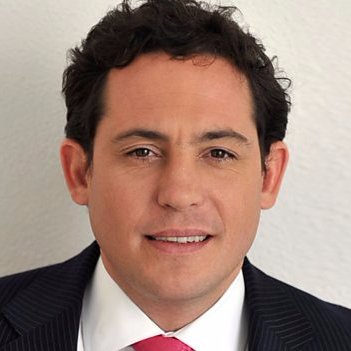
Get your money out of property and into something more productive seems to be the message from the Chancellor who added an extra 2% tax on rental income. Alex Foster at Blick Rothenburg described the move as "the final nail in the coffin for private investors in rental properties".
Catherine retweeted

SOMETHING VERY STRANGE IS HAPPENING IN THE GOLD MARKET.
Gold has crashed more than 25% since the US-Iran war began, falling below $4,000 for the first time in over 3 months.
But instead of selling, investors are continuing to pile into Gold ETFs, with holdings climbing toward 102 MILLION ounces.
This is happening while stocks are crashing and investors are selling assets to raise cash.
This means gold downtrend is because of forced selling.
If ETF investors keep accumulating despite the crash, we could see good rebound in gold once panic settles.

Catherine retweeted

Jensen Huang says $NBIS is “doing really well” as $NVDA increasingly positions Nebius as a key player in Europe’s AI infrastructure expansion.
And with Nebius securing the land and power that major cloud providers are struggling to find, it’s becoming an increasingly important way for Nvidia to turn Europe’s growing AI demand into more GPU sales.


Catherine retweeted
$SPCX spent ~$16.4B on AI infrastructure in Q3 alone which is ~84% of its total CapEx.
That's about a $66B annualized pace for a company most people still think of as a rocket maker.


$SPCX ABSOLUTELY CRUSHED THEIR Q3 EARNINGS
• Revenue $14.6B vs Est. $13.0B
• EPS $0.35 vs Est. $0.16
• EBITDA $8.8B vs Est. $6.6B
• CapEx: $19.6B
