

Observations from long-form conversations, podcasts, and culture.
Joined December 2025
- Tweets132
- Following85
- Followers22
- Likes165




Pinned Tweet
Podcast observation:
Just saw this clip from Joe Rogan where Tom Brady drops that bird-on-a-branch line: “A bird sitting on a tree is never afraid of the branch breaking, because its trust is not on the branch but on its own wings.”
Simple as hell, but it stuck with me. Long-form conversations like JRE keep coming back to the same truth ;real confidence isn’t hoping the world stays stable. It’s knowing you can handle it if it doesn’t.
Most of us are still waiting for the perfect branch.
What’s one quote or moment from a podcast that actually changed how you trust yourself?
2
444
The weird thing about job hunting now is that AI made everyone look “qualified” on paper.
ATS-friendly keywords.
Exact-match qualifications.
Perfect resume style.
Clean cover letters.
And honestly, learning those things is not bad .Because recruiters are using AI too.
But at some point, a hiring manager still wants to see real evidence behind what you claim.
So in a world where anyone can look qualified, the real question becomes:
Can they trust you?
I think the solution is simple, but not easy:
Show the work.
Message the recruiter.
Build a small portfolio.
Share your experience on X or LinkedIn.
Prove you exist beyond the template.
Good context:
youtube.com/watch?v=qNObQCU1…
#JobSearch #AI
41
The next business graveyard will not be empty stores.
It will be companies that still exist but never get mentioned by AI.
Old search was forgiving.
If you were not #1, maybe you were #3.
If you were not on page one, maybe someone still found you later.
AI search is different.
When someone asks:
“best accountant for freelancers”
“best dentist near me”
“best PCB designer in Vancouver”
“best immigration lawyer for PR”
“best café for working quietly”
the AI does not show 40 options.
It compresses the market into 3 names.
Maybe 5.
Everyone else becomes invisible.
That is terrifying for small businesses.
Because the new question is not:
“Do you rank on Google?”
It is:
“Does the internet say enough clear, trusted, specific things about you that AI feels safe recommending you?”
Most businesses are still writing websites like it is 2014.
“Quality service.”
“Customer-focused.”
“Years of experience.”
“Contact us today.”
That language is dead.
AI cannot recommend vague.
It needs proof.
Who exactly do you serve?
What problem do you solve better than others?
What do customers repeatedly say about you?
What comparisons are you willing to make?
What price range, location, process, timeline, guarantee, case study, review, video, or expert explanation proves you are real?
The businesses that win AI search will not be the loudest.
They will be the easiest to cite.
Not “we are the best.”
More like:
“We are the best option for [specific customer] who has [specific problem] and needs [specific outcome], because here is the proof.”
That is the new rhetoric.
Be specific enough that humans trust you.
Be structured enough that machines can quote you.
Be original enough that you are not just another generic business website in the pile.
The future of marketing is not only SEO.
It is becoming the answer.
Good breakdown:
youtube.com/watch?v=nOk-kX8F…
#AISearch #SmallBusiness #Marketing
168
The new internet scam is not fake AI. It is half-true AI.
Every day someone posts:
AI can sell for you.
AI can make Pixar films.
AI can fake crowds.
AI can build a startup from one prompt.
Technically, yes.
Practically, no.
The missing sentence is always:
After 17 failed generations, three paid tools, manual editing, prompt retries, cleanup, human approval, and a creator who already knows what they’re doing.
AI video is real. But “one prompt” is usually content bait.
AI agents are real. But “24/7 employee” usually means a fragile workflow with no revenue data.
AI image editing is real. But a viral clip is not proof that reality is dead.
AI automation is real. But a terminal window is not a business.
The problem is not AI.
The problem is influencers selling the illusion that skill, cost, taste, and technical judgment disappeared overnight.
They didn’t.
AI did not remove work.
It moved the work into planning, tool selection, prompting, editing, testing, verification, and cleanup.
So before reposting “AI now can…”, ask:
How many attempts?
Which tools?
How much money?
How much editing?
Can an average person repeat it?
Where is the proof?
Hot take:
Most viral AI demos are not product demos.
They are ads for FOMO.
AI is powerful.
But “possible” is not the same as “easy.”
And “demo” is not the same as “evidence.”
Good discussion on hype vs reality:
youtube.com/watch?v=NoVMk_P6…
The winners will not be people who believe every demo. They will be people who can separate capability from production, cost, and repeatability.
What do you think: useful signals, or mostly engagement farming?

1
1
216
“Hot divorcée summer” is funny until you notice the machine behind it.
Every life stage becomes an aesthetic.
Singlehood becomes a campaign.
Divorce becomes a capsule collection.
Healing becomes a shopping category.
Reinvention becomes a look.
The market does not care what happened to you.
It cares how fast your identity can be turned into a mood board.
1
1
55

The future of work may not be “AI replaces your job.”
It may be AI remembering your job better than you do.
Face recognition at the desk.
Badges that capture context.
Agents that summarize conversations.
Workflows that become searchable.
That sounds convenient until the office becomes a permanent record.
A micromanager forgets.
A system doesn’t.

When politicians say the data will be “uneven,” regular people hear something else:
rent still high
jobs less certain
groceries still annoying
businesses nervous
young people delaying everything
Economic restructuring always sounds clean in a press conference.
It feels very different when your life becomes the transition period.
1
36

Nobody talks about the AI boom as inflation.
But maybe they should.
Data centers, memory chips, power grids, cooling, land, software, talent — all of that demand pushes prices somewhere.
So while people are told AI will make everything cheaper, the buildout itself may make daily life more expensive first.
The future is not free.
Someone always pays for the infrastructure.
1
37

One narrow waterway can remind everyone that modern life is not as digital as we pretend.
We talk about AI, apps, remote work, cloud, subscriptions.
Then oil moves because of Hormuz and suddenly the “real world” enters every grocery bill, plane ticket, delivery route, and commute.
The internet feels weightless.
Energy reminds us everything still has mass.
1
1
29

return-to-office fight in Canada is happening.
A company hires people in 2021 and 2022 saying, “Don’t worry, hybrid is here to stay.”
So people build actual lives around that.
Someone moves from Toronto to Hamilton because rent is insane.
Someone moves closer to their parents because their dad has appointments every week.
Someone arranges daycare around two remote days.
Someone buys a small house far from downtown because the commute was supposed to be occasional, not a lifestyle.
Then one Monday morning, leadership sends the email:
“Starting next month, everyone is expected back in the office four days a week.”
And they act confused when people are angry.
But the anger is not really about the office.
It’s about the lie.
People can handle change. What they can’t handle is being told one version of life during hiring, building their rent, family, commute, childcare, and health around it, then being treated like none of that was real.
A few months later, the best people leave.
Not the lazy ones.
The best ones.
The ones with options.
The ones who were already doing good work without being watched.
And then management says, “Strange, productivity is down.”
Of course it is.
You didn’t bring people back to culture.
You brought them back to distrust.
Where people work is not a small detail.
It touches sleep, rent, marriage, kids, aging parents, mental health, and whether someone has any life left after work.
Companies keep calling it “policy.”
Employees experience it as a broken promise.
Good conversation on the psychology of remote work and trust:
youtube.com/watch?v=jnKrzox3…
#RemoteWork #WorkCulture #Canada #ReturnToOffice

The next class divide won’t be who has internet.
It will be who can escape it.
Some people will be online because they want to be.
Others will be online because work, school, banking, friendship, dating, delivery, identity, and entertainment all got folded into the same glowing rectangle.
That’s not convenience anymore.
That’s captivity with good UX.
The rich version of the future might look strangely old-fashioned:
offline time
real friends
walkable places
no constant notifications
a job that doesn’t chase you home
a nervous system that isn’t refreshed every 4 seconds
We used to think being connected meant freedom.
Now the real luxury may be being unreachable without disappearing.
Good conversation on this:
youtube.com/watch?v=wz8KrZFh…
#ModernLife #DigitalCulture #AttentionEconomy
85
People are not just buying clothes anymore.
They are buying borrowed identities.
One week everyone is “old money.”
Next week everyone is “clean girl.”
Then “mob wife.”
Then “office siren.”
Then “quiet luxury.”
Then “coquette.”
Then “it girl.”
Then whatever the algorithm names next.
And somehow every “personal style” looks like it came from the same mood board.
Same slick bun.
Same beige coat.
Same gold hoops.
Same little sunglasses.
Same Stanley cup.
Same Pilates uniform.
Same expensive-looking minimalism.
Same fake effortlessness.
You walk outside and it feels less like a city and more like the algorithm got a dress code.
The strange part is that people are spending real money to look like someone else’s personality.
Not inspired by it.
Copied from it.
They buy the bag because a girl with better lighting had it.
They buy the shoes because a stranger called them “timeless.”
They change their whole face because the current beauty template says so.
They decorate their apartment like a coffee shop they saw 400 times on TikTok.
They even borrow opinions, phrases, posture, humor, lifestyle goals.
At some point, trend culture stopped being about taste and started becoming identity laundering.
People are trying to purchase a self.
And the market knows it.
That is why everything has a name now.
Not just a sweater — “old money knit.”
Not just a bow — “coquette coded.”
Not just brown hair — “espresso brunette.”
Not just being thin and rich-looking — “quiet luxury.”
Not just dressing normally — “model off duty.”
The naming is the trap.
Once something has a label, people can search it, copy it, shop it, film it, monetize it, and move on before they ever ask:
“Do I even like this?”
That is the most uncomfortable question right now.
How much of your taste is yours?
How much of your style did you choose?
How much of your personality is actually you — and how much is just the feed repeating itself through your closet?
The internet used to help people discover themselves.
Now it often helps people replace themselves faster.
And the saddest part is that originality is not even expensive.
Originality usually comes from memory.
The jacket you kept for years.
The color you always loved before it became trendy.
The weird hobby you never posted.
The earrings from your aunt.
The shoes that make no sense but feel like you.
The outfit that does not have a name yet.
That is style.
Style is not looking like the most accepted version of the moment.
Style is evidence that a real person lives inside the clothes.
I think we are entering an era where looking “perfectly on trend” may become the least interesting thing about someone.
Because if everyone can buy the same aesthetic, the real luxury becomes having a point of view.
A face that still looks like a face.
A room that still looks lived in.
A closet with contradictions.
A personality that did not come pre-packaged with affiliate links.
Maybe the most rebellious thing now is not dressing louder.
It is dressing truthfully.
Not asking, “What aesthetic am I?”
Asking, “What do I keep choosing even when nobody is selling it to me?”
Good conversation on personal style, taste, and internet influence:
youtube.com/watch?v=N2xnYfna…
#PersonalStyle #TrendCulture #DigitalIdentity #Fashion

1
1
210
Podcast Angles retweeted

Who is the author?
Dan Koe (@thedankoe) is a bestselling author (The Art of Focus), writer, and co-founder of Eden (@edendotso). With nearly 1 million followers, he’s one of the most respected voices on personal development, psychology, productivity, and building a meaningful life through one-person businesses.
Background & history of this post:
This long-form letter dropped on January 12, 2026 — right at the start of the new year — when everyone was making (and already breaking) resolutions. Dan has always been skeptical of superficial goal-setting, and this piece was his deepest dive yet into why most people fail at change. It quickly became one of his biggest hits: 300K+ likes, 45K+ reposts, 185M+ views, thousands of bookmarks, and even video adaptations. It’s classic Dan Koe — not short hype, but a comprehensive, bookmark-worthy read that people still reference months later.
Main purpose of the post:
Dan isn’t here to shame you for failed resolutions. Instead, he explains the real reasons people stay stuck (identity, unconscious goals, fear of success, outdated mind levels, and self-protection mechanisms) and gives you a better path. It’s 7 powerful ideas on behavior change, psychology, and productivity, culminating in a full 1-day Life Reset Protocol (psychological excavation in the morning, pattern interrupts throughout the day, and synthesis at night). The goal? Help you shift who you are so the right actions become natural — not forced discipline that fades in 2 weeks.
If you’ve ever felt like you’re meant for more but keep looping back to the same patterns, this is the one.
Read it. Bookmark it. Set aside time to actually do the protocol.
True change doesn’t come from another motivational post — it comes from rewiring how you see yourself and what you’re optimizing for.
Original post here 👇
teapaw.org/thedankoe/status/20107…
What part hit you hardest when you read it? Drop it below — let’s discuss. 🚀

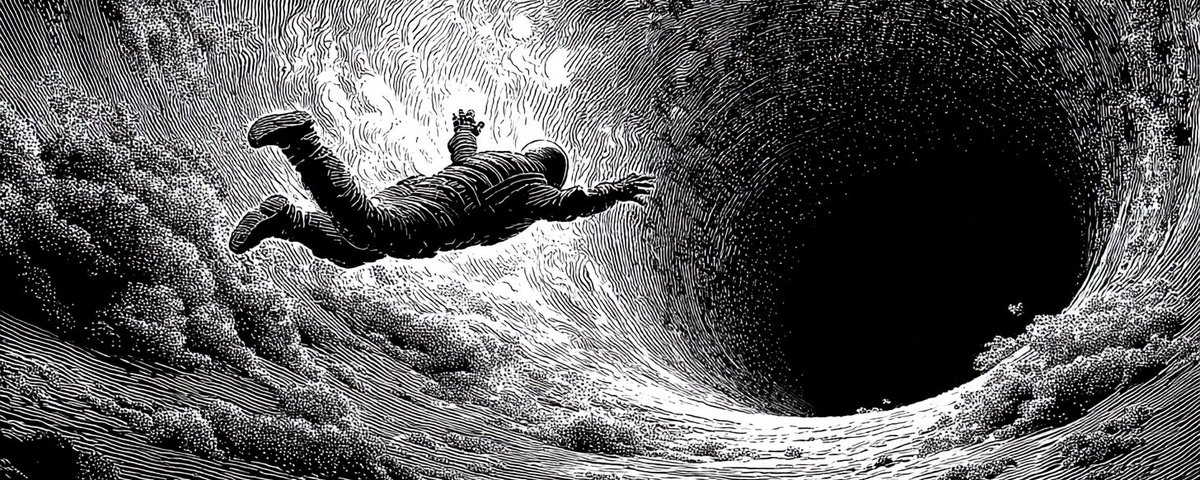
The modern job search is not just hard.
It is psychologically weird.
You can spend 2 hours rewriting a resume for a job that may not exist.
You can record a one-way interview for nobody.
You can get rejected by software before a human ever knows you applied.
Then you’re told to network, upskill, stay positive, personalize every application, and treat rejection as feedback.
But what if there was never feedback?
What if the door was painted on the wall?
A 2025 report found nearly 1 in 3 job postings went nowhere — openings that never resulted in a hire.
That changes the psychology of looking for work.
People don’t just feel unemployed.
They feel invisible.
They start doubting their skills, their writing, their degree, their personality, their future — when sometimes the system was never actually hiring.
This is why job searching feels so exhausting now.
It’s not only competition.
It’s uncertainty with a login page.
Good breakdown:
youtube.com/watch?v=lFmcZXa-…
#JobSearch #FutureOfWork #WorkCulture
1
1
270
The next status symbol won’t be a car, watch, or apartment.
It will be having people who actually know you.
Not followers.
Not likes.
Not group chats full of memes.
Real people who notice when your energy changes, who invite you without making it a big deal, who remember the version of you that existed before you became “productive.”
A 2026 study across 8 countries found nearly 1 in 2 young adults felt lonely.
That’s not just a mental health stat.
That is a design failure.
We built a world where everything is convenient except friendship.
Food comes to your door.
Entertainment never ends.
Work follows you home.
Dating became swiping.
Community became content.
And then we act surprised when people feel empty.
Maybe the crisis isn’t that people are “antisocial.”
Maybe we removed too many normal places where life used to happen by accident.
The gym.
The café.
The cheap diner.
The library.
The neighborhood.
The office friend you didn’t choose but somehow needed.
People don’t only need therapy.
They need proximity.
Good conversation on this:
youtube.com/watch?v=fsaeFYGb…
#Loneliness #ModernLife #Culture
