

♟ Your knowledge isn’t the problem. Your pattern recognition is. Tactical training for players stuck under 2000 Elo. Make Chess FUN Again 🔥🥃🔥
Behind You..
Joined October 2015
- Tweets1.2K
- Following38
- Followers109
- Likes8.5K

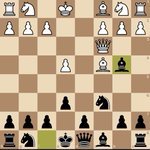


The rating plateau
Stuck at 1200? 1400? 1600?
Here’s something worth considering:
Your rating might not be limited by what you DON’T know.
It might be limited by what you repeatedly fail to notice.
A missed fork.
A loose piece.
An ignored threat.
A bad pawn break.
Find the recurring mistake.
Fix the pattern.
8
One greedy capture, then checkmate in 7 😈 This bishop sacrifice drags the king out to die. Train chess sacrifices FREE at PrimalChess.com
7
Tactical curiosity
Your opponent hangs a piece.
You capture it.
You feel like a genius.
Then you realize their queen, bishop, and knight are all pointing at your king.
Sometimes the most dangerous move on the board is the one that looks completely free.
Calculate BEFORE you collect. ♟️
13
Check out PrimalChess's video! #TikTok tiktok.com/t/ZPLtsr8kH/

13
The uncomfortable truth
You don’t need another chess opening.
You don’t need 500 more puzzles.
You probably need to understand why you keep making the SAME mistakes in your games.
Your next rating breakthrough might be hiding in your last 10 losses.
Stop collecting chess knowledge.
Start fixing your leaks. ♟️
10
PrimalChess retweeted

JOE ROGAN: The computing power on your phone today. can you beat your phone at the highest level?
MAGNUS CARLSEN: No. No chance.
JOE ROGAN: That’s crazy. Wasn’t Deep Blue basically a whole stack of computers? And your phone is probably more powerful than that today.
MAGNUS CARLSEN: It’s shocking. I have no chance against my phone.
JOE ROGAN: So how do you even play against computers?
MAGNUS CARLSEN: I rarely play against engines because they just make me feel stupid and useless. I think of them more as a tool.
JOE ROGAN: But have computers actually changed how you understand chess?
MAGNUS CARLSEN: Absolutely. Neural networks have improved our understanding of the game immensely.
JOE ROGAN: What did you learn from them that humans weren’t already doing?
MAGNUS CARLSEN: One big thing was long-term king safety. Humans used to push pawns mainly as an attacking tool. But the engines showed that you could push a pawn and create a weakness 20 or 30 moves later that would make the opponent’s king less safe.
JOE ROGAN: So the computer basically showed you ideas that humans weren’t seeing.
MAGNUS CARLSEN: Exactly. There was a period where you could clearly see which players were using these new neural-network ideas and which weren’t.
JOE ROGAN: And you were one of the guys who figured it out early?
MAGNUS CARLSEN: Yeah. My coach got into it very quickly, and we gained an advantage over almost everybody.
JOE ROGAN: That’s insane. The machines aren’t just better at calculating, they’re actually teaching the best players how to think differently.
MAGNUS CARLSEN: That’s probably the biggest impact they’ve had on chess.
The relatable middlegame problem
Ever reach a perfectly normal middlegame and suddenly have NO IDEA what to do?
So you:
●Move a rook.
●Push a random pawn.
●Shuffle your knight.
●Somehow make your position worse.
💀
Here’s a better question:
What is the worst-placed piece on the board?
Improve it.
10
The positional chess insight
Weak players ask:
“What can I attack?”
Strong players also ask:
“What does my opponent want?”
That second question changes everything.
Sometimes the best move isn’t an attack.
It’s taking away your opponent’s best idea before they can execute it.
That’s prophylaxis.
10
Check out PrimalChess's video! #TikTok tiktok.com/t/ZPLpECPNR/
11


Caro-Kann Defense Trap! 🤯 Nd6# Smothered Mate in 11 Moves! #Chess #chess... youtu.be/rP3GFbEVIS8?si=BfJW… via @YouTube

28
♟️ Think you've got what it takes to spot 600 forks?
I made a FREE training challenge on PrimalChess to help you sharpen your tactical vision.
🔥 Train 600 Forks for FREE: primalchess.com/d/c6aad9b374…
Let's see how many you can solve!
What's your current chess rating? Drop it below. 👇

16