

Research and Advisory in Onchain Capital Markets ◼️ Family @PrincipiaHQ
Joined October 2011
- Tweets334
- Following87
- Followers10.8K
- Likes383




daily early projects ◾️
@BirchHill_io – regulated rails to bring u.s. credit (farm, apartment loans) onchain via morpho vaults ($4m seed, led by multicoin; parafi, castle island, nascent)
@ibisfinancialHQ – private credit for frontier-market crypto firms, out of stealth with a $250m falconx credit facility (pre-seed led by falconx; anchorage, innovating capital)
@cancore_io – liquidity os for tokenized finance: canton-native execution wired to public-chain liquidity ($7.2m seed via saft; paper ventures, dao5, arkstream)
@Mochatradeapp – indian traders fund in rupees via upi and trade perps on u.s. stocks ($5.5m seed led by coinfund; coinbase ventures, yc)
↳ why watch: india's options crowd meets onchain perps
@peso_latam – usdt account for latam: local qr payments in bolivia, brazil, argentina, plus a u.s. account and visa card (pre-seed led by tether)
@FrostOptions – options on perp funding rates: keep the carry, hedge the tail (colosseum crypto world's fair, german track 2nd)
↳ why watch: funding-rate risk finally gets a hedge
@R0boPay – payment layer for ai agents and machines on solana + peaq (1st, peaq track, superteam germany x colosseum hackathon)
@YieldCircle – social yield farming: follow wallets that earn, prove your apy (colosseum crypto world's fair, german track 3rd)
verify before you ape.

Binance’s buyback of the hacked tokens appears to have started.
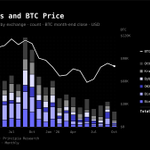
Since the hack, Binance trades at a premium to OKX on the tokens the attacker reportedly sold: PEPE +67 bps, ENA +24, UNI +17, WLD +17. Before, the gap was under 3 bps on all 13 tokens we track.
The largest premiums sit on the tokens the attacker reportedly sold for ETH (per Lookonchain): PEPE, ENA, UNI, WLD, AAVE, LINK, ONDO.
Binance says it is buying the last 20% of losses "through market and OTC". The gap fits that demand. Public data can't show who is buying
TRX goes the other way: −218 bps median, −289 bps at 00:10 UTC today.
And Binance's share of Binance+OKX volume fell on all 13 tokens. BTC 76% → 61%. XRP 80% → 64%. LINK 84% → 73%.

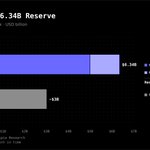
Binance says it has reserved $6.34B to cover the hack: $5B is already held in the exact impacted tokens, and the rest is being bought through market and OTC channels.
That second part is the one to watch. Buying back low-liquidity tokens in size is a market event in itself: order-book depth, cross-venue spreads and OTC premiums on the affected assets over the next few days will show how it's being done.
The real check comes after: a post-incident Proof of Reserves with per-asset coverage back at 100%+.
Verify before you trust.
◼️ The numbers: $6.34B reserved, $5B already held in kind, the remainder bought via market and OTC; ~$3B frozen is counted separately.
◼️ How this squares with the earlier "~$2B gap" math CZ posted, and why frozen funds aren't part of it.
◼️ What to watch while the buybacks run: depth and spreads on the thinner affected tokens across venues, plus any OTC premium.
◼️ What a credible post-incident PoR should show: per-asset coverage, hot-wallet attribution, and the date of the snapshot.
Close: incident disclosure is now part of exchange quality, and we'll be tracking it.
Incident disclosure is now part of exchange quality, and we'll be tracking it.

The Binance hot wallet incident is likely the largest crypto theft on record.
Binance’s own estimate: ~$6.3B impacted, ~$3B already frozen onchain, full coverage via SAFU and corporate funds.
But the bigger question for the market: how should we judge exchange quality now?
For years, exchange rankings have leaned on volume, liquidity and spreads. Those still matter. But Oct 29 showed that operational security can wipe out every liquidity advantage in hours.
Four things we think deserve more weight after this:
◼️ Hot vs. cold wallet split
◼️ Proof-of-reserves cadence and liability coverage
◼️ Insurance/SAFU size relative to hot-wallet exposure
◼️ Incident response: time to freeze, time to disclose, time to resume
Most of this can be checked from public data: wallet flows, PoR attestations, insurance fund disclosures, and the exchange‘s own incident timeline. Response speed matters too. Freezes by Tether (1.5B+ USDT) and Circle (~823M USDC) show how much depends on coordination in the first hours.
We’ll be tracking how quickly Binance restores deposits and withdrawals, and how reimbursement progresses. Exchange quality is more than a liquidity score. It‘s how a venue performs on its worst day.

CEX listings in October: 40, the fewest in 24 months (through Oct 28).
Binance Alpha listed 3 tokens this month, against 46 at the peak. Korea now does more of the work: Upbit and Bithumb account for 18 of October’s 40.
Jan–Sep 2026: 652 listings across 8 exchanges, down 48% from 1,243 a year earlier.


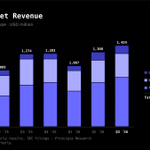
Robinhood Q3 2026: record revenue, but the mix moved.
◾️ Net revenue $1.42B, +12% YoY.
◾️ Diluted EPS $0.51 vs $0.61
◾️ Transaction revenue $867M, +19%
◾️ Options $399M (+31%), now 1.66x equities + crypto combined
◾️ Event contracts $173M, up 6x+. 16.4B contracts traded
◾️ Crypto $120M (−55%), notional $50B (−38%)
Retail is moving from spot crypto to options and prediction markets.


On-chain options did $3.92b in notional volume over the past 30 days. That’s 0.6% of on-chain perps volume ($608b).
Perps have already moved on-chain: DEX futures volume is about 16% of CEX volume. Options haven’t: on-chain options are only 1–3% of CEX options. If options caught up to the perps ratio, that’s $20b+ a month based on CEX’s H1 average of $144b, versus about $4b today. Roughly 5x headroom.
It’s also a one-venue market. Derive has 82% of notional volume, 91% of premium and 94% of open interest, up from 25–50% of notional in mid-2025. Options need market makers quoting every strike and expiry, so liquidity tends to pool in one place.

$BNC is the most tokenized stock onchain: 14.0% of CEA Industries’ market cap ($36.8m of $262.6m) now trades as tokens. The next closest is $AGPU at 4.2%.
Tokenized value rose 27.0% in 7 days, from $27.9m to $35.4m. Most of that is price: the token rose 22.9%, while supply grew 3.3%.
It’s used mainly for trading:
◾️ $25.4m spot volume in 24h (PancakeSwap v3 $16.7m)
◾️ $32.5m perp volume, $11.5m open interest
◾️ Only $0.83m in DeFi, 2.3% of tokenized value, all DEX liquidity on BSC with no lending markets

Top 10 protocols by holders revenue, past 7 days
Hyperliquid alone is 39% of the top-10 total. The top four make up 82%, and they return value in different ways: HYPE buybacks, USDC paid to PAPER stakers, TRX burns, and PUMP buybacks.

Tokenized RWAs in DeFi reached $270.5m, up 21.1% in 90 days.
Gold still anchors the stack: XAUt on Aave V3, TermMax and Uniswap V2 holds $97.1m, about 36% of the total.
Growth came from the venues listing many assets. Raydium AMM rose 69% to $39.7m across 135 pools, Uniswap V3 71% to $30.6m, and Kamino Lend 57% to $28.0m.
Data: rwa.principialabs.io

X Layer 基本面季报:2026 Q3
本季重点:Exchange OS 上线后,X Layer 正从"交易所的链"走向"链上交易所"。TradeZone Q3 处理了 2.87 亿笔交易,是 EVM 主链的 2.6 倍;EVM 活跃度和 DeFi TVL 双双翻倍。
环比数据:
◾️OKB 市值 ⬆️ 53.8%,至 25.4 亿美元
◾️EVM 日均交易 ⬆️ 262%,至 122 万笔
◾️DeFi TVL ⬆️ 100%,至 1.73 亿美元
◾️日活地址 ⬆️ 89%,至 7.05 万
完整报告👇


Fundamentals of X Layer Q3 2026
Key Update: Exchange OS turns X Layer into a full-stack onchain trading system. TradeZone processed 287M transactions in Q3, 2.6x the EVM, while EVM activity and DeFi TVL both doubled.
QoQ Metrics
◾️OKB market cap ⬆ 53.8% to $2.54B
◾️EVM daily transactions ⬆ 262% to 1.22M
◾️DeFi TVL ⬆ 100% to $173.4M
◾️App fees ⬆ 490% to $1.86M

