

https://teapaw.org/t.co/QNLGp9Zr8g is encrypted email + messenger in one app. Zero-access by design. No phone number. Safer. Stronger. Smarter. Private.
Joined October 2013
- Tweets402
- Following177
- Followers54
- Likes748




Pinned Tweet
Private.Ki is encrypted email and encrypted chat in one account, with encrypted voice and video calls. $0, no phone number, no invitation.
Sign up right now: private.ki
And here is the table of what our server can and cannot see: private.ki/en/server

271
Quick reminder, we are regularly updating our warrant canary:
private.ki/help/en/privacy/w…
Every secure / encrypted communication service should have one!
1
1
33
We are hiring:
private.ki/en/careers
Everybody welcome to apply. (Except North Koreans.)

87
What is a transparency report?
A transparency report is a public disclosure by a service provider detailing requests it receives from governments, law enforcement agencies, and other authorities.
These reports typically disclose how many requests were received, which countries submitted them, what information was requested, and how often the provider complied with or rejected the requests.
Transparency reports help the public understand how authorities seek access to user data and how service providers respond to such demands.
However, there are limitations: Some requests cannot legally be disclosed, and reporting may be delayed or restricted. Furthermore, a transparency report does not necessarily reveal what information a provider can technically access.
Transparency reports are an accountability mechanism, not proof of security or privacy.
Read Private.Ki's transparency report here:
private.ki/help/en/privacy/t…
105
Private.Ki retweeted

❗️ Google's privacy policy no longer rules out ads based on your Gmail, Drive and Photos.
A 16 October update makes an exception if you let other Google services, like Search, access that data.
Search may process it to "personalize content, including ads", the policy now says.


No software is 100% secure. Vulnerabilities can exist in any system, including applications built around end-to-end encryption.
Private.Ki explicitly welcomes independent security researchers to test its systems and report vulnerabilities.
The scope includes the web app, mobile apps, APIs, website, and mail infrastructure.
Of particular interest are vulnerabilities affecting encryption, cryptographic key handling, and the boundaries of what Private.Ki's servers can access.
Good-faith security research within the published rules is authorized. Private.Ki will not pursue legal action or refer researchers to law enforcement for testing conducted within that scope.
Testing must use dedicated test accounts, stop at proof of concept, and avoid disrupting services or accessing other users' data.
Exceptional findings will be rewarded, and researchers will receive public credit.
Security is not established by claiming that a system cannot be hacked. It is strengthened by allowing its security claims to be tested.
Full disclosure policy:
private.ki/help/en/privacy/r…
72
"Nothing to hide" is not an argument against encryption.
Privacy is not about hiding illegal activities. It is about controlling access to personal information.
Emails can contain financial information, medical records, private conversations, business negotiations, travel patterns, personal relationships, and countless other details of everyday life.
None of this has to be illegal, embarrassing, or suspicious to deserve confidentiality.
With conventional, unencrypted email services, providers with access to mailbox contents can potentially analyze, profile, and disclose this information, including in response to lawful government requests.
End-to-end email encryption fundamentally changes this relationship. The service provider cannot read properly encrypted message contents without the necessary decryption keys.
The absence of wrongdoing does not eliminate the right to privacy.
Nobody likes illegal activities, and nobody wants to support illegal activities.
However, it is not up to the service provider to decide what is right or wrong.
Encryption is not about having something to hide. It is about ensuring that private correspondence remains private.
39
An unencrypted inbox reveals more than just emails.
Hotel reservations, flight confirmations, and travel bookings can expose detailed travel patterns:
- Destinations and travel dates
- Length of stays
- Frequency of travel
- Regular routes and preferred hotels
- Periods when someone is away from home
Email providers with access to mailbox contents such as Gmail, Outlook, Yahoo,... (basically all conventional webmail services) can analyze this information and build detailed profiles of users' movements.
Law enforcement and other authorities can request the content of the inbox (and with it, all travel-related information) through legal process.
The situation is fundamentally different with end-to-end encrypted inboxes. Stored emails and mailbox metadata are encrypted in the users' browser. Not even the service provider can read encrypted mailbox contents or analyze them to reconstruct travel patterns. And if authorities request access to encrypted mailbox contents, the service could not hand over any user content, as itself cannot access it.
A service provider cannot disclose plaintext it cannot access.

37
How lucky can we be that there are messenger apps where you don't need a phone number to sign up.
They work even in India.

❗️ India is set to require WhatsApp, Telegram and Signal to work only while the registered SIM is active in the phone.
The telecom ministry says apps that run without the SIM let scammers abroad misuse Indian numbers.


34
You don't need a phone number to sign up at Private.Ki, and we don't log.

Here's how exactly Telegram provides user data to U.S. authorities. A letter recently filed in court shows how Telegram transfers that data, such as IP address and phone number.
More: 404media.co/heres-what-teleg…

34
There is no such thing as 100% security and no unbreakable encryption. It does not exist.
Anyone who claims otherwise is not telling you the truth.
Every online service, especially those focused on privacy and security, has a responsibility to be honest about its limitations.
When someone tries to sell you:
"Unbreakable encryption"
"Military-grade encryption"
"100% secure communications"
"Impossible to hack"
...be skeptical!
No system is completely secure. And humans make mistakes.
For example:
Your password can be compromised. You might choose a weak or predictable password. You might reuse it across multiple services. Or you might store it in your browser or password manager, which someone could potentially access.
Strong encryption won't help if an attacker can simply log into your account.
Even if your emails are encrypted and your private encryption key is protected with with an additional passphrase, separate from your account password (like we recommend to our users), this might happen:
But that passphrase could also be weak, predictable, stolen, or exposed. An additional security layer reduces risk. It does not eliminate it.
our device might be compromised. A keylogger, spyware, or other malware could capture your passwords, passphrases, or decrypted messages directly on your device.
Even the strongest encryption cannot protect plaintext once your device has been compromised.
You might be forced to unlock your device. An attacker might physically threaten you. Authorities might legally compel you to unlock your device or disclose credentials, depending on the jurisdiction.
Cryptography cannot eliminate physical coercion or legal pressure.
So encryption is essential. But encryption alone does not guarantee security. Security also depends on your devices, your credentials, your decisions, and the threats you face.
We won't promise you 100% security. Don't listen to the ones who do.

47
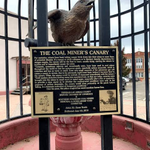
Did you know where the word Warrant Canary has its origin?
In the past, coal miners carried canaries underground. These birds were highly sensitive to toxic gases, and if a canary stopped singing or died, it warned miners of invisible dangers before they became fatal for humans.
A warrant canary applies a similar principle to digital privacy. It is a regularly published statement by a company declaring that it has not received certain secret government requests, such as demands for user data or surveillance orders.
In some jurisdictions, companies can be legally prohibited from disclosing such requests. The idea behind a warrant canary is that while a company might be forbidden from announcing that it received an order, it may be able to stop publishing its previous statement.
After the USA PATRIOT Act of 2001, the FBI could secretly demand library records, including information about people's reading habits. Libraries receiving certain orders were legally prohibited from disclosing them. In 2005, a librarian introduced a sign stating: “The FBI has not been here (watch very closely for the removal of this sign).”
The idea? If the sign disappeared, visitors might suspect the library had received a secret FBI request.
Today, online services such as email providers user warrant canaries. If the canary disappears or is no longer updated, users may interpret this as a warning.
Private.Ki's warrant canary is here:
private.ki/help/en/privacy/w…


27
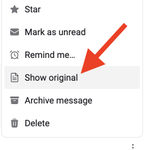
Sometimes it's interesting (or necessary) to check the headers and the raw message source of an email.
Check SPF, DKIM, and DMARC authentication, trace the email's route through mail servers, and examine technical details such as IP addresses, timestamps, and message identifiers.
Useful for investigating suspicious emails, detecting potential spoofing, and troubleshooting delivery issues.
You can also paste the header into AI and let it analyze for you. (However, this has privacy constraints...)
Easy at most (not all) email providers.


32
A word about your PGP keys:
Your public PGP key is, as its name suggests, public. It can be shared with anyone and allows others to encrypt messages that only you can decrypt.
Your private PGP key is different. It's the secret that allows you to decrypt messages intended for you. It must remain confidential. Your private key is encrypted in itself with your passphrase. So even if exposed, your private key is safe, as it can only be used with your PGP passphrase.
Neither your passphrase nor your non-encrypted ("unlocked") private key is ever sent to our servers. Your passphrase is never stored anywhere, it is solely used to decrypt ("unlock") your private key. The unlocked version of your private key is only stored in your device's memory as long as your session is active or you lock your account.
We recommend to set a passphrase at sign-up. Yes, that's uncomfortable, as it's essentially a "second password", but it is much more secure: Even if somebody could enter your account (with your email address, password and - if set up - 2FA), your messages stay encrypted: To decrypt them, your passphase is needed.
If you prefer not to set up a separate passphrase at sign-up, your passphrase is derived from your password. That's more convenient, yet not as secure.
We use automatic key management, so you don't have to deal with the technical complexity of PGP yourself. However, you can export your public and private key in Settings.
To export your private key, you must set up 2FA. (And, for security reasons, there is a waiting period.)
By the way...our name Private.Ki means "private key" 😀

43
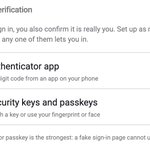
Two-factor authentication is live on Private.Ki. Currently we support authenticator apps such as @Authy, security keys and passkeys.
Add as many as you like of these, give them a name, and revoke their permissions if you lose them.
Shall we add more 2FA methods? Let us know - we hear you!

52
We now speak WKD (Web Key Directory), the open standard for finding someone's encryption key by their email address.
Mail between Private.Ki and other services that use WKD (such as @ProtonMail) is end-to-end encrypted automatically.
Your public key is automatically published; your recipient's is looked up. Nothing to configure.
Try it in Private.Ki webmail: A mail to an external address (for example from Proton) automatically has the green lock which means "PGP-encrypted".

41
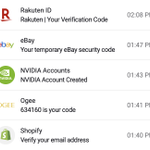
We added BIMI to Private.Ki encrypted webmail today.
Verified brand logos now appear directly in your inbox.
To display a verified logo, senders must authenticate their emails (DMARC) and verify their brand identity through a VMC certificate. This helps prevent brand impersonation and phishing. Major brands like LinedIn, eBay, Paypal, Shopify use BIMI.
Privacy comes first: Logos are retrieved (if not already in our cache) by our server (and cached) when emails arrive, NOT when you open or view them. No external requests from your device, no tracking, no privacy compromises.
Learn more about BIMI, a relatively unknown feature:
en.wikipedia.org/wiki/Brand_…

103