



Prof. Dollar retweeted

I was blessed with the opportunity to speak today at this event. I have the utmost respect for the current FDA administration. You can see and feel how genuine they are, how dedicated they are to this new Rare Disease Framework Initiative. This is some exciting stuff!

Today, FDA kicked off its Rare Disease Framework Initiative with a public meeting, co-hosted by @ReaganUdall. Thanks to all who joined for your input, candor & vision. With only 5% of rare diseases having an approved treatment, the status quo isn't enough — we must do more.
FDA Acting Commissioner @FDA_KyleD shared with the attendees that the “urgency of the need has not changed, but now we — the agency, drug developers, researchers, and patients — are ready to meet that need together.”


Prof. Dollar retweeted

Thank you, Lauren, for representing our community at such a defining moment. Speak with uncompromising conviction. The consequences of regulatory decisions extend far beyond policy and precedent; they determine the futures of entire families. We have watched generations succumb to Huntington’s disease. Now, for the first time, science offers the possibility of changing that trajectory. The urgency of our lives deserves to be reflected in the urgency of the decisions that shape them. 💙💜
Prof. Dollar retweeted

@uniQure_NV @ #ESGCT2026 in Hamburg!
The @ESGCT 33rd Annual Congress takes place in Hamburg, Germany, from 27-30 October 2026.
esgctcongress.com/poster-lis…
$QURE


Prof. Dollar retweeted

Wells Fargo reiterated Overweight on $QURE with a $75 PT (+240% upside) after hosting top HD KOLs:
• BLA-ready AMT-130 alone makes QURE deeply undervalued
• Favorable FDA path = high approval odds
• AMT-260 (rTLE) adds unpriced optionality
KOL insights below 🧵 (1/4)

💯% confidence in @laurencurehd!
The FDA will seek public input on a new Rare Disease Framework, including innovative trial designs, flexible evidence requirements, innovative statistical methods and putting patients’ voices at the center.
#AMT130 $QURE #AdCom4HD
@reaganudall TNX

❤️ I HAVE SOME EXCITING NEWS TO SHARE!
I am incredibly honored and excited to announce that I've been selected to speak in person at the FDA's Rare Disease Framework Public Meeting on October 28th in Silver Spring, Maryland!
This meeting is especially meaningful because it focuses on the FDA's new initiative and recently released white paper, A New Framework for Rare Disease Review.
For someone who has spent so many years advocating for the Huntington's disease community, this opportunity means more to me than I can adequately put into words.
I'm not just an advocate. I'm gene-positive, someone living with the reality of a progressive, rare brain disease. I've watched this disease take so much from people I love, and I know firsthand what is at stake when we talk about treatment development, regulatory decisions, and the time patients have left.
I've spent nearly two decades fighting for a seat at the table. On October 28th, I'll have the privilege of using that seat to help shape a future where the patient voice is not an afterthought, but a foundation of the process.
And that means everything to me. ❤️
The FDA's new Rare Disease Framework Initiative represents an opportunity to rethink how treatments for rare diseases are developed and reviewed, recognizing that rare diseases present unique challenges that traditional approaches don't always adequately address.
It's an opportunity to discuss what evidence is realistically attainable, how we can improve consistency and predictability in regulatory decisions, and how patients can have a meaningful role throughout the process.
But here's the part I really want everyone to hear:
📣 YOU HAVE A SEAT AT THIS TABLE, TOO!
The FDA is inviting public comments on this initiative, and this is an opportunity for patients, caregivers, families, advocates, researchers, and everyone impacted by rare diseases to provide input.
You don't need a medical degree. You don't need to understand every detail of regulatory science.
💪Your lived experience IS expertise. And your voice deserves to be heard. 💙
📣 HOW TO GET INVOLVED:
📝 Submit a public comment:
regulations.gov/docket/FDA-2…
Docket #: FDA-2026-N-12214
📅 Deadline to submit comments: December 11, 2026
📖 Read the FDA's new white paper and learn about the initiative:
fda.gov/industry/fda-rare-di…
💻 Learn about the October 28th public meeting and how to attend virtually:
fda.gov/news-events/fda-meet…
I'm excited. I'm humbled. And I'm incredibly grateful for this opportunity.
But more than anything, I'm hopeful about what we can accomplish when patients are genuinely included in shaping the systems that determine our futures.
We have an opportunity to make a difference. Let's not waste it.
Because for those of us living with progressive rare diseases, every day matters. Disease progression can cause irreversible damage. And what we stand to lose isn't just time - it's our independence, our abilities, precious moments with our families, and the futures we're fighting so hard to protect.
❤️ Time Matters. And so do our voices.
#RareDisease #HuntingtonsDisease #FDA #PatientAdvocacy #PatientVoice #TimeMatters #RareDiseaseResearch #RareDiseaseFramework

Prof. Dollar retweeted

Yet ANOTHER datapoint indicating $QURE 's AMT-130 has disease modifying effect. Look at the drop off in cUHDRS in those who did not complete Week 101. Data point after data point after data point all point in the same direction.
And, the most notable data point of them all remains the updated 3-year data showing highly stat sig 80% slowing on cUHDRS and the stat sig TFC on both 3 AND 4 year, DESPITE the presence of dropouts in the control arm even at 3 year which of course will bias towards being the worst progressors.


Prof. Dollar retweeted

Lewis Hamilton: Max has shown why he’s a force to be reckoned with, it’s so great racing against one of the greats.
Anthony Davidson: I would choose Max Verstappen... he can jump in most things and be quick.
Niki Lauda: I’ve never seen anyone do that before, he’s the talent of the century
Alex Albon : For me Max is the greatest
Damon Hill: Max has that Schumacher quality. The focus, the relentlessness, the ability to extract everything from the car every single lap. He does not switch off.
Sebastian Vettel: Max is doing something that F1 has never seen, he’s set a new benchmark
Christian Horner: Max is the greatest talent I’ve seen in a race car
Ralph Schumacher: Purely in terms of skill, they are the two best drivers I've seen in Formula 1, Michael and Max
Martin Brundle: Max is the benchmark
Jenson Button: I think Max Verstappen is the greatest F1 driver of all time
Jimmy Broadbent : Max is the greatest driver ever
Fernando Alonso: Only Max, only he can do it.
Lando Norris: I’m fighting against Max, probably the best there’s ever been
Antony Hamilton: incredible talent and an absolute gentleman
Nico Rosberg: Max is the best driver I raced against
Gerhard Berger: I was teammates with senna and Max is the only one like him. Maybe better
Nico Hulkenberg: Max is the GOAT
Stefan Johansson: The most complete F1 driver ever
Sebastian Buemi: He’s the GOAT
Gunther Steiner: Max has reached GOAT status
Helmet Marko: I’ve not seen anyone with the talent Verstappen possess.
Jaime Alguersuari: Best F1 driver ever
Ollie Bearman: He’s the best driver we’ve ever had
Sergio Perez: I used to look at his telemetry data and think how the hell are you doing that
Pete Windsor: He drives like very few. Like Jim Clark
Pedro Del La Rosa: Easily one of the greatest
Toto Wolff: he’s a special special driver we may not see again.
The list goes on and on and on and on. These quotes are all out there just google them and there’s so many more . It amazes me how tons of professionals around F1, current and ex F1 drivers, ex and current F1 champions, commentators and drivers from categories all around the world virtually all have the same opinion that Max Verstappen is the greatest driver and talent F1 has seen which I think can only be rivaled alongside Senna and Schumacher in debates are they all produced magic in dominant cars but even more magic in underperforming cars, yet we have accounts on @x who’ve never raced in their life and think they know better when they probably couldn’t explain track macro without google thinking Verstappen is “average”

Prof. Dollar retweeted

Check out the August 2026 edition of the #HD Clinical Trials Update, published today in @journal_hd and freely available online! 🔓 journals.sagepub.com/doi/10.…
Thank you to Profesors Ed Wild, Sarah Tabrizi and Dr @OpeyemiKinyomi, as well as Professors Leslie Thompson and Blair Leavitt for their contributions.

Prof. Dollar retweeted

$qure $clpt
All the Ehdn abstracts are up
jnnp.bmj.com/content/97/Supp… Q motor
jnnp.bmj.com/content/97/Supp…
Tabrizi has a crapload of abstracts on imaging, some of the whole brain mri ones might come in handy. Definitely some interesting stuff.
ALN-HTT02 had the abstract up, it said the information will be shown at the presentation.

Prof. Dollar retweeted

@mahesh_shenai, Although we have never met, I addressed Dr. Mallika Mundkur at the @FDA's CNPV public meeting, whom I understand is your wife.
After reading nearly 20 of your posts concerning Huntington’s disease (HD) and AMT-130, I have to ask: Are you evaluating the totality of the evidence, or predominantly searching for reasons to discount it?
You repeatedly express hope that you will someday treat Huntington’s disease patients. But how much direct experience have you had with our community? Have you spent meaningful time with symptomatic patients across disease stages, witnessed their progressive neurological decline, or spoken with families about their risk tolerance?
I ask because I have.
HD has devastated three generations of my family. My grandmother died after years of suffering. Her chorea was so severe that she wore padded mittens for nearly four years to prevent her involuntary movements from dislodging her feeding tube.
I was nearly my daughter’s age when my grandmother developed symptoms. Now both my daughter and son are watching their grandfather and aunt experience the same disease. My father is in the middle stages of Huntington’s disease, while my aunt is further along in its devastating progression. As a mother, I live with the painful reality that my children may one day witness this same deterioration in me—or, even more heartbreaking, experience it themselves.
What I witnessed as a little girl, my children are witnessing today. Different generations, the same devastating cycle we are desperately trying to break.
The psychological consequences are equally profound. A fellow Michigander and HD advocate recently lost her father to suicide. Another Michigan chapter board member nearly lost her niece, and several HD friends have lost loved ones to suicide. Suicide risk among people with Huntington’s disease is substantially higher than in the general population.
Why? Imagine caring for someone you love while witnessing years of relentless neurological deterioration, all while knowing you could face the same fate. And even if you escape inheriting the mutation, you may carry the lifelong burden of survivor’s guilt as those you love continue to suffer. This is the profound, multigenerational trauma of Huntington’s disease.
More than 40,000 Americans live with HD, and over 200,000 are at risk. Those figures do not include the countless caregivers and relatives whose lives are also affected.
Your anecdote about a surgeon with another movement disorder reinventing his professional life was particularly revealing. When I read it, I immediately questioned your firsthand understanding of HD.
HD does not afford patients the luxury of simply reinventing their lives. It progressively damages the brain circuits responsible for cognition, judgment, behavior, movement, and independence. Symptoms can worsen over 10–25 years, gradually taking away the ability to work, communicate, maintain relationships, swallow, walk, talk, and care for oneself.
The ability to reinvent one's life requires precisely the neurological capacities HD progressively destroys. HD takes away the ability to meaningfully participate in life altogether.
The 2024 HD Symptoms and Treatment Impact Survey found that nearly three-quarters of respondents would accept treatment risks for five years without progression, while approximately 35% would accept risks for even three years.
Three more years raising children. Five more years working, communicating, remembering, and living independently. More birthdays, graduations, and time with family.
Then consider the economic consequences of inaction. Over 10–25 years, HD families will face neurologists, psychiatrists, hospitalizations, expensive chorea and psychiatric medications, physical and occupational therapy, speech and swallowing therapy, mobility equipment, home modifications, specialized residential care, and eventually around-the-clock assistance.
HD removes two people from the workforce: the patient and the family member who becomes their caregiver. Families lose wages, insurance benefits, retirement savings, and years of financial security. Many conventional care facilities lack the specialized neurological and behavioral resources required for HD, leaving families with limited options.
These costs accumulate across households, employers, Medicare, Medicaid, disability programs, and society.
When evaluating the risks and costs of treatment, why is the cost of inaction so often treated as though it were zero?
If AMT-130 meaningfully preserves independence, the potential economic and societal benefits deserve consideration.
You have described yourself as one of approximately 80 U.S. neurosurgeons with expertise relevant to this procedure. If AMT-130 does not meet your personal threshold for clinical adoption, that is your judgment. But your threshold is not the FDA's regulatory standard, nor should it determine the choices available to every informed patient and qualified physician.
Other neurosurgeons may recognize the broader significance of this investigational gene therapy. If its clinical benefits are confirmed, AMT-130 could help transform how we approach inherited neurodegenerative disorders beyond HD.
Regarding surgical risk, stereotactic neurosurgery has been performed in humans since 1947. Trial experience suggests the procedure has generally been tolerated.
But the question is not whether neurosurgery carries risk. It does. The question is whether those risks are acceptable relative to the potential benefit for patients facing a progressive, fatal disease without an approved disease-modifying treatment.
Your professional risks and our personal risks may look entirely different.
For you, this is a discussion of procedural complications, evidence, and professional responsibility. For us, it is progressive neurological deterioration, dependency, and premature death.
The reported AMT-130 findings, including favorable Total Functional Capacity trajectories compared with external controls, deserve serious consideration. TFC measures employment, financial management, domestic responsibilities, daily living, and care requirements. It measures the independence HD progressively takes away.
Scientific skepticism is essential, but it must be applied symmetrically.
Our community has also been wounded by regulatory rhetoric. @VPrasadMDMPH, your wife’s former boss, recently compared patients pursuing unproven treatments to a drowning person reaching for a blade. Regardless of the intended scientific warning, such language risks reducing informed, deeply personal benefit-risk decisions to acts of desperation, overlooking the devastating consequences patients and families face without treatment.
Our willingness to accept uncertainty is not desperation. It reflects a rational understanding of what HD will otherwise take from us.
Imagine watching someone you love progressively lose the ability to think, communicate, walk, swallow, or even recognize the people they love most. Now imagine living with the knowledge that the same devastating disease could one day affect you, your children, your siblings, or generations of your extended family. This is the reality of Huntington’s disease.
What would a few additional years together mean? What would you do to break the cycle?
I am not asking you to abandon scientific standards. I am asking you to recognize that the consequences of waiting are as real as the risks of treatment.
The absence of treatment is not the absence of risk. It is continued disease progression, escalating dependency, enormous psychological and economic suffering, and irreversible neurological loss.
You may see an investigational neurosurgical procedure that has not met your preferred evidentiary threshold. We see a potential opportunity to preserve the ability to think, communicate, work, love, and remain present in our families' lives.
We are asking for scientific judgment that accounts for the full reality of Huntington’s disease.
P.S. Go Blue! 〽️💙💛
#HuntingtonsDisease
#RareDisease
Prof. Dollar retweeted
$qure $clpt
Romy said news of the trial had left her feeling "elated".
"The hope is incredible and it really keeps me going on darkest days," she said.
"I want more people to be able to experience that and not have to have the fear and terror of this in their families."
Sofia added: "It does make us a bit lost for words, because it's a chance for people in the younger generations to not have to go through what we've been through."
Cath Stanley, chief executive of the Huntington's Disease Association (HDA), said the breakthrough had "created a lot of excitement, a lot of opportunity, however there is still an awful long way to go."
bbc.com/news/articles/c6x2z2…

Prof. Dollar retweeted

Europe .. Remind you of what the UAE Foreign Minister said a decade ago! Just in case you forgot (which you obviously did) !

Prof. Dollar retweeted
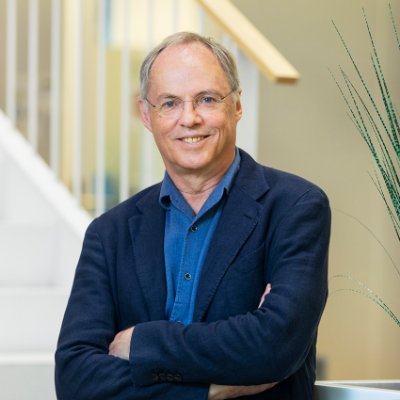
Don't miss this organoid symposium in Utrecht, NL! January 19-21 2027
organoids-are-us.com/

Prof. Dollar retweeted
$qure $clpt
The main gist of the meeting was
Prasad- I don’t want to ever see a patient, f them
New FDA- we want the patients to have a seat at the table. We want to see you and hear you at every point as we develop and go through the trial.
FDA hybrid meeting today, if anyone listens to Karim and Mike Davis talk and thinks amt 130 isn’t getting AA I don’t know what to tell you. You clearly aren’t listening, I put this at a 99 percent chance this gets AA unless amt 130 is a complete fraud which I don’t believe or suddenly some of the patients have tumors. If you are honestly betting that the FDA is going to look at the 4 year results and have a sudden change of heart you are going to have a rude awakening. Again, if you are betting on the first two things that is your choice but if you are betting on that 3rd one you are out of your mind.
Some of the things that stuck out today
Michelle Campbell from the FDA
Campbell said she understands how look, a kid was the example she used, might not sleep well the night before, or blood work, MRI’s, they might not perform well on that day but the day to day success isn’t captured by that, kind of what happened with tms compared to daily lives with tfc with amt 130. Basically saying daily function is important.
She talked about how they consider certain things meaningful such as in some diseases they are in a wheelchair and what is considered meaningful is to be able to push that button to move the wheelchair. She used another disease as being meaningful to be able to microwave food on their own. She also said they recently approved a drug mostly on the success of the 2ndary endpoint compared to the primary.
This FDA is going to be the most open minded FDA we have ever seen. They are open to a crapload of stuff on how to measure success or endpoints. You can tell these people actually care. Complete opposite of Prasad. Rare disease families and patients should be pumped up when they listen to this FDA. On the super rare diseases I also believe they are working hard to deal with certain cmc issues.
Prof. Dollar retweeted

The FDA has responded to the high level of advocacy in the rare disease community, particularly over the last 18 months. By “responded,” I mean actually “listened.”
Prasad, Makary, gone. Many statements and stories from FDA acknowledging the unique medical and human circumstances of rare diseases in children and adults. No more tacit Malthusian Arnold Ventures type attitude, please. Let’s go, FDA. @FDA @FDA_KyleD @HarrieScarlet @FDACDERDirector @FDACDERDirector @minoShah @cdoug @peter_mantas @RTWInstitute @mike98572986 @DrToonces @houmanhemmati @Elijahjstacy @SenRonJohnson @SenRickScott @FDACBER @pan_accindex @US_FDA @HHSGov @RaeTennant50178 @rareRevolutionM @checkorphan
@SecKennedy @laurencurehd @gillibrandny @SavingSadieRae @bradloncar @chrispiaOTM29 @CDCgov @LauraMclinn @dirod923 @RighttoTryGuy
@RainConsulting @FDA_KyleD @cyabydac1 @RareDiseases @RareAction @PatientWo @twotreesthere @CheckRare @DrOz @mike98572986
bloomberg.com/news/articles/…


Prof. Dollar retweeted
3/3
Out of 7,000+ rare diseases, the FDA selected Huntington’s as one of only 2 external case studies for this inaugural event—alongside CDRH (device) and CBER leadership. Coming just days before the late-Oct BLA filing decision, the regulatory alignment here is undeniable. $QURE
Prof. Dollar retweeted
Key dates & read-through: FDA hosts a patient voice meeting on Oct 16 and a public meeting on Oct 28, targeting initial recommendations by Feb 2027.
Leerink notes the most immediate read-through applies to companies currently in active regulatory review, including $QURE. 4/4
Potential new program for $QURE?
A knockdown-and-replace gene therapy targeting the liver and lungs for alpha-1 antitrypsin deficiency (#AATD).
Could CSL Behring $CSLLY, partner in Hemophilia B, be a logical partner to explore? They already supply AAT protein replacement therapy.

ALT Poster to be presented at the ESGCT 33rd Annual Congress in Hamburg, Germany, from 27-30 October 2026.
Prof. Dollar retweeted
1/4 Dr. Ralf Reilmann presented 3-year Q-Motor data from the AMT-130 studies at EHDN 2026. Evaluating objective sensor metrics (finger tapping) provides valuable context beyond subjective motor scores, comparing high-dose AMT-130 against external controls (TRACK-HD). $QURE

