

OMICs, genetics, mitochondrial diseases and more | tweets by group members
Munich, Germany
Joined July 2022
- Tweets15
- Following107
- Followers236
- Likes27
Pinned Tweet
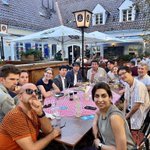
Hello, #ScienceTwitter! We are scientists from Prokisch Lab in Munich, studying the diagnosis and treatments of genetic disorders, with a special focus on mitochondria. 💪 Tweets are from all lab members. Let's connect 👋
Prokisch Lab retweeted

RNA sequencing resolved >1/4 of splicing-related VUS in hereditary cancer testing, improving variant classification and potentially enhancing cancer risk management and treatment strategies bit.ly/4jFjXcz #GIMO #RNASequencing #VUS #HereditaryCancer

ALT Screenshot of Figure 2: Reclassification across all variants of uncertain significance (VUS). A. Sankey plot showing the outcomes of including RNA sequencing data into the evidence for variant interpretation and classification. B. Pie chart of the VUS that were upgraded and downgraded based on variant location and type. C. Classification of VUS based on gene.
Prokisch Lab retweeted

Hypoxia in a pill!
Chronic, continuous 11% FIO2 suppresses brain pathology in models of mitochondrial disease and aging, but we need practical alternatives. We combine a Hb "left-shifter" with a HIF2a inhibitor to achieve therapeutic hypoxia in mice.
jci.org/articles/view/185569

Prokisch Lab retweeted

The GENOMIT Consortium is meeting this days in Barcellona (Spain).
Different expertise, different skills, different countries: together to shed light on mitochondrial diseases.
#MitoAwareness

Prokisch Lab retweeted

New concept for variant effect prediction. 'How bad' is the new 'how rare'. With DNA LMs we can ask how important a variant is for predicting other bases. This influence score correlates better with functional assays. This was not possible with alignment-based conservation.


Prokisch Lab retweeted

We explored why pathogenic variants are present in the gnomAD database for early-onset, severe, dominant conditions. Explanations identified for most but some likely due to incomplete penetrance though more study needed. 1/3
Prokisch Lab retweeted

novel perspective suggesting high sustained energy expenditure may be net protective against cancer | Evolution, Medicine, and Public Health | Oxford Academic academic.oup.com/emph/articl…

Prokisch Lab retweeted

High ROS production from mitochondria comes not from high energy expenditure (EE) but from having high capacity and supply and not using it (sitting idle)

novel perspective suggesting high sustained energy expenditure may be net protective against cancer | Evolution, Medicine, and Public Health | Oxford Academic academic.oup.com/emph/articl…
Prokisch Lab retweeted

Interesting new review article discussing how the rise in genomic investigations has placed an increased emphasis on the need for variant validation. Integrative -omics provide a complementary approach to better understand genomic findings.
doi.org/10.1002/jimd.12663

Prokisch Lab retweeted

Mitochondrial DNA mutations can lead to rare disease and accrue with age. But how does nuclear genome variation influence mtDNA variation?
Here in >250k people, we find that nuclear variants can impact variation in the levels of mtDNA mutations. (1/5)
medrxiv.org/content/10.1101/…

Prokisch Lab retweeted
Next up: Understanding variant pathogenicity using multi-omic pipelines with Holger Prokisch
#SSIEM2022

First in-person meeting with Murayama lab since corona. Getting ready for #ssiem2022 #GENOMIT

Prokisch Lab retweeted

My lab where I work as a postdoc has now a Twitter account! #mitotwitter #sciencetwitter

Hello, #ScienceTwitter! We are scientists from Prokisch Lab in Munich, studying the diagnosis and treatments of genetic disorders, with a special focus on mitochondria. 💪 Tweets are from all lab members. Let's connect 👋
