

Proteus™ is our rapid payload-tailored spacecraft design & production platform, delivering rapid, reliable, one company access to orbit
Los Angeles, CA
Joined November 2022
- Tweets39
- Following62
- Followers97
- Likes62


Pinned Tweet
Imagine a world where every spacecraft is fully blank sheet customized for the payload and mission. Where you don’t have to choose compromised standardization at the start. That’s what we’re building @Proteus_Space. We’re building the machine that builds the machines.
Companies don’t have experience - people do. When people retire or leave, so does the experience. Thats why we built an autonomous payload tailored spacecraft design and production platform = Proteus. Chosen by the world’s leading space organizations for the most demanding missions.
spacenews.com/as-space-force…

You can replace "chip" with "spacecraft" - and that's why we started @Proteus_Space. We're doing the same thing - with blank sheet custom spacecraft design and production.

Elon Musk wants to do 10 chip designs a year with Terafab compared to 1 every 2 years:
"The advancement of any given technology is how many iterations, and how much progress per iteration. How many chip designs can you do, make and test in a year? These days it's typically 2 years for even 1 significant chip design, and that's kind of going from start of design to volume fabrication...we want to do more like 10 designs per year."
Via @teslaownersSV
$SPCX $TSLA
This is one of the reasons we built Proteus - a machine for autonomous spacecraft design and production. It 10x's every engineer that touches it. When you don't have the talent - you need the technology.
rand.org/pubs/research_repor…

Space is unforgiving and missions fail, that’s the reality of the game, but it takes a lot of intellectual honesty to publish lessons learned so the larger community can improve.
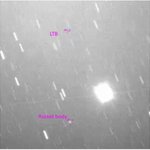
Proud to recognize our Director of Mission Operations, @DillanMcdonald, as a co-author on a new paper documenting the tracking and recovery attempt for NASA’s Lunar Trailblazer mission.
agupubs.onlinelibrary.wiley.…

Lunar Trailblazer launched 26 February 2025, went silent the next day with NASA ending the mission on 31 July 2025.
Draper Selects Proteus for Advanced On-Orbit Mission
Proteus Space is excited to announce a new spacecraft contract award from Draper under a multi-year agreement.
Full announcement:
spacenews.com/draper-selects…
#NationalSecuritySpace #Spacecraft #DigitalEngineering #RapidAccessToSpace


Proteus Space Names Maj. Gen. Kim Crider (USAF, Ret.) to Board of Directors
spacenews.com/proteus-space-…

Shout out to Dr Robinson, who’s a member of our Board of Advisors and who has a payload on our M1 spacecraft in orbit right now.

On this day in 2005, Steve Robinson conducted the first-ever spacewalk underneath the Space Shuttle. He performed the task out of sight of the crew when a tile gap filler became dislodged on the underside of the shuttle. Robinson captured a selfie in the process.

ALT An astronaut using a handheld camera to capture a photo of his helmet visor during a spacewalk.
"Standard" Bus integration schedule and cost overruns have long been a bottleneck across the satellite industry. The pain has just been accepted.
DARPA’s robotic servicing spacecraft to FINALLY fly this summer. Hague explained that there were a number of reasons for the delay: “Both the bus, the satellite bus provided by Northrop Grumman, as well as the payload, the robotic payload provided by DARPA, are very complicated. So, it’s challenges with integrating those, as well as we need to have all the software to be able to work together to be able to do this mission and do that safely,” he said.
Our autonomous, AI-native, services-as-software platform is purpose built to unlock design throughput at scale.
Every mission deserves a spacecraft designed specifically for it, so Proteus rapidly designs payload-tailored buses at the speed of compute, delivering parametric B-Rep CAD manufacturing packages and the engineering analyses needed to rapidly machine and AI&T fully mission-tailored spacecraft today.
breakingdefense.com/2026/05/…

We’re solving these challenges in unique ways for some of the world’s most important space customers today. If you want Instant Intelligence™ on space supply chain, a quickly delivered bus 100% adapted to your payload and mission, and Government Purpose Rights deliverables - give us a shout.
#TheFutureIsFaster


Proteus Space retweeted

We’re “spring”-ing forward a little early!
The successful deployment of JACC – or the JPL Additive Compliant Canister – demonstrates the potential for 3D printed mechanisms for future space antennas.
Learn more: jpl.nasa.gov/images/pia26706…
Another successful on-orbit payload deployment, this time via our collaboration with @NASAJPL!
The JPL Additive Compliant Canister (JACC) is a deployable mechanism based on helical antenna systems. It showcases how additive manufacturing can simplify compliant mechanisms and deployable structures.
About the size of a small paperback book when stowed and weighing under 500 grams, the jack-in-the-box–style system integrates its lid, canister, hinges, torsion springs, and deployable compression spring into a largely monolithic titanium structure, reducing the part count by a factor of three compared with conventional designs.
The system also features a novel, embedded kinematic hinge architecture. Developed and produced in-house at JPL in less than a year from napkin sketch to delivery, JACC leverages the laboratory’s advanced additive manufacturing capabilities.
Its successful on-orbit demonstration aboard the Proteus Space M1 ESPA class satellite underscores the utility of 3D printing for advanced deployable systems on future space missions.
Thanks to our mission collaborators!
@NASAJPL
@SpaceWERXDOD
@AFResearchLab
@LeonardoDRSnews
@ucdavis