

The Quantum Biology DAO is a non-profit that supports the field with community building, governance tokens and an open competition for research grants.
Joined July 2024
- Tweets2.5K
- Following428
- Followers7.3K
- Likes9.6K



Living cells are warm, wet, and noisy. Exactly the conditions that can disrupt delicate quantum states.
So how could quantum effects possibly influence biology? And why are they so difficult to measure?
New video introducing these ideas, check it out >> youtu.be/1_kn7D9CNkA
PSA: You don't need to be a scientist to get involved in science!!
There are communities dedicated to making science more accessible and creating opportunities for people from all backgrounds to get involved.
(Like the Quantum Biology DAO 🚀)
"The Terrifying Theory of Quantum Biology" 👀
What do you think?
youtu.be/bjvlGibYSoU?si=z5_x…
Quantum Biology DAO retweeted

Every living thing on Earth has grown up inside a magnetic field. It’s about 50 µT, and it’s so constant that we never notice it.
So here’s a simple question: what happens to life when you take it away?
At QBI, we create hypomagnetic conditions, reducing magnetic fields to a tiny fraction of Earth's normal strength, sometimes below 1 nT.
Why? Removing Earth's magnetic field helps us investigate whether biological systems respond to it, and whether quantum effects might help explain how.
Here’s some of what we've seen so far:
- Frog embryos developed faster. In a carefully controlled hypomagnetic environment below 1 nT, Xenopus laevis embryos showed accelerated development compared with those in Earth's normal magnetic field: doi.org/10.1101/2024.10.10.6…
- Bacteria took longer to start growing. At 19 nT, E. coli spent about 50% longer in its initial adjustment phase, but grew at the same rate once rapid growth began: doi.org/10.64898/2026.08.03.…
- We identified 81 genes in E. coli whose expression differed between hypomagnetic and normal magnetic conditions during that initial adjustment phase: doi.org/10.64898/2026.08.03.…
- Fluorescent proteins responded to magnetic fields. We've observed magnetic-field-dependent fluorescence in both engineered and naturally occurring proteins. In our MagLOV2 experiments, the results were consistent with the quantum radical pair mechanism: biorxiv.org/content/10.64898…
We're still figuring out what causes these responses. But understanding them could reveal more about how living systems interact with magnetic fields and whether quantum mechanics plays a role.
Our experiments, methods, and data are openly documented in QBI's electronic lab notebooks (ELNs): data.quantumbiology.org/


Let's start off your week with a Quick Quantum Quiz!
Question: What is quantum tunneling? Simply put, it's particles _________ (fill in the blank)
17%changing spin
0%losing energy
0%forming bonds
83%crossing barriers
6 votes • 1 daysWhat is spin??
Electron spin is a purely quantum property... there's nothing quite like it in our everyday experience. To find it, we have to look at the microscopic level.
Dr. Jonathan Woodward intros this phenomenon in this clip from his recent presentation. For the full video, check out the link below ⬇️
Quantum Biology DAO retweeted
Meet the QBI Team! (Part 2/2)
Continuing our introductions, meet four more people behind the Quantum Biology Institute! From scientific computing and microbiology to research infrastructure and operations, each plays an important role in supporting QBI's mission.
Dr. Michael Montague | Chief Technology Officer
A microbiologist with research experience at Johns Hopkins and the J. Craig Venter Institute, Michael brings expertise in synthetic biology, bioinformatics, and microbiology. At QBI, he oversees technology efforts and investigates how microorganisms respond to weak magnetic fields through multi-omics research.
Dr. Morgan Sosa | Head of Computational Research and Data Infrastructure
A computational physical chemist and research software developer, Morgan built QBI's research data infrastructure from the ground up. Her work includes developing the systems that automatically publish our electronic lab notebooks, helping make QBI's experiments, methods, and scientific progress openly accessible.
Bret Gaitan | Grants & Operations Consultant
With a background spanning military intelligence, education, business management, and operations, Bret brings experience in research, analysis, and organizational planning. At QBI, he supports grant-related work and helps improve the processes that keep the Institute running smoothly.
Jennilyn Gaitan | Head of Operations
Certainly not least, the woman who helps keep everything together! With more than two decades of experience in administration and operations, Jennilyn has been part of QBI since 2023. She oversees day-to-day operations and develops the systems and processes that allow the team to focus on their research.
We're grateful for the expertise, dedication, and perspectives each person brings to QBI. It's this kind of collaboration that makes interdisciplinary research possible, and we're excited to share more of the work happening across the Institute.

Sharing this resource if you haven't come across it yet >>
Back in June, we had the pleasure of sitting down with quantum biologist Dr. Nathan Babcock to discuss his work and the field more broadly.
In addition to his publications, Nathan has a YouTube series covering topics ranging from quantum fundamentals to photosynthesis, spin chemistry, and more.
Check it out if you're interested in learning more about quantum biology: youtube.com/@drbabcock

How can weak magnetic fields affect biological processes?
Scientists have proposed several mechanisms to explain how living organisms detect and respond to magnetic fields. Here are four possibilities:
1. Magnetic particles (magnetite): Certain organisms, including magnetotactic bacteria, contain tiny magnetic particles that help them align with Earth's magnetic field.
2. Electrical conduction: Sharks and rays use specialized sensory systems to detect weak electrical fields in their surroundings.
3. New physical mechanisms: It's always possible that undiscovered physics could explain certain biological responses, although there is currently little evidence to support this possibility.
4. Electron spin superpositions: This is where quantum biology comes in. The radical pair mechanism involves quantum properties of electrons that may allow weak magnetic fields to influence chemical reactions and, potentially, biological processes.
Of these possibilities, electron spin dynamics are a particularly promising area of research for understanding magnetic field effects that cannot be explained by established classical mechanisms.
Join us as we dive into the frontier of quantum biology, where physics and life sciences converge.
Quantum Biology DAO retweeted
Meet the QBI Team! (Part 1/2)
We wanted to take a moment to introduce (or reintroduce) the people behind the Quantum Biology Institute. Our team brings together researchers from different scientific backgrounds, each contributing their expertise to a shared goal: understanding the role quantum physics may play in living systems.
Here are some of the people working to make that happen:
Dr. Clarice D. Aiello | Chief Scientific Officer
A quantum engineer with a PhD from MIT and research experience at Stanford and UC Berkeley, Clarice leads QBI's scientific direction. Her work focuses on understanding how quantum physics may inform biological processes at the nanoscale.
Dr. Venkatesh K. Sridharan | Head of Redox Biology
With a background in cardiovascular research and biopharmaceutical discovery, Venkatesh investigates how weak magnetic fields and electron-spin dynamics may influence cellular redox processes, signaling, and metabolism.
Dr. Brian L. Ross | Head of Biochemistry
A molecular biologist specializing in protein design and evolution, Brian earned his PhD from Johns Hopkins and conducted postdoctoral research at the Weizmann Institute. At QBI, he brings expertise in protein engineering and molecular biology to the investigation of magnetosensitive proteins.
Dr. Alessandro Lodesani | Co-founder
With a PhD in Physics from the Polytechnic University of Milan and previous research at MIT, Alessandro helped build QBI's experimental capabilities. His work has included designing specialized instruments to investigate the effects of weak magnetic fields on biological systems.
Joseph Mansour | Applied Physicist
A patented inventor, and STEM polymath, with 40 years developing laser, and electronic commercial products. Completed graduate studies in Applied Physics at Stanford, after Physics B.S. from UCLA. At QBI, he is developing the Quantum Bacterioscope.
We're excited to show off some of the people driving this research forward.

Quantum Biology DAO retweeted
We thought it was time to properly introduce ourselves and share a little more about the work we're doing at the Quantum Biology Institute (QBI).
Our mission is to understand the role quantum physics plays in living biological systems. Right now, our research focuses on a core question: How can weak magnetic fields influence biology?
Scientists have observed that magnetic fields can affect biological processes, including cellular growth and metabolism. But the mechanisms behind many of these effects remain poorly understood.
One hypothesis we're investigating involves quantum superposition, through a process known as the radical pair mechanism. In certain chemical reactions, magnetic fields can influence the quantum states of paired electrons, potentially changing the outcomes of those reactions.
We want to understand whether these quantum processes help explain magnetic-field effects inside living cells, and whether they play a functional role in biology. Thread below ⬇️
—
How are we approaching this?
Our research brings together physics and biology:
- On the physics side, we're developing specialized instruments to investigate magnetic-field effects and quantum spin dynamics, alongside theoretical models to understand and predict these interactions.
- On the biology side, we're identifying magnetosensitive proteins, studying changes in gene expression and biological pathways, and exploring how magnetic fields may influence redox processes and metabolism.
—
Where does the research stand today, and what's next?
So far, we've developed specialized instruments, built theoretical models, identified naturally occurring magnetosensitive proteins, and observed magnetic-field-dependent changes in bacterial growth and gene expression.
Now, we're working to connect these observations to their underlying physics. We're developing the Quantum Bacterioscope to investigate quantum spin dynamics inside living cells, while continuing to identify the molecules and biological pathways involved. Our long-term goal is to establish whether and how quantum superposition contributes to biological function.
—
Of course, there's much more to this work than we can fit into one X post, and we'd love for you to explore the research, ask questions, and join the conversation.
Open science is central to how we operate. We share our ongoing research through publicly accessible electronic lab notebooks, alongside publications, educational courses, and more:
- Open lab notebooks: data.quantumbiology.org/
- Research publications: quantumbiology.org/publicati…
- Educational series: youtube.com/@QuantumBioOrg
Follow along as we investigate whether quantum physics could offer an entirely new way to understand, and perhaps one day influence, living biology.

If you missed today's earlier presentation with Dr. Jonathan Woodward, the recording is now available on YouTube!
A big thank you to Jonny for giving us an accessible introduction and sharing his research on radical pair reactions, new microscopy methods, and magnetic field effects in living systems. Thanks as well to everyone who joined us!
Watch the full presentation: youtu.be/a0Xa38wgV9w?si=9tk9…
Hello folks! Just about 10 minutes until our presentation + Q&A from Jonathan Woodward!
All are welcome >> us06web.zoom.us/j/8431960594…


Can quantum effects explain how living organisms respond to weak magnetic fields?
The radical pair mechanism is a leading hypothesis for how migratory birds sense Earth's magnetic field. But how can we investigate these quantum processes inside living systems?
On October 14th at 8am ET / 5am PT, Dr. Jonathan Woodward of the University of Tokyo will join us for a live presentation exploring how radical pair reactions can be investigated in biological systems, followed by a community Q&A.
Dr. Woodward's research focuses on spin chemistry and magnetic field effects on chemical reactions, using advanced spectroscopy to investigate radical pair processes in biological systems.
His talk will explore new microscopy methods for observing these reactions in real time, including findings that provide evidence of the radical pair mechanism operating in living cells and substantial magnetic field responses in unmodified bacteria.
Join our Discord for details >> quantumbiology.community

New paper in PLOS ONE explores lithium isotope effects and magnetic interactions in radical-pair chemistry, using quantum mechanical simulations to investigate potential biological implications.
Read here: doi.org/10.1371/journal.pone…

Just two days until Jonny Woodward joins us! Come learn more about quantum biology and join the discussion.
Everyone is welcome! Join us on Zoom >> us06web.zoom.us/j/8431960594…
Can quantum effects explain how living organisms respond to weak magnetic fields?
The radical pair mechanism is a leading hypothesis for how migratory birds sense Earth's magnetic field. But how can we investigate these quantum processes inside living systems?
On October 14th at 8am ET / 5am PT, Dr. Jonathan Woodward of the University of Tokyo will join us for a live presentation exploring how radical pair reactions can be investigated in biological systems, followed by a community Q&A.
Dr. Woodward's research focuses on spin chemistry and magnetic field effects on chemical reactions, using advanced spectroscopy to investigate radical pair processes in biological systems.
His talk will explore new microscopy methods for observing these reactions in real time, including findings that provide evidence of the radical pair mechanism operating in living cells and substantial magnetic field responses in unmodified bacteria.
Join our Discord for details >> quantumbiology.community
Quantum Biology DAO retweeted
We are an institute studying how quantum effects may influence biological systems, with much of our work focused on how weak magnetic fields interact with biology.
We also want to make more of the research process visible, not just the finished results. Here’s how we do it ⬇️


🐸 It's been two years since the tadpole study!
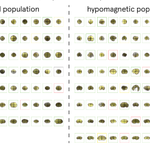
This research from collaborators in our ecosystem found that Xenopus laevis embryos developed faster when exposed to a hypomagnetic field of less than 1 nT, compared to Earth's natural magnetic field of approximately 50 μT.
For decades, scientists have reported weak magnetic field effects across a wide range of organisms and cell types, but these findings have often been met with skepticism.
This study added large-scale, open data to the conversation, showing that reducing Earth's magnetic field to almost zero can have measurable effects on biological development.
The findings raise an important question: How are living organisms able to detect and respond to such weak magnetic fields?
Two years on, there's still plenty to uncover. Check it out: biorxiv.org/content/10.1101/…

Quantum Biology DAO retweeted

BREAKING NEWS
The 2026 #NobelPrize in Physiology or Medicine has been awarded to Karl Deisseroth, Peter Hegemann and Georg Nagel “for their discoveries concerning light-gated ion channels and optogenetics.”
