I was walking around Kanapaha Botanical Garden near Gainesville, Florida. There were lots of interesting plants to see, though many weren't flowering at this time of year (early November). An exception was this beauty: Callianthe picta (commonly called Chinese lantern).
C. picta is classified in the mallow or cotton family (Malvaceae) and is related to cotton, okra, and cacao (the source of chocolate).
The plant is a small shrub with maple-like, lobed leaves and striking, bell-shaped flowers. It has an extensive range, with a center of diversity in South America (Argentina, Brazil, Paraguay, and Uruguay), and has become naturalized in Mexico, China, and India.
The flowers are typically orange-red or yellow, with dark red veins (another common name is red-veined flowering maple). Each flower has five petals and numerous stamens fused together around a central pistil (the stigma is visible in the center of the flower). Interestingly, the flowers are edible and are reported to be very sweet; apparently, the longer a flower is open, the sweeter its flavor. Not surprisingly, hummingbirds and bees pollinate the flowers.
Some ethnobotanical data suggest that this plant might have medicinal value. A survey of Indigenous tea garden workers in India (Chettri, D. and Chowdhury, M. Ethnobotany Research and Applications 34: 13 2026) found that they used 197 different plants to treat a variety of diseases and disorders. Among these plants, C. picta flowers were gathered, used raw or dried, and ground into a powder to treat reproductive disorders (e.g., menstrual cramps) and kidney and urinary problems. These data are based entirely on a survey of the workers. No laboratory investigations have been done to support these claims.
Take home message: Visit botanical gardens and/or walk in nature. You might be surprised by what you find.
#botany #Chineselantern #plants
What do Mayapple and Eastern Red Cedar have in common?
At first glance, they seem very different:
Mayapples belong to the Barberry Family (Berberidaceae) in the genus Podophyllum. There are two main species: American mayapple (P. peltatum L.) and the Indian or Himalayan mayapple (P. hexandrum). American mayapple is native to North America, whereas the Indian mayapple is found in parts of China, India, Pakistan, Nepal, and Afghanistan.
Mayapple is a perennial wildflower that grows from an underground, root-like stem called a rhizome. It has a very distinctive morphology: the leaves look like umbrellas, with one or two leaves per plant. Each plant usually forms one flower, and after fertilization, yields a fruit the size of a small lemon.
Mayapple species have a long history as medicines. For example, First American tribes used the American mayapple as a laxative to treat helminth infections and snake bites. The Himalayan mayapple was used to treat liver disorders, wounds, and tumors. Because of these uses, the plants have become overharvested and endangered in many areas.
Eastern Red Cedar (Juniperus virginiana L.) (ERC) is a member of the Cypress Family and is native to eastern North America. It grows as an evergreen shrub or tree. Its bark peels in strips as the tree grows. As a conifer, it does not produce flowers but reproduces via male (pollen-producing) and female (seed-producing) cones. The seed cones resemble berries, are dark purple-blue, and contain 1-3 seeds. They serve as a winter food source for many bird species. ERC has become invasive in some areas because it thrives in disturbed grasslands and recently cleared forested areas. The heartwood is decay-resistant and is used to make fence posts, chests, and closet linings. It has long been used as a medicinal plant to treat a variety of conditions, including cough, joint pain, genital warts, and skin rashes.
What is the commonality between mayapple and ERC?
They both produce the chemical podophyllotoxin (PPT).
Why is PPT important?
PPT is important because it specifically inhibits microtubule formation, slowing down the growth of cells. Microtubules are fibers that are necessary for the proper segregation of chromosomes during cell division. Unfortunately, early studies showed that PPT is too toxic for systemic (intravenous) use. Most of its clinical use has been limited to topical treatment of genital warts and other skin conditions.
On the upside, recent research has focused on synthesizing PPT derivatives, leading to the discovery of teniposide and etoposide. These chemicals stop cell division by inhibiting the enzyme topoisomerase II, resulting in DNA strand breaks. Etoposide has been used to treat ovarian and testicular cancers, leukemia, retinoblastoma, and small-cell lung cancer, whereas teniposide has been used to treat Hodgkin's lymphoma, lymphocytic leukemia, and bladder cancer. These chemicals are effective but also have significant side effects that limit their use.
Although both mayapple species and ERC produce PPT, harvesting has been limited in mayapple because of limited availability of plant material. A recent article by Katelyn Stenmark and colleagues, published in the journal Industrial Crops and Products (237: 2025), proposed a method for extracting PPT from ERC foliage. Although yields were lower than those obtained from mayapple rhizomes or leaves, the greater availability of ERC foliage makes this process attractive for providing PPT for research aimed at discovering new derivatives with fewer side effects and greater efficacy in cancer treatment.
A final note: remember that I'm just an old biologist who does not give medical advice. If you are interested in these plants as treatments, talk to a competent medical professional. DO NOT CONSUME THESE PLANTS UNDER ANY CONDITIONS AS THEY ARE HIGHLY TOXIC.
#botany #plantmedicines #plants
One of the toughest plants most people have never heard of lives in the Namib Desert of southern Africa, one of the oldest and driest deserts on Earth.
Some years ago, we were staying in the charming coastal town of Swakopmund, Namibia. (Incidentally, this small city is like a slice of Germany in Africa, as it was originally part of a German colony. The Germans were forced out during WWI, and Namibia became independent in 1990.) We drove into the Namib Desert and found this amazing plant, Welwitschia mirabilis. (It was named after the Austrian botanist Friedrich Welwitsch, the first European to classify the plant.)
Further investigation showed that Welwitschia is a gymnosperm, meaning it does not flower but instead produces male and female cones on different plants for reproduction. A variety of insects, including flies, bees, and wasps, pollinate it.
It has an interesting structure: two large, leathery leaves, a short stem, and a very deep taproot. Each plant produces only two leaves during its life. The leaves elongate from the base; as they elongate (for some plants, the leaves can reach 2 meters in length), the ends split, giving the appearance of multiple leaves.
A classic study by B.M. Eller and colleagues, published in the South African Journal of Botany (2: 209-223,1983), reported that it takes about 10 years for the leaves to elongate by 100 cm. Gas exchange measurements showed that the leaves are most productive (with the highest photosynthesis rates) away from the base and near the mid-leaf.
The Namib’s desert habitat is harsh, with prolonged dry periods; consequently, the plant obtains moisture by capturing water from the humid desert fog and tapping into very deep groundwater. Given all this, it is remarkable that some Welwitschia plants have survived for more than 1000 years.
Some research has concluded that ancestors of Welwitschia were extant during the age of the dinosaurs, meaning the plants' origins date back millions of years. This evolutionary history makes Welwitschia a true “living fossil”.
Welwitschia has been recognized by independent Namibia, as the plant appears on the official coat of arms.
#plant #livingfossil #Namibia
John Choinski retweeted
It’s astonishing how many of us do not realise —mostly teens— that almost all our peculiar ideas on how to run society are not original, were well known and written about repeatedly within 2-3000 year old wisdom stories, of the classical world mythology, the ancient Near East, even the Sumerians with the story of Gilgamesh and his friend Enkidu murdering the gardener in a garden for fun (possible influence on later Eden and flood story).
Human nature never changes, and the literature has been telling us this since the year dot.
How a plant chemical isolated from tree bark became a frontline chemotherapy treatment for cancer.
The story begins in 1960, when a program supported by the National Cancer Institute and the United States Department of Agriculture sent botanists worldwide to collect plant samples, which researchers then screened for anticancer activity. Between 1960 and 1981, researchers collected and screened more than 30,000 plants and other natural products. Among these samples were tissues from the Pacific Yew tree (Taxus brevifolia) in the Yew family. Initial investigations using crude bark extracts and a laboratory-based assay showed promising results, inhibiting the growth of cancer cells grown in the laboratory. Researchers later discovered that this extract worked by disrupting cell division and slowing tumor growth.
Chemical analysis of the extracts eventually identified the active anticancer compound, a plant terpene named Taxol (also called paclitaxel). Researchers later tested the purified chemical in animals, followed by clinical trials beginning in 1984. This research eventually led to FDA approval in 1992 to use Taxol as a chemotherapy agent to treat ovarian cancer.
There was one major problem. Overharvesting threatened the wild supply of Pacific yew bark. Additionally, the yield of Taxol from the bark was very low, with ~1000 trees needed to produce 1 kg of Taxol. A tree also needs ~200 years to reach adult size. This led to protocols for its total synthesis from simple organic precursors, which was accomplished in 2005.
Today, Taxol and its chemical derivatives are frontline chemotherapy agents effective against many types of cancer, including breast, lung, and ovarian cancers, as well as Kaposi’s sarcoma.
#plants #taxol #paclitaxel
So I decided to catch myself up on what’s been happening in the wonderful world of UFOs, alien crash recoveries, and the never-ending march toward “disclosure.”
A couple of hours later, even with the help of AI to sift through it all, I came to a remarkable conclusion.
We’re exactly where we were 40 years ago.
Proof of extraterrestrial spacecraft? Zero.
Verified alien bodies or recovered technology? Zero.
The evidence? Mostly “he said,” occasionally “she said,” and an endless parade of people who know someone who knows someone who supposedly saw something.
But something HAS changed!
The productions are more elaborate. The documentaries are slicker. The conferences are bigger. The marketing is world-class. And the sheer volume of monetized content, subscriptions, books, and merchandise has never been more impressive.
The alien disclosure industry is thriving. The actual disclosure? Still missing.
Meanwhile, the genuine search for extraterrestrial life continues, quietly and methodically, conducted by scientists using telescopes, spacecraft, laboratories, and the scientific method to investigate everything from our own solar system to distant worlds many light-years away.
And here we are, on our little planet, tucked away in a quiet corner of the Milky Way, still waiting for someone to produce an actual alien.
Apparently, disclosure has been “just around the corner” for 40 years.
That’s one hell of a corner.
If you have hay fever (allergic rhinitis), don't blame the lovely goldenrod plant; the culprit is more likely the less showy, weedy ragweed plant. The main difference is that insects pollinate goldenrods, while wind carries ragweed pollen.
Ragweed belongs to the sunflower plant family, in the genus Ambrosia. (Interestingly, the Greek word translates roughly to “food of the gods.” The great Swedish botanist Carl Linnaeus named the plant, so perhaps this is a type of botanical joke?)
Ragweed probably originated in North America but has been introduced to many suitable habitats worldwide, including Europe, Asia, and elsewhere, where it has become invasive. The flowerhead, or inflorescence, is a distinctive spike that typically contains both male (pollen-producing) and female (pollen-receptive) flowers. A single plant can shed an estimated 1 billion pollen grains during the growing season. This pollen is responsible for ~50% of all cases of allergic rhinitis in areas where it grows. Pollen production begins in late summer and continues into the Fall. Pollen shedding peaks at midday and is worse on dry days for allergy sufferers (rainfall removes pollen from the air).
On the positive side, people have used ragweed as a medicinal plant (primarily by First American tribes) and in phytoremediation because its roots can take up lead from contaminated soils.
Goldenrod is also in the sunflower family, mostly in the genus Solidago, although many other similar plants are also called goldenrods. Most of these plants have a center of diversity in North America, but they now occur in many other regions worldwide with suitable habitats, where they have become invasive.
The distinctive flower heads typically consist of numerous individual flowers, usually yellow, that bloom in late summer or fall, though this group includes many variations. The flowers produce nectar that attracts a wide variety of insect pollinators, including many species of bees, wasps, and moths. These insects pollinate the flowers because the sticky pollen doesn't blow around in the wind. Many other insects, including wasps, butterflies, and moths, often lay their eggs in the flowers.
Goldenrods have many traditional medicinal uses and are also edible. Goldenrod leaves have been found to contain rubber, prompting industrialist Henry Ford to consider using goldenrod as a substitute for natural rubber trees. Unfortunately, goldenrod rubber is produced in low amounts and is of poor quality.
A recent paper in the journal Molecules (2026, 31, 126) by E. Gebarowska and colleagues suggests that, because these plants have high levels of bioactive phytochemicals with antifungal and insecticidal activity, they could serve as an alternative to synthetic pesticides.
Summary? Don’t blame goldenrod for your hay fever. Appreciate its role in preserving natural pollinators.
#hayfever #goldenrod #ragweed
John Choinski retweeted
FSD is very liberating for the elderly.
Replying to @RonDeSantis
FSD is transformational and will be an amazing utility, especially for those only marginally able to drive.
The elderly especially will benefit from it.
John Choinski retweeted
Replying to @QuercusJohn
[Revised]
The pathological gnostic hard L/R manifestations do.
They share a common goal in seeking to become gods, but are inverses of each other.
In short, the pathology that plagues liberalism is existential (ontological) in nature.
Whilst the pathology that plagues conservatism is epistemological in nature.
Normal Liberalism & Conservatism finds woke L&R repellent as they realise it’s electoral kryptonite.
"What…is 'Woke'?" within the political left and right?
— it's warmed up Gnostic Heresy from the 2nd and 12 century with a secular presentation, rooted in Forbidden fruit story in Genesis 3, the oldest story known: the heresy that we can become like gods.
It is the same today in its structure and has four age-old steps
ONE. the problem is not maladaptive arrogance/moral self betrayal/covenental rupture, what in theological language would be termed sin — but 'oppression' from a 'They'/Elites.
The truth is concealed by a
‘They'—Big Pharma, the patriarchy, whiteness, Capitalists, Bill Gates, three-letter agencies, CIA, Jews, etc.
To be 'woke' is to be awakened to the truth about 'They/ the 'matrix', the wizard behind the curtain.
TWO. Solution: the answer is not faith in God nor works, but discovering the hidden secret or plan, 'smash the patriarchy', finding the suppressed patent or cure, etc
THREE. You have become awakened to the truth about 'They', thus 'Woke'.The awakened are like Toto the dog in the Wizard of Oz, they have pulled back the curtain on how society really is. Everyone else is asleep or 'sheeple', as conspiracy theorists put it.
FOUR. Redemption: comes through awakening. Man is not converted; he becomes “woke”.
The system is corrupt so it needs to be destroyed versus the 'They' are corrupt and controlling things behind the scenes.
Hard left: WHAT to blame for our personal failings. The ‘They’ is the ‘System’/Being itself/the facticity and givenness of the world.
Hard right: WHO to blame (usually cohorts or demographics)
To the Modernist and Post-Modernist gnostic,
redemption of Being comes from being awakened (Woke) to knowledge (gnosis) rather than loving-kindness, and gnosis is secret and possessed by an elect — or by the DEI consultant (Left), or the ‘Based’ (Right).
Conspiracy theorists want to awaken friends & fam, not to do so would be a moral failing.
If enough people can be awakened, the eschaton is ‘immanantised’ (author Eric Voegelin) and Eden/utopia is built or restored.
In modern politics the pathology is manifest thus:
Labour/Left: Build a new Eden — future/hope/sunlit uplands.
ConservativeRight: Return to Eden — past/legacy/restoration/make great again.
The brilliant resource @NewDiscourses breaks down much of this in great depth and it’s a real wild ride and utterly engrossing
Look closely in nature; you might find something amazing. For example:
Red Spider Lily (Lycoris radiata) recently popped up in my garden. It has a very interesting flower with spindly stamens that give it a spider-like appearance. This plant belongs to the Amaryllis family and originates in East Asia, though it grows in suitable habitats worldwide. The flowers appear first, followed by the leaves in late fall/early winter. Because of this delay, it is also called the Resurrection Lily.
Key facts about this plant. Do not eat it, particularly the bulbs, as they contain the alkaloid lycorine, which is deadly poisonous. In very small amounts, the tissue also contains another alkaloid, galantamine. Some research shows it is a potent acetylcholinesterase inhibitor. This has caused researchers to suggest it could be a treatment for symptomatic Alzheimer’s disease and (possibly) schizophrenia. More work is needed, but unfortunately, the plant produces only a very small amount of the alkaloid, which limits experimental work. Researchers are working to determine how to synthesize galantamine without the plant.
What a cool plant to find!
Recently, the USA and elsewhere celebrated Columbus Day. Some have reacted with mixed feelings, viewing Christopher Columbus's 1492 arrival in the Americas as the start of exploitation of the peoples who already lived there. The abuse was real, particularly through the introduction of previously unknown diseases (e.g., measles, mumps, smallpox, influenza, typhus, whooping cough) to native populations.
Did you know, however, the huge positive impact that this contact eventually had? Columbus's voyages established trade routes with Europe and, eventually, the rest of the world. This trade included plants native to the Americas that became essential to agriculture. Can you imagine Ireland without potatoes? Italy without the tomato? Africa without maize (corn)?
A recent paper by J. Irmišová and colleagues, entitled “American useful plants in post-medieval Europe: Integrating archaeobotanical and historical evidence”, appeared in the Journal of Ethnobotany and Economic Botany 80 (3), 2026, pp. 353-374. The authors did an extensive analysis of archival data to produce a list of 24 American plants introduced to Europe and the rest of the world through these newly established trade routes. Interestingly, although crop improvement techniques developed cultivars better suited to European climates and soils, indigenous farmers had already cultivated most of these plants. The list includes peanuts, tomato, chili pepper, sunflower, pumpkin and squash, potato, tobacco, common bean, maize (corn) and cacao.
For example:
The tomato (Solanum lycopersicum L.) has a geographic center of origin in (what is now) south-central Mexico, and wild plants were domesticated ~9000 years before the present day (BP).
The potato (Solanum tuberosum L.) originated in modern-day southern Peru and has been a cultivated plant since between 5400 and 4500 years BP.
Tobacco (Nicotiana sp.) has a geographic center of origin in modern-day Colombia and was initially cultivated between 8000 and 6000 years BP.
Maize or corn (Zea mays L.) also originated in modern-day central Mexico, with cultivation beginning between 9000 and 6250 years BP.
Cacao (Theobroma cacao L.), the source of chocolate, originated in modern-day Ecuador and was initially cultivated between 5300 and 5000 years BP.
As a personal aside: I lived in Zimbabwe in the late 1980’s. A common meal included a finely grown cornmeal preparation (it looks like mashed potatoes) called sadza (generally eaten with a green vegetable and some meat). The image shows a good balanced meal of sadza, greens and goat offal (intestines wrapped around the stomach). I rarely met anyone who knew that maize originated in the Americas. I noticed the same trend in Botswana/Namibia, where a similar cornmeal mash is called pap.
#plants #ColumbusDay
John Choinski retweeted
One thing you may encounter at university while you read your Master’s degree in thst most rarified of spheres —the Academy— is the dawning, slow astonishment that some —even alas, a minority of your contemporaries and peers— will struggle to understand what you are saying to them and that because •they•do not understand, they believe that you are the dumb one.
This is hardly unusual as the ‘Professor’ Jason Arday OxBridge scandal revealed.
What’s curious about really smart folk you meet —and I don’t ordinarily mean Book-smart,’ ‘knowing a lot of of stuff’ smart or near ubiquitous within the Academy, the anti-knowledge of ‘ideologically possessed’ pseudo-smart, where the person’s consciousness gestalt of relating to the world has been entirely replaced via a totalising paradigm that they did not arrive at via their own reasoning—
Not those sorts, but when you meet the ‘switched on’ smart, the Richard Feynmans, the Dawkins, the Jordan Petersons of the Academy…
is that really smart folk tend to know what they know well,
know where their knowing runs out of road,
and know —and deeply realise— that, really, they know next to nothing.
The •really• dumb people think they know everything, but know even less than the really smart people.
They think the really smart people are dumb or boring for the reason that smart folk realise they don't know much.
In other words, they mistake certainly and cynicism for knowledge and believe the really smart person’s caution, uncertainty and ‘ on the other hand’ nuance for not knowing much.
So…if your comprehension and understanding of the world is sufficiently advanced and subtle, to someone who doesn't know much about the world, what you say will often sound like complete gibberish to them.
John Choinski retweeted
The cautionary tale of sociognosticism operates on several levels.
1Epistemologically: Don't mistake reimagined reality for actual reality.
2Psychologically: Attempting to deny your own nature creates pathology.
3Socially: Systems built on denial of human nature create friction and instability.
4Existentially: There are limits to what consciousness can overcome and wisdom lies in recognising them.
5 Physically: Attempting to deny your own sexed embodiment and physical nature creates pathology.
More Supermarket Botany
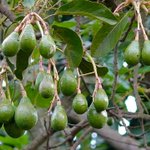
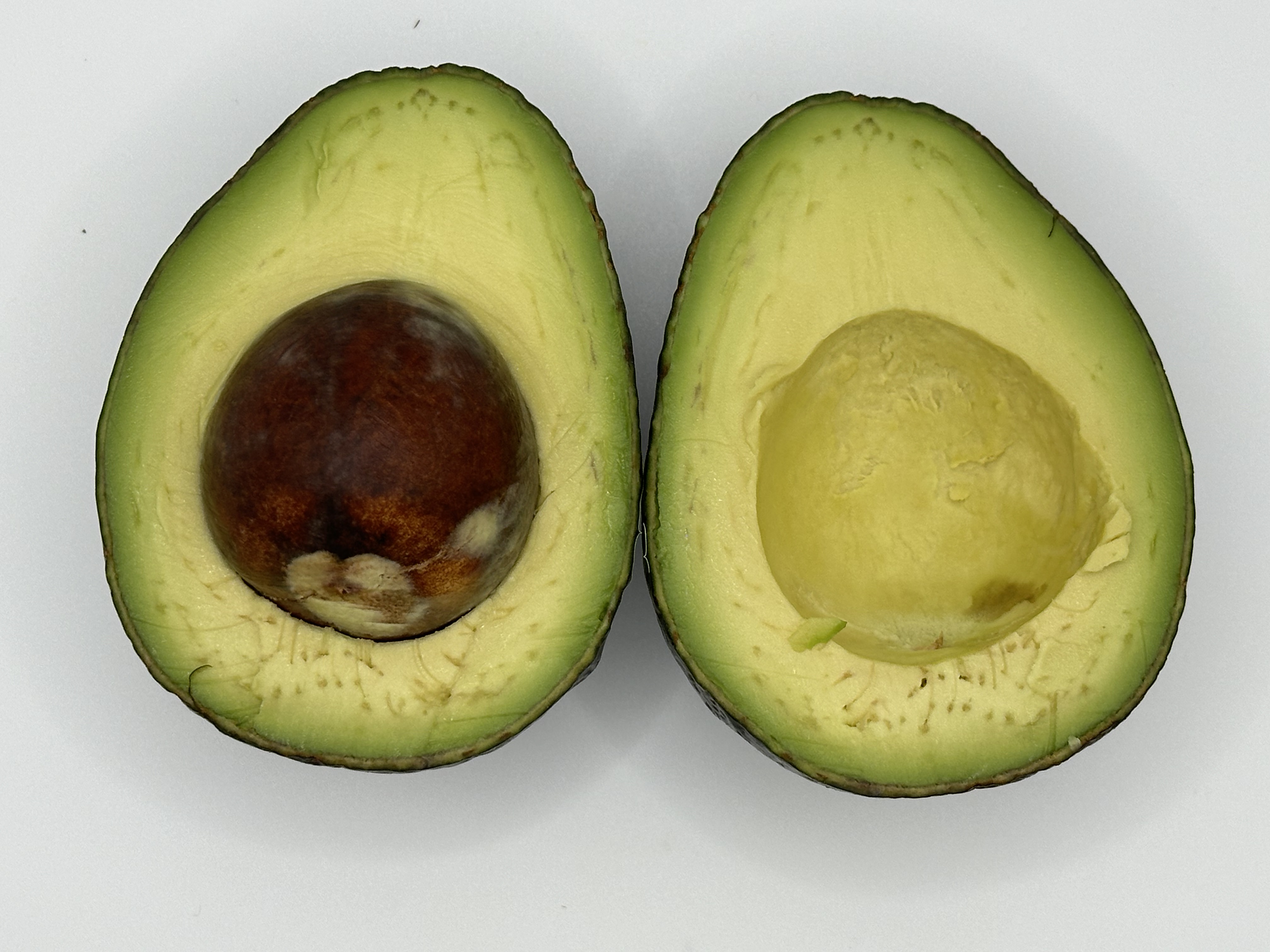
Avocados are nutritional powerhouses that are related to the trees that produce cinnamon and bay leaves.
They are also botanically berries
Avocados (Persea americana) are medium-sized trees (up to 20m or 66 feet) in the Laurel (Lauraceae) family, with a center of diversity in the New World, probably from Mexico.
The fruit is a single-seeded berry that some classify as a drupe (a stone fruit with a bony pit like a plum), although the seed covering is not bony but very thin. The edible part is the fleshy middle layer. Other economically important plants in this family include spices, cinnamon (Cinnamomum sp.), and bay leaves (Laurus nobilis L.)
The avocado is a climacteric fruit. This means it matures on the tree but ripens after harvesting. Knowing avocados are climacteric fruits helps when selecting "ripe" avocados at the market; they are hard in texture but will ripen after a week or so. Putting the fruit in a paper bag with a ripe banana speeds ripening. This is because bananas emit ethylene gas. Ethylene is a natural ripening hormone. Growers have learned this and often expose mature fruits to ethylene gas before marketing them in a grocery store to make them more desirable to shoppers. Admit it, you squeeze an avocado before buying it! Consume ripe avocados as soon as possible; otherwise, they will get mushy.
The most sold avocado is the Hass cultivar, named after a plant breeder, Rudolph Hass, who developed the variety in California and obtained a patent in 1935. It is interesting to note that the first or mother Hass avocado tree was obtained from a single seed. Since then, all subsequent Hass trees have been propagated asexually from cuttings obtained from the mother tree or her offspring or using tissue culture techniques.
An up-and-coming avocado variety (soon to be patented) may be the Luna UCR (name trademarked), developed in 2023 by Mary Lu Arpaia, Eric Focht, and colleagues at the University of California, Riverside. Luna avocados were selected as one of Time magazines "Best Inventions" for 2023. When ripe, the Luna has a desirable black skin (exocarp), but the trees are smaller, easier to harvest, and more productive per acre than the Hass avocado.
Avocados are nutritional powerhouses with an excellent amount of monounsaturated fats (primarily oleic acid) and saturated fats (mostly palmitic acid). Avocados are also excellent or good sources of dietary fiber (the highest of any berry), vitamin A, vitamin E, vitamin K, thiamin, riboflavin, folate, pantothenic acid, and pyridoxine, as well as many essential minerals (iron, magnesium, phosphorous, potassium, sodium, zinc, and copper). They also contain good amounts of antioxidants, lutein, and zeaxanthin.
Avocados are eaten (when ripe!) and added to salads, dips, and many other foods too numerous to list.
#botany #plants #avocado
John Choinski retweeted
Professionalism is the voluntary, temporary surrender of personal comfort for a duty. If you never surrender it, you can't be professional by definition.
Work is a transaction, not a testimony. A Customer uses a business for one reason, competence. Fix my thing, make my coffee, put gas in my car. Every moment spent essentially telling them who you are is a second you're not doing what they came for and is just noise.
That's corrosive because it inverts the whole purpose of a business. The business exists to serve the stranger. Professionalism was the discipline that made that possible.
I set myself aside for 8-12 hours so I can be useful to people I don't know and may not agree with.
When you make people lead with pronouns, flags, statements of personal identity, then you're asking the customer to do emotional labour before they even get served. "Acknowledge me first, then I'll make your coffee."
That's why the best pros you've ever met — the brilliant barista, the great mechanic, the old-school copper — you often had no idea what their politics or sexual interests was. That's not because they had none. It's because they were good at their job.
No wonder that companies can’t get the staff”, because the COVID lockdown and generation Z has been screenified rather than socially tolerated with social friction and inculcated a cohort of self obsessives
Generation Alpha, Z and to a much lesser extent Gen Y are all too often coming into the workplace under the unconscious expectation that they can set the boundaries, but it’s their superiors and customers that set the boundaries.
Lockdown was a brutal training course, 2-3 years of being told your personal safety and your feelings are the most important thing in public life.
<School, college and university attendance done from your bedroom, on a screen, alone.
<No apprenticeship in being told "no" by a boss or a customer to your face or meeting others who happen to disagree with you — the utter, pearl-clutching horror!
Before some smart Alec chimes in with the NAxALT logic fallacy —
This is not to say that •ALL• gen Z, Gen Alpha or even Y are self-obsessed, many are not, but the system rewarded self-obsession for 3 formative, neuroplastic years. When the world shrinks to your bedroom and your feed, you think the world IS your feed.
Work and real life meat space then feels like an intrusion on your “identity”, the irony being that these spheres are the very part of that which edifies and calibrates identity.
Not all plants use photosynthesis to synthesize their food.
For example, consider the Ghost Pipe or Indian Pipe plant.
Roughly 1% of flowering plants produce no chlorophyll and have lost the ability to photosynthesize. These plants fall into two groups:
1. Plant parasites such as Dodder (Cuscuta) mentioned in a previous post, that physically connect (with structures called haustoria) to a photosynthetic host to obtain the food they need.
2. Myco-heterotrophic plants such as Ghost Pipe (Monotropa uniflora) that connect indirectly to a photosynthetic plant through root-associated (mycorrhizal) fungi that live in the soil.
Ghost Pipe plants are members of the Heath (Ericaceae) Family and are thus related to blueberries, cranberries, and azaleas. They live in forest understory habitats in North and Central America and East Asia. Ghost Pipes are typically 4-8 inches tall and have “ghostly” white stems, scale-like leaves, and a single nodding flower at the end of each stem.
Ghost Pipe has a long history as a medicinal plant and has also seen a resurgence in use because of information shared on the Internet (what some have called “digital ethnobotany”). Most users have made a tincture (dried plant material dissolved in ethanol) and used it for pain management along with a variety of other symptoms. No current published research has identified any active plant compounds.
If you encounter Ghost Pipe in a forest habitat, take photos only and don’t dig it up hoping to transplant it to your garden. It will not survive, as it depends on a physical connection with a soil fungus and an associated green plant.
#plantparasites #ethnobotany
Genetics alone does not determine tulip flower color. Striped tulips, for example, are infected with a virus.
Striped tulip varieties have been prized for centuries, although it has long been known that these plants (known as “broken tulips) were weaker and smaller than tulips with solid-colored blooms. An interesting period in European history known as “Tulipomania” occurred in Holland, where frenzied interest in tulip flowers (including broken-color varieties) led to a financial bubble and a steep decline in prices. Growers also learned that aphids transferred the color-breaking characteristic from broken varieties to healthy plants. Finally, in 1928, it was determined that the insects carried a virus, now known as the tulip breaking virus (TBV), which was identified as the causal agent.
A recent study by A.A. Wong, G. Carrero and T. Hillen, published in Communications Biology 8: 129 (2025), proposed a mathematical model to explain how TBV (and other viruses) can create broken tulips. The TBV virus inhibits the expression of anthocyanin pigments responsible for flower color. Viral infection occurs at the base of the petals, creating areas where the cells are yellow or white. As the petal elongates, it forms a white or yellow streak. The authors describe their model as follows: “The model is based on the interplay of virus infection with cell pigmentation gene expressions for anthocyanin and comprises a system of partial differential equations, balancing the effects of viral infection, viral use of cell resources, and inhibition of gene expression for cell pigments".
Just for fun, here is a short poetic history of broken tulips as written by Deborah Leipziger:
The Broken Tulip
For decades, no one knew
what caused the flaring
the feathering of tulips,
Parrot like,
Red on orange
Peppermint red on white
Black on tangerine —
The eruption into flame
for broken tulips like
Absalom and Mabel
What causes tulips to “break”?
The mosaic virus
carried by aphids
infects bulbs
and the flower breaks
its hold on one color,
the primary color suppressed
and lighter colors bleeding through
the beauty of a curse
#botany #tulipomania #plantviruses
John Choinski retweeted
🌼✨
Frangipani flowers are known for their sweet tropical scent, but these trees are surprisingly tough and can thrive through heat, drought, and neglect. ☀️🌺
📸: Somnuk Krobkum
#flower #frangipani #nature
More Supermarket Botany
Why do we use certain plants as medicines and not others?
Plants are important sources of medicines, as roughly 25% of modern prescription drugs contain an active ingredient originally isolated from a plant or are produced by chemically modifying a plant metabolite.
Nearly 380,000 plant species are known; however, only certain plants are used as medicines. One explanation for this disparity is trial and error. Imagine hunter-gatherer societies learning which plants to exploit and which to avoid. Eventually, this process produced cultural traditions that determined certain plants were tasty, improved food flavor, and, in some cases, were used to treat diseases.
Another answer may be that humans and certain plants evolved together with benefits for each. For example, human metabolism cannot synthesize all the amino acids needed to assemble proteins; humans must get nine essential amino acids from their exogenous diet. Fortunately, eating animal-based proteins and including various plants in the diet can compensate for these deficiencies. Plants produce the essential amino acids tryptophan, tyrosine, and phenylalanine as a product of the shikimic acid pathway (SAP). The SAP also synthesizes, from these amino acids, many different alkaloids and flavonoids, chemicals that also serve as the functional basis for the medicinal value of many plants. In summary, humans' biochemical and (possibly) therapeutic needs evolved along with the plants they grew and ate.
One fascinating cultural tradition that significantly impacted the choice of medicinal plants was the Doctrine of Signatures (DOS). The DOS originated with the ancient Greeks and posited that aspects of a plant's physical form, including its shape, color, texture, and so forth, were clues to its potential therapeutic efficacy.
As an example, the root of American ginseng (Panax quinquefolius, Araliaceae family) resembles (if you squint a bit) a male figure, a signature suggesting the herb could treat circulatory issues associated with erectile dysfunction (ED). A review published in The World Journal of Men’s Health (40 (2): 264-269 (2021) concluded, however, that ginseng extracts had a “trivial effect on ED when compared with placebo…”.
The lungwort plant (Pulmonaria officinalis, in the forget-me-not family, Boraginaceae) produces leaves that look like diseased lung tissue. Lungwort extracts were traditionally used to treat lung infections and other respiratory conditions. Numerous online sources recommend lungwort tea to treat similar conditions; however, there appears to be no convincing research supporting such claims.
In conclusion, plants are a cornerstone of drug discovery, but the DOS is not a scientific concept. It has some importance when studying ethnobotany and the relationships between plants and society.
#botany #medicinalplants #plants
More Supermarket Botany
A special fiber known as Abacá or Manila hemp is obtained from a plant related to the banana. This fiber is used to make, among other products, Philippine banknotes and teabags.
First, some background:
Abacá fiber is obtained from the leaf sheaths of Musa textilis, an herbaceous perennial monocot plant in the Banana Family (Musaceae) with a center of diversity in the Philippines.
The plant grows from an underground rhizome that forms shoots called runners that grow along the ground. The runner will periodically root and form up to 25 “trunks.” Each trunk is not a real stem but a pseudostem formed from 12-25 leaves with basal sheaths (found at the base of the petiole) that overlap extensively as they grow. Eventually, a real stem will form between the leaves to produce flowers, although, unlike ordinary bananas, the fruits that develop are not edible. To harvest abacá, the trunks are cut down to collect the leaf sheaths for decortication.
Decortication begins when newly harvested leaves are mechanically crushed and beaten between rollers to separate other leaf tissues from the fibers. The resulting pulp is then washed in water to separate the fibers, which are dried and graded.
Abacá fiber is between 6 and 12 feet in length (180-370 cm) and is considered high quality (it has been described as “soft, silky and fine”). It was initially used in the Philippines to make indigenous textiles and luxury fabrics such as t’nalak or dreamweaver cloth. However, because of its “wet strength,” abacá was incorporated into rope, twine, hats, and fishing nets.
Today, most abacá is pulped and used to make specialized paper. For example, tea bags from Twinings of London use paper made from abacá fibers. Abacá fiber is also incorporated (along with cotton and other fibers) to make the paper used in Philippine banknotes. The fiber adds strength and flexibility to the paper giving the banknotes a longer lifespan. Interestingly, manilla envelopes, at one time, were made from abacá fiber (or, as it was called, Manilla hemp), although today, ordinary and cheaper wood pulp is used instead.
#plantfiber #botany