
We support capitalism, conservative values and democratic freedoms as a means of increasing prosperity and security across the globe.
Cambridge, England, UK
Joined October 2025
- Tweets347
- Following82
- Followers105
- Likes14








Daily Planet TV@byjohnmckay retweeted
Switzerland is having a big vote this month on possibly expanding its arms, munitions and defence business - making it one of the leading global arms traders.
The arms industry in Switzerland is so
important to the economy of German-speaking Switzerland that there will be a vote on November 29th for the whole nation on a relaxation of the law on selling war materiel.
A look into a sector, little known to French-speaking Swiss, shows there are over 140 armaments companies in and around cities like Zurich and the federal capital Bern.
One of Zurich’s big companies is Rheinmetall.
Rheinmetall specialises in medium-calibre cannon systems, anti-aircraft guns, and programmable ammunitions.
It also has facilities in the towns of Altdorf and Studen. Our photo shows the Oerlikon naval gun.
Other Swiss arms companies include SIG Sauer AG (Neuhausen-am-Rheinfall) and formerly known as Swiss Arms AG.
SIG is Switzerland's largest small arms manufacturer, famous for the SG 550 line of assault rifles.
There is also the well known firm B&T AG (based in Thun) - a prominent specialist in modern small arms, suppressors, submachine guns (such as the MP9 and APC series), and tactical weapon attachments
Another is state-owned RUAG- Ammotec, a defence and aerospace contractor supplying military ammunitions, technology and maintenance services.

Daily Planet TV@byjohnmckay retweeted
À deux jours du 11-Novembre, les appels de certains syndicats d'enseignants à boycotter les cérémonies commémoratives dans les établissements scolaires.
À deux jours du 11-Novembre, les appels de certains syndicats d'enseignants à boycotter les cérémonies commémoratives dans les établissements scolaires.
Le 1 Novembre la nation rendre hommage aux soldats morts pour la France et fait partie du devoir de mémoire.
Une polémique à deux jours du 11-Novembre. Une circulaire publiée en juillet dernier par le ministère de l'Éducation nationale rend désormais obligatoire l'organisation d'une cérémonie commémorative dans chaque établissement scolaire, du CM1 à la terminale. Mais plusieurs syndicats d'enseignants dénoncent une glorification de la guerre et une banalisation du militarisme. Certains appellent même au boycott de ces cérémonies, provoquant l'incompréhension de parents d'élèves.
Pierre-Yves, père d'un garçon scolarisé en CM2, se réjouit pourtant de voir son fils participer à une cérémonie organisée par son école. "C'est bien de marquer le coup en disant qu'il y a des gens qui se sont battus. C'est bien d'en parler à l'école", explique-t-il au micro d'Europe 1.
"L'histoire, ça fait partie de l'enseignement"
Mais lorsqu'il apprend que certains syndicats appellent au boycott, ce père de famille ne cache pas son indignation. "C'est choquant parce que ce sont des dates historiques et l'Histoire, ça fait partie de l'enseignement. Puis, s'ils sont libres et s'ils peuvent enseigner, c'est grâce à ces gens qui se sont battus", estime-t-il.
Pour Pierre-Yves, les commémorations constituent avant tout un moment de transmission. "Que ce soit une minute de silence, que ce soit un texte lu, juste en mémoire de ce qui s'est passé, c'est important", insiste-t-il. Certains syndicats dénoncent notamment une volonté de préparer les esprits à la guerre. Un argument que ne comprend pas Julien, père de Léon, scolarisé en CM1.

Daily Planet TV@byjohnmckay retweeted
National Rally candidate for the French Presidency Marine Le Pen says France can no longer afford to foot the bill for unemployed foreigners in the country. There are twice as many foreigners unemployed in France than French people.
National Rally candidate for the French Presidency Marine Le Pen says France can no longer afford to foot the bill for unemployed foreigners in the country. There are twice as many foreigners unemployed in France than French people.
À deux jours du 11-Novembre, les appels de certains syndicats d'enseignants à boycotter les cérémonies commémoratives dans les établissements scolaires.
À deux jours du 11-Novembre, les appels de certains syndicats d'enseignants à boycotter les cérémonies commémoratives dans les établissements scolaires.
Le 1 Novembre la nation rendre hommage aux soldats morts pour la France et fait partie du devoir de mémoire.
Une polémique à deux jours du 11-Novembre. Une circulaire publiée en juillet dernier par le ministère de l'Éducation nationale rend désormais obligatoire l'organisation d'une cérémonie commémorative dans chaque établissement scolaire, du CM1 à la terminale. Mais plusieurs syndicats d'enseignants dénoncent une glorification de la guerre et une banalisation du militarisme. Certains appellent même au boycott de ces cérémonies, provoquant l'incompréhension de parents d'élèves.
Pierre-Yves, père d'un garçon scolarisé en CM2, se réjouit pourtant de voir son fils participer à une cérémonie organisée par son école. "C'est bien de marquer le coup en disant qu'il y a des gens qui se sont battus. C'est bien d'en parler à l'école", explique-t-il au micro d'Europe 1.
"L'histoire, ça fait partie de l'enseignement"
Mais lorsqu'il apprend que certains syndicats appellent au boycott, ce père de famille ne cache pas son indignation. "C'est choquant parce que ce sont des dates historiques et l'Histoire, ça fait partie de l'enseignement. Puis, s'ils sont libres et s'ils peuvent enseigner, c'est grâce à ces gens qui se sont battus", estime-t-il.
Pour Pierre-Yves, les commémorations constituent avant tout un moment de transmission. "Que ce soit une minute de silence, que ce soit un texte lu, juste en mémoire de ce qui s'est passé, c'est important", insiste-t-il. Certains syndicats dénoncent notamment une volonté de préparer les esprits à la guerre. Un argument que ne comprend pas Julien, père de Léon, scolarisé en CM1.
Daily Planet TV@byjohnmckay retweeted
Low storage buffers in Europe could keep global gas markets tight well into 2027
The European Union and the UK are heading into the winter heating season with their lowest natural gas storage levels in more than a decade, which could extend tight conditions in global natural gas markets well into 2027.
That's according to the annual Global Gas Security Review from the International Energy Agency, which also includes the latest quarterly update and near-term forecasts for gas markets.
The report examines how profound structural changes over the past decade are reshaping global gas markets and helping importers in some regions weather the supply shock stemming from the current conflict in the Middle East.
The IEA report finds the global gas market has evolved substantially, becoming more flexible, liquid and interconnected – but also more complex.
The expansion of spot trading and destination-flexible liquefied natural gas (LNG) contracts have strengthened links between regional markets, improving their ability to withstand supply disruptions, according to the report.
But the effective halting of LNG flows through the Strait of Hormuz – which reduced loadings from Qatar and the United Arab Emirates by more than 60 billion cubic metres between March and October – has driven Asian and European prices to their highest level since the 2022-23 gas supply crisis.

Switzerland is having a big vote this month on possibly expanding its arms, munitions and defence business - making it one of the leading global arms traders.
The arms industry in Switzerland is so
important to the economy of German-speaking Switzerland that there will be a vote on November 29th for the whole nation on a relaxation of the law on selling war materiel.
A look into a sector, little known to French-speaking Swiss, shows there are over 140 armaments companies in and around cities like Zurich and the federal capital Bern.
One of Zurich’s big companies is Rheinmetall.
Rheinmetall specialises in medium-calibre cannon systems, anti-aircraft guns, and programmable ammunitions.
It also has facilities in the towns of Altdorf and Studen. Our photo shows the Oerlikon naval gun.
Other Swiss arms companies include SIG Sauer AG (Neuhausen-am-Rheinfall) and formerly known as Swiss Arms AG.
SIG is Switzerland's largest small arms manufacturer, famous for the SG 550 line of assault rifles.
There is also the well known firm B&T AG (based in Thun) - a prominent specialist in modern small arms, suppressors, submachine guns (such as the MP9 and APC series), and tactical weapon attachments
Another is state-owned RUAG- Ammotec, a defence and aerospace contractor supplying military ammunitions, technology and maintenance services.
Low storage buffers in Europe could keep global gas markets tight well into 2027
The European Union and the UK are heading into the winter heating season with their lowest natural gas storage levels in more than a decade, which could extend tight conditions in global natural gas markets well into 2027.
That's according to the annual Global Gas Security Review from the International Energy Agency, which also includes the latest quarterly update and near-term forecasts for gas markets.
The report examines how profound structural changes over the past decade are reshaping global gas markets and helping importers in some regions weather the supply shock stemming from the current conflict in the Middle East.
The IEA report finds the global gas market has evolved substantially, becoming more flexible, liquid and interconnected – but also more complex.
The expansion of spot trading and destination-flexible liquefied natural gas (LNG) contracts have strengthened links between regional markets, improving their ability to withstand supply disruptions, according to the report.
But the effective halting of LNG flows through the Strait of Hormuz – which reduced loadings from Qatar and the United Arab Emirates by more than 60 billion cubic metres between March and October – has driven Asian and European prices to their highest level since the 2022-23 gas supply crisis.
Daily Planet TV@byjohnmckay retweeted
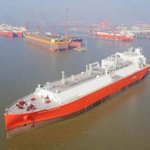
Weekly report on the charter market in global shipping for oil and gas tankers.
The shipping charter rates for Very Large Crude Carriers are at $220,000 per day.
Liquefied natural gas carrier rates are at $43,000 per day East of Suez and $30,000 per day for charters West of Suez.
There is scope for further near-term gains, but a sustained recovery still needs.
The other most costly charters in the world are for the Very Large Gas Carriers with charter rates for VLGCs rising to over $6,120,000 per month.
Freight rates for LPG and VLGC and LNG tankers are expected to remain largely arb-driven going forward. That said, with a balanced to tight position list, LPG and LNG rates are expected to remain robust.
Imports of crude oil recovered in October to match levels prior to the Iran conflict which goes far in explaining the stronger sentiment last week.
Suezmaxes led the charge down yesterday, and with now a considerable aperture between VLCC and Suezmaxrates the former will be at a disadvantage and under pressure to narrow the gap, especially in the Atlantic.
TD34 has seen a downward adjustment with WS 610 now reportedly concluded, albeit on a relet – and although there’s been a bit of a cleanup oil company- and trader relets are still dominating the position list.
However, these are historical high rates and corresponding returns, even if there should be a further correction, which appears likely.
Western Aframax markets fall rapidly this week with limited activity allowing charterers to take freight down.
North Sea has seen market correct from freight in the WS 500’s down into the 300’s. Dates have pushed into the 2nd decade but we still have enough prompt free of cargo tonnage looking for employment.
With US and Mediterranean markets also becoming weaker, alternative options for owners are not as obvious at the moment.
This is the time of year when unpredictable weather does have an influence, which may help owners find some stability, although some more softening expected before that occurs.
The softening of the Mediterranean market continues as activity remainslacklustre for the 1st half of November with more than tnough tonnage.
Owners are looking for alternatives, but we have only seen a handful of vessels ballasting out.
As in the North Sea, returns are strong on the right dates but we need to find a new floor.
The Panamax market has begun to recover after a softer start to the week, with firmer Pacific fixtures leading the improvement.
In the Atlantic, a shorter tonnage list and better NCSA grain demand are helping transatlantic rates find a floor, although US-origin fronthaul inquiry remains limited. ECSA has steadied, but available tonnage still outweighs fresh cargoes.

Weekly report on the charter market in global shipping for oil and gas tankers.
The shipping charter rates for Very Large Crude Carriers are at $220,000 per day.
Liquefied natural gas carrier rates are at $43,000 per day East of Suez and $30,000 per day for charters West of Suez.
There is scope for further near-term gains, but a sustained recovery still needs.
The other most costly charters in the world are for the Very Large Gas Carriers with charter rates for VLGCs rising to over $6,120,000 per month.
Freight rates for LPG and VLGC and LNG tankers are expected to remain largely arb-driven going forward. That said, with a balanced to tight position list, LPG and LNG rates are expected to remain robust.
Imports of crude oil recovered in October to match levels prior to the Iran conflict which goes far in explaining the stronger sentiment last week.
Suezmaxes led the charge down yesterday, and with now a considerable aperture between VLCC and Suezmaxrates the former will be at a disadvantage and under pressure to narrow the gap, especially in the Atlantic.
TD34 has seen a downward adjustment with WS 610 now reportedly concluded, albeit on a relet – and although there’s been a bit of a cleanup oil company- and trader relets are still dominating the position list.
However, these are historical high rates and corresponding returns, even if there should be a further correction, which appears likely.
Western Aframax markets fall rapidly this week with limited activity allowing charterers to take freight down.
North Sea has seen market correct from freight in the WS 500’s down into the 300’s. Dates have pushed into the 2nd decade but we still have enough prompt free of cargo tonnage looking for employment.
With US and Mediterranean markets also becoming weaker, alternative options for owners are not as obvious at the moment.
This is the time of year when unpredictable weather does have an influence, which may help owners find some stability, although some more softening expected before that occurs.
The softening of the Mediterranean market continues as activity remainslacklustre for the 1st half of November with more than tnough tonnage.
Owners are looking for alternatives, but we have only seen a handful of vessels ballasting out.
As in the North Sea, returns are strong on the right dates but we need to find a new floor.
The Panamax market has begun to recover after a softer start to the week, with firmer Pacific fixtures leading the improvement.
In the Atlantic, a shorter tonnage list and better NCSA grain demand are helping transatlantic rates find a floor, although US-origin fronthaul inquiry remains limited. ECSA has steadied, but available tonnage still outweighs fresh cargoes.
Daily Planet TV@byjohnmckay retweeted
My book is available on Amazon for £5.99. Below the Radar - Life on Both Sides of the Cold War. A purchase will help guarantee free energy industry reports.
🤖 Made with AI
Daily Planet TV@byjohnmckay retweeted
Even the Swiss have joined the European riots set off in France. The banking city of Zurich was hit by unrest in protests over the cost of living crisis and government spending cuts.
Global investors are also steering clear of France as riots continue and which are expected to worsen as the Far-Left rises up against the National Rally party’s Marine Le Pen when she wins the French Presidency in May 2027 as forecast.
Worldwide political gloom continued at a meeting of foreign ministers of the G20 industrial nations who failed to issue a final statement because of divisions over the economic slowdown, the Ukraine conflict and the US-Iran war.
US Secretary of State Marco Rubio hosted the G20 Foreign Ministers’ Meeting in Atlanta, Georgia, focusing the agenda on the global economic growth, freedom of navigation, and food security.
However the G20 nations could not even agree on a group photograph because European ministers refused to gather for an official group photo with Russia’s Foreign Minister Sergei Lavrov.
Daily Planet TV@byjohnmckay retweeted
Buy my book for £5.99 on Amazon called: Below the Radar - Life on Both Sides of the Cold War (A book purchase will help to fund free energy industry news reporting)
🤖 Made with AI
Daily Planet TV@byjohnmckay retweeted
Check out John McKay's video! #TikTok vm.tiktok.com/ZN8S4EB3H/

Even the Swiss have joined the European riots set off in France. The banking city of Zurich was hit by unrest in protests over the cost of living crisis and government spending cuts.
Global investors are also steering clear of France as riots continue and which are expected to worsen as the Far-Left rises up against the National Rally party’s Marine Le Pen when she wins the French Presidency in May 2027 as forecast.
Worldwide political gloom continued at a meeting of foreign ministers of the G20 industrial nations who failed to issue a final statement because of divisions over the economic slowdown, the Ukraine conflict and the US-Iran war.
US Secretary of State Marco Rubio hosted the G20 Foreign Ministers’ Meeting in Atlanta, Georgia, focusing the agenda on the global economic growth, freedom of navigation, and food security.
However the G20 nations could not even agree on a group photograph because European ministers refused to gather for an official group photo with Russia’s Foreign Minister Sergei Lavrov.
Daily Planet TV@byjohnmckay retweeted
Energy shipping data this week has seen a surge in fixings for Very Large Crude Carriers (VLCCs). One-year timecharter rates are at $220,000 per day.
Oil prices are also rising after a Houthi missile attack on Saudi Arabia's biggest oil refinery.
Both oil and cargo shipping markets are waiting for greater clarity on US President Donald Trump’s next move towards Iran.
There is speculation of a planned attack on Iran after the midterm elections for the US Congress are concluded on November 3rd.
In the Aframax Mediterranean
market there has been lots of activity.
Replacement jobs have been done well above the WS 900 mark but the normal fixing window is getting fixed back to where it was at the end of last week.
Ceyhan should be done for the first 10 days November with nothing close to WS 800 being paid with bigger flats than the Augusta.
Expected rates were seen north of WS 750 depending on minimum flat and dates.
The Panamax market weakened across both the Pacific and Atlantic basins.
In the Atlantic, fresh grain and mineral demand remains too thin to absorb available tonnage, while the long November ECSA ballaster list continues to push transatlantic and fronthaul rates lower.
The Pacific is now following, as fewer Aussie and NoPac cargoes compete for the ships available.
In the Supramax market Asia continued to show positive sentiment, supported by tight tonnage and steady cargo demand, although rate increases are beginning to plateau.
Liquefied natural gas rates increased for East of Suez to $43,000 per day while West of Suez recovered to $30,000 a day.
One-year LNG charters reached $54,000 a day.
In the Very Large Gas Carrier (VLGC) market, rates for LPG ships were still at over $6,000,000 a month.
The East-West arbitrage in LPG and LNG remained open and continued to support cargo economics at current freight levels.
While LPG vessel availability remained broadly balanced against demand, the recent correction suggested charterers have regained some negotiating power.
Going forward, participants will be closely monitoring fixture volumes and fresh cargo emergence to determine whether rates have found support or if further downside remains likely in the weeks ahead.

Energy shipping data this week has seen a surge in fixings for Very Large Crude Carriers (VLCCs). One-year timecharter rates are at $220,000 per day.
Oil prices are also rising after a Houthi missile attack on Saudi Arabia's biggest oil refinery.
Both oil and cargo shipping markets are waiting for greater clarity on US President Donald Trump’s next move towards Iran.
There is speculation of a planned attack on Iran after the midterm elections for the US Congress are concluded on November 3rd.
In the Aframax Mediterranean
market there has been lots of activity.
Replacement jobs have been done well above the WS 900 mark but the normal fixing window is getting fixed back to where it was at the end of last week.
Ceyhan should be done for the first 10 days November with nothing close to WS 800 being paid with bigger flats than the Augusta.
Expected rates were seen north of WS 750 depending on minimum flat and dates.
The Panamax market weakened across both the Pacific and Atlantic basins.
In the Atlantic, fresh grain and mineral demand remains too thin to absorb available tonnage, while the long November ECSA ballaster list continues to push transatlantic and fronthaul rates lower.
The Pacific is now following, as fewer Aussie and NoPac cargoes compete for the ships available.
In the Supramax market Asia continued to show positive sentiment, supported by tight tonnage and steady cargo demand, although rate increases are beginning to plateau.
Liquefied natural gas rates increased for East of Suez to $43,000 per day while West of Suez recovered to $30,000 a day.
One-year LNG charters reached $54,000 a day.
In the Very Large Gas Carrier (VLGC) market, rates for LPG ships were still at over $6,000,000 a month.
The East-West arbitrage in LPG and LNG remained open and continued to support cargo economics at current freight levels.
While LPG vessel availability remained broadly balanced against demand, the recent correction suggested charterers have regained some negotiating power.
Going forward, participants will be closely monitoring fixture volumes and fresh cargo emergence to determine whether rates have found support or if further downside remains likely in the weeks ahead.
Daily Planet TV@byjohnmckay retweeted
The energy prices report sees Brent crude still strong on October 26 at $114.60 per barrel and the US Henry Hub natural gas price slipping further to $2.537 per million British thermal units, making contracted US imports cheaper than last week.
The oil price-linked liquefied natural gas price slipped to $13.60 per MMBtu at current Brent oil prices.
LNG cargo prices have recently risen for nations such as China, Japan and South Korea as well as India.
The very high European natural gas prices are partially blamed on singular net zero policies for energy that threaten power cuts in Europe as the Strait of Hormuz shipping blockades drained global supplies but also those of Iran.
US gasoline prices began to drop at New York Harbor and for RBOB wholesale supplies to under $3.00 a gallon.
European Union natural gas prices jumped along with the UK National Balancing Point market price and gas values in the US, India and Australia.
The EU benchmark Dutch Title Transfer Facility (TTF) front-month natural gas price remained high at the equivalent of $28.758 per million British thermal units for November and $28.770 for December versus the October 16 prices of the equivalent of $28.712 per MMBtu for November and $28.940 per MMBtu for December.
The German Trading Hub Europe November price was the highest in the European trading area at the equivalent of $29.182 per million British thermal units on for the November future and $29.245 per MMBtu for the December future. This was an increase from the $28.832 per MMBtu and $28.883 prices price on October 16.
(Please buy the author’s new e-book available to purchase on Amazon for £5.99: Below the Radar – Life on Both Sides of the Cold War (please note this will help guarantee future free energy and shipping reports.)
The UK National Balancing Point natural gas price increased again on to the equivalent of $28.808 for November and $29.205 for December versus last week’s $28.797 per MMBtu.
This was despite the UK agreeing to open its own Jackdaw gas field in the North Sea but refusing to develop the Rosbank oil field.
The US Gulf Coast front-month LNG price was last quoted at $27.010 per MMBtu compared with $26.750 per MMBtu on October 16.
Our US Gulf Coast LNG free-on-board cargo price estimate for November delivery is around $97.25 million for a volume of 3.6 million MMBtu with the buyer supplying the shipping.
The Japan Korea Marker (JKM) benchmark front-month futures price for Asian cargoes increased to $29.950per MMBtu on for the front-month December future compared with $29.210 last week and $26.541 on October 16 for the November future.
(Please consider buying the author’s e-book now available to purchase on Amazon: Below the Radar – Life on Both Sides of The Cold War. This will help ensure free future energy market reporting.)
In India, prices went against the global trends with the West India Marker (WIM) price for spot cargoes delivered into the LNG import terminals on the Indian West and East coasts surged over the week to $29.607 per MMBtu for the front-month December future, up from $26.218 per MMBtu previously for the front-month November.
The Australian benchmark natural gas price at the Wallumbilla Hub in Queensland increased in the past week to A$14.500 per gigajoule on versus A$11.050 per gigajoule previously.
Queensland hub prices thus rose to US$10.130 per million British thermal units, up from the equivalent of US$7.760 per MMBtu on October 16.

The energy prices report sees Brent crude still strong on October 26 at $114.60 per barrel and the US Henry Hub natural gas price slipping further to $2.537 per million British thermal units, making contracted US imports cheaper than last week.
The oil price-linked liquefied natural gas price slipped to $13.60 per MMBtu at current Brent oil prices.
LNG cargo prices have recently risen for nations such as China, Japan and South Korea as well as India.
The very high European natural gas prices are partially blamed on singular net zero policies for energy that threaten power cuts in Europe as the Strait of Hormuz shipping blockades drained global supplies but also those of Iran.
US gasoline prices began to drop at New York Harbor and for RBOB wholesale supplies to under $3.00 a gallon.
European Union natural gas prices jumped along with the UK National Balancing Point market price and gas values in the US, India and Australia.
The EU benchmark Dutch Title Transfer Facility (TTF) front-month natural gas price remained high at the equivalent of $28.758 per million British thermal units for November and $28.770 for December versus the October 16 prices of the equivalent of $28.712 per MMBtu for November and $28.940 per MMBtu for December.
The German Trading Hub Europe November price was the highest in the European trading area at the equivalent of $29.182 per million British thermal units on for the November future and $29.245 per MMBtu for the December future. This was an increase from the $28.832 per MMBtu and $28.883 prices price on October 16.
(Please buy the author’s new e-book available to purchase on Amazon for £5.99: Below the Radar – Life on Both Sides of the Cold War (please note this will help guarantee future free energy and shipping reports.)
The UK National Balancing Point natural gas price increased again on to the equivalent of $28.808 for November and $29.205 for December versus last week’s $28.797 per MMBtu.
This was despite the UK agreeing to open its own Jackdaw gas field in the North Sea but refusing to develop the Rosbank oil field.
The US Gulf Coast front-month LNG price was last quoted at $27.010 per MMBtu compared with $26.750 per MMBtu on October 16.
Our US Gulf Coast LNG free-on-board cargo price estimate for November delivery is around $97.25 million for a volume of 3.6 million MMBtu with the buyer supplying the shipping.
The Japan Korea Marker (JKM) benchmark front-month futures price for Asian cargoes increased to $29.950per MMBtu on for the front-month December future compared with $29.210 last week and $26.541 on October 16 for the November future.
(Please consider buying the author’s e-book now available to purchase on Amazon: Below the Radar – Life on Both Sides of The Cold War. This will help ensure free future energy market reporting.)
In India, prices went against the global trends with the West India Marker (WIM) price for spot cargoes delivered into the LNG import terminals on the Indian West and East coasts surged over the week to $29.607 per MMBtu for the front-month December future, up from $26.218 per MMBtu previously for the front-month November.
The Australian benchmark natural gas price at the Wallumbilla Hub in Queensland increased in the past week to A$14.500 per gigajoule on versus A$11.050 per gigajoule previously.
Queensland hub prices thus rose to US$10.130 per million British thermal units, up from the equivalent of US$7.760 per MMBtu on October 16.