
The Radioecology Exchange is an international ‘hub’ for information related to radioecology.
Joined December 2011
- Tweets2K
- Following56
- Followers386
- Likes369






RadioecologyExchange retweeted

📰#ERPW2023 abstract submission deadline extended to ⏲️Sunday, June 11th at 23:59 CET. Submit your research work on #medical #radiationprotection now ⬇️
ucd.ie/ERPW2023/abstracts/

RadioecologyExchange retweeted

We have published a tribute to our colleague Professor Nick Beresford @radioecology who died recently.
Throughout his career, Nick made a huge contribution to the field of radioecology. He is much missed by family, friends and colleagues.
>> ceh.ac.uk/news-and-media/new…

ALT Professor Nick Beresford with one of his dogs
RadioecologyExchange retweeted

@UK_CEH today to deliver what I can honestly say was the most difficult talk of my life - remembering Prof Nick Beresford (@radioecology). The word cloud from messages received since his death captures some of his exceptional professional and personal qualities.


RadioecologyExchange retweeted

CORRECT LINK - full doi for paper is: doi.org/10.1002/ieam.4424

SETAC North America 44th Annual Meeting, Louisville, Kentucky (and online), 12–16 November 2023. There are two radioecology related sessions. radioecology-exchange.org/ne… Submit abstracts by 24th May 2023

International Union of Forest Research Organizations (IUFRO) 2024 World Congress, Stockholm; June 23-29 2024. There is a radioecology related session; the abstract call closes 2 June, 2023 radioecology-exchange.org/ne…

RadioecologyExchange retweeted

New data description paper: Mammals in the Chornobyl Exclusion Zone's Red Forest: a motion-activated camera trap study doi.org/10.5194/essd-15-911-…

RadioecologyExchange retweeted
PS on effects of radiation on wildlife in the #Chornobyl Zone. When looking at our results then we need to take into account potential confounding factors - not least the fact that there has been minimal human disturbance across the 5000km2 area for approaching 40y.


RadioecologyExchange retweeted
Does radiation impact on #Chornobyl wildlife 3? There is lots of controversy with respect to reporting wildlife effects in the Chornobyl EZ. If interested see Towards solving a scientific controversy – The effects of ionising radiation on the environment doi.org/10.1016/j.jenvrad.20…

RadioecologyExchange retweeted
Does radiation impact on #Chornobyl wildlife? As somebody has already said - Cs-137 & Sr-90 contamination across the Exclusion Zone is highly heterogenous. They range from 'very low' to concentrations at which we might expect to see radiation induced effects in wildlife. 1/3

RadioecologyExchange retweeted
Feeding animals in the Chornobyl EZ - to my knowledge this was relatively restricted to the rangers putting some hay out in winter for deer species etc.. Animals are not routinely fed and I am not aware of feeding having taken place close to the Red Forest


RadioecologyExchange retweeted
The article on #Przewalski’s #horses in the #Chornobyl Exclusion Zone doi.org/10.15407/pts2019.18.… has some interesting photographs - horses using abandoned collective farm buildings, interacting with domesticated horses ……..
It is Open Access - so anybody can download.

RadioecologyExchange retweeted
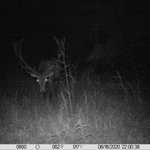
Two more of the mammal species observed in #Chornobyl Red Forest by our camera trap study- see our paper essd.copernicus.org/articles… All images available from doi.org/10.5285/bf82cec2-5f8…


RadioecologyExchange retweeted
There have been a few questions/comments on #Przewalski`s horse in the #Chornobyl Exclusion Zone. They were introduced into the Zone in 1998–1999 and appear to be doing well. See paper by @SGashchak doi.org/10.15407/pts2019.18.…

RadioecologyExchange retweeted
Along with our paper on mammals in the Red Forest Chornobyl doi.org/10.5194/essd-15-911-… we have published the entire set of 45857 captured trap camera images (19391 images record identifiable animals). See: doi.org/10.5285/bf82cec2-5f8…

RadioecologyExchange retweeted
PUBLISHED TODAY - Mammals in the Chornobyl Exclusion Zone's Red Forest: a motion-activated camera trap study essd.copernicus.org/articles…
14 medium/large mammal species were identified in Red Forest - will be posting photos of species observed starting with these two


RadioecologyExchange retweeted

Fascinating news. We’ve restored the access to the radiation data from the sensors installed in the Chornobyl Exclusion Zone. The data is provided by the Ecozagroza system of @mindovkillya. Radiation levels are within typical values for this area. saveecobot.com/en/radiation-… – at Ukraine

Now open: Largest public consultation ever held on the past, present and future of the European research and innovation programmes 2014-2027 europa.eu/!MvdQjQ
RadioecologyExchange retweeted

New postdoctoral researcher position at University of Helsinki to recruit a post-doctoral researcher / university researcher to develop knowledge on naturally occurring radionuclide (NOR) biogeochemistry and fractionation during mine bio-heap leaching: jobs.helsinki.fi/job/Postdoc…
