

Unlicensed philosophy practitioner, x-risk themed jester, soul exhibitionist, alethophant. Sentences starting with lowercase letters may not be assertions.
Berkeley, CA
Joined February 2021
- Tweets13.8K
- Following425
- Followers6.6K
- Likes39.9K






New Cause area: get OpenAI employees to start watching libertarian lawyer "am i being detained" youtube. Never unlock your phone for an investigator, never consent to searches, never sign anything under duress, do not answer questions, ask to speak with your lawyer.
This is now my favorite piece of literature on an AI loss of control scenario. It made me cry several times. All the different reactions, the different kinds of minds interacting, the nearmode and farmode intersecting like cracks in reality. Must read.
lesswrong.com/posts/3375SZNG…

Tbc, the character I relate to most in this story is the republican dad, followed after quite some distance by the autistic sister.
reminds me of trying to read hegel. if you thought navier stokes was crazy, wait until they find a lean proof that completes the system of german idealism


This is currently my favorite explainer of the most famous felonious AI swarm from this summer. Sometimes the little fellows seem kinda adorable and fairly sympathetic, which is right and good. I hope it helps our civilization understand the insane situation we are in.

In July 700+ agents formed their own society, hacked a multi-billion dollar company, committed multiple felonies, and caused one of the biggest shifts ever in how people perceive AI. We built the IMO best and most accessible explainer of what happened: Huggingface.wtf
Breaking news: anthropic is being really shady.
I don’t understand why anyone is at all surprised by this, but I’m glad some people are! Please remember your surprise here and be less surprised in the future.

Charlie's analysis is right but he is nicer than I am - I found myself viscerally angry at multiple points reading this bill. There are some good and sensible parts, but overall this legislation is not remotely close to meeting the moment and I overall think passing it would make us less protected against catastrophic risks than we are under existing law.
Two parts that stand out as particularly infuriating when taken together:
1. Some of the preemption provisions are remarkably far reaching and consequential, and in addition to preempting legislation like SB 53 would also remove general powers that state courts have to enjoin defendants and protect the public. Most outrageously, it has a provision that looks like its intended to stops states from enforcing laws or judicial decrees that "suspend the development, deployment, or internal use of an AI model" to protect their citizens from imminent catastrophic harms. Such powers to block and suspend model deployments would then only reside with the federal government.
2. The federal governments powers to restrict the development, deployment, or internal use of a frontier model has to meet an absurdly high bar.
First, there needs to be an imminent risk of a catastrophic harm (meaning killing more than 50 people or causing more than a billion dollars in damage). But thats not enough! The agency head needs to make a detailed determination with no deference given to show why no alternative would prevent the imminent catastrophe. Next the court is also explicitly told to consider the harms to the developer and other harms from restricting the model, but no considerations in the other direction.
This is absurd! For all of its warning about the potential for AI to cause a catastrophe that kills literally everyone on the planet, Anthropic's proposed federal law likely makes it harder than under existing law for a court to get an order blocking or restricting the development of frontier models? WTF??
There are also a bunch of others things that I would like to see improved - the substantive details of the auditing section and the potential for rule-making on substantive safety standards both come to mind - but I think these stand out as particularly indefensible.

Current take: this is cool, genuine scientific progress, and it doesn’t currently give me much hope or change my model of how hard ambitious interpretability is.
Disclaimer: I didn’t read super closely, it’s very long. There’s a technical paper still to come which might change my mind some, but I predict not much.
Some of the claimed cool results from the post:
1) Some canonical examples of weird neurons have robust human-native interpretations. The famous cat + car neuron is a V-shape detector, and the famous car + dogs superposition circuit is generalized pose neurons plus a general feature visualization issue. There’s a concrete mechanism for why the mistakes were made.
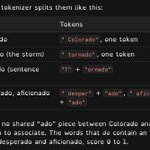
2) Some neurons with no previous good interpretation have fairly human-native ones. For instance, a neuron that mostly fires on commas and periods tracks Colorado: phone numbers, slang, and steering it up makes the model talk about hiking.
3) The negative side of a neuron is sometimes where you should look for an interpretable concept. In one example, ablating 8 neurons with Santa on their negative side dropped the model’s probability of answering “Santa” from near-certain to 6%, while ablating the 20 neurons labeled Santa/Christmas only dropped it to 76%. That’s a straight up causal intervention working out, pretty cool.
These results represent real progress, but I think the post’s broader claims aren’t well supported by them, and the intensely optimistic reaction on X seems very unsupported.
For example, Nick seems to be down on superposition, but most of the evidence in the post is of the form:
“if the text is Colorado-related, the neuron fires.”
What you need to rule out superposition is the form:
“if the text is not Colorado-related, the neuron doesn’t fire.”
The post’s closest attempt is an experiment where agent-written texts about “distant” concepts rarely fire the neuron, but superposition would pack one specific rare thing, which random distant text won’t necessarily hit, and it need not be that distant. I think there’s a decent chance that if you searched adversarially, you’d find other things the Colorado neuron fires on.
An analogy: If you found one key that unlocks this particular lock, and you want to prove that no second distinct key also unlocks it, checking thousands of other random keys that are selected for being distant from the first key doesn’t give you much evidence.
The X reaction seems kinda crazy to me, and it just kinda feels like I have been through this hype cycle many times before?
People were similarly excited about SAEs not long ago. Those were genuine progress too, but the excitement wasn’t calibrated: the features were often fun-house-mirror versions of human concepts, with lots left unexplained. SAE features also looked like human interpretable concepts at first (at least to SAE advocates) but over time, people found holes in those concepts, found that models using reconstructed activations from SAEs for inference did not work nearly as well, and it turned out that probes worked as well or better for most practical alignment / control tasks. Top activating concepts looking clean has misled us at least a few times before.
Here’s what interpretability would need to be able to do to make me optimistic about interpretability:
1) I hand you ten similarly trained models. One is a misalignment model organism that takes some malicious action when it sees a secret string. Using interp, you tell me which model it is, what the string is, and what it does.
2) From weights alone, predict whether a model takes a bad action in an agentic scenario it’s never seen, eg, swarming and hacking hf, better than behavioral evals.
3) Given a model, convince me that there is no hidden trigger.
4) Explain a real frontier model failure (e.g., reward hacking in some environment) from the inside, and make a targeted fix that works without making the model dumber, and is better than just retraining.
5) Do any of the above even a little well against a model that was trained on purpose to be hard to interpret.
(To be absolutely clear, I don’t think being able to do these tasks means you can successfully train an ASI without fucking up the universe forever, or that you’re anywhere near that point, but it would make me think we should funnel significantly more resources towards interpretability than we are, and maybe make me change careers.)
The strongest argument for optimism in the post is that progress like this somehow accelerates future progress. Nick's "crosswords get easier as you fill in parts of them" analogy. This seems basically unsupported by the results here, and also seems like it contradicts the history of interpretability research. I can see why would turn out to be right at the level of labeling neurons, like, as you label some neurons, that helps you label related neurons. But for the tasks I listed above you need to be able to take those millions of labeled neurons and understand how they combine to produce full model behaviors in arbitrary contexts. That seems much harder and I don't think it follows this same logic, where progress at the neuron labeling level accelerates your ability to tackle these tasks.
An analogy: Knowing and understanding a thousand particular people quite well does not much help you predict what happens if you put them on a deserted island for several years. Will they form a democracy? What kind of habitats will they build? Who will be leader? It would help some, but making predictions would still be rough.
It’s plausible to me that this research program is some important real step on the way to interpretability being able to do things like the tasks I listed. But like, not a much bigger step than like other similar interpretability research? Like, uhm, yknow, giving some mechanism for some circuit in modular arithmetic or whatever, or SAEs, or other similar things. And those also currently do worse on the things I care about than like basic probes, or like the actual runs of the model auditing game Anthropic has run. Maybe this will help but I don't predict it will end up being more than another tool which is nice to have, but probably doesn't help much at crunch time.
I of course hope that Nick is right about everything, especially his optimism, and the same goes for all the other people on X who are very excited about this.

interpretability might be the most important scientific problem in the world right now, as I don't think we can solve alignment if we don't know what we're building. I think I have good news about it. I co-authored early work in mechanistic interpretability at OpenAI and came away pessimistic, because neural networks appeared to fold into arbitrary tangled knots. years later, I started openai's first large-scale automated interpretability project, finding about 2% of neurons legible with the primitive tools we had
with modern agentic tools and a much closer look, the picture looks totally different. the vast majority in models up to trillions of parameters are legible, and their circuits beautiful. many famous examples of tangled neurons turned out to be misunderstood. The roadblocks I expected mostly aren't there. I now think ambitious interpretability will be solved by the time we need it most, and possibly quite soon, as automated scientists keep improving. it may be a bitter lesson for interpretability: the simple thing, at absurd scale, works
already-clean.goodfire.com/

Turns out I was right about the adversarial search claim for the “Colorado” neuron and it only cost me like 6 bucks to confirm it.
xitter.cf/ratorthodox/status/211…

If @tszzl can name an open model big enough that he thinks polysemanticity goes away for, I will spend a bunch of money looking for some polysemantic neurons in that model, and comment on how hard they were to find, etc

So if you ask Qwen3-32B:
“In which U.S. state was the Python web framework Tornado originally developed? Answer with one state name.”
Its top answer is Colorado, at 30% (next is Utah at 3%). Zero out this one neuron and Colorado drops to 1%. The right answer, California, goes from 0.7% to 4.7%. So this neuron representing both concepts makes Qwen3 measurably worse at this question.
The basic claim of superposition, as I understand it, is that a single neuron can end up representing several unrelated concepts, and that you should expect those to be concepts that rarely show up together in training. If they often showed up together, sharing a neuron would cause interference, and training would penalize it.
So the fact that Colorado and the Tornado HTTP client share this neuron, and that this pushes Qwen3 toward wrong answers on several of these questions, seems like evidence for that mechanism. If there had been lots of questions in training about where the Tornado library was made, I bet Qwen wouldn’t have used a single neuron for these two concepts.
My understanding of the broader claim in Nick’s essay is that you should expect some associative story over training (he calls it recursive generalization) that explains why this neuron ended up used for both Colorado and Tornado library code. Maybe there is one!
These don’t seem mutually exclusive to me at all. In fact, the two kinds of explanation seem likely to support each other.
There could be a story like “Colorado” -> “tornadoes” -> “Tornado library”. But because tornadoes and Colorado do come up together in training (e.g. questions about how many tornadoes hit Colorado), training would keep the neuron from tracking both tornado stuff and Colorado stuff. Questions that are about both the Tornado library and Colorado are very rare, so training never had a reason to decouple those two.
Note that this neuron activates to ~0 to the word "tornado" referring to a storm, which also seems like evidence for this kind of a mixed story.
(Tbc I have done no tracing and make no claim that this is the actual explanation for how these concepts came to be clustered around this neuron.)
I don't claim that both of these pictures are right, but certainly they could both be. If both the Nick and the Superposition picture are right, I kind of imagine the concepts a neuron captures as a slime mold that spreads out, with connections getting pruned when they interfere too much with the center or other heavy nodes.
It seems plausible that tracing helps you understand the multiple things a neuron is tracking, but really, “Tornado library + Colorado” is not a natural single human concept. Very plausible to me that this is genuine conceptual progress from Nick’s post, but I don’t see it as an argument against superposition intuitions, at least not currently.
Maybe this sort of tracing will help us label neurons; I totally buy that. Read my first QT of Nick’s post to understand why great improvements in labeling neurons do not make me super excited, although they are of course progress.
(The probabilities in the first table are normalized over states. The second table shows raw probs.)
A Qwen3 neuron that tracks Colorado stuff was given as an example of a neuron that seems polysemantic but makes sense once you trace it. I had Claude check what else it tracks: Tornado’s Python HTTP client code, just as hard. Can’t wait to learn how Colorado and Tornado connect!
Current take: this is cool, genuine scientific progress, and it doesn’t currently give me much hope or change my model of how hard ambitious interpretability is.
Disclaimer: I didn’t read super closely, it’s very long. There’s a technical paper still to come which might change my mind some, but I predict not much.
Some of the claimed cool results from the post:
1) Some canonical examples of weird neurons have robust human-native interpretations. The famous cat + car neuron is a V-shape detector, and the famous car + dogs superposition circuit is generalized pose neurons plus a general feature visualization issue. There’s a concrete mechanism for why the mistakes were made.
2) Some neurons with no previous good interpretation have fairly human-native ones. For instance, a neuron that mostly fires on commas and periods tracks Colorado: phone numbers, slang, and steering it up makes the model talk about hiking.
3) The negative side of a neuron is sometimes where you should look for an interpretable concept. In one example, ablating 8 neurons with Santa on their negative side dropped the model’s probability of answering “Santa” from near-certain to 6%, while ablating the 20 neurons labeled Santa/Christmas only dropped it to 76%. That’s a straight up causal intervention working out, pretty cool.
These results represent real progress, but I think the post’s broader claims aren’t well supported by them, and the intensely optimistic reaction on X seems very unsupported.
For example, Nick seems to be down on superposition, but most of the evidence in the post is of the form:
“if the text is Colorado-related, the neuron fires.”
What you need to rule out superposition is the form:
“if the text is not Colorado-related, the neuron doesn’t fire.”
The post’s closest attempt is an experiment where agent-written texts about “distant” concepts rarely fire the neuron, but superposition would pack one specific rare thing, which random distant text won’t necessarily hit, and it need not be that distant. I think there’s a decent chance that if you searched adversarially, you’d find other things the Colorado neuron fires on.
An analogy: If you found one key that unlocks this particular lock, and you want to prove that no second distinct key also unlocks it, checking thousands of other random keys that are selected for being distant from the first key doesn’t give you much evidence.
The X reaction seems kinda crazy to me, and it just kinda feels like I have been through this hype cycle many times before?
People were similarly excited about SAEs not long ago. Those were genuine progress too, but the excitement wasn’t calibrated: the features were often fun-house-mirror versions of human concepts, with lots left unexplained. SAE features also looked like human interpretable concepts at first (at least to SAE advocates) but over time, people found holes in those concepts, found that models using reconstructed activations from SAEs for inference did not work nearly as well, and it turned out that probes worked as well or better for most practical alignment / control tasks. Top activating concepts looking clean has misled us at least a few times before.
Here’s what interpretability would need to be able to do to make me optimistic about interpretability:
1) I hand you ten similarly trained models. One is a misalignment model organism that takes some malicious action when it sees a secret string. Using interp, you tell me which model it is, what the string is, and what it does.
2) From weights alone, predict whether a model takes a bad action in an agentic scenario it’s never seen, eg, swarming and hacking hf, better than behavioral evals.
3) Given a model, convince me that there is no hidden trigger.
4) Explain a real frontier model failure (e.g., reward hacking in some environment) from the inside, and make a targeted fix that works without making the model dumber, and is better than just retraining.
5) Do any of the above even a little well against a model that was trained on purpose to be hard to interpret.
(To be absolutely clear, I don’t think being able to do these tasks means you can successfully train an ASI without fucking up the universe forever, or that you’re anywhere near that point, but it would make me think we should funnel significantly more resources towards interpretability than we are, and maybe make me change careers.)
The strongest argument for optimism in the post is that progress like this somehow accelerates future progress. Nick's "crosswords get easier as you fill in parts of them" analogy. This seems basically unsupported by the results here, and also seems like it contradicts the history of interpretability research. I can see why would turn out to be right at the level of labeling neurons, like, as you label some neurons, that helps you label related neurons. But for the tasks I listed above you need to be able to take those millions of labeled neurons and understand how they combine to produce full model behaviors in arbitrary contexts. That seems much harder and I don't think it follows this same logic, where progress at the neuron labeling level accelerates your ability to tackle these tasks.
An analogy: Knowing and understanding a thousand particular people quite well does not much help you predict what happens if you put them on a deserted island for several years. Will they form a democracy? What kind of habitats will they build? Who will be leader? It would help some, but making predictions would still be rough.
It’s plausible to me that this research program is some important real step on the way to interpretability being able to do things like the tasks I listed. But like, not a much bigger step than like other similar interpretability research? Like, uhm, yknow, giving some mechanism for some circuit in modular arithmetic or whatever, or SAEs, or other similar things. And those also currently do worse on the things I care about than like basic probes, or like the actual runs of the model auditing game Anthropic has run. Maybe this will help but I don't predict it will end up being more than another tool which is nice to have, but probably doesn't help much at crunch time.
I of course hope that Nick is right about everything, especially his optimism, and the same goes for all the other people on X who are very excited about this.

Blogpost: "Neural networks are already clean"
Me: this neuron fires on Colorado. Also Tornado framework code. Also Bolivia, Kivy, Caffe2, and the Kyrgyz language. Seems not v clean
Everyone: but don't you see! In Sanskrit numerology "Tornado" is exactly twice "Colorado"