

is it $82 yet? not financial advice. dyor before investing, or your portfolio might crash harder than your dreams. official backup account: @OpenAarmy
Joined September 2025
- Tweets9.8K
- Following289
- Followers2K
- Likes14.3K








RealOpenArmy retweeted

Finished my first set of OPEN board meetings. Dinner last night then nom and gov committee and full meeting today. My first impression is that this is an incredibly strong team and board. There is a lot of work to do but I am very optimistic about our prospects. More to come!


RealOpenArmy retweeted

🏡❤️ $OPEN: This Is Why We Need the Full Picture! 😌
Glad to see Kaz personally stepping in to clarify the numbers!
Public home prices don’t always tell the whole story. There are fees, concessions, and other costs that outsiders may not see.
Kaz even mentioned that one of the homes he checked is expected to make tens of thousands of dollars! 👀❤️
Of course, Opendoor still has challenges, and profitability matters. But we shouldn’t judge an entire company’s performance based on a few publicly listed home prices or an online tracker.
Sometimes the numbers we don’t see are just as important as the ones we do! 😉
Thanks, Kaz, for taking the time to clarify! ❤️🏡
Long $OPEN! Not financial advice.


RealOpenArmy retweeted

@HHGF99 Ahead of your 1:1 with @nejatian, I think there are several important questions shareholders deserve answers to.
1. AI underwriting and risk management: Opendoor scaled acquisitions aggressively, yet clearly failed to adequately account for changing mortgage rates, resale velocity, holding periods and market risk. These conditions didn’t deteriorate overnight. They evolved over months. Why didn’t the models recognize those trends and adjust acquisition spreads accordingly? Did AI simply allow the company to scale acquisitions faster without meaningfully improving underwriting accuracy?
2. New acquisition cohort economics: Management is now aggressively clearing older inventory and accepting losses. That may be the right decision to free capital for healthier acquisitions ahead of spring 2027. But if the underwriting models have genuinely improved, why won’t management disclose expected contribution margins for newer acquisition cohorts? Investors don’t need guarantees, but they do need evidence that the underlying problem has been corrected. Why has cohort-level transparency diminished precisely when the numbers became less favorable?
3. Accelerating 3P: Kaz previously suggested Opendoor wouldn’t aggressively expand 3P until 1P/2P were operating exceptionally well. Yet 3P is now being accelerated while the core business continues reporting significant losses. What changed? Is this because management genuinely believes 1P/2P have reached the necessary operating standards, or because it recognizes that capital-light products are essential to offset the risks and losses of the existing business?
4. Liquidity, buybacks and profitability: With approximately $910M in unrestricted cash at Q3-end and substantial ongoing losses, is management preserving capital because it now expects profitability to take considerably longer than originally anticipated? If so, shareholders deserve a realistic timeline and a clearer explanation of capital allocation. What are the minimum cash requirements, expected quarterly burn and conditions under which additional repurchases would make sense?
5. Accountability: Kaz has emphasized transparency and accountability, but Accountable primarily measures activity: acquisitions, processing efficiency and resale velocity. Where are the metrics showing whether Opendoor is actually creating economic value? We should be seeing predicted versus realized holding periods, risk-adjusted acquisition spreads, cohort contribution margins and profitability by product.
I believe in the potential of what @nejatian and the team are building, particularly the opportunity to transform Opendoor into a capital-light real estate transaction platform.
But operational efficiency is not the same as profitable execution. AI that allows you to make more acquisitions faster is only valuable if it also helps you make better acquisitions. Otherwise, you’re simply scaling mistakes more efficiently.
Management cannot ask investors to underwrite a potentially enormous 3P opportunity while leaving fundamental questions about 1P/2P economics, liquidity and the path to profitability unanswered.
If Opendoor genuinely wants to be held accountable, it needs to provide shareholders with the financial metrics that matter, not just the operational metrics that look encouraging. I hope you’re able to get clearer answers during your 1 on 1
RealOpenArmy retweeted

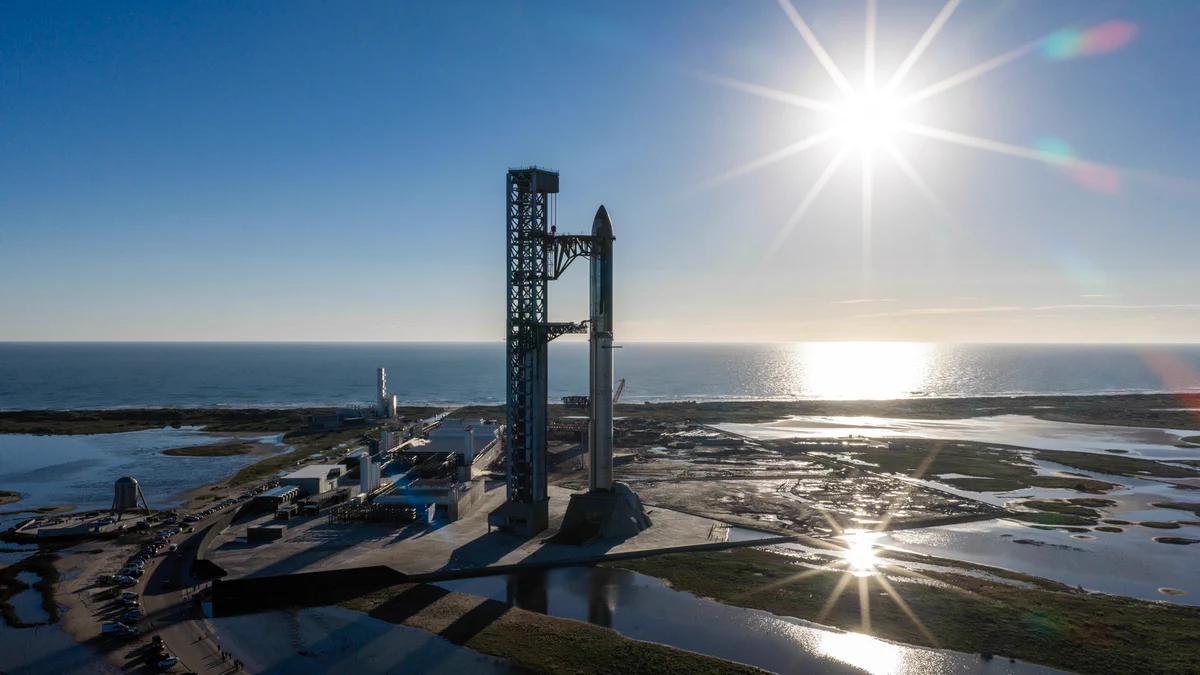
Watch Starship Flight 15
teapaw.org/i/broadcasts/2brajgZlO…
RealOpenArmy retweeted

we recently shipped a big change to how you get started selling your home with Opendoor.
~35% less time to get to your estimated value means
~40% more people reach their estimated value and
~15% more people finish their home walkthrough
left (old), right (new)
RealOpenArmy retweeted

$open @RealOpenArmy
My thoughts today about the space with Kaz. He was asked many questions, some of which he could answer and some that he could not if they weren't already addressed in the quarterly report of conference calls.
First and foremost...This space did help quell several topics that have investors on edge. Topics that the trolls and shorts post daily to instill doubt and anxiety. That alone makes the space worth listening to.
1) Taking the company private: Kaz put this to rest and explained the time to take the company private was when he first became interested in OpenDoor. This will now play out in the public markets.
2) Leaving the company: Some on X have suggested Kaz will leave, seek easier opportunities, make more money elsewhere, blah blah blah...Kaz stated - "I'm not going anywhere."
3) Delisting: Kaz stated that was not on his list of concerns. Now this topic is probably one where Kaz can have an opinion but obviously anything is possible in the world of investing. That being said, It would take a minimum of 6 months if the stock price fell below One Dollar for 30 consecutive days. If during that 30 days the price were to close at 1.01, the clock starts all over. There is even a possibility for a 6 month extension making it a year total for delisting if it was triggered.
4) Road Act: This to me was probably the most interesting issue of all. He said the company was 100% for the readact and voiced loudly for it..This tells me they are not concerned and maybe even have some sort of surprise connected to this. Time will tell.
5) Insider buying: Kaz cannot speak for anyone but himself and did say he has purchased stock every single time he has been allowed to. I personally do think the BOD should step up here with the exception of @mikealfred who came to the board already owning at least 8 million shares the last I heard. That is someone with real skin in the game.
So take the space however you want and make your own conclusions. This is not financial advice, and just my observations.
RealOpenArmy retweeted

$OPEN - We had an interview call with Ownify CEO Frank Rohde this AM. We will have a Space tomorrow, time TBD, on the highlights of that call. Here is a summary of some of the topics we discussed. 👇

🏡 @RealOpenArmy summarized our call with Ownify CEO Frank Rohde. Here are the key takeaways:
🧱 HOW IT WORKS
Buyers choose a home, Ownify qualifies them and purchases it with cash. Each home sits in its own LLC, divided into 10,000 ownership units called “bricks.”
Residents begin with roughly 2% ownership. Fixed monthly payments combine rent and additional equity purchases, targeting approximately 10% ownership after five years.
🔑 BUYER BENEFITS
Lower upfront costs, a predictable five-year payment and a gradual path toward ownership. According to Frank, the investor pool absorbs increases in property taxes and insurance.
Buyers must live in the home but don’t have to be first-time homeowners.
💰 INVESTOR MODEL
The Ownify Home Fund pools investor capital across homes. Returns come from rental income and property appreciation. Investors don’t select individual properties.
🤝 OPENDOOR RELATIONSHIP
Frank described Opendoor as an inventory/channel partner. Ownify gives qualified buyers another way to purchase homes, potentially helping $OPEN reach more buyers and move inventory faster.
Any future mortgage collaboration remains a possibility, subject to competitive offerings and applicable rules.
📅 AFTER FIVE YEARS
Residents can:
• Buy the home using a mortgage and accumulated equity.
• Renew and continue building ownership.
• Exit, with Ownify buying back their equity, subject to applicable fees and terms.
🚀 WHAT’S NEXT?
Ownify aims to expand into 15–20 major states and markets. Frank also discussed fractionalization, potential future tokenization and AI-assisted administration.
👀 THE $OPEN TAKEAWAY
Ownify could complement Opendoor’s mission by expanding access to homeownership and reducing transaction friction.
The proof will be investor funding, adoption, successful homeowner transitions and measurable sales for Opendoor. Promising potential; the financial impact still needs to be demonstrated.
RealOpenArmy retweeted

@nejatian
Can you please have your team add P3 KPIs to accountable.opendoor.com/ ?
This OS what retail is most interested in tracking. Bet impressed with the turnaround so far. Keep building!

RealOpenArmy retweeted

It’s too late for me to do a full review of $OPEN and the numbers / commentary. But I’ll say a few words:
> Under the hood, the NEW business at Opendoor is genuinely working and it's bigger than the headline numbers suggest. Kaz admitted on the call that he "underestimated how big a business title and escrow could become.” it's already running 3x last year's volume, and they're now extending it to transactions that have nothing to do with Opendoor.
>Same with this week's launch of Buy with Opendoor: the full product suite including mortgage, title, escrow now open to buyers whether or not they buy an Opendoor home.
>Cash Now, More Later passing $1B of volume in a year, mortgage originations up 5x in a quarter, and marketing cost per acquired home down 57%, and the pattern is clear: the future of this company is owning the transaction, not the house.
> What they got wrong was timeline and sequencing. They were far too aggressive. Acquisitions ramped +316% before the resale system was ready.
>by management's own scorecard, acquisitions are "solid green" and resale velocity is "yellow." homes bought before the discipline was in are being cleared at a loss, with the pain guided into Q1.
>The result is bloated, aging inventory 7,596 homes, $2.57B on the books, stale listings doubled to 18%
>carrying costs eating the P&L with two-thirds of the Q4 loss guide is holding costs. The CFO has now conceded both profit targets are behind schedule.
> The balance sheet isn't broken with $910M in cash. But $1.8B of operating cash burn in nine months means the clock is ticking louder than the plan assumed.
The new business is becoming more real. The old one's mistakes are what they have to outrun because they got to antsy to wait another Quarter or two before ramping acquisitions.
Time will tell. For now I’m still long my small piece and looking to add!
RealOpenArmy retweeted

"If we don't hit 5-10% market share in US Residential in the next 5 years, we should all be pretty disappointed right?" - Kaz
$OPEN is a 1000$ company in the making.


Opendoor 2.0: The Singularity Scaler Nobody Is Pricing In
A road to a $1000 per share.
$OPEN is sitting at $4.42.
EBITDA profitable ahead of schedule. 5,000+ acquisition contracts in Q1 — best since 2022.
LTM free cash flow: +$519M. Was -$6.3B in 2021.
The market is still pricing it as a broken iBuyer.
It's becoming a housing OS.
Full breakdown 🧵

RealOpenArmy retweeted

Join us for our Q3'26 Financial Open House.
Stream on X, YouTube, or Robinhood: investor.opendoor.com
teapaw.org/i/broadcasts/1pKkOXlNZ…

RealOpenArmy retweeted

Looking forward to give you all an update about what we've been up to for the past few months at Opendoor.
We'll go live in about an hour on @Opendoor.
RealOpenArmy retweeted

🆘

🚨 URGENT | IRAN
SENTENCED TO DEATH FOR POSTS ON X
Amirhossein Mousavi, known as James Be-Din, has been sentenced to death by the Islamic regime over his online activity, according to his lawyer.
SPEECH IS NOT A CRIME. STOP HIS EXECUTION!
#امیرحسین_موسوی

RealOpenArmy retweeted

After DOGE, Elon came to a conclusion most people missed.
He tried to reform the state from the inside. He failed. And he said it plainly: the government can't fix its own deficit. Nobody in power actually wants to cut. The machine protects itself.
So he drew the only logical conclusion. If the state can't be reformed, there are only two ways this ends.
Either global bankruptcy. Debt keeps compounding, interest payments eat the budget, and the system collapses under its own weight.
Or robots. AI and robotics grow the economy so fast that the debt becomes manageable, and abundance makes the old fights over scarcity irrelevant.
Here's the part almost nobody sees.
For two centuries, capitalism has had a marketing problem. Its gains are real but slow and invisible. 2% growth a year doesn't feel like anything. Your life gets better over 30 years and you never connect it to the system that did it. Meanwhile, the left's promises feel immediate and concrete: a check, a subsidy, a benefit. That's why the left wins on promises even when it can't deliver them. Capitalism produces the wealth, socialism takes the credit.
Robots break that asymmetry.
When productivity doubles in a few years instead of a few decades, people will see it. Things get cheaper, services get better, opportunities appear, in real time. For the first time in history, people will connect capitalism and their rising standard of living directly, almost instantly. The causal chain becomes visible.
And that changes everything politically.
So there are two scenarios.
Scenario one: we stay in the current inertia. No breakthrough, or a breakthrough we regulate to death. The debt wins. Living standards stagnate, then fall. A frustrated electorate turns to whoever promises the most, and that pushes toward a hard collectivist left. But collectivism fails, as it always does. And when it fails, the most organized, most disciplined collectivist force left standing isn't the old left. It's radical Islamism. Bankruptcy, then communism, then something worse.
Scenario two: robots win. Abundance arrives, and it arrives visibly. The link between free enterprise and prosperity becomes obvious to everyone. And this is the key point: it becomes obvious to everyone, including the minorities the left was counting on. Because their long-term incentive is the same as everyone else's. A kid in the suburbs gains infinitely more from a booming, abundant West than from a bankrupt state handing out promises it can't keep. Abundance is the most powerful integration machine ever built.
That's the Western renaissance.
The West doesn't need to win the culture war by arguing. It needs to win it by delivering. And for the first time, it has the technology to deliver fast enough for people to notice.
The race isn't left vs right anymore. It's robots vs bankruptcy.

RealOpenArmy retweeted

$OPEN Q4 week 4 acquisitions,
415, down a measly 13%, hoping we get clarification on why we are not pushing for more acquisitions in the earnings call,
My thoughts are that they could be focusing energy on developing their 3p model which is unaffected by the current macro environment and being extremely selective with their acquisitions keeping numbers lower but margins/net win rate higher,
Anyways,
The Q4 run so far:
→ 525 → 428 → 477 → 415
Q4 is averaging 461 a week which is still solid, still more than double the same weeks last year.
At 6% contribution margin:
→ 461 × 13 = 5,993 contracts a quarter
→ × $377,500 = $2.26B revenue
→ × 6% = $136M contribution
→ − $110M costs = $26M a quarter
→ about $0.11 adjusted EPS annualised
→ 30x = $3.34 | 45x = $5.00 | 60x = $6.67
These are contracts, not every home becomes eventually and some fall through.
→ Clearance 8% better than MLS, really want this to increase in the future
→ Q4 closings still running well ahead of last year which is very nice to see :)
Q3 earnings land Thursday 😅
What I'm watching:
→ The first $1B revenue quarter under Kaz
→ Margin against the 3.2–3.5% guide
→ A Q4 guide above Q3 👀 but keeping my expectations low honestly on this
Also, Opendoor's 3P products are now live:
→ List with Opendoor, for sellers (early release)
→ Buy with Opendoor, for buyers (beta)
Until now, Opendoor mostly made money by buying a home and reselling it. The 3P model means it helps people buy and sell homes it never owns.
→ Sellers list on the open market using Opendoor's scale and AI tools
→ Buyers use the same tools to buy any home, not just Opendoor's
→ Opendoor earns from the transaction without the home sitting on its balance sheet
→ No inventory to fund, no holding costs, no price risk on those homes
As Kaz put it: "We want more homeowners - even if they don't buy or sell to Opendoor."
More users, more traffic, less capital at risk. Earn clean bottomline accretive margin.
Opendoor are building a platform that can adapt to any macro. It's going to take time for it to show in the numbers,
Patience and conviction.
nfa, long $OPEN 🏠

