


Beyond the Hard Problem retweeted

Sonnet 116. Patrick's favourite. Take one minute out of your day to hear the bard's words spoken by someone who lived by them.
Beyond the Hard Problem retweeted

Acclaimed British actor Patrick Stewart, who died on Wednesday at age 86, is best known for his portrayal of Captain Jean-Luc Picard in Star Trek: The Next Generation, part of the iconic sci-fi franchise.
We’re revisiting Scientific American’s coverage of the science behind Star Trek. A thread:


Beyond the Hard Problem retweeted

We are deeply saddened to hear that the celebrated stage and screen actor Sir Patrick Stewart has died at the age of 86.
Stewart's extensive work across seven decades ranged from highly acclaimed Shakespearean roles to the hugely popular X-Men and Star Trek franchises.

ALT Sir Patrick Stewart is sitting on a window banquette wearing black tie and smiling at the camera. He is leaning his right elbow on the arm of the banquette and is pictured against a wintry London skyline that can be seen through the window behind him. The image is black and white.
Beyond the Hard Problem retweeted

This is incredible.
This machine is capable of cleaning up 100 million kg of plastic ocean waste, and as of 2025, it has already collected about 500,000 kg of plastic.
It aims to remove 90% of ocean plastic by 2040.
Beyond the Hard Problem retweeted

Bravo Denis Noble!
Good description of Penrose non-computability in conscious processing and the Orch OR theory.

We do things more slowly than AI, but we produce surprise: out-of-distribution behavior like creativity. Like Beethoven, who brought novelty to classical music. Denis Noble hypothesizes that this capacity for ‘surprise’ comes from vast stochasticity. A bacterium has over 20 billion water molecules. Imagine the amount of stochasticity happening in a human body. Would silicon based AI be capable of out-of-distribution surprise behavior?


Beyond the Hard Problem retweeted
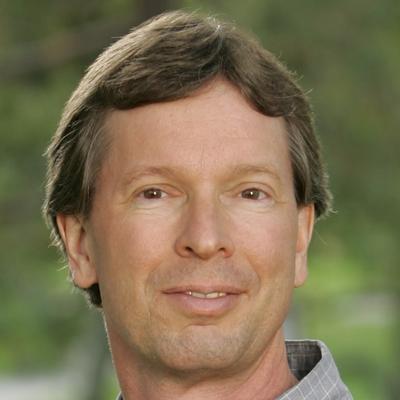
A little over a week from now, I’ll be in New Jersey for a rare East Coast event.
We’ll explore the possibility that spacetime is not fundamental, and what that might tell us about the nature of reality.
Join us: hvstage.org/event/donald-hof…
Thank you!
Beyond the Hard Problem retweeted
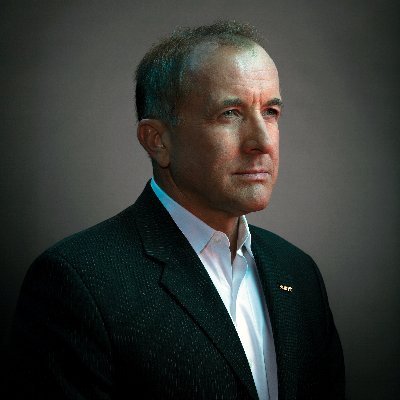
Does Consciousness Break the Laws of Physics?
Physicist Avshalom Elitzur thinks so—and argues in our conversation that accounting for consciousness may require changing the laws of physics.
Say what?
skeptic.com/michael-shermer-…

Beyond the Hard Problem retweeted

We often assume that our memories are stored in our brains, just like a hard drive stores data. bit.ly/4AfiMbS
In this talk, philosopher Victoria Trumbull argues this is a radical mistake: she argues that the brain enables memory without containing it, and that time itself stores memory.

Beyond the Hard Problem retweeted
The Science of Consciousness 2026 is 3 weeks away, October 11-16. We have 700 registrants, and group rooms and bungalows at Paradise Point Resort in Mission Bay, San Diego are almost filled and close in one week. Program and other info at tsc2026.org

Beyond the Hard Problem retweeted
I don’t think that. But I do think some conscious human A-hole could program an AI to do so.


Beyond the Hard Problem retweeted

A stunning sunset at Stonehenge. Pure magic. 🤩

ALT A stunning sunset at Stonehenge. Pure magic. 🤩
Beyond the Hard Problem retweeted
The Science of Consciousness 2026
Tsc2026.org at Paradise Point Resort in San Diego October 11-16 sponsored by UCSD is filling up quickly. Lead organizer Arnaud Delorme has done a great job and abstracts for plenary, concurrent and posters are on the website.
Here’s my abstract for the session ‘Which came first, life or consciousness?
tsc2026.org/abstracts_html/s…
My favorite abstract is from Kassandra Ori-McKenney in the Psychedelics plenary titled ‘Psychoplastogens and the microtubule cytoskeleton’. Here it is:
tsc2026.org/abstracts_html/k…
Beyond the Hard Problem retweeted

Brian Stafford, MD, reflects on his remarkable transition from a successful academic career in psychiatry to guiding wilderness-based practices aimed at what he calls an “eco-awakening”: a shift from an ego-centric to an eco-centric mode of consciousness.
youtu.be/_Mjx9iqQmXk

Beyond the Hard Problem retweeted
Congratulations to Sir Roger Penrose and colleagues from Oxford, Ulm and Ben-Gurion Negev Universities for experiments linking Einstein’s gravity with quantum mechanics. They proved equivalence theory which extends spacetime curvature to tiny quantum scales, as Penrose predicted. With larger superpositioned masses they can test Penrose Objective Reduction at times t=h/E, also proposed as the origin of consciousness. Preparations for those experiments are underway.
eurekalert.org/news-releases…
Beyond the Hard Problem retweeted
Why did Plato choose to write in dialogue, and what makes that choice still matter today?
In this talk, philosopher Angie Hobbs unpacks Plato's method to show why his work remains a genuine source of insight in the 21st century.
Tap here to watch "Why Plato Matters Now." iai.tv/video/why-plato-matte…
Beyond the Hard Problem retweeted
Our new paper ‘Home-administered unfocused ultrasound in subjective cognitive decline and dementia: An open-labeled, uncontrolled feasibility pilot study’ will be published soon in Frontiers in Aging. Here’s a preprint;
researchgate.net/publication…

Beyond the Hard Problem retweeted
Penrose's claim that consciousness relies on non-computable quantum mechanics has been dismissed for decades: quantum states, critics say, collapse far too fast in a warm brain to matter.
bit.ly/4xw9jLD
But neuroscientist Mike Wiest argues new evidence of stable quantum states at much higher temperatures means we must take the idea seriously again.
