

Curating the Quirky, Curious, and Crazy aspects of Regency life. Sharing prints and paintings that deserve another day in the sun. Certified 100% vitriol free.
London.
Joined January 2022
- Tweets1.3K
- Following747
- Followers1.6K
- Likes4.5K




Pinned Tweet
A cartoon from 1832, showing the dangers of pumping raw Sewage into the Thames. I’m just so glad that our Government would never allow this to happen today…
(Warning: tweet may contain irony)
#EndSewagePollution @Jamie_Woodward_ #SewageScandal

The Backstreet Regents retweeted

Regency style metamorphic library chair that converts into steps for reaching high shelves.

Oh what, oh whatever’s a fella to do
When the Waiters care more
For each other than you?
(The Tea Gardens at Bayswater, by Isaac Cruikshank, published #onthisday, August 1st, in 1796)


An early 19th-century advert for Mr Green the Horse-riding Balloonist, performing at, and above, London's Vauxhall Gardens.
(You probably wouldn’t want to be standing directly underneath a nervous horse though…)
#Onthisday #otd

The Backstreet Regents retweeted

"Friendship books" were the #Facebook of the 17th and 18th centuries (without the ads and data mining). Here's a fine example of one begun in 1795 by the aunt of the poet Felicia Dorothea Browne: publicdomainreview.org/colle… #FriendshipDay


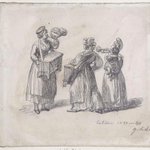
I’m posting this image as an antidote to the belligerence of the World Cup Final…
“Flemish Costumes”, or elegant pastimes in the open air.
(George Scharf: 1813)

The Backstreet Regents retweeted

Doggett’s Coat and Badge Rowing Race, London. 1820. William Heath. #ThamesPaintings

If you were wondering what the Spanish got up to during our Regency years, here’s a small sample of “Los Gritos de Madrid” — the cries of street vendors purveying goods ranging from Pots to Plums to Pop-up Saints.
(Miguel Gamborino: 1809–17. Plate 13)

The Backstreet Regents retweeted

24 July 1851. Window Tax in Britain was finally abolished. It was introduced in 1696 and was a progressive tax so that houses with fewer than 10 windows were subject to a flat rate house tax but those with over 10 windows paid more. To reduce the burden owners bricked up windows.

The Backstreet Regents retweeted

#BartlowHills #Cambridgeshire #18thCentury
Bartlow Hills, a Roman tumuli cemetery at Bartlow in the county of Cambridgeshire, England. Depicted here in the late 18th century. The Hills, near the village of Ashdon in the county of Essex, were once believed to be the last resting place of soldiers killed at the Battle of Ashington, fought in 1016 AD between an Anglo Saxon king, Edward Ironside, and a Danish ruler, Canute. Hence the caption to the illustration proclaims that the hills or tumuli were: “raised over the Bodies of those slain in a great battle between Edmund Ironside & Canute the Great”. However, modern archaeological techniques have established that the Bartlow Hills are actually a Roman tumuli cemetery: the graves of a wealthy family who probably lived in the 1st or 2nd century AD at a nearby villa. Antique engraving published 18th century and later coloured by hand.


George Scharf gives us a glimpse into a lost world of Oyster Rooms, Chimney Sweeps and private Fire Brigades, on one of London’s most famous thoroughfares.
'The Strand from the corner of Villiers Street', 1824, shortly before the area was redeveloped.

As a child I spent many happy hours playing with a Stick and Hoop, but never had one nearly as elaborate as this.
Feeling deprived.
#ArnoldvanWesterhout

An elderly, one legged, Sailor watches young people frolicking in Greenwich Park — not with a sadness that he can no longer participate in such sports, but in celebration of the exuberance and energy renewed in each successive generation. (That's how I interpret it anyway!!)

Some folk draw closer to the page
As ageing eyes lose strength
(Though folk like me can only read
The words held at arm’s length !)


“I can read and distinguish those authors who shine,
And always felt pleasure in courting the NINE.”
“Courting the Nine” in Regency days meant either calling on the nine Muses for artistic inspiration, or — like this lady — playing for one of the nine large Lottery prizes.

The Backstreet Regents retweeted

22/3/26
Here’s how to be a “modern man of fashion”, 1814 style. Satirist Thomas Rowlandson details three principal requirements ~ dress like a coachman, study boxing & bull baiting, and speak the slang language fluently metmuseum.org/art/collection…

Regency Coachmen had a reputation for being coarse, crude, and offensive — so I apologise in advance for this outburst...
“Vot are you staring at? SPOONEY” (By William Heath, c. 1829)

The Backstreet Regents retweeted

"On Monday, July 12th, Lord Byron's funeral procession, attended by a great number of noblemen's and gentlemen's carriages, and by crowds of people, who evinced a deep sympathy, left the house at Westminster, and traversed various streets of the metropolis."
The Courier, 1816

The Backstreet Regents retweeted
In 1759 the British Museum opened at Montague House to “all studious & curious Persons”. Here’s an entry ticket from 1777, issued to botanist Joseph Banks, with a prohibition against touching “any Thing” & a stern “No money to be given to the Servants” ephemeraresources.blogspot.c…
