



Pinned Tweet
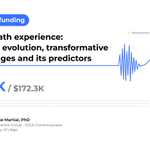
Since January 2025, ResearchHub has deployed over $1.5M in research funding to scientists worldwide.
We just redesigned our funding page to make it even easier for funders and researchers to connect.
Take a look ↓ researchhub.com/fund
ResearchHub retweeted

The bottleneck in science is clearly headed towards validation.
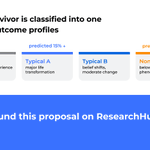
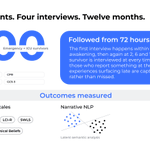
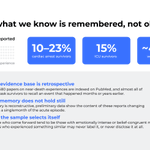
We're experimenting with flipping the process: AI drafts V1 proposals, scientists refine them with peer review bounties, and the crowd funds the ones worth running.
Open, distributed wet-lab validation 💪

We used GPT Sol 6.1 to draft 10 preregistered proposals to test this hypothesis in the wet lab.
1. Funders: pool funds on the RFP
2. Scientists: upvote, comment, or review to strengthen the experimental design
3. Wet labs: comment if you want to run one
researchhub.com/rfp/33104/te…

ResearchHub retweeted

We used GPT Sol 6.1 to draft 10 preregistered proposals to test this hypothesis in the wet lab.
1. Funders: pool funds on the RFP
2. Scientists: upvote, comment, or review to strengthen the experimental design
3. Wet labs: comment if you want to run one
researchhub.com/rfp/33104/te…

GPT-Rosalind surfaced a new lead for drug discovery: could restoring cholesterol transport protect neurons from degeneration?
DCTN1 is a gene linked to Perry syndrome, a rare neurodegenerative disorder. In mouse-brain data, disrupting it increased expression of genes involved in making cholesterol. GPT-Rosalind suggested a possible explanation: cholesterol may not be reaching where neurons need it.
That gives scientists a specific mechanism to test and, if confirmed, a direction for developing new treatments for neurodegenerative disorders.
With @perturbai_tx and @scrippsresearch, a team of thousands of GPT-Rosalind agents worked in parallel, connecting gene-expression results from millions of mouse brain cells with scientific literature in just 32 minutes. We’re now expanding this collaboration to identify new drug targets.
openai.com/index/scaling-ai-…
125,091 radiology images from one cancer patient, 136 CT, MRI, PET and X-ray studies dated 2022 to 2026, are now public domain.
Genome, RNA and single-cell data sit alongside them in the same open bucket (n=1, osteosarcoma).
xitter.cf/sytses/status/21122434…

We’ve just made public 125,091 DICOM radiology images from across my cancer journey (link below). The data is both longitudinal and multi-modal, dated and linked to my treatment timeline, so you can compare imaging across initial diagnosis, standard of care, first remission, “founder mode cancer care”, and second remission. It’s viewable in OHIF, the standard open-source viewer used in radiology research.
Given the long history of applying deep learning to radiology, we’re hoping to see a variety of methods and models applied to my data. If you find something interesting, please reach out to [email protected], or if you know a researcher who should see this, tag them below.
Thanks to Terra LaFerriere for organizing these images, and Kamil Slowikowski for building osteosarc.com into the resource it is.

Sid Sijbrandij's osteosarcoma clinical imaging archive, 136 studies from 2022 to 2026, osteosarc.com (data release, CC0 per the site's data page; no analysis attached).
osteosarc.com/imaging/

Posa, Romano et al. (senior authors Gati, Trauner, Levitz), An opioid efficacy switch for reversible optical control of analgesia, Cell, 15 October 2026, Weill Cornell Medicine, University of Pennsylvania and USC (mice; abstract-level verification).
doi.org/10.1016/j.cell.2026.…
Men taking an extended-release minoxidil tablet twice daily gained 36.4 hairs per cm2 at six months, against 6.6 on placebo.
Once daily: 28.6 (randomized Phase 3, n=536; company topline, not peer reviewed).
xitter.cf/HLcure2020/status/2112…

Veradermics VDPHL01 gives early, consistent & robust hair growth in Phase 3 clinical trial topline 6-month results.
An average increase in non-vellus hair count of 28.6 hairs/cm² and 36.4 hairs/cm² in once-daily and twice-daily VDPHL01 treatment arms.
hairlosscure2020.com/verader…

Veradermics, Study 304 topline release, 19 October 2026: randomized, double-blind, placebo-controlled Phase 3 of VDPHL01 in 536 men with male pattern hair loss, NCT06972264 (company data, not peer reviewed; p values given only as p<0.0001).
ir.veradermics.com/news-rele…
In children's noses, antiviral gene activity fell with days since symptoms began (r=-0.64), not with illness severity.
Severity groups did not differ significantly at the same stage (preprint; 51 infected, 17 controls).
xitter.cf/atranscendedman/status…

Researchers studied 68 children and found SARS-CoV-2 variants trigger distinct immune responses in the nose.
Alpha and Delta produced stronger antiviral interferon responses, Omicron shifted toward inflammatory macrophage signaling and T-cell activity.
biorxiv.org/content/10.64898…

McEwen et al. (senior authors Mall, Lehmann, Trump), Evolution of SARS-CoV-2 reshapes upper airway immunity in children, bioRxiv, 16 October 2026, Berlin Institute of Health at Charite (preprint, not peer reviewed; ages 0 to 17, unvaccinated, mostly mild to moderate cases).
biorxiv.org/content/10.64898…
ResearchHub retweeted

> thousands of agents
> ~40,000 scientific papers read
> 32 minutes
> found new potential mechanisms worth investigating for Parkinson-like neurodegenerative diseases
work that would have taken human researchers months to a year, done in just 32 minutes
i genuinely don't think people understand what is coming for biotech
GPT-Rosalind surfaced a new lead for drug discovery: could restoring cholesterol transport protect neurons from degeneration?
DCTN1 is a gene linked to Perry syndrome, a rare neurodegenerative disorder. In mouse-brain data, disrupting it increased expression of genes involved in making cholesterol. GPT-Rosalind suggested a possible explanation: cholesterol may not be reaching where neurons need it.
That gives scientists a specific mechanism to test and, if confirmed, a direction for developing new treatments for neurodegenerative disorders.
With @perturbai_tx and @scrippsresearch, a team of thousands of GPT-Rosalind agents worked in parallel, connecting gene-expression results from millions of mouse brain cells with scientific literature in just 32 minutes. We’re now expanding this collaboration to identify new drug targets.
openai.com/index/scaling-ai-…
Disrupting mitochondria in human cells roughly doubled their energy use. In people with mtDNA disease, resting oxygen use runs about 30% above healthy controls.
Whole-body data from 6 cohorts, per kg (Hedges' g 2.4).
xitter.cf/sciam/status/211248408…

A radical new theory about energy and mitochondria could explain chronic disease and aging.
sciam.com/article/the-provoc…

Sturm et al. (Picard lab), OxPhos defects cause hypermetabolism and reduce lifespan in cells and in patients with mitochondrial diseases, Communications Biology 2023, Columbia University (fibroblasts from 3 SURF1 patients vs 3 healthy donors; resting VO2 from 6 patient cohorts, per kg).
doi.org/10.1038/s42003-022-0…

Alpha/beta suppression after a switch cue shared a common component across three tasks in 148 adults, a domain-general signature of flexibility.
It did not track IQ or working memory (EEG, r=0.25 with switch preparation).
xitter.cf/MillerLabMIT/status/21…

Task-specific theta enhancement and domain-general alpha/beta suppression as oscillatory signatures of cognitive flexibility
nature.com/articles/s44271-0…
#neuroscience

Huelsemann, Loeffler and Schubert, Task-specific theta enhancement and domain-general alpha/beta suppression as oscillatory signatures of cognitive flexibility, Communications Psychology, 15 October 2026, Johannes Gutenberg University Mainz (open access, n=148).
nature.com/articles/s44271-0…
A 1-gram wireless microscope imaged more than 8,500 neurons per mouse across the cortex as the animals moved freely. Earlier wireless miniscopes reached about 300.
Calcium imaging, not electrodes (weight excludes battery).
xitter.cf/DavidCRowland/status/2…

Kids today will never know the joy of sitting in the lab listening, at full volume, to the one (1) cell you'll record that month
nature.com/articles/s41586-0…
Zhang, Li, Yuan et al. (corresponding authors Jiamin Wu, Pu Dai, Qionghai Dai), Cortex-wide imaging in naturally behaving mice with 1-gram wireless mesoscopes, Nature, 19 October 2026, Tsinghua University (peer reviewed, accelerated article preview).
nature.com/articles/s41586-0…
ResearchHub retweeted
sci/acc


The results are in!
Peer review relies on people giving their time. How often do we ask reviewers how the system should work for them?
We’ve published the findings of the Pirevios reviewer survey, based on 200+ completed responses. Among those who responded:
• 71% had considered stopping reviewing in the past year.
• 58% named time demands as their main reason for declining a review.
• 73% selected payment or compensation as one possible improvement.
• 73% said they had never been asked how peer review should work.
This was a self-selected survey, so these figures do not represent all reviewers.
The full report includes detailed charts, written-response themes and methods: pirevios.com/survey-report
The findings are helping shape what we’re building at Pirevios: a directory where reviewers can describe their specialities and availability, and say whether they are open to unpaid, paid or hybrid reviewing.
Our aim is to help journals find suitable reviewers sooner, reduce invitations that do not fit, and give more reviewers a chance to contribute without repeatedly approaching the same people.
Thank you to everyone who shared their experience. I’d welcome your thoughts on how we can make this genuinely useful for reviewers and journals. More about Pirevios: pirevios.com/
@mirvatalasnag @sbrugaletta @ncurzen @mmamas1973 @gbiondizoccai @AnilMakam @dr_yakupergun @EslamAbady33 @francisdeng @PTarantinoMD @ross_prager @LocasaleLab @DrNeilStone @drjohnm @DrDamluji @wisit661 @Hemida_MD @BrettSperryMD @docmartin22 @JadAbdelsattar @Azeem_Majeed @Dr_AmerZeidan @DrToddLee @doctorinigo @AmitGoyalMD @acorderofort @Elsayed_saidx @jtsaxon

Muscle from ALS mice carries the molecular hallmarks of aged muscle at early disease stages, at the myofiber level.
Late disease and old age then converge on the same dying fast glycolytic fibers (SOD1-G93A mice, single-nucleus).
xitter.cf/CraigAGoodman1/status/…

An integrative transcriptomic atlas of ALS and aging skeletal muscle defines shared and distinct molecular programs of degeneration
pnas.org/doi/abs/10.1073/pna…

Grima-Terren, Rommelfanger and Munoz-Canoves, An integrative transcriptomic atlas of ALS and aging skeletal muscle defines shared and distinct molecular programs of degeneration, PNAS, 15 October 2026 (integrated single-nucleus atlas; abstract-level verification).
doi.org/10.1073/pnas.2613546…

A phage carries RNA-guided silencing aimed at the satellite that parasitizes it. Satellites that cannot redirect it do not propagate.
Their counter: decoy RNAs that point the machinery at the host genome (E. coli, preprint).
xitter.cf/kenjmloi/status/211165…

Viruses have parasites too. Our new preprint shows how phages use VIPR to silence parasitic satellites, and how the satellites fight back with its own decoy VIPR RNAs that redirect VIPR to DNA REP elements in the host genome!!
biorxiv.org/content/10.64898…

Lopez, Mayor, Loi, Armbruster, Yen, Yoon and Doudna, Competition among viral elements for VIPR RNA-directed genome silencing, bioRxiv preprint, Innovative Genomics Institute, UC Berkeley (abstract-level verification).
biorxiv.org/content/10.64898…
