

Computer Science Researcher.Low-resource NLP | Graph Neural Networks | Explainable AI. Sharing research insights, experiments and reproducible ML.
Joined September 2026
- Tweets63
- Following75
- Followers1
- Likes123



Michael Tomiwa retweeted
𝗛𝗼𝘄 𝘁𝗼 𝗪𝗿𝗶𝘁𝗲 𝗬𝗼𝘂𝗿 𝗣𝗵𝗗 𝗣𝗿𝗼𝗽𝗼𝘀𝗮𝗹: 𝗔 𝗦𝘁𝗲𝗽-𝗕𝘆-𝗦𝘁𝗲𝗽 𝗚𝘂𝗶𝗱𝗲
#phd #thesis #dissertation #masters #researchproposal #phdproposal #academia


Michael Tomiwa retweeted

How to write your first research paper?
A simple and helpful guide for beginners to get started with their first research paper..
#phd #researchpaper


Michael Tomiwa retweeted

Magnolia es un software gratuito y de código abierto para el análisis cualitativo de datos. Sirve para codificar y analizar entrevistas, documentos, imágenes, audio, video y encuestas. Su archivo es exportable a NVivo, MAXQDA y ATLAS.ti caledavis.eu/magnolia.html


Michael Tomiwa retweeted

这个skill硕博们必须收藏起来:耶鲁大学 CS PhD、多篇 Nature MI / ICML / NeurIPS 作者 Chen Liu 把他发顶会的做图方法论开源了!
57 套真实论文配图模板直接打包,覆盖柱状图、趋势线、热力图、3D 球体等。它不只是简单的 Python 脚本,而是一套完整的出版级 House Style 规范: 🎨 专业规范:严格的 Helvetica 字体、语义化配色(蓝目标、绿增量、红对比)、去除多余轴线、支持 300-600 DPI 及 SVG 矢量导出。 🤖 Skill 化配置:支持无缝接入 Claude Code、Cursor 或 Codex。装好后给它数据,AI 就能自动按这套顶会标准帮你出图,告别反复手动调参
正在写论文、急需提升图表质感的科研党千万别错过这个skill
👉 GitHub:github.com/ChenLiu-1996/figu…


Michael Tomiwa retweeted

You’re a researcher, undergraduate or postgraduate student, and you don’t know about PublishPapers.online yet? 😳🙊
I genuinely appreciate what @ProjectProofHQ is doing through this platform to make research documentation more accessible to students and early-career researchers.
I’ve used it, and it’s been a great resource.
The interesting part is,While waiting for your journal article to be published, you can document your work on PublishPapers and use it as a writing sample when applying for scholarships and other academic opportunities, where applicable.
Don’t sleep on this. Your research deserves to be documented and recognised!
Don’t miss an opportunity because you don’t have documentation of your research.

Michael Tomiwa retweeted

I re-submitted a journal article, unchanged, after getting hammered in peer review.
The decision this time? First time accept.
Peer review is such a terrible system.


Michael Tomiwa retweeted

My biggest struggle with reviews in 2026 is that (AI) reviewers don’t seem to know the difference between limitations and critical issues. An LLM can easily find 100+ limitations in any paper (even the best ones in history), but that doesn’t mean the paper shouldn’t be accepted.
Michael Tomiwa retweeted
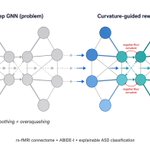
Starting my first-author research journey in geometric deep learning. I'm looking at how graph curvature can guide rewiring in GNNs to reduce oversquashing. I'll share what I learn as I go. #GNN #MachineLearning
Michael Tomiwa retweeted
Before you submit, read 5 recent papers from your target journal. Copy their structure, how long their abstracts are and how they cite. Reviewers notice when a paper "fits."


Michael Tomiwa retweeted

PhD Students – How to identify the CORRECT set of papers for your literature review?
Identifying and screening papers takes a lot of time.
Now you can do it not only quickly but also accurately.
Here is how it works.
1. Go to ponder.ing/?via=faheem and log in.
2. Specify your requirements.
3. For example, I entered the following.
Find population studies with n>1000 on air pollution and cardiovascular disease.
4. That’s it. Ponder will identify the papers for you.
5. In my case, it identified 38 relevant papers.
Ponder doesn’t stop here.
You can create a mind map of the identified papers.
- This mind map correlates all papers.
- It categorizes the papers.
- You can see the summary of each paper
- This will help you understand the literature
Try Ponder today for FREE: ponder.ing/?via=faheem
Michael Tomiwa retweeted
How to write a systematic literature review in 1 day?
1. Go to link.researchcollab.ai/rcmu
2. From the left menu, click on review
3. Enter the title of your systematic literature review
That’s it. Download the draft.
Work on the draft to make a real paper from it.
#phd
Michael Tomiwa retweeted
Research follows the same pattern. AI conceals the small early mistakes you would once have caught quickly, until they re-emerge as structural problems during supervision, peer review or your viva.
Tools amplify skill. They do not replace it.
🎁 FREE GIVEAWAY
I have prepared a Research AI Starter Kit containing:
✔️ Copy-paste Google Scholar search strings for any topic
✔️ Prompts for literature mapping, figure redrawing and ethical paraphrasing
✔️ A checklist for catching AI errors before your supervisor does
Want it free?
✅ Like this post
🔁 Repost
💬 Reply "KIT"
I will send it straight to your DMs.
Michael Tomiwa retweeted
Most researchers do not have a tool problem.
They have a fundamentals problem disguised as a tool problem.
Here are the 5 free AI tools that genuinely strengthen academic research, ranked, with real scenarios and search examples you can use today. 🧵
#5: Gemini's Nano Banana (figures and diagrams)
Upload a rough sketch or an existing figure and request a clean, publication-ready version.
📌 Scenario: You are writing a paper on autism neuroimaging and need a diagram highlighting specific brain regions. Instead of spending hours in design software, you photograph your hand-drawn sketch and have a polished draft figure in minutes.
⚠️ Limitations: Outputs are difficult to reproduce when a reviewer requests revisions, embedded text is often inaccurate, and repeated edits degrade image quality. Treat it as a first draft and finalise in Canva, PowerPoint or Photoshop.
#4: Grammarly (language and paraphrasing)
It works inside Word, where your manuscript already lives.
📌 Scenario: Four co-authors have edited your discussion section through track changes. Tenses are inconsistent, articles are missing, and two sentences now contradict each other. Grammarly flags these issues before your supervisor or the journal editor does.
Its AI features also support ethical paraphrasing of source material.
⚠️ Rule: After any AI rewrite, verify that the scientific meaning has not shifted. "Associated with" becoming "causes" is not a grammar fix. It is an error.
#3: Google Scholar + Google Scholar Labs (literature searching)
Classic Scholar offers unmatched coverage, including paywalled work, and reliably surfaces the foundational, highly cited studies. Scholar Labs, its AI-enhanced version, interprets full research questions and explains why each paper was selected.
The strongest approach is to use both together.
📌 Scenario: You are beginning a dissertation on nanoplastics and human health.
🔍 Classic Scholar searches to try:
• "nanoplastics" "human health" to find exact phrases only
• intitle:nanoplastics toxicity to return papers with the keyword in the title
• "microplastics" OR "nanoplastics" placenta to capture both terms
• nanoplastics exposure -marine to exclude marine-focused studies
• author:"surname" nanoplastics to trace a key author's work
• Then use the left sidebar to set "Since 2022" for recent evidence, or sort by citations to find landmark studies
🔍 Scholar Labs query to try:
"What evidence exists that nanoplastics cross the placental barrier, and what health outcomes have been reported in humans?"
Classic Scholar maps the foundations. Scholar Labs sharpens the question.
#2: NotebookLM (working with your own sources)
Upload your PDFs, and it answers questions using only those documents, with citations back to the exact passage.
📌 Scenario: You have 30 papers for your literature review. You ask: "Which of these studies used cohort designs, and what limitations did the authors report?" Within seconds you have a structured overview linked to the original text, which is ideal for building a synthesis matrix.
⚠️ Always open the cited passage and confirm it says what the summary claims.
#1: Zotero (reference management)
It is not the most exciting tool, but it is the most important one.
It saves papers directly from your browser, organises them into collections, and inserts correctly formatted citations into Word in APA, Harvard, Vancouver or any other style.
📌 Scenario: Two days before submission, your supervisor asks you to switch from Harvard to APA 7th. Without a reference manager, that means hours of manual reformatting. With Zotero, it takes one click.
Every tool above is only as reliable as the reference trail behind it. That is why this one ranks first.
⚠️ The uncomfortable truth
If you are collecting more than five tools, pause and reflect.
Studies of programmers found that those using AI felt faster but spent more time correcting errors the AI had introduced.