

Slashing Acquisition Costs by Turning Your 1-time buyers into 8-time buyers or more | $85M+ Made for our Partner Brands Email, SMS, Subscriptions & Community
Request a Free Audit 👉
Joined August 2021
- Tweets3.9K
- Following727
- Followers4.8K
- Likes9.9K






🚨Hiring a Klaviyo Tech (Immediate start)
You'll own the technical build of email + SMS campaigns for DTC brands.
Working alongside our Klaviyo Account Manager.
What you'll do:
• Build campaigns and flows from Figma into Klaviyo with clean code, proper alt text, and mapped links
• Write accurate segment definitions using metrics, profile properties, boolean logic, and conditional splits
• Integrate subscription apps correctly (ReCharge, Skio, Loop) and understand which events fire natively vs need custom properties
• Work inside Shopify to manage integration syncs, order metrics, tags, catalog feeds, and discount codes
• Troubleshoot issues independently when flows break, segments don't match, or events don't fire
What we need:
• Deep technical knowledge of Klaviyo (not just surface-level familiarity)
• Experience building dozens of campaigns and flows
• Strong attention to detail, clean execution and fast-paced.
• Ability to work independently — we will not be hand-holding you
Role details:
Remote | Full-time | Long-term
DM me.
Abdul Ibrahim retweeted
"What else can we talk about in our emails if not promotional offers?"
I get asked this question repeatedly from brand owners almost every week
You gotta put effort to improve the quality of the content you put out, rather than being lazy
The whole point of email marketing is to distribute content that will make subscribers view your brand as the "Go-To-Brand" in your niche.
That will then make subscribers convert
Not hammering promotional offers to your list
Promotional offers, in fact, have the opposite effect
Subscribers will perceive your brand as a cheap knock-off brand
Instead of leading brand that aims to solves its pains/problems for their audience
Here's just a handful of the content we send out for our that are not promotional:
➝ Customer success stories
➝ Brand story / Founder story
➝ Educational-focused content on product
➝ How-to guides / Application of product
➝ UGC competition content
They generate just as much revenue from some of these emails as a promotional email would
It's packed with actionable and educational insights that customers can benefit from
80-85% of your content needs to be on value-driven content and not promotional
You can always repurpose some of the best performing value-driven emails within your flows.
Abdul Ibrahim retweeted
The most expensive mistake in ecom email isn't a bad send.
It's a great one nobody dissected.
If you can't tell me which line drove the click, which section drove the order, and where else in your funnel that copy should be running by Monday, you're treating a research report like a fortune cookie.
Abdul Ibrahim retweeted
Brands will build a product for a year without spending an afternoon reading what their own customers are already saying about the problem they're experiencing.
Abdul Ibrahim retweeted
Your most frustrating subscribers are the ones who OPEN and CLICK but NEVER BUY.
These fence-sitters aren't like your other subscribers.
They're stuck because of specific objections or misconceptions about your products.
Here's my 5-minute hack to uncover exactly what's holding them back:
1️⃣ Create a segment of subscribers who: • Opened 5+ emails in 30 days • Clicked 2+ times • Zero purchases
2️⃣ Send them a single-question email: "What's the ONE thing stopping you from trying [product]?"
3️⃣ Analyze responses and create content specifically addressing these objections
I did this for a skincare brand last month and discovered 73% had the same misconception about ingredient effectiveness.
We created a 2-3 emails emails addressing this ONE objection and converted 28% of fence-sitters into buyers.
This isn't just an email trick - it's direct market research from your most valuable non-customers.
Do this today. Thank me later.
Abdul Ibrahim retweeted
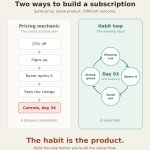
Had a great conversation with a 7-figure supplement brand owner yesterday who wanted help to improve their subscription programme
A question I asked him was:
"What are you doing to drive more customers to your subscription programme from your email list?"
their response:
"We're just giving 15% discount away"
Thats the problem.
You can't slap a 15% discount on your subscription programme and expect customers to opt in.
You need to be selling the importance of CONSISTENCY and EFFICIENCY.
Without it, what's the point of them signing up?
Questions your customers will be asking themselves:
➝ Apart from the 15% discount what's in it for me?
➝ Am I more likely to see results if I sign up for your subscription?
➝ Can you show me proof that other customers got better results after joining the subscription program?
➝ What support or guidance can I get as a customer to make the best out of my subscription?
Address these questions across your:
- Repeat-buyers post-purchase flow
- Pre-subscription flow
- Email campaigns
- Welcome flow
Your on-site reviews aren't enough anymore.
Customers know they can be filtered or deleted. For health products especially, authenticity matters.
So here's why Trustpilot reviews specifically can be a game-changer for your brand and how to collect them with email
First, couple reasons WHY you should even care 👇
➝ 89% of consumers check reviews before making a purchase
➝ Trustpilot reviews show up in Google Shopping results (crucial for CAC reduction)
➝ Brands with 100+ Trustpilot reviews see a 37% higher conversion rate vs. those with just on-site reviews
➝ 72% of customers won't take action until they've read reviews from a trusted third-party site
👉Trustpilot reviews impact your entire marketing funnel
👉They appear in Google searches before customers even know your brand
👉They show up in Google Shopping (reducing your CAC)
👉They build instant credibility (unlike easily-faked on-site reviews)
👉They're a ranking factor for SEO
I've seen brands double their organic traffic just from improving their Trustpilot presence.
Now, here's exactly how to build a review collection system that actually works:
First, let's talk about WHO to ask for reviews (this is where most brands mess up)
Don't blast your entire customer base asking for reviews. That's amateur hour.
Instead, focus on your customers that have done the following:
✅Made multiple purchases (they clearly see value in your products)
✅Consistently open your emails (they're engaged
with your brand)
✅Had enough time to see results (for hair growth products, wait 4-6 months. For skincare, 30-45 days)
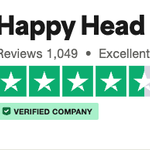
Here's an email flow you can use to start collecting reviews and that has allowed us to collect more than 1000 reviews for Happy Head
Email 1: The Setup
➝ Send a personal note thanking them for their previous review
➝ Mention how their feedback has helped other customers
➝ Ask if they'd share their experience on Trustpilot (include direct link)
➝ Request specific details about their journey:
- What product are they using?
- How long have they been using the product?
- How long did it take them to see results?
- What doubts did they have prior to purchase (if any)
- What made them want to buy from you?
➝ Offer a premium incentive ($20-30 off next purchase works well for Trustpilot reviews)
Email 2 (3 days later): The Reminder
➝ Share your current Trustpilot rating
➝ Explain how Trustpilot reviews help others find reliable products
➝ Include a screenshot of your Trustpilot page
➝ Remind them about the reward
➝ Direct link to Trustpilot
Email 3 (2 days later): Final Call
➝ Last chance to claim the premium reward
➝ Use scarcity (24 hours left)
➝ One-click link to Trustpilot
➝ Reminder of their previous positive feedback
The reviews you collect today aren't just nice to have's,
they're essential to your survival in the next 12-18 months from now.

5 email marketing mistakes we're still ripping out of ecom accounts every single week in 2026👇
1. Sending campaigns to the full list.
Gmail, Yahoo, and Apple now weight engagement rate per send. A single blast to your full list drags inbox placement for the next 30 days of campaigns behind it.
2. Optimizing for a near-zero unsubscribe rate.
The dead weight you refuse to let go is the reason your engaged buyers are landing in Promotions. Unsubscribes are a feature of a healthy list, not a failure of the last send.
3. Judging flows by total revenue instead of revenue per send.
Total revenue rewards volume and hides where you have no flow at all. RPS is the only metric that tells you where the leverage actually is.
We rebuild every client's flow architecture around it on day one.
4. Rewriting welcome email #5 while email #1 hasn't been touched in a year.
Email #1 does the majority of welcome flow revenue. Most brands invert the creative attention and wonder why welcome performance never moves.
5. Defaulting to a discount in cart abandonment #3.
It trains subscribers to wait for the code, and it kills margin on every future order they place. Free shipping, extended returns, and payment plans all outperform a blanket 15% off in 2026, the discount should be the last lever, not the first.
Every one of these is fixable inside a week.
Most of them will lift email revenue faster than any new flow you're currently planning to build.
Had a great conversation with a 7-figure supplement brand owner yesterday who wanted help to improve their subscription programme
A question I asked him was:
"What are you doing to drive more customers to your subscription programme from your email list?"
their response:
"We're just giving 15% discount away"
Thats the problem.
You can't slap a 15% discount on your subscription programme and expect customers to opt in.
You need to be selling the importance of CONSISTENCY and EFFICIENCY.
Without it, what's the point of them signing up?
Questions your customers will be asking themselves:
➝ Apart from the 15% discount what's in it for me?
➝ Am I more likely to see results if I sign up for your subscription?
➝ Can you show me proof that other customers got better results after joining the subscription program?
➝ What support or guidance can I get as a customer to make the best out of my subscription?
Address these questions across your:
- Repeat-buyers post-purchase flow
- Pre-subscription flow
- Email campaigns
- Welcome flow
Your most frustrating subscribers are the ones who OPEN and CLICK but NEVER BUY.
These fence-sitters aren't like your other subscribers.
They're stuck because of specific objections or misconceptions about your products.
Here's my 5-minute hack to uncover exactly what's holding them back:
1️⃣ Create a segment of subscribers who: • Opened 5+ emails in 30 days • Clicked 2+ times • Zero purchases
2️⃣ Send them a single-question email: "What's the ONE thing stopping you from trying [product]?"
3️⃣ Analyze responses and create content specifically addressing these objections
I did this for a skincare brand last month and discovered 73% had the same misconception about ingredient effectiveness.
We created a 2-3 emails emails addressing this ONE objection and converted 28% of fence-sitters into buyers.
This isn't just an email trick - it's direct market research from your most valuable non-customers.
Do this today. Thank me later.
Stop creating new email content that MIGHT work.
I've found a goldmine that works EVERY time:
• Pull your top-performing educational emails from the last 180 days
• Check which ones drove the most purchases (despite having NO offers)
• Insert these proven winners into your relevant flows
Example: Top ingredient education email → Welcome sequence
Been doing this for years and it's worked every time for my clients.
Your best-converting copy isn't in your head.
It's hiding in your product reviews.
Review mining is the secret weapon you're not using in your email flows.
Writing "marketing speak" emails is killing your conversions.
Meanwhile, your customers are giving you conversion gold in their reviews.
Here's how to turn reviews into revenue-driving email copy:
Find Pattern Words
Look for repeated phrases like 👇
→ "I was skeptical at first..."
→ "I never thought this would..."
→ "Finally, something that..."
These reveal true buying objections your customers have
Spot Transformation Stories
Search for 👇
→ "Before/After"
→ "Used to/Now"
→ "Never/Finally"
These show the emotional journey that can help drive repeat purchases.
Copy Examples
Generic copy ➡️"Our premium formula..."
Review-mined copy ➡️ "I was skeptical at first, but after 2 weeks my husband noticed the difference..."
Pain Point Patterns
Look for 👇
→ Common problems
→ Failed solutions
→ Frustrations
→ Hesitations
Use their exact words in your
➡️Welcome flows
➡️Abandon cart emails
➡️Win-back campaigns
➡️Cross-sell sequences
It's 2026 and brands are still designing emails like landing pages like this one I just found in my inbox.
Shop.
Starter Kits.
Contact Us.
Sustainability.
Four navigation links before I even get to the content.
Your email isn't your website. Stop treating it like one.
The goal of an email is to get someone to click ONE thing.
Not to give them 5 options and hope they pick the right one.
Every extra link is a decision point.
Every decision point is friction.
And friction kills clicks.
I see brands proudly show me their "beautifully designed" emails with navigation bars, footer menus, and multiple CTAs.
Then wonder why their clicks and conversions drop.
You're not helping people explore.
You're overwhelming them.
Here's the rule:
One email.
One goal.
One primary CTA.
Everything else is just noise distracting from the action you actually want them to take.
Save the navigation for your landing page.
In the inbox, guide them to one destination and get out of the way.

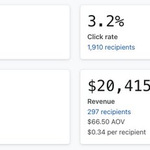
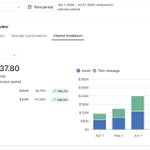
Getting results like this for our clients has become routine.
With every email send
We ask ourselves the following questions:
➝ What are we selling here?
➝ What action do we want them to take?
➝ Is this content relevant to this audience group?
➝ Is the offer relevant to this audience group?
➝ What elements can I A/B test here?

Abdul Ibrahim retweeted
"Shows what a difference good strategy makes."
Most brands think retention is a volume problem. Send more. Complex segments.
It is almost always a sequencing problem.
Which email, to which segment, at which point in the buying cycle.

Brands will build a product for a year without spending an afternoon reading what their own customers are already saying about the problem they're experiencing.

Abdul Ibrahim retweeted
Having multiple CTA's like the example below is the easiest way to destroy your conversions and click rates.
You're completely diluting the messaging of your email and confuses recipients.
Ask yourself the following question:
What action do I want my customers to take?
➝ Shop?
➝ Watch a webinar?
➝ Read an ebook?
➝ Read a blog?
➝ Share?
Have one clear CTA and your recipients will be more likely to follow through on that specific action you want them to take.
Night and day difference if you want to see higher conversions.

Abdul Ibrahim retweeted
The single biggest lift we get on any new account is getting rid of vague copy and replacing it with the exact language sitting in their Judgeme dashboard.
→ "Improves gut health" becomes "My constant burping is 90% better"
→ "Reduces bloating" becomes "I don't have that bloated feeling anymore"
→ "Fast results" becomes "I noticed improvement after 3 days"
The right column isn't cleverer copywriting. It's a copy-paste from a real 5-star review.
We do this on every account we onboard.
It's the fastest way to see more engagement.