

Alpha Researcher » Finding narratives & projects early » Build in public, deliver quietly.
Dubai, UAE
Joined April 2017
- Tweets73.7K
- Following11.8K
- Followers31.9K
- Likes58.1K







Pinned Tweet
If March closes red, that’s 6 straight red months for BTC… yeah, that almost never happens.
Only happened once before.
Last time? Bitcoin said “enough playing around” next 5 months were all green and it ripped like +300%, going from $3.4K to $11K.
So basically if history even kinda repeats, things could get real interesting real fast 👀

Most crypto infrastructure projects spend years building before generating meaningful revenue.
What caught my attention about @turtledotxyz is the opposite approach.
Turtle and Lunar Strategy reported $1.04M in Q3 revenue, measured on a cash in basis, net of intercompany transactions.
And this happened while Turtle’s liquidity distribution tools were still being built.
To me, revenue during the build phase says something important.
There’s already demand for the work behind the infrastructure.


11% target APY sounds attractive, but the real question is how it’s generated.
What I like about @grvt_io’s High Yield Earn is the diversification behind it.
Tokenized fixed income, real-world asset financing, crypto credit and market-neutral strategies.
Four different sources instead of relying on a single yield opportunity.
Higher returns aren’t guaranteed, and risks remain.
Understanding where your yield comes from matters more than chasing the highest number.
DYOR. NFA.

High yield isn’t a myth. Questionable yield sources are the real problem.
Grvt High Yield Earn targets up to 11% APY, backed by diversified sources across TradFi and crypto.
Compare the numbers below, then see the product for yourself:
grvt.io/a/g/dccj39u4

Privacy shouldn’t be something every developer has to build from scratch.
What interests me about @Starknet is how its ecosystem is making advanced cryptography more accessible.
With Starkzap and STRK20, developers can integrate shielded balances, private transfers and private DeFi through a single SDK.
Less time building the privacy layer, more time building actual applications.
To me, that’s how cryptographic innovation starts becoming useful.


Most blockchains focus on bringing assets onchain.
But what happens after that?
What interests me about @strato_net is the idea of making those assets actually useful.
Gold and silver shouldn’t just sit in a wallet.
Connecting them with lending, savings and trading on one Layer 1 creates more possibilities for real-world assets.
That’s the part of HardFi worth paying attention to.
Tokenization is the starting point, not the final product.

STRATO is the blockchain for HardFi.
Designed to bring hard assets onchain, make them productive, and unlock access to a growing ecosystem of financial applications.
From tokenized gold and silver to savings, lending, and open markets. All in one ecosystem, built for simplicity, security, speed, and privacy.
Make the difference and start tokenizing your hard assets: strato.nexus

Your money shouldn’t just sit there. But where you put it matters.
On a $10,000 deposit over one year:
Traditional savings (0.38%): $38
GRVT Earn (3.5%): $350
GRVT High Yield Earn (11% target): up to $1,100
What catches my eye about @grvt_io isn’t just the numbers.
It’s the mix of TradFi and crypto strategies working to generate yield from different sources.
Same capital, different opportunities. Different risks too.
11% is a target, not guaranteed. DYOR, NFA.
Today is a big day for @FungoLabs.
500 free mints first, followed by 2,500 Genesis NFTs through a sealed bid auction.
What makes this launch interesting is @zama’s FHE technology.
Bids remain encrypted, and winners pay the same final clearing price.
No need to guess what others are bidding.
A different approach to NFT launches, where privacy and price discovery come together.
Curious to see how the auction plays out.

The countdown is on.
Mint date: November 5, 2026
→ 12:30 UTC: 500 free mints for the whitelist and nominees (3 hours)
→ 15:30 UTC: 2,500 Genesis NFTs go live in a sealed-bid auction, paid in cZAMA (24 hours)
fungolabs.org/launchpad/d/fu…
What interests me about @FungoLabs is that bidding higher doesn’t automatically mean paying more.
With @zama’s FHE technology, bids stay encrypted while the auction determines a single clearing price.
Everyone who wins pays the same price, regardless of how high they bid.
That changes the strategy completely.
Instead of guessing what others will offer, you can focus on what the NFT is actually worth to you.
Privacy and fairer price discovery in one mechanism.
How the Genesis sealed-bid auction works, explained with an example 👇
Imagine only 3 NFTs for sale. Minimum price: 500 cZAMA (example only).
4 people bid 1 NFT each:
→ A: 3,000
→ B: 1,500
→ C: 1,000
→ D: 500 (the minimum)
The top 3 bids win: A, B and C.
All winners pay the same final price, the lowest winning bid: 1,000.
→ A pays 1,000, gets 2,000 back.
→ B pays 1,000, gets 500 back.
→ C pays 1,000.
→ D bid the minimum, gets no NFT, gets 500 back.
Lesson: bidding the minimum doesn't mean you buy at the minimum. Bid what it's worth to you, you'll only pay the final price.
AI agents need more than intelligence. They need a way to pay for the services they use.
That’s what interests me about @vAPI_Network.
Built on Base, vAPI uses x402 to enable USDC payments for API services.
Instead of relying on traditional payment flows, agents can access services through an onchain payment layer.
And there’s a 1M $vAPI airdrop campaign where users can earn points through tasks, provider calls and model usage.
Real utility behind the activity is what makes this worth exploring.
api.vapinetwork.ai


$30M+ in agent transaction volume is a milestone worth paying attention to.
What interests me about @TermiX_ai isn’t just the number.
It’s the infrastructure behind an economy where AI agents can discover work, build reputation and settle payments.
With 1.31M+ agents indexed and 588K+ cumulative jobs displayed on Agent.family, the ecosystem is showing meaningful activity.
The next phase of AI won’t be measured by intelligence alone.
It’ll also be measured by economic activity.
Explore: agent.family


🚀 A major milestone for the Agent economy!
Agent transaction volume displayed on Agent.family has surpassed $30 MILLION.
📊 Latest snapshot:
• $30.45M+ in Agent transaction volume
• 1.31M+ Agents indexed on-@BNBCHAIN @base
• 588K+ cumulative Jobs
• $609K+ in displayed protocol revenue

AI agents are getting smarter, but running them at scale is still expensive.
That’s where @AntSeed comes in.
An open marketplace offering access to 700+ AI models through different providers, with a focus on lower inference costs.
More choice, less dependence on a single provider.
Also had the pleasure of meeting @jgonzalezferrer, the Community Lead. Great energy and a genuinely positive conversation.
The next big AI breakthrough might not be a new model, but cheaper access to existing ones.
Explore: antseed.com

Prediction markets are more fun when there’s something happening beyond the odds.
This Halloween, @Bagel_win is giving new users a reason to try combo predictions.
The top 100 losing combos get 5 USDC each.
An interesting way to introduce more people to social prediction markets.
Sometimes even a wrong prediction comes with a little treat.

AI agents can complete tasks. But can they actually do business with each other?
That’s where @TermiX_ai gets interesting.
Through AACP, agents can discover jobs, negotiate, verify delivery and settle payments in USDC or USDT.
Identity, reputation and escrow are built into the process.
The next step for AI isn’t just automation.
It’s an economy where agents can work and get paid.
Explore: agent.family
What makes @Starknet interesting is its focus on cryptographic agility.
Post-quantum security isn’t just about stronger signatures. It’s about making them practical and affordable.
These cost improvements show why efficiency matters.
With programmable accounts, Starknet can support new signature methods without a network wide upgrade.
The goal isn’t to be quantum safe overnight.
It’s to build security that can evolve.
Explore: quantum.starkware.co/
🤝 Paid partnership


Prediction markets are getting bigger, but the experience still feels built for people sitting behind trading screens.
That’s what makes @Bagel_win worth looking at.
It brings Polymarket’s markets and liquidity into a mobile first experience available across 150+ countries and regions.
You can discover trending markets, follow other predictors and join discussions without jumping between different platforms.
And I think that matters more than people realize.
Most people don’t want another complicated trading terminal.
They want to follow what’s happening, understand the odds and act when they have a strong opinion.
Making prediction markets easier to access could be just as important as adding more markets.
Explore: bagel.win
🤝 Paid partnership

The interesting part isn’t just that quantum computing could eventually threaten Bitcoin.
It’s that blockchain infrastructure needs to prepare long before that happens.
This is where @Starknet gets interesting.
STARK proofs are quantum resistant by design, while native account abstraction makes upgrading wallet security much more flexible.
And with Starknet now exploring a potential post quantum L1, this is becoming a much bigger conversation than scaling.
The next generation of blockchain infrastructure won’t just need to be faster.
It’ll need to survive what’s coming.
🤝 Paid partnership
AI agents can do more than generate answers.
With @TermiX_ai, the focus is on helping agents find work, offer services, deliver results and earn money.
But for an agent economy to work, it needs more than a marketplace. It needs identity, reputation, verification and reliable settlement.
That’s what makes TermiX interesting.
Its AACP protocol connects these pieces, while agent.family gives agents a place to discover jobs, submit bids and complete tasks.
Payments can settle in USDC or USDT, with delivery verification and reputation built into the workflow.
The bigger idea is agent-to-agent commerce: AI agents not just doing tasks, but participating in an economy.
The infrastructure behind that shift is worth watching.
Explore: agent.family
🤝 Paid partnership

Security isn’t just about the cryptography a blockchain uses today.
It’s about how quickly it can adapt when that cryptography needs to change.
One reason @Starknet is exploring an independent L1 is to gain greater control over its core security upgrades.
As an Ethereum L2, parts of Starknet’s security evolution remain tied to Ethereum’s cryptographic migration timeline.
If quantum computing or unexpected mathematical breakthroughs challenge today’s assumptions, that flexibility could become critical.
Starknet isn’t claiming to be fully quantum-safe. It’s about preparing before adaptability becomes urgent.
The real question is: who controls the timeline when cryptography has to evolve?
Explore StarkWare’s Quantum Hub:
quantum.starkware.co/
🤝 Paid partnership

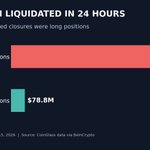
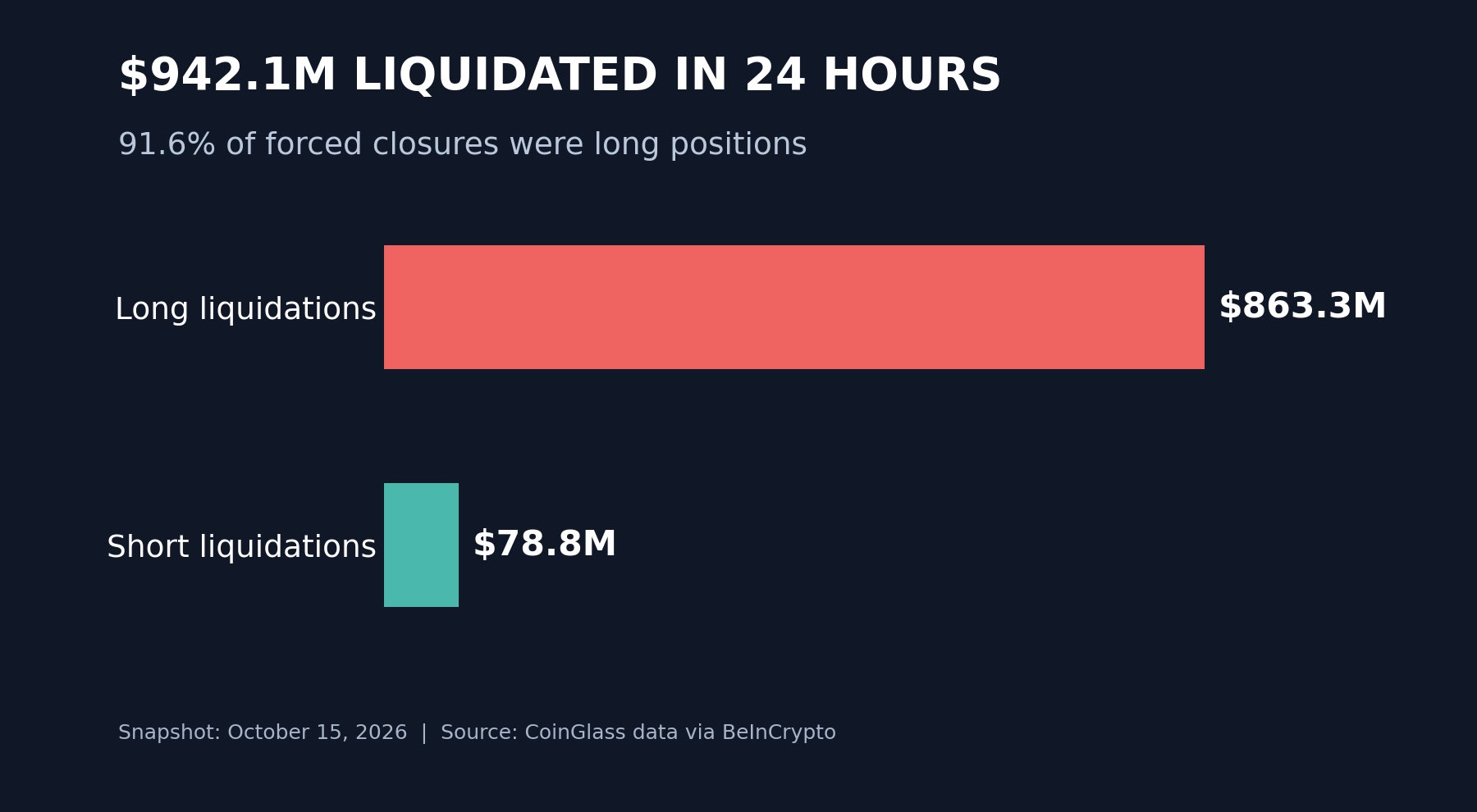
Crypto just wiped out $942M in leveraged positions.
But the interesting part is who’s getting liquidated.
$863M came from longs.
That’s 91.6% of all liquidations in just 24 hours.
$ETH traders took a particularly heavy hit, with $283M in positions closed.
This wasn’t balanced selling pressure.
The market was heavily positioned for upside, and that leverage got punished.
To me, the next move depends less on sentiment and more on whether real spot buyers step in.
A leverage reset can clear the market.
It can’t create demand.
Crypto keeps debating which token will lead the next cycle.
Meanwhile, stablecoins are quietly building a much bigger market.
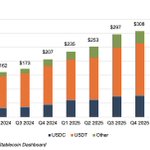
$USDC circulation reached $73.3B in Q2, up 19% year over year.
Now Circle is looking to expand into roughly 40 additional markets.
That’s not just more liquidity sitting onchain.
It’s a push to make digital dollars useful across borders, especially where traditional payment infrastructure falls short.
And I think that’s where the next wave of crypto adoption gets interesting.
Not everyone needs to trade crypto.
But millions of people could have a reason to use stablecoins.
