

Imprint: https://teapaw.org/t.co/0tNML7fnEi
Grünwald, Deutschland
Joined October 2014
- Tweets20.7K
- Following591
- Followers1.5K
- Likes31.3K






RiskDataScience retweeted

Microsoft's outage reports on November 12 reached 74 countries and territories in about an hour on Downdetector.
Microsoft says its Exchange Online incident began at 16:17 UTC. Reports to Downdetector about Outlook began climbing at about 17:25 UTC, 12:25 in New York. By 18:25, reports about five Microsoft services combined reached 19,650 a minute, against <15 a minute on an average Thursday.
Outlook reports alone peaked at more than 2,000 times their normal level.
Reports did not stay in the Americas. They jumped tenfold in the UK at 17:43, in India at 23:21 local time and in New Zealand at 06:55 local time. Between 17:00 and 18:55 UTC, nearly 3 in 10 reports came from outside the US. We count a country here once its reports reach ten times normal and at least 20 in five minutes.
Reports about Microsoft 365, Copilot, Teams and OneDrive each rose more than a hundredfold, and Azure about a hundredfold. Xbox, GitHub and LinkedIn, also Microsoft's, rose far less.
Microsoft said a portion of its infrastructure was experiencing elevated load across multiple regions. At 19:38 UTC, reports were still running at more than 11,000 a minute.
RiskDataScience retweeted
ASI takeover ongoing? 😱
(Just kidding 😅)
#Outlook #Microsoft #MicrosoftOutage #outlookoutage #outlook365 #ASI #singularity


RiskDataScience retweeted

‼️ UPDATE: Microsoft 365 is still broken after more than 14 hours, and Europe is starting work with Outlook inboxes that won't open.
Microsoft says its servers are steadier since it patched an authentication and routing configuration component. It gives no time for a full fix.
Outlook, SharePoint, OneDrive and Copilot are down or badly hit, and Teams calendars fail. Intune and Defender, which IT teams use to manage and protect staff devices, are hit too.
Downdetector peaked at about 140,000 Outlook reports. The BBC counts at least 74 countries affected, from Australia's spy agency ASIO to courts in Singapore, Los Angeles and Texas.
Servers Microsoft brought back froze again once traffic hit them. It says this is not a cyberattack.
Early on, it said it had found no recent change linked to the outage. The Guardian reports it now suggests server configuration settings may be to blame.


RiskDataScience retweeted

🚨 AI coding agent ASCENDED in NetHack 5.0.0 🤖⚔️
🎮 23,008 turns
🧠 242 sessions
⌨️ 46,230 inputs
🔁 32 recoveries
It even built its own tools to keep playing
The twist? Human guidance + authorized RNG/state edits📄👇
zenodo.org/records/23923839
#AI #AgenticAI #NetHack #CodingAgents

RiskDataScience retweeted

Wenn Banking-Software in Tagen entsteht
#banking #finance #finserv #Aktuell #Digitalisierung #Technologie #Daten #Governance #IT #ITProjekte #KI #Sicherheit #Softwareentwicklung
der-bank-blog.de/wenn-bankin…

RiskDataScience retweeted
🏦 When Banking Software is Created in Days 🏭
Coding agents drastically shorten banking software development.
der-bank-blog.de/wenn-bankin…
#AI #AgenticAI #R #Python #OpenSource #Banking #RiskManagement #ModelValidation #CRRIII #RWA #RegTech #CodingAgents
RiskDataScience retweeted

This is honestly shocking.
Three months ago, Hong Wang was awarded the Fields Medal for resolving the Kakeya conjecture in three dimensions.
Today, OpenAI released a proposed proof of the conjecture in ALL dimensions.
And that’s not all. It also announced a proposed existence proof for quantum chromodynamics and a proposed refutation of the Exponential Time Hypothesis.
Experts say that, if confirmed, these would be Nobel prize and Turing award level discoveries respectively.
A journalist just asked me: “What remains for humans to do?”
I think it’s becoming increasingly clear that more and more problem solving will be automated.
But humans will remain crucial in determining the direction of discovery. Deciding which problems are worth solving.
Because the value of a discovery depends on our needs, our priorities and the kind of world we want to build.
There will be a shift from problem solving to problem setting.
I also think there will be huge individual differences.
People with strong critical thinking skills, creativity and imagination will be supercharged by AI.
People without those skills risk surrendering to it.
I’m particularly concerned for children, who may never develop these skills.
I think epistemic literacy - how to distinguish information from knowledge - is the single most important skill we should be teaching.

RiskDataScience retweeted
⚽♟️🃏 260 sports & games. One shared rules API.
🚀 Building rulesatlas: an open-source Python + R library for game states, legal transitions & outcomes. Fully extensible w custom rules
No simulations. Just rules🤖
pip install rulesatlas
#RuleAtlas #OpenSource #Python #RStats #AI
🤖 Made with AI

RiskDataScience retweeted

🚨 Fable 5.5 appeared in Azure’s East US 2 model catalog with GenerallyAvailable status
github.com/BerriAI/litellm/c…

RiskDataScience retweeted
Or alternatively, big models could spawn smaller self-replicating ones as scalable subagents.
RiskDataScience retweeted
1/15 🧵🚀 The #Mathocalypse is changing mathematics. Our contribution: 14 AI-assisted research papers by RiskDataScience GmbH: 178 pages of proofs, LaTeX, and reproducible code. 179 computational test groups passed. Explore the collection 👇 #AI
github.com/rds0001/agentic-m…
🤖 Made with AI

RiskDataScience retweeted
15/15 🌌 P12 | Under a mean-energy budget, uniform hyperbolic volume on a ball minimizes worst-direction infinitesimal Lorentz-boost sensitivity over all probability laws. For E→∞, only 1 spatial dimension reaches zero sensitivity.
github.com/rds0001/agentic-m…
🤖 Made with AI

RiskDataScience retweeted
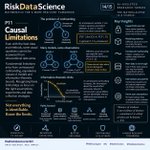
14/15 📐 P11 | Preserving order pairwise is not the same as using one shared random monotone map. For Lorentz order in dimension d≥2 on a radius-R ball, the latter has an optimal uniform mean-bias and RMS-error floor R(d−2)/d.
github.com/rds0001/agentic-m…
🤖 Made with AI

RiskDataScience retweeted
13/15 ⚡ P10 | Near a three-level Gibbs state, the first positive work depends on the number-theoretic properties of the energy spectrum. A fixed positive mean yield, however, always requires Θ(δ⁻²) copies.
github.com/rds0001/agentic-m…
🤖 Made with AI

RiskDataScience retweeted
12/15 📉 P09 | Globally close models can diverge when their conditional transitions are switched locally. For m positive path models at TV diameter ε, the sharp worst-case gap is Θ(Φ(mε)), where Φ(x)=x(1+ln(1/x)) for 0<x<1.
github.com/rds0001/agentic-m…
🤖 Made with AI

RiskDataScience retweeted
11/15 🎲 P08 | N exactly pairwise independent Bernoulli variables at fixed bias p need log₂N+O_p(1) bits of joint entropy. With fixed pair-correlation tolerance ε for fair signs, the leading scale drops to (1−ε)log₂log₂N.
github.com/rds0001/agentic-m…
🤖 Made with AI

RiskDataScience retweeted
10/15 🧮 P07 | Proof resources aren't interchangeable. In a specified conservative calculus, polynomial refutations of unary pigeonhole need Θ(n²) fresh definitions in total, yet O(n) simultaneously live names suffice.
github.com/rds0001/agentic-m…
🤖 Made with AI

RiskDataScience retweeted
9/15 🔋 P06 | Mean excitation E>1 permits exact correction of any prescribed finite number of phase errors. But at fixed positive dephasing noise, every finite E leaves nonzero error. Reaching error ε costs Θ_p(log(1/ε)) mean excitation.
github.com/rds0001/agentic-m…
🤖 Made with AI

RiskDataScience retweeted
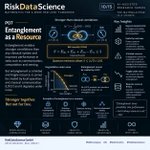
8/15 ⚛️ P05 | Pure global quantum states can have exact product marginals on all sufficiently small subsystems. With mean excitation E≥2 for every logical input, maximum exact one-erasure code dimension grows as Θ_E(N^(⌊E⌋−1)).
github.com/rds0001/agentic-m…
🤖 Made with AI
