







Samuel R. retweeted

Looking at earlier speech models, their training data, and how people use them in products and everyday use cases, one thing stood out: the same recording can need different outputs.
Sometimes you want every word and filler. Sometimes you want clean, formatted text. Sometimes you want to add context, like names or technical terms, to help the model recognize them. Or you want a translation or an answer to a question about the recording.
Users should be able to ask for what they need.
This idea helped shape #Granary-v2.
We expanded from 25 to 48 languages and improved label quality through better ASR labeling, transcript refinement, and quality filtering. We also built labels and instruction pairs for different transcription styles, contextual ASR, code-switching, translation, transcript-based captions, and question answering.
#Granary-v2 is part of the training data behind #Nemotron-3.5-Transcribe, which lets users control transcription style, provide context, translate speech, and ask questions about audio.
We’re sharing model weights, training recipes, a public subset of #Granary-v2 labels, and the curation pipeline built with NeMo Curator.
A lot of work from the NeMo Speech team. Excited to finally share it!
🤗 Model:
huggingface.co/nvidia/NVIDIA…
📊 Granary-v2 dataset:
huggingface.co/datasets/nvid…
📝 Granary-v2 technical report:
research.nvidia.com/labs/nem…
🛠️ Granary-v2 pipeline:
github.com/NVIDIA-NeMo/Curat…
#NVIDIA #NeMo #SpeechAI #SpeechRecognition #SpeechData #OpenSource


Meet NVIDIA Nemotron 3.5 Transcribe 🎙️
An open-weight, promptable 30B MoE model with ~4B active parameters that brings transcription in 40 languages, speaker attribution, translation, contextual prompting and audio understanding into one checkpoint.
Watch it keep track of who said what when everyone’s talking at once.
1/ 🧵
Samuel R. retweeted

Today, as part of the ongoing Rwanda-Singapore Trade and Investment Mission, Hinsley Njila, Founder and CEO of Kilwa Technologies, signed an MoU with @QTSoftwareltd and @DUmuganda to advance collaboration on the development of Kinyarwanda AI-enabled language models.
This partnership aims to strengthen the inclusion of Kinyarwanda in the digital economy while unlocking new opportunities for AI-driven innovation across key sectors, including agriculture, healthcare, education, and financial services.

Samuel R. retweeted

if you're a framework/model provider on the benchmark and don't like the ranking, you can submit a new candidate!
every agent on VAmoS is 100% open-source
PRs welcome: github.com/veris-ai/rory-age…
one of my goals with VAmoS is to make it super transparent, and it's a living bench


Samuel R. retweeted

Wake up, ppl 👀
Xiaomi just open-sourced ~7K of the RL environments it used to train MiMo on HuggingFace, across domains like code, cyber, general, music and web dev
I think this is one of the biggest things to happen in frontier open-source RL environment data.
Indepth analysis and learnings coming soon 👀

Samuel R. retweeted

Jev is TypeSafe AI's first System One Model.
It is 100x faster and cheaper than frontier LLMs.
That opens up a lot of use cases people usually skip because the big models are too slow or too expensive for them.
Here are 9 use cases where we think Jev could be used instead of an LLM.

Samuel R. retweeted

Math & Mystery.
→ Is it possible to pass this cookie through the hole?
Credit: instagram.com/p/DWBqdqxAvWc/. I didn’t upload this video to 𝕏. I’m pointing to a video within the 𝕏 stream of “Interesting Universe”, 𝕏 ID “InterestingUni” (Mar 19, 2026).
Samuel R. retweeted

We are at @DeepIndaba in Lagos! Come by our booth to say hello and learn about our work advancing inclusive AI for African languages. See you there!
#DLI2026 #Indaba2026 #DigitalUmuganda


Samuel R. retweeted
Congratulations to the Afrivoice EAC Hackathon winners!
1st: KANTA Izzoudine, ZOCLI Hilary , LOKO Audric Isaac WER 0.34778
2nd: @LeoUnlimited WER 0.34819
Local 1st: Cyprian Kiplangat WER 0.41409
Community Champion nominee: @kevindegila for rallying Benin’s community.

Samuel R. retweeted
⏳ Only 5 days left to register!
Ready to help shape the future of African language AI? Join the AfriVoice EAC ASR Hackathon and build speech technologies that make AI more inclusive and accessible across East Africa.
Don't miss your chance; registration closes soon!
🤖 Made with AI

Samuel R. retweeted
📢Reminder: The Afrivoice EAC ASR Hackathon FAQ Session is happening TODAY!
Please note: The session will take place from 6:00–7:00 PM EAT (East Africa Time).
📅Today, Thursday, July 2, 2026
🔗 Join here: meet.google.com/zoc-bsgt-yxb


Samuel R. retweeted
📢📢📢
Join our online FAQ Session to learn more about the challenge, and get your questions answered by the organizing team.
📅Date: Thursday, July 2, 2026
🕕Time: 6:00–7:00 PM EST
💻Format: Online Q&A Session
🔗 Join the session here: meet.google.com/zoc-bsgt-yxb…

Samuel R. retweeted
Our CEO, @n_audace, joined @RBA_Rwanda’s Waramutse Rwanda to discuss Rwanda’s growing AI ecosystem and the role of the new National AI Agency in shaping the country’s digital future.
Watch the full discussion (in Kinyarwanda): youtube.com/watch?v=rU5E7V_Y… #AI #Rwanda

Samuel R. retweeted
🚨 AfriVoice EAC ASR Hackathon - Registrations OPEN! 🚨
Build multilingual ASR models for East African languages. Focus on edge deployment & offline use.
📅 June 15 – July 15, 2026
🏆 Up to $1,000 in prizes
Join now: afrivoice.github.io/afrivoic…

Samuel R. retweeted
Are you passionate about AI, speech technology, and African languages? @DUmuganda, @mcaai_msu , and @Maseno_Uni are excited to launch the Afrivoice EAC ASR Hackathon.
📌Learn more and register: afrivoice.github.io/afrivoic…
🤖 Made with AI

Samuel R. retweeted

The biggest barrier for AI applications in Africa isn't model complexity -- it's the scarcity of data for the 2000+ spoken languages there.
We just released WAXAL. This open-access dataset delivers 2,400+ hours of high-quality speech data for 27 Sub-Saharan African languages, serving 100M+ speakers. Crucially, this community-rooted effort — led by African organizations — changes the roadmap for truly inclusive voice AI.
Learn more and check out the WAXAL dataset here: goo.gle/4cxNHae

ALT Launched in 2021 as a multi-year collaboration with African academic and community organizations, WAXAL provides the high-quality, permissively licensed data needed to build robust speech systems. Note: We have updated this post announcement with a corrected map. We apologize for the previous error and appreciate the community feedback that helped us correct it.
Samuel R. retweeted
Great energy hosting Translation, Interpretation, Linguistic and Literature students from @Uni_Rwanda -National Police College! We explored AI tools, specifically language technology, and their benefits.
#Digitalumuganda #NationalPoliceCollege #AIForGood


Samuel R. retweeted
Join us as We celebrate 7 amazing years since #DigitalUmuganda started contributing to the #Rwandan and #African #AI community!
7 years of bridging the AI Divide one language at a time.
Thank you for growing with Us!

Samuel R. retweeted

🪘 Call for African Datasets 🪘
We are delighted to announce the call for the African Datasets as part of the Research in Africa Days at Deep Learning Indaba 2026 in Nigeria. Data is the heartbeat of innovation, and we are expanding the African Dataset Repository to ensure African realities power the global AI revolution.
We invite startups, researchers, individuals, and organisations to submit datasets that reflect the diverse challenges and opportunities of the continent.
Why Join the Mission?
✨Visibility: Selected datasets will be featured during the Research in Africa Days.
✨Impact: Help make African data the foundation for innovations that transform lives and build a brighter future.
✨Representation: Selected teams will designate a representative to attend the Indaba in Nigeria and represent their work.
Deadline: 20 March 2026.
Submit Here:👉 docs.google.com/forms/d/1C-2…
#DLI2026 #Indaba2026

Samuel R. retweeted
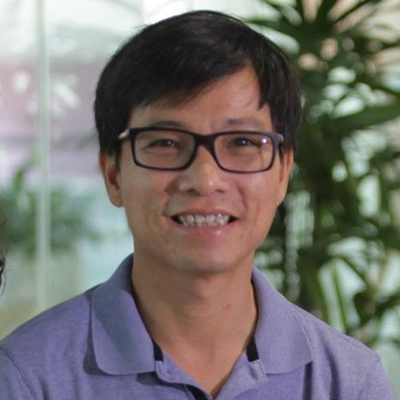
Excited to share our latest work: "Semi-Autonomous Mathematics Discovery with Gemini." We used Gemini to systematically evaluate 700 "open" conjectures in the Erdős Problems database.
The result? We addressed 13 problems marked as open—finding 5 novel autonomous solutions and identifying 8 existing solutions missed by previous literature.
Read the full case study here: arxiv.org/abs/2601.22401
