
Growth advisor for tech, SaaS and DTC launches. Building a growth system: strategy grounded in your market → campaigns in minutes. Author of The 14-Day Sprint.
Master your growth 👉
Joined June 2025
- Tweets445
- Following864
- Followers1K
- Likes18.3K




Pinned Tweet
If you want to land your first 100 customers fast, you need to understand these basics:
1) Generate, leverage and capture demand.
2) Gather and sample audience data fast.
3) Leverage platform algorithms and build frequency.
4) Focus on product competitive advantages.
You don’t need more random AI slop: posts and campaigns disconnected from your market, audience, positioning and growth goal.
You need one connected growth system: a way to turn market research into a clear strategy, then turn that strategy into campaigns you can test.
Here’s how it works:
1. Start with your product and market
Open the *Positioning Hypothesis*prompt. Add your product details, target customer, the problem you solve, any evidence you have and your website, if available.
Review the output, add context and refine it until your positioning is sharper.
2. Build your messaging foundation
Use the *Message Architecture* prompt to define your ideal customer, their painful status quo, the outcome they want and what makes your product different.
Review and refine the output. Save it as your source of truth for the prompts that follow.
Then use the *Clarify Your Messaging* prompt to develop strategic positioning and messaging for each audience segment.
3. Plan your targeting and distribution
Use your messaging foundation with the *Targeting* and *Distribution Plan* prompts to identify the audiences, channels, campaign ideas and success metrics you want to test.
4. Turn your one source of true plan into assets
Choose the prompts that support your goal:
- *Organic posts*
- *Search content and blogs*
- *Social ads*
- *Search ads*
- *Landing pages*
One connected strategy. Multiple assets working together.
5. Launch, measure and improve
Review your AI-generated output. Verify claims, links and landing pages, and check your tracking before launch.
Then upload your results and use the prompts to review them. Repeat what works, improve what needs work, and keep learning when the data is inconclusive.
The goal isn’t to publish more content for the sake of it.
It’s to turn your strategy into focused action and use every campaign to learn what works for your product.

Google says you don’t need special AI markup to appear in AI Overviews or AI Mode.
You need the fundamentals: buyer search intent, useful content, indexed pages and clear answers.
Here’s where many product blogs miss the opportunity:
Before: “Streamline Your Workflow”
After: “How can a construction team keep site updates from getting lost?”
One describes a feature. The other answers a question a buyer actually asks.
Turn that question into a growth plan:
→ SEO: Check search data and results for intent. Map the keyword to the right page.
→ AEO: Answer the question directly, then cover relevant follow-ups.
→ GEO: Add evidence and expertise that make your answer useful and credible.
→ Off-site: Earn relevant links and mentions through expert commentary, PR and industry relationships.
→ Measure: Track search impressions and clicks. Test the same question across AI platforms over time and record which sources appear.
One connected plan for your search strategy and content, grounded in your positioning. That’s the Growth System.

Don’t know how to help your product get found in search and discovered in AI answers? No problem.
Use the Prompt Library inside the Growth OS Workspace to turn your audience insights and keyword research into an SEO, AEO and GEO content plan.
With Growth System you can:
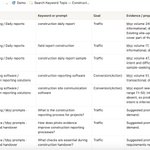
→ Build an initial keyword plan
→ Research proposed keywords and questions with an SEO tool
→ Update and prioritise your plan using the research data
→ Create keyword-aligned blog drafts and mockups
→ Develop keyword-aligned homepage and product page copy and mockups
→ Write search ads
No blank pages. No disconnected keyword lists.
Just one source of truth for your search and content strategy, built around your audience, positioning and research.
Explore the Growth System
compoundgrowthloop.com
🚀 New Prompt Library is here.
One source of truth for SEO, GEO & AEO (on-site + offsite) to create ready-to-launch landing pages for homepages, product pages & blogs.
Demo dropping soon.
Ready to rank *and* get cited?
2
3
146
Want your product to be easier to find in search and useful enough to be considered for AI answers?
Start with the questions your customers are asking. Then turn those questions into content that genuinely helps.
The new SEO, AEO and GEO prompt workflow in the Growth OS Workspace connects audience insights, keyword research and content creation in one plan.
Using Growth Master’s modules and guided prompts, here’s how it works:
1. Build your initial search plan in minutes
Use the initial keyword planning prompt to start with your audience, positioning and customer questions. Group potential searches by topic, separating educational intent from product-seeking intent.
2. Research the opportunities
Use those topics to explore related keywords and suggested questions in a research tool such as Moz. Check the target market and language.
3. Update your source-of-truth plan
Upload your research exports and use the plan update prompt to review audience fit, intent, available search volume and organic difficulty. The Notion AI workflow can then update your keyword worksheet and plan, propose priorities and flag missing data.
4. Turn opportunities into content
Use the blog prompt to create drafts and mockups from your prioritised plan. Start with P1 opportunities, then consider P2 topics that add distinct value.
For example:
→ An educational search about site updates could become a practical guide.
→ A product-seeking search for construction communication software could become a buyer’s guide or lead to a product page if that better answers the search.
5. Connect content to conversion
Use the landing page, blog and search ad prompts to create messaging, mockups and ad copy from the same plan. Match each search and ad promise to a page that delivers on it.
The plan also considers off-site opportunities, such as relevant links, PR and expert commentary. Review content, claims and destinations before launch.
One source of truth connecting customer questions, keyword research, content and conversion.


1
87
Explore the Growth Prompt Library inside the Growth OS Workspace.
compoundgrowthloop.com

24
Building a SaaS is getting faster. Finding customers shouldn’t be the slowest part.
Organic builds trust over time. High-intent ads help you reach the right people and test your message sooner.
Run a 14-day ad sprint. Learn what resonates. Iterate. Repeat.
Use paid ads for speed and control.
2
181
How to buy ads the right way for a new product launch 👇
“I spent $400 on ads and got five customers.”
Sound familiar?
That’s $80 in ad spend per customer.
A big brand might acquire customers for less. People already recognise the name, understand the product and trust it enough to buy.
The brand may also have existing audiences and years of campaign data to learn from.
For a completely new product launch, you’re starting somewhere different.
You’re not just paying to acquire customers.
You’re also paying to learn who they are, what they care about and why they might choose you.
That’s why you need to play a different game.
Treat your first 14 days as a learning sprint.
1. Read the early engagement signals.
Days 3-7:
In Day 3 pause the ads with lower click through rate.
Look at which audiences group engage, which messages earn clicks and what happens when people reach your landing page.
If people click but leave quickly, don’t immediately buy more traffic. Check whether the page delivers on the ad’s promise.
2. Refine the segment and message.
Days 7–14:
Look beyond clicks. Who signed up or bought? What did they respond to? Where did other visitors drop off?
Double down on the ad groups that convert.
Talk to your early customers. Ask what they were using before, which benefit mattered most and what nearly stopped them.
Use what you learn to refine your audience, messaging and offer.
3. Optimise the conversion path.
After day 14:
Keep testing the messages that attract the right people. Make the landing page clearer.
Remove friction from signup or checkout. See whether customers get value after they arrive.
Over time, better positioning, a stronger conversion path and growing trust can help reduce acquisition costs.
Lower costs won’t happen just because you keep spending. They can come from reading the signals and acting on what you learn.
Five customers don’t prove product-market fit yet.
But those five customers give you somewhere to start.
If you’re a founder or builder, don’t compare your first campaign to a brand that’s spent years building recognition.
Use your early budget to learn. Set a time and budget limit and turn that learning into a better customer journey.
Done right, paid ads give you speed and control so you can learn faster instead of spending months guessing.
Scale when you see meaningful signals: the right people are buying, getting value and coming back, and the economics make sense.

2
90
How to buy ads the right way for a new product launch 👇
“I spent $400 on ads and got five customers.”
Sound familiar?
That’s $80 in ad spend per customer.
A big brand might acquire customers for less. People already recognise the name, understand the product and trust it enough to buy.
The brand may also have existing audiences and years of campaign data to learn from.
For a completely new product launch, you’re starting somewhere different.
You’re not just paying to acquire customers.
You’re also paying to learn who they are, what they care about and why they might choose you.
That’s why you need to play a different game.
Treat your first 14 days as a learning sprint.
1. Read the early engagement signals.
Days 3-7:
In Day 3 pause the ads with lower click through rate.
Look at which audiences group engage, which messages earn clicks and what happens when people reach your landing page.
If people click but leave quickly, don’t immediately buy more traffic. Check whether the page delivers on the ad’s promise.
2. Refine the segment and message.
Days 7–14:
Look beyond clicks. Who signed up or bought? What did they respond to? Where did other visitors drop off?
Double down on the ad groups that convert.
Talk to your early customers. Ask what they were using before, which benefit mattered most and what nearly stopped them.
Use what you learn to refine your audience, messaging and offer.
3. Optimise the conversion path.
After day 14:
Keep testing the messages that attract the right people. Make the landing page clearer.
Remove friction from signup or checkout. See whether customers get value after they arrive.
Over time, better positioning, a stronger conversion path and growing trust can help reduce acquisition costs.
Lower costs won’t happen just because you keep spending. They can come from reading the signals and acting on what you learn.
Five customers don’t prove product-market fit yet.
But those five customers give you somewhere to start.
If you’re a founder or builder, don’t compare your first campaign to a brand that’s spent years building recognition.
Use your early budget to learn. Set a time and budget limit and turn that learning into a better customer journey.
Done right, paid ads give you speed and control so you can learn faster instead of spending months guessing.
Scale when you see meaningful signals: the right people are buying, getting value and coming back, and the economics make sense.
5
179
How to buy ads the right way for a new product launch 👇
“I spent $400 on ads and got five customers.”
Sound familiar?
That’s $80 in ad spend per customer.
A big brand might acquire customers for less. People already recognise the name, understand the product and trust it enough to buy.
The brand may also have existing audiences and years of campaign data to learn from.
For a completely new product launch, you’re starting somewhere different.
You’re not just paying to acquire customers.
You’re also paying to learn who they are, what they care about and why they might choose you.
That’s why you need to play a different game.
Treat your first 14 days as a learning sprint.
1. Read the early engagement signals.
Days 3-7:
In Day 3 pause the ads with lower click through rate.
Look at which audiences group engage, which messages earn clicks and what happens when people reach your landing page.
If people click but leave quickly, don’t immediately buy more traffic. Check whether the page delivers on the ad’s promise.
2. Refine the segment and message.
Days 7–14:
Look beyond clicks. Who signed up or bought? What did they respond to? Where did other visitors drop off?
Double down on the ad groups that convert.
Talk to your early customers. Ask what they were using before, which benefit mattered most and what nearly stopped them.
Use what you learn to refine your audience, messaging and offer.
3. Optimise the conversion path.
After day 14:
Keep testing the messages that attract the right people. Make the landing page clearer.
Remove friction from signup or checkout. See whether customers get value after they arrive.
Over time, better positioning, a stronger conversion path and growing trust can help reduce acquisition costs.
Lower costs won’t happen just because you keep spending. They can come from reading the signals and acting on what you learn.
Five customers don’t prove product-market fit yet.
But those five customers give you somewhere to start.
If you’re a founder or builder, don’t compare your first campaign to a brand that’s spent years building recognition.
Use your early budget to learn. Set a time and budget limit and turn that learning into a better customer journey.
Done right, paid ads give you speed and control so you can learn faster instead of spending months guessing.
Scale when you see meaningful signals: the right people are buying, getting value and coming back, and the economics make sense.
1
4
101
How to buy ads the right way for a new product launch 👇
“I spent $400 on ads and got five customers.”
Sound familiar?
That’s $80 in ad spend per customer.
A big brand might acquire customers for less. People already recognise the name, understand the product and trust it enough to buy.
The brand may also have existing audiences and years of campaign data to learn from.
For a completely new product launch, you’re starting somewhere different.
You’re not just paying to acquire customers.
You’re also paying to learn who they are, what they care about and why they might choose you.
That’s why you need to play a different game.
Treat your first 14 days as a learning sprint.
1. Read the early engagement signals.
Days 3-7:
In Day 3 pause the ads with lower click through rate.
Look at which audiences group engage, which messages earn clicks and what happens when people reach your landing page.
If people click but leave quickly, don’t immediately buy more traffic. Check whether the page delivers on the ad’s promise.
2. Refine the segment and message.
Days 7–14:
Look beyond clicks. Who signed up or bought? What did they respond to? Where did other visitors drop off?
Double down on the ad groups that convert.
Talk to your early customers. Ask what they were using before, which benefit mattered most and what nearly stopped them.
Use what you learn to refine your audience, messaging and offer.
3. Optimise the conversion path.
After day 14:
Keep testing the messages that attract the right people. Make the landing page clearer.
Remove friction from signup or checkout. See whether customers get value after they arrive.
Over time, better positioning, a stronger conversion path and growing trust can help reduce acquisition costs.
Lower costs won’t happen just because you keep spending. They can come from reading the signals and acting on what you learn.
Five customers don’t prove product-market fit yet.
But those five customers give you somewhere to start.
If you’re a founder or builder, don’t compare your first campaign to a brand that’s spent years building recognition.
Use your early budget to learn. Set a time and budget limit and turn that learning into a better customer journey.
Done right, paid ads give you speed and control so you can learn faster instead of spending months guessing.
Scale when you see meaningful signals: the right people are buying, getting value and coming back, and the economics make sense.
1
86
How to buy ads the right way for a new product launch 👇
“I spent $400 on ads and got five customers.”
Sound familiar?
That’s $80 in ad spend per customer.
A big brand might acquire customers for less. People already recognise the name, understand the product and trust it enough to buy.
The brand may also have existing audiences and years of campaign data to learn from.
For a completely new product launch, you’re starting somewhere different.
You’re not just paying to acquire customers.
You’re also paying to learn who they are, what they care about and why they might choose you.
That’s why you need to play a different game.
Treat your first 14 days as a learning sprint.
1. Read the early engagement signals.
Days 3-7:
In Day 3 pause the ads with lower click through rate.
Look at which audiences group engage, which messages earn clicks and what happens when people reach your landing page.
If people click but leave quickly, don’t immediately buy more traffic. Check whether the page delivers on the ad’s promise.
2. Refine the segment and message.
Days 7–14:
Look beyond clicks. Who signed up or bought? What did they respond to? Where did other visitors drop off?
Double down on the ad groups that convert.
Talk to your early customers. Ask what they were using before, which benefit mattered most and what nearly stopped them.
Use what you learn to refine your audience, messaging and offer.
3. Optimise the conversion path.
After day 14:
Keep testing the messages that attract the right people. Make the landing page clearer.
Remove friction from signup or checkout. See whether customers get value after they arrive.
Over time, better positioning, a stronger conversion path and growing trust can help reduce acquisition costs.
Lower costs won’t happen just because you keep spending. They can come from reading the signals and acting on what you learn.
Five customers don’t prove product-market fit yet.
But those five customers give you somewhere to start.
If you’re a founder or builder, don’t compare your first campaign to a brand that’s spent years building recognition.
Use your early budget to learn. Set a time and budget limit and turn that learning into a better customer journey.
Done right, paid ads give you speed and control so you can learn faster instead of spending months guessing.
Scale when you see meaningful signals: the right people are buying, getting value and coming back, and the economics make sense.
1
97
“I spent $400 on ads and got five customers.”
Sound familiar?
That’s $80 in ad spend per customer.
A big brand might acquire customers for less. People already recognise the name, understand the product and trust it enough to buy.
The brand may also have existing audiences and years of campaign data to learn from.
For a completely new product launch, you’re starting somewhere different.
You’re not just paying to acquire customers.
You’re also paying to learn who they are, what they care about and why they might choose you.
That’s why you need to play a different game.
Treat your first 14 days as a learning sprint.
1. Read the early engagement signals.
Days 3-7:
In Day 3 pause the ads with lower click through rate.
Look at which audiences group engage, which messages earn clicks and what happens when people reach your landing page.
If people click but leave quickly, don’t immediately buy more traffic. Check whether the page delivers on the ad’s promise.
2. Refine the segment and message.
Days 7–14:
Look beyond clicks. Who signed up or bought? What did they respond to? Where did other visitors drop off?
Double down on the ad groups that convert.
Talk to your early customers. Ask what they were using before, which benefit mattered most and what nearly stopped them.
Use what you learn to refine your audience, messaging and offer.
3. Optimise the conversion path.
After day 14:
Keep testing the messages that attract the right people. Make the landing page clearer.
Remove friction from signup or checkout. See whether customers get value after they arrive.
Over time, better positioning, a stronger conversion path and growing trust can help reduce acquisition costs.
Lower costs won’t happen just because you keep spending. They can come from reading the signals and acting on what you learn.
Five customers don’t prove product-market fit yet.
But those five customers give you somewhere to start.
If you’re a founder or builder, don’t compare your first campaign to a brand that’s spent years building recognition.
Use your early budget to learn. Set a time and budget limit and turn that learning into a better customer journey.
Done right, paid ads give you speed and control so you can learn faster instead of spending months guessing.
Scale when you see meaningful signals: the right people are buying, getting value and coming back, and the economics make sense.
Follow me and DM *PLAN” with what you’re building and your website. I’ll help you identify your first distribution test.
The 5-step process to build your own distribution plan:
1. Anchor it in your ICP + positioning
Define who you serve, the problem you solve, and why they’d choose your product over their current alternative.
2. Identify your demand situation
Are people already searching for a solution? Or do they need education before they recognise the problem and your solution?
That distinction shapes how you reach them.
3. Pick 2 channels your customers actually use
Go where they look for answers and discuss their problems.
Outreach Example:
“LinkedIn post” to reach and educate your audience + “paid search” to reach people actively looking for solutions.
4. Map the funnel: Create → Leverage → Capture demand
- Create: Educate your target audience and build interest.
- Leverage: Build audience lists from engaged audiences and website visitors. Use them for retargeting and lookalikes where available.
- Capture: Reach interested audiences and high-intent searchers with direct messaging that leads to a signup, purchase or demo.
5. Find signals, test and improve weekly
Set a goal for each campaign. Track engagement, relevant traffic and conversions. Learn what works, adjust and repeat.
Simple systems beat random posting.
1
1
93
Follow me and DM *PLAN” with what you’re building and your website. I’ll help you identify your first distribution test.
The 5-step process to build your own distribution plan:
1. Anchor it in your ICP + positioning
Define who you serve, the problem you solve, and why they’d choose your product over their current alternative.
2. Identify your demand situation
Are people already searching for a solution? Or do they need education before they recognise the problem and your solution?
That distinction shapes how you reach them.
3. Pick 2 channels your customers actually use
Go where they look for answers and discuss their problems.
Outreach Example:
“LinkedIn post” to reach and educate your audience + “paid search” to reach people actively looking for solutions.
4. Map the funnel: Create → Leverage → Capture demand
- Create: Educate your target audience and build interest.
- Leverage: Build audience lists from engaged audiences and website visitors. Use them for retargeting and lookalikes where available.
- Capture: Reach interested audiences and high-intent searchers with direct messaging that leads to a signup, purchase or demo.
5. Find signals, test and improve weekly
Set a goal for each campaign. Track engagement, relevant traffic and conversions. Learn what works, adjust and repeat.
Simple systems beat random posting.
1
1
95
The 5-step process to build your own distribution plan:
1. Anchor it in your ICP + positioning
Define who you serve, the problem you solve, and why they’d choose your product over their current alternative.
2. Identify your demand situation
Are people already searching for a solution? Or do they need education before they recognise the problem and your solution?
That distinction shapes how you reach them.
3. Pick 2 channels your customers actually use
Go where they look for answers and discuss their problems.
Outreach Example:
“LinkedIn post” to reach and educate your audience + “paid search” to reach people actively looking for solutions.
4. Map the funnel: Create → Leverage → Capture demand
- Create: Educate your target audience and build interest.
- Leverage: Build audience lists from engaged audiences and website visitors. Use them for retargeting and lookalikes where available.
- Capture: Reach interested audiences and high-intent searchers with direct messaging that leads to a signup, purchase or demo.
5. Find signals, test and improve weekly
Set a goal for each campaign. Track engagement, relevant traffic and conversions. Learn what works, adjust and repeat.
Simple systems beat random posting.