

The St. Clair County Historical Society (est. 1905) helps St. Clair County tell its story through education, research, preservation and community involvement.
701 E Washington Belleville IL
Joined July 2012
- Tweets3.8K
- Following120
- Followers271
- Likes1.8K
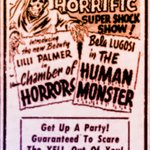





This week in 1947, Belleville moviegoers thrilled to a horror double feature at the Lincoln Theatre .
Featuring Chamber of Horrors and The Human Monster (starring the legendary Bela Lugosi), it promised to “scare the YELL out of you!”


As you contemplate your year-end giving, consider a qualified charitable distribution directly from your IRA.
It fulfills your RMD requirements and supports all that we do.
Talk to your financial advisor about this great giving opportunity.

This detailed lithograph celebrated the completion of the Eads Bridge in 1874.
Check out the details and the insets, which feature engineering diagrams, a portrait of James B. Eads, and facts about the bridge.
Donated in 1945, this piece is on display at our Victorian Home.


Winking Bob is right, you know.
Join us to support and protect our amazing local history.
Join here: STCCHS.org/join

Middle and upper class Victorian women found a creative outlet in fancywork.
This floral wreath from our collection is an example of Victorian fancywork.
The flowers are wax and the leaves are silk. It dates from 1870-1890.
Donated in 1968.


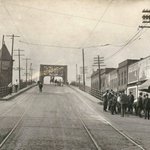
In this photo, we’re looking west towards the approach to the Municipal Free (now MacArthur) Bridge in East St. Louis.
The date is August of 1917, a fact backed up by the poster for The Spy, a silent film released on August 19, 1917. The bridge was newly opened then.

In October of 1948, Belleville moviegoers surely beat a path to the Illinois Theater at 216 W. Main Street to catch the rerelease of The Walking Dead.
Originally released in 1936, it starred horror film legend Boris Karloff.

Born in Lebanon in 1870, building contractor Jesse Gedney lived his entire eventful life in St. Clair County.
He built hundreds of buildings in his long career, including many of East St. Louis’s schools.
He died in 1935 and is buried in College Hill Cemetery in Lebanon.


Here’s another example of “Side Hustles of 19th Century Undertakers.”
Livery stables rented and boarded horses and vehicles.
In this 1886 ad, John Benner advertised his businesses on Collinsville Avenue in East St. Louis.

East St. Louis produced a little of everything during its industrial heyday.
One of these many things was baking powder.
Bon Bon Baking Powder was made by J.C. Grant Chemical Company at 12th and Walnut.

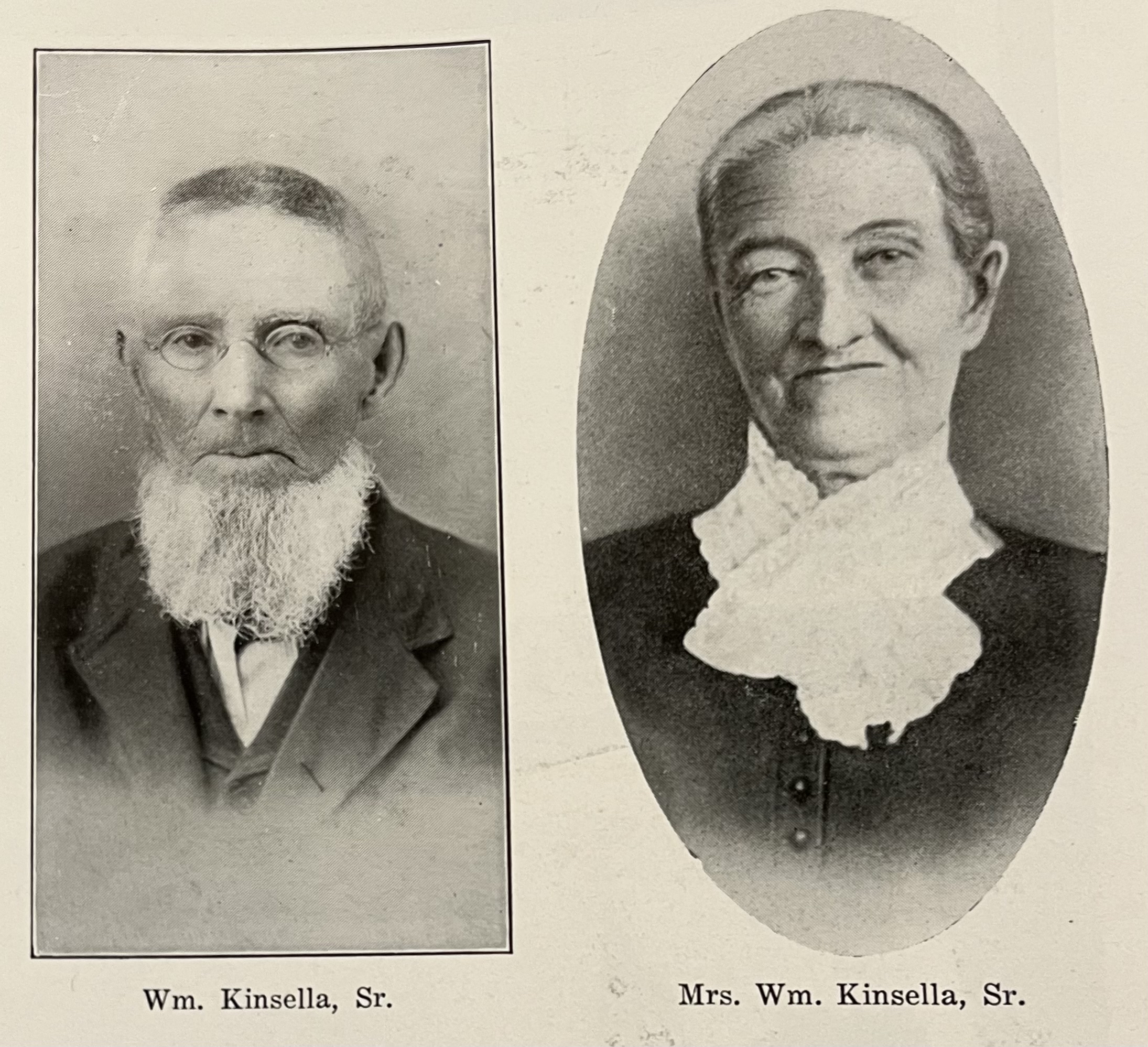
William Kinsella was born in Dublin in 1813 and immigrated here in 1840.
He married Anna Connolly, another Irish immigrant, and they settled on a farm in present day Fairview Heights.
The Lincoln in Belleville Walking Tours are BACK!
Free tour, but space is limited, so registration is required. Register here: buytickets.at/stclaircountyh…

These ads from 1846 mention carding machines.
In the 1840s, farm families sheared, sorted, picked, and scoured wool before bringing it to the mill. There, the carding machines brushed the wool into rolls for spinning or into batting for quilts.
Photo: Old Sturbridge Village.


We love a good aerial photo here and this is a great one.
It shows the area around 6th & Broadway in East St. Louis in the early 1950s.

Illinois was a free state—but “free” did not mean equal. Join us Nov. 7 at 11 AM for Lives in Code, stories of African American resilience under Illinois’ Black Codes, 1819–1865. An Illinois Humanities Road Scholars program.
buytickets.at/stclaircountyh…

We’re pleased to announce that the fence at the Messinger Cemetery will receive some much-needed TLC!
We’ll keep you updated!


The Haunted Belleville Walking Tour returns for a thrilling ninth edition!
For tickets and more information, call 618/234-0600 or click here: buytickets.at/stclaircountyh…
Tickets are selling FAST, so don’t delay!

When working with a museum collection, you never know what’s sometimes hiding in plain sight.
We found this sketch behind a framed photograph. The artist appears to be Margaret Hohman.
Margaret created her sketch on the back of a partial menu.


In 1907, optician H.M. Wilson in East St. Louis advertised the latest in diagnostic technology.
The instrument in the photo in the ad is an eye refractor or phoroptor.
You’ve used the modern version at every visit to the optometrist.

