

Building real finance. Founder & CIO, Neeyah & Souq. Former software engineer.
CA
Joined October 2010
- Tweets10.5K
- Following643
- Followers2K
- Likes19.3K








Safeer Mohiuddin retweeted

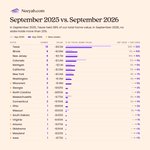
Our society is being torn apart by the inability of many Americans to buy their own homes, yet the federal government taxes developers who build new, for-sale homes at much higher rates than it taxes developers who build rentals.
Safeer Mohiuddin retweeted

Today, Brad Lander, rabbis, and other New Yorkers accompanied Palestinian farmers during the olive harvest. For that, they were detained by the Israeli government.
Harvesting olives is not illegal. The occupation is.
I am thankful that Brad has been released. But other New Yorkers remain detained, and they must be released immediately.
The same Israeli government detaining them has committed a horrific genocide against Palestinians, killing more than 74,000 people over the last few years alone.
The detention of these New Yorkers must end. The occupation must end. The genocide must end.
Safeer Mohiuddin retweeted

In the Palestine case, the tipping point is the moment when the cost of silence begins to exceed the cost of speaking, and millions take that step and start speaking. That is all; millions upon millions broke their silence, and this moment is irreversible. In the history of anti-colonial struggle, that tipping point has always mattered because, in Edward Said's framework, it is when the colonizer loses permission to narrate, and the colonized begin to be heard on their own terms, in their own voices and in spaces they forge.
hbazian.substack.com/p/from-…
Safeer Mohiuddin retweeted

you’re telling me i pay $895 a year for a charge card that already takes a heavy cut from merchants every time i use it, then gives me quarterly coupons to justify the fee, many of which are subsidized by those same merchant partners, & on top of that makes me jump through hoops to redeem everything including the dumb points currency i earn which fluctuates in value drastically & is highly inflationary?
absolutely remarkable.
one could only hope to start a business like this.
Safeer Mohiuddin retweeted

“The lifestyle of an entrepreneur at its core is: I can take more pain than the other guy, and I'll prove it.”
“ There's a zen that can happen when a warrior has fought for a long time. You can get used to it.”
“ You almost start accepting it. Like, something bad happens and you don't even get mad.”
“ There are benefits. But you need to make sure you don't get so used to it that it doesn't even bother you. You can get so zen, you're unbothered.”
“ There's something special about the extra fierceness of being bothered, being upset about something that is wrong.”
— @travisk

My conversation with @travisk, founder of Atoms and Uber.
0:00 Building Atoms & the Meta Problem of Management
3:51 The Appeal of Impossible Problems: Starting Over in China
12:19 Uber vs. Didi: Copycats, Hypergrowth & China's Rules
21:02 How Network Effects Become an Efficiency Fortress
31:48 Capitalism vs. the Taxi Cartel
44:05 The China War Goes Global & the Entrepreneur's Capacity for Pain
54:04 Life After Uber: Lawfare, Media Narratives & Reputation
58:21 What Founders Get Wrong About Venture Capital
1:08:35 The Fundraising Playbook: QED Storytelling & a Five-Room Auction
1:18:38 The Uber Coup, Radical Accountability & Outgrowing Fear
1:26:42 Why Specialized Robots Beat Humanoids at Industrial Scale
1:31:30 Finding Your Sport: Food, Mining & the Physical AI Stack
1:40:14 How to Build Many Companies Inside One Company
1:46:33 Entropy, Civilization & the Meaning of Progress
Includes paid partnerships.
Safeer Mohiuddin retweeted

The point of man is to build, create, and improve the lives of others.
The number on the screen is not relevant.

Safeer Mohiuddin retweeted

After 5 years of entrepreneurship, I can't stress enough how much it's ALWAYS something. If you don't have a problem right now, God bless you, but one is days or minutes away. I'm dead serious. If you think I'm kidding, ask around. Make sure you want this. It's not for everyone.
Safeer Mohiuddin retweeted

Nothing destroys your life more than not being able to deal with uncertainty.

Safeer Mohiuddin retweeted

So the Fed is probably gonna keep hiking rates
Which won't end the war in Iran
And probably won't slow down AI hyperscaler spending
So consumers get hurt by higher borrowing costs but inflation won't really go lower?
Safeer Mohiuddin retweeted
This year:
Mortgage rates have gone from 6% to 7%
10 year Treasury yields: 4% to 5%.
Inflation: 2.4% to 3.4%.
Oil prices from less than $60/barrel in Jan to >$100/barrel
And the stock market is up double digits but valuations are falling
Why?
awealthofcommonsense.com/202…

Safeer Mohiuddin retweeted

The bitter lesson of outbound GTM: improving TOFU is always better than improving conversion.
h/t @samdblond on the @uncapped_pod


Safeer Mohiuddin retweeted

What did the Fed accomplish by raising rates today?
For the first time in over half a century, a completed prolonged rate-cutting cycle produced HIGHER long-term interest rates.
The market has been telling the Fed for 2 years that it had the wrong policy.
They finally listened today.


1/5
I have the opposite conclusion.
Fed cutting has been a two-year policy error that (hopefully) ends tomorrow with a hike (91% prob now).
This chart shows that since the Fed started cutting rates on Sept. 18, 2024, the 10-year yield is UP 1.30%
@AnnaEconomist @fundstrat

Safeer Mohiuddin retweeted

New: Macklemore will donate entire $1M of earnings from Ed Sheeran's tour to six orgs helping Palestinians — invites Bob Kraft to match him.
Wants to center Palestinians being killed + journalists & aid workers who keep going.
"Their risk is of a far different order than mine."




Safeer Mohiuddin retweeted
One of the greatest viruses of the modern man is looking at Instagram Stories. You will melt your brain looking at a barrage of outcomes—like vacations, parties, cars—with no visibility of the process that got them there.
Safeer Mohiuddin retweeted
Admire your courage @macklemore!

Safeer Mohiuddin retweeted
Well said. Agree.

Law enforcers already have authority to charge companies and their CEOs for creating and releasing dangerous, unvetted, or defective products. We shouldn’t let discussions about new legal regimes distract from the fact that there’s no AI exemption from laws already on the books — a point @FTC emphasized repeatedly during my tenure.
1. There is an extensive set of laws that govern dangerous and defective products. For example, releasing unvetted AI models or agents can violate consumer protection laws. Shipping flawed AI tools without implementing adequate measures to detect and stop rogue or defective AI agents can be an “unfair or deceptive” act or practice under the FTC Act (and analogous state laws). And some state AGs are already exploring holding AI firms and their CEOs criminally liable when their models participate in criminal activity.
2. Existing laws also prohibit “unfair methods of competition.” This covers instances where AI firms appropriate the competitively sensitive information of their customers, including through tracking their use of various tools. It can also cover instances where firms pursue dangerous behavior, aware that doing so may compel rivals to do the same.
As the Supreme Court has noted: “A method of competition which casts upon one's competitors the burden of the loss of business unless they will descend to a practice which they are under a powerful moral compulsion not to adopt, even though it is not criminal, was thought to involve the kind of unfairness at which the [unfair methods of competition] statute was aimed."
3. The highly concentrated and interconnected structure of these markets could be creating major risks and conflicts of interest. We had started investigating these partnerships and cross-investments across the stack (and released a preliminarily overview of some findings: ftc.gov/news-events/news/pre…).
Both federal and state enforcers should be scrutinizing these opaque relationships and inter-dependencies. We are already seeing how these relationships could undermine accountability. For example, OpenAI could face liability given the Hugging Face incident, but Hugging Face being bought up by Nvidia means that we’re unlikely to see it file a lawsuit over this — given Nvidia’s strong incentive to see OpenAI continue full speed ahead.
4. As AI tools dramatically change the landscape of cybersecurity risks and hacks, all businesses should be doubling down on having core security protections in place. Firms that fail to invest in adequate data security measures or fix known vulnerabilities can also be breaking the law. A recent analysis showed that around 1/3 of Fortune 100 companies do not even have a way to notify them about security issues. During my @FTC tenure, we sued firms for poor data security practices and held CEOs liable when they were personally responsible.
this.weekinsecurity.com/doze…
ftc.gov/news-events/news/pre…
5. As policymakers consider new legal regimes, we should be looking to lessons from prior efforts to govern major sectors, such as banking and other networks, platforms, and utilities. Tools like structural separations, nondiscrimination, and supervision could be key, and there’s a rich history of what works and what doesn’t. But we can and must pursue any new efforts alongside enforcing existing laws.
