

From the writers and editors of Safety+Health magazine, a publication of the National Safety Council
Itasca, IL
Joined December 2011
- Tweets8.5K
- Following1.1K
- Followers14.5K
- Likes956
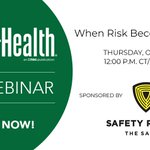


Risk becomes harder to spot when it's part of everyday work.
Today's free webinar explores why some workplace risks fade into the background and what you can do to bring them back into focus.
🔗 Register now: bit.ly/3VPegRW

Inspections flagged a dangerous problem. Yet the tank remained in service.
Months later, that same tank failed at a Washington pulp and paper mill, killing 11 workers and seriously injuring others. Now, the Chemical Safety Board is investigating.
🔗 bit.ly/3WDDzXh

California is placing new limits on how employers can use AI in workplace decisions.
The recently signed laws are designed to address concerns about AI's role in hiring, promotions, discipline and other employment-related decisions.
🔗 Read more: bit.ly/4k5xUTF

Risk becomes harder to spot when it's part of everyday work. Familiarity can make even serious hazards seem normal.
Our next free webinar explores why some workplace risks fade into the background and what you can do to bring them back into focus.
🔗 bit.ly/3VPegRW

When communication breaks down, risk goes up.
A new report on crane operations found that 98% of respondents experienced communication challenges during lifting activities in the previous 90 days.
🔗 More details here: bit.ly/47nqx2y

Nearly 395 million workers around the world are injured on the job each year. That's more people than the entire U.S. population.
What role do safety leadership, investment and stronger systems play in reducing workplace harm?
🔗 Full details here: bit.ly/4hTX9pf

🎙️ One of the most influential voices in workplace safety joined us on stage for a special live edition of On the Safe Side: David Keeling, Assistant Secretary of Labor for Occupational Safety and Health.
🔗 Watch the full conversation here: bit.ly/4dd4uPa

With Hurricane Isaias making landfall, OSHA is highlighting resources to help workers and employers stay safe during response, cleanup and recovery efforts.
🔗 Explore OSHA's hurricane preparedness and response resources: bit.ly/3BO9SES

Why do some people still choose not to wear a seat belt?
A new AAA study explores the reasons behind this risky behavior, despite the well-known safety benefits of buckling up.
🔗 Family Safety & Health takes a closer look at the findings: bit.ly/4e3UWXb

Our next free webinar examines the science behind modern head protection testing, including emerging approaches to evaluating impacts and the ongoing evolution of industry standards.
🔗 Find out what safety professionals should know: bit.ly/4rRv0Uk

New research from the National Safety Council and the University of Waterloo suggests workplace violence may be an overlooked contributor to musculoskeletal disorders.
🔗 Read more: bit.ly/3U94V6S

A new Department of Labor Office of Inspector General investigation found OSHA may have conducted up to 481 inspections that didn't comply with congressional funding restrictions.
OSHA strongly disputes the findings.
🔗 Learn more: bit.ly/3TGJIkC

Being prepared means more than having a plan on paper.
Join our next free webinar to learn OSHA requirements and best practices for exit routes, emergency action plans and fire prevention planning.
🔗 bit.ly/4rPa7cr

In the latest NSC Thought Leadership column, Claire Bryant explains why fatigue should be viewed as a predictable and manageable safety risk, particularly as workers spend more of their day commuting and working in darkness.
🔗 Read the column: bit.ly/3VZdZvy

“Particularly deadly.”
That’s how Chemical Safety Board Chair Steve Owens described fiscal year 2026 after incidents reported to the agency resulted in 53 deaths, up from 36 the previous year.
🔗 Read more: bit.ly/3U0UQsD

The National Safety Council is joining OSHA and other leading safety organizations as a charter member of the newly formed National Serious Injury and Fatality Prevention Alliance.
🔗 More details here: bit.ly/4hviLrP

Rooftop work comes with serious fall hazards. Are you confident your protection plan covers the risks?
Join us tomorrow for a free webinar on simplifying OSHA rooftop fall protection requirements.
🔗 Register now: bit.ly/4rDlIva

What happens at work doesn't always stay at work.
Hazardous substances can travel home on workers' clothing, shoes, tools and personal items, potentially exposing family members to harmful contaminants.
🔗 Learn about the risks and steps you can take: bit.ly/3Tarack

The October issue of Safety+Health is online!
Discover the truth behind common PPE myths and misconceptions, learn how to prevent hazardous substances from following workers home and explore strategies for addressing workplace bullying - and more!
🔗 bit.ly/3TVjN8Q

Are your fall protection measures keeping pace with rooftop hazards?
In our next free webinar, we'll discuss common rooftop fall hazards, OSHA requirements and practical strategies for evaluating risk and protecting workers at height.
🔗 Register now: bit.ly/4rDlIva
