

@SammonSTEAM
🇺🇸Account based in
About this account
- Account based in
- United States
- Connected via
- United States App Store
Account-level information from X, not a live location or the device used for a specific post.
Teacher | STEAM Professional Development Specialist | Speaker | Co-Author | The Tapas Approach to Project-Based Learning https: https://xitter.cf/t.co/iqa15RRnvC
New York, USA
Joined November 2018
- Tweets1.5K
- Following3K
- Followers1.4K
- Likes2.1K






Pinned Tweet
🚀 Exciting News! 🚀
We are so proud of Beyond the Algorithm which is officially available on Amazon today! a.co/d/0iFYAaw5
We are incredibly grateful to @jmattmiller for writing the foreword and helping set the stage for the ideas and possibilities explored throughout the book.
In a world where the future is increasingly unknown, Project-Based Learning + AI (PBL-AI) isn’t just an approach, it’s the path forward for keeping humans meaningfully in the loop.@TKtalksSTEAM @WCSDEmpowers @drbonkwcsd

Through the Eyes of Our Students
I often find some of the powerful entry events in PBL are when we simply give students the opportunity to notice, wonder, and lead the conversation.
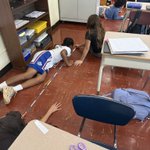
As part of our Museum of Human Learning PBL, our Grade 6 students took a short stroll over to the historic one-room schoolhouse located right on the grounds of Oak Grove Elementary School. Inside, they examined original photographs and documents from the late 1800s and early 1900s.
I may have facilitated the experience, but the students led the conversation.
Looking closely at an old class photograph, they noticed that the children appeared to be different ages.
“Why are there so many different ages in the same class?”
“How did one teacher teach all of them?”
Then came another observation:
“Why isn’t anyone smiling?”
That question took the conversation somewhere deeper.
Students began wondering about what childhood and education were like more than a century ago. They talked about a time when attending school could be viewed as a privilege and often competed with responsibilities at home, on farms, or at work. When we compared that with their own experience today, one student offered a simple observation:
“Today, education feels mandatory.”
That contrast opened the door to an even bigger conversation: How has the experience of learning changed over time, and what has influenced those changes?
Suddenly, the photograph wasn’t just an old photograph.
It was evidence of learning.
Facial expressions. Clothing. Ages. The classroom itself. Documents. Artifacts. Each offered clues about who had access to learning, how learning happened, what was expected of students and teachers, and how the lives people lived shaped their opportunities to learn.
That is at the heart of our Museum of Human Learning. Our students are investigating how learning has evolved, what has shaped it, and what we can learn from the past as we think about learning today and into the future.
And perhaps the best place to begin is exactly where our students began:
by noticing, wondering, and asking questions.
@TKtalksSTEAM @drbonkwcsd @WCSDEmpowers
#MuseumOfHumanLearning #StudentVoice #StudentInquiry #ProjectBasedLearning #PBL #HistoryOfLearning #AuthenticLearning #STEAM #WappingersSchools


Pipeline to Performance PBL | Building the Science Behind the Design!
Sixth-grade students at Evans Elementary have established their engineering companies, and now they’re building the scientific understanding that will inform their future designs!
Through hands-on investigations, students are exploring how force, motion, and energy work together, gathering data, making observations, and using evidence to explain what happens and why.
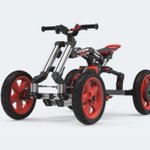
As they move toward designing and testing their Infento vehicles, these experiences are helping students connect scientific concepts to authentic engineering challenges.
Before students can engineer solutions, they need to understand the science behind their decisions.
@TKtalksSTEAM @drbonkwcsd @WCSDEmpowers
#PipelineToPerformance #ProjectBasedLearning #STEAM #PortraitOfAGraduate #Wappingers


Museum of Human Learning PBL | Learning Through the Lens of Archaeologists!
Fifth- and sixth-grade students at Oak Grove are transforming their historic one-room schoolhouse into a living museum exploring how humans have learned and innovated throughout history.
As part of this experience, students are stepping into the role of archaeologists of human learning, examining artifacts, making observations, taking notes, and gathering evidence to uncover how learning has evolved over time.
Their discoveries will inform the exhibits they research, design, and curate for the museum.
Students aren’t simply learning about history. They’re investigating it, interpreting evidence, and using their discoveries to teach others. @TKtalksSTEAM @drbonkwcsd @WCSDEmpowers
#PortraitOfAGraduate #ProjectBasedLearning #StudentVoice #AuthenticLearning #Wappingers


Portrait of a Graduate in Wappingers: From Vision to Action!
As we move through October, it’s exciting to see our Portrait of a Graduate moving beyond words on a wall and into authentic learning experiences across Wappingers!
Kindergarten Shape Box PBL: Our youngest learners are applying geometry to design shape boxes for children at MidHudson Regional Hospital, with Ketcham High School Manufacturing students bringing their designs to life.
Pipeline to Performance PBL: Evans Elementary sixth graders are launching engineering companies, assuming corporate roles, designing Infento vehicles, and preparing to pitch their products at STEAM Day with support from community partners.
Museum of Human Learning PBL: Oak Grove fifth- and sixth-graders are transforming their historic one-room schoolhouse into a living museum, combining historical research, community partnerships, and interactive technologies.
Claim, Evidence & Reasoning Pilot: Fifth-grade teachers are integrating Cognitive Load Theory and intentional scaffolding to strengthen students’ scientific reasoning and ability to support claims with evidence.
Different ages. Different content. Different challenges. One shared purpose.
Critical Thinking. Communication. Collaboration. Creativity. Global & Civic Awareness.
Our Portrait of a Graduate isn’t simply something we want students to see. We want them to experience it, practice it, and ultimately become it.
@TKtalksSTEAM @drbonkwcsd @WCSDEmpowers
#PortraitOfAGraduate #Wappingers #PBL #STEAM #AuthenticLearning


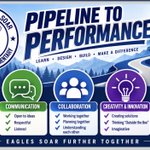
Pipeline to Performance: A Portrait of a Graduate, Through the Eyes of Our Students!
What happens when students are given the opportunity to define what it means to be a successful graduate?
As part of our Pipeline to Performance PBL, students used Padlet to collaborate, share ideas, and narrow down the qualities they believe should define their classroom’s Portrait of a Graduate.
Through original sketches, thoughtful discussions, and collaboration with Gemini AI, students transformed their ideas into a shared anchor chart.
The best part?
This came from the voices of the children!
This is more than an anchor chart. It represents student voice, ownership, creativity, and a shared vision of who they are becoming.
After all, Pipeline to Performance isn’t about building a vehicle. It’s about building a graduate.
@TKtalksSTEAM @drbonkwcsd @WCSDEmpowers
#PipelineToPerformance #ProjectBasedLearning #StudentVoice #PortraitOfAGraduate #STEAMEducation #AIinEducation #FutureReadyLearners


Pipeline to Performance: From Identity to Engineering
Grade 6 students at Evans are rockin and rollin with Pipeline to Performance!
Our two classes took another important step in transforming their classrooms into student-led engineering companies.
Before they build anything, students are learning that successful design begins with purpose, identity, criteria, and constraints. Each class worked collaboratively to establish its company identity, developing a name, motto, vision, and core values that represent who they want to be as a team.
And the results are already showing some personality:
Infinite Mobility
“Transforming the Future”
Engineering the Quad ATV
Infinite Dynamics
“Infinite Possibilities”
Engineering the Hero
Students are now moving from company formation to science content and engineering decision-making, with each company preparing to tackle the unique challenges presented by its selected vehicle.
This is where Pipeline to Performance begins to come alive.
The vehicle is the context.
The PoG is the product.
As students move forward, they’ll need to communicate, collaborate, think critically, solve problems, make evidence-based decisions, and adapt when their first idea doesn’t work.
@TKtalksSTEAM @drbonkwcsd @WCSDEmpowers
#PipelineToPerformance #ProjectBasedLearning #PBL #STEAM #EngineeringEducation #StudentAgency #DesignThinking #MiddleSchool #WappingersCSD #PortraitOfAGraduate


John Sammon retweeted

What if your next book club became more than a great read?
Bring meaningful professional learning to your district with The Tapas Approach to Project-Based Learning or Beyond the Algorithm. We’ll provide a ready-to-use book club template, reflection prompts, and a complimentary virtual session with the authors to help turn conversation into practice.
Build educator capacity. Strengthen connections to the Portrait of a Graduate. Create greater impact for students.
STEAM Machine Innovations
📧 [email protected]
@SammonSTEAM @steammachinepd
#ProfessionalLearning #PBL #PortraitOfAGraduate #AIinEducation #TeacherPD #STEAMEducation

A few weeks ago, I shared an infographic called A 10-Day Recipe for Transformation, inspired by the Tapas Approach to Project-Based Learning. Today, I’m sharing it again, along with a new companion resource: Find the PBL Opportunity in Your Standards.
I’ve been thinking a lot about the Portrait of a Graduate as New York begins rolling out its statewide framework.
I keep coming back to one idea:
Portrait of a Graduate competencies shouldn’t live on a poster. They should live in the work students are doing every day.
The challenge is moving from identifying competencies to intentionally creating opportunities for students to practice, develop, demonstrate, and reflect on them through authentic learning experiences.
That’s where Project-Based Learning can help.
PBL isn’t the only way to develop these competencies, but it provides a natural context for students to communicate, collaborate, think critically, create, reflect, and apply their learning to meaningful problems and purposes.
And bringing elements of PBL into instruction doesn’t require redesigning an entire unit or launching a weeks-long project.
Over the next several posts, I’ll unpack The 10-Day Recipe for Transformation, sharing small, manageable ways to incorporate elements of PBL into existing instruction while creating opportunities for students to develop Portrait of a Graduate competencies.
And perhaps the best place to begin is actually before Day 1.
Take a look at the Find the PBL Opportunity in Your Standards infographic. Start with what you already teach. Look for standards that invite students to investigate, analyze, design, create, communicate, solve problems, or use evidence, and consider whether the learning can connect to a meaningful problem, purpose, or audience.
Not every standard needs to become a project, nor is every standard equally suited for PBL. Some provide important foundational knowledge. The goal isn’t to force PBL into every standard. It’s to find the opportunities already within your curriculum.
One more important distinction:
Participation doesn’t automatically equal competency development.
Working in groups doesn’t necessarily develop collaboration. Presenting doesn’t automatically develop effective communication. Making something doesn’t necessarily develop creativity.
These opportunities need to be intentional, with practice, feedback, and reflection that help students strengthen the competencies they are developing.
Once you find the right curricular opportunity, you’re ready to take the first small bite.
In my next post, we’ll begin with Day 1: Launch the Challenge, exploring ways to turn that opportunity into a meaningful challenge that sparks curiosity, creates purpose, and begins bringing Portrait of a Graduate competencies to life.
Standards tell us what students need to learn.
Portrait of a Graduate describes who we want them to become.
PBL creates opportunities for students to do both.
Small bites. Big impact.
@TKtalksSTEAM @WCSDEmpowers @drbonkwcsd @DitchThatTxtbk


John Sammon retweeted
PBL starts before the project does.
The first days of school are your opportunity to build the culture that makes powerful PBL possible…student voice, collaboration, curiosity, ownership, and a willingness to take risks.
As you plan those first days, consider: Are you preparing students for PBL before you ever launch the first project?
Start with the culture. The projects will follow. ❤️
Small Bites. Big Ideas.
@SammonSTEAM @WCSDEmpowers
#TheTapasApproach #PBL #ProjectBasedLearning #BackToSchool #ClassroomCulture
🤖 Made with AI

John Sammon retweeted
PBL Spotlight: Community Partners
Some of the most powerful PBL experiences happen when learning extends beyond the classroom.
Community partners bring authenticity, purpose, and a real audience to student work. They help students see that what they are learning can matter to someone outside of school.
Whether students are designing for a hospital, solving an environmental challenge, thinking like entrepreneurs, or creating for a community need, our partners help turn an assignment into an experience.
They ask questions.
They provide feedback.
They share expertise.
Most importantly, they show students that their ideas have value.
A huge thank you to all of our incredible community partners who give their time, expertise, encouragement, and trust to our students. Your partnership helps make these learning experiences possible and meaningful.
PBL reminds us that learning doesn’t have to stay within four classroom walls.@SammonSTEAM @WCSDEmpowers @drbonkwcsd @CentralHudson @SenatorRolison @WMCHealth @TrevorZoo @MandT_Bank @Habitat_org @dutchessrestore
#PBL #CommunityPartners #AuthenticLearning #ProjectBasedLearning #StudentAgency #PortraitOfAGraduate
🤖 Made with AI

John Sammon retweeted
In preparation for the Portrait of a Graduate (POG), we have an opportunity to think differently about what learning can and should look like for our students.
If we want students to become effective communicators, collaborators, critical thinkers, and problem-solvers, we must intentionally create learning experiences where they can practice those competencies authentically.
PBL provides one of those pathways.
But meaningful PBL doesn’t happen simply because we encourage it. Leaders have to create the conditions for it to thrive.
The good news? We don’t have to do everything at once.
🍴 Small bites. Intentional moves. Big possibilities for students.
Here are 8 ways leaders can begin supporting a sustainable PBL culture.
@SammonSTEAM @WCSDEmpowers @drbonkwcsd
#PBL #PortraitOfAGraduate #EducationalLeadership #AuthenticLearning #DeeperLearning
🤖 Made with AI

One of the most powerful truths about Project-Based Learning is that the community partner celebration and public product is far more than a showcase. It has the potential to be a moment of transformation.
When done well, the public product is an authentic performance assessment. It’s the moment students discover that what they’ve learned has value beyond the classroom, and sometimes, they discover something even more important about themselves.
At an end of year celebration at Mid-Hudson Regional Hospital, students from across our district shared projects they had created for children receiving care. As the event was winding down, a group of high school students stood off to the side talking. A third-grade teacher nearby overheard one student quietly say:
“I didn’t think we were that important.”
That sentence stopped her in her tracks.
The student had just realized that every family, healthcare professional, educator, and community partner in the room had come to celebrate their work because it mattered. Their ideas mattered. Their effort mattered. They mattered.
Not long afterward, the teacher had told me what she overheard with tears in her eyes. It was clear the moment had stayed with her.
I know it can be difficult to find teacher coverage, coordinate schedules, and organize authentic community experiences. They take time. They take planning. They take commitment.
But moments like this are worth every bit of the effort as students realize they are capable of making a difference in the world. @TKtalksSTEAM @drbonkwcsd @WCSDEmpowers

One of the biggest misconceptions about Project-Based Learning is that it’s all flash, takes months to complete, replaces explicit instruction, or ignores foundational skills.
It couldn’t be further from the truth.
This year, I worked with a few of my colleagues in who were excited about PBL but also overwhelmed by where to begin. Instead of asking them to redesign an entire unit, we started small. Together, we designed short, focused projects that allowed students to apply what they had learned, and the impact was awesome and the teachers are on board for more PBL next year.
Great PBL begins with great teaching. Students still need explicit direct instruction, strong foundational skills, guided practice, and formative assessment. Those aren’t replaced, they’re the foundation. The difference is that PBL doesn’t stop there.
Once students have the knowledge, they use it. They investigate authentic problems, create meaningful solutions, receive feedback, revise their work, and share their learning with an authentic audience.
This 10-Day Recipe for Transformation grew out of the work I did with my colleagues this year. Inspired by the philosophy behind the second edition of The Tapas Approach to Project-Based Learning (Small Bites. Big Ideas.) It is designed to help teachers take that first step with confidence and discover that meaningful PBL doesn’t have to start with a giant project.
If you’re looking for project ideas to pair with this framework, explore our Innovation Hub.
lnkd.in/g2Z6Wy_d
You’ll find classroom-ready projects organized by grade level, subject area, and standards.
Foundational skills are essential. My belief is they’re the starting point, not the final destination.
Small Bites. Big Ideas. @TKtalksSTEAM @WCSDEmpowers @drbonkwcsd

The original purpose of the @wcsdempowers STEAM Project-Based Learning webpage was to use our district as a community partner and showcase the incredible work happening throughout WCSD. It has since grown into a repository of project-based learning experiences that highlight the creativity, innovation, and impact of our students and educators. Check out 2025/2026 we just added it.
sites.google.com/wcsdny.org/…
We have always believed in foundational skills because who wouldn’t want our kids to have the basic survival kit for life? But that is not our final destination.
From small-scale projects completed over a couple of days, to experiences that lasted months, to full interdisciplinary projects that spanned an entire school year, we are fundamentally shifting how students interact with their knowledge. Instead of simply learning content, students use their knowledge to create something meaningful for someone else.
We cannot thank our district and our community partners enough for believing in this work. Your support has helped create authentic learning experiences that empower students to apply their learning in meaningful ways and make a difference beyond the classroom. @TKtalksSTEAM @WCSDEmpowers @CentralHudson @SenatorRolison @MandT_Bank @Habitat_org @drbonkwcsd @dailystem @DitchThatTxtbk

Most schools ask students, “What do you want to be when you grow up?”
Project-Based Learning asks a different question:
“What problem are you ready to help solve today?”
What happens when students are trusted with real challenges?
They stop acting like students completing assignments and begin acting like scientists, engineers, historians, designers, entrepreneurs, and community leaders. The classroom shifts from a place of compliance to a place of contribution.
In a world where information is instantly available, the true value of education is no longer what students can memorize, it’s what they can create, improve, and contribute. Project-Based Learning gives students opportunities to tackle meaningful problems, collaborate with others, learn from failure, and produce work that matters beyond a gradebook.
The most powerful public product of PBL isn’t the presentation, website, prototype, or exhibition.
It’s the transformation of a young person who begins to believe:
“I can make things better.”
And that belief may be the most important outcome education can produce. @TKtalksSTEAM @DitchThatTxtbk @WCSDEmpowers @drbonkwcsd @dailystem
As we approach the final days of the school year, I am incredibly proud to work alongside colleagues who continue to create meaningful learning experiences right up to the very end.
In just four days, our third-grade students completed a project-based learning experience focused on inheritance and variation of traits. Although a real garden would have been ideal time was our enemy. Students analyzed 13 butterfly traits, created parent butterflies, and then developed offspring butterflies that inherited a unique combination of traits from both parents. They also identified habitats and host flowers before using AI to transform their original work into beautiful virtual butterfly gardens that demonstrated their understanding of heredity, variation, adaptation, and ecosystems.
What makes this project especially meaningful is that the learning extends beyond the classroom. Our district serves as a valuable community partner by providing an authentic audience through our STEAM Project-Based Learning webpage, where these virtual butterfly gardens will be shared with families and the entire Wappingers community to experience and celebrate student learning.
The project may have lasted only a few days, but the impact, and the audience, will last much longer. @TKtalksSTEAM @WCSDEmpowers @drbonkwcsd


Civic engagement in full effect at @OakGroveES40 today. Grade 6 students had the opportunity to share their voices, ideas, and learning with community leaders who can help shape the future, including @drbonkwcsd , our Superintendent, @SenatorRolison and others.
This PBL celebration showcased a truly interdisciplinary learning experience. By redesigning our science and social studies curriculum around authentic, real-world challenges, and intentionally aligning mathematics and ELA skills to that work, students applied reading, writing, communication, research, data analysis, measurement, and problem-solving in meaningful contexts. Rather than learning subjects in isolation, students experienced how disciplines work together to help us better understand and improve the world around us.
From field observations and biodiversity research through @inaturalist , to designing their own cuneiform tablets with @tinkercad , students leveraged tools ranging from crayons to AI to investigate, create, and communicate their thinking. Throughout the project, students explored how geography, early civilizations, ecosystems, human impact, and civic action are interconnected, all in an effort to better understand and help preserve our precious Hudson River for future generations.
Their work demonstrates what is possible when learning is connected to purpose, audience, and action. @TKtalksSTEAM @WCSDEmpowers @steammachinepd


John Sammon retweeted

Another wonderful PBL celebration this morning! Grade 6 students at Oak Grove ES worked with state Senator Robert Rolison after reviewing his bipartisan letter to the EPA (written with fellow Senator Michelle Hinchey). They explored biodiversity, sustainable water use from the Hudson River, and innovative solutions for the future. Senator Rolison and Dr. Bonk agreed that the caliber of work was what would one would expect from high school or beyond. Incredible work by our students as we continue to prioritize project-based learning. @drbonkwcsd @SenatorRolison @SammonSTEAM @TKtalksSTEAM

John Sammon retweeted
Iteration in Action 🔄❤️
The fidget boards now being used in pediatric treatment room at MidHudson Regional Hospital didn’t appear overnight.
Elementary students learned life science concepts and created initial prototypes. High school manufacturing students refined and built the designs. The prototypes then returned to the elementary students for testing and feedback before final revisions were made.
Design. Test. Revise. Improve.
What started as a classroom idea became a product that is now supporting real pediatric patients.
That’s the power of authentic PBL—learning that extends beyond the classroom and creates impact in the community.
@SammonSTEAM @WCSDEmpowers @drbonkwcsd @steammachinepd @dailystem
#PBL #DesignThinking #Iteration #AuthenticLearning #PortraitOfAGraduate


