Pinned Tweet
Saudipedia launches five global languages—English, French, Chinese, Russian, and German—to guide their intrigued speakers in exploring Saudi Arabia’s history and culture, through reliable content produced using a well-structured workflow, from content creation and fact-checking before publication to post-publication quality monitoring.
Street Art in the Kingdom of Saudi Arabia refers to initiatives launched by the Ministry of Culture in 2021 to decorate walls with Arabic calligraphy and graffiti art in collaboration with the Ministry of Municipalities and Housing. These initiatives aim to celebrate Arabic calligraphy as part of Arab cultural identity. Events were held across ten provinces as part of the "Year of Arabic Calligraphy" and the Quality of Life Program.
#Saudipedia
📷SPA
saudipedia.com/en/street-art…
King Saud Bin Abdulaziz Al Saud, the first crown prince and second king of Saudi Arabia, led the nation for eleven years after the passing of the Founding King Abdulaziz.
#Saudipedia
saudipedia.com/en/saud-bin-a…
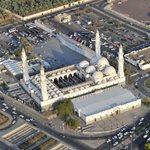
Quba Mosque, constructed in 622, is the first mosque built in Islam. Located southwest of al-Madinah al-Munawwarah on the Hijra Road, it is approximately 3.5 km away from the Prophet’s Mosque and can accommodate twenty thousand worshipers. King Salman’s Project to Expand Quba Mosque is considered the largest expansion in its history and aims to increase its capacity to approximately sixty-six thousand worshipers.
#Saudipedia
📷SPA
saudipedia.com/en/quba-mosqu…
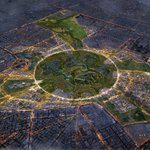
King Salman Park is one of Riyadh’s megaprojects, launched on March 19, 2019. As an urban region with a total area exceeding sixteen km, after its completion, it will be a vibrant community. The project’s initial plans include a central park surrounded by cultural, sports, residential, hotel, and commercial facilities.
#Saudipedia
📷King Salman Park Foundation
saudipedia.com/en/king-salma…
Deeply rooted in Saudi Arabia’s culture and longstanding traditions, Saudi Coffee is a fundamental element of hospitality. In 2015, Arab coffee traditions were included on UNESCO’s Representative List of the Intangible Cultural Heritage of Humanity as a common element among Saudi Arabia and several Gulf countries. Saudi Arabia is also known for cultivating Saudi Khawlani coffee, one of the most expensive and rare types of coffee in the world, distinguished by its aroma.
#Saudipedia
📷Ministry of Culture
saudipedia.com/en/saudi-coff…
Siwak, also known as Miswak, is a stick used for cleaning the mouth and can be effectively used as a natural toothbrush to clean, freshen, protect, or maintain the oral cavity and teeth in good condition, and it is one of the practices of natural disposition (Sunan al-Fitrah).
#Saudipedia
📷SPA
saudipedia.com/en/siwak
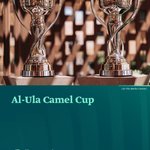
Al-Ula Camel Cup announced by the Royal Commission for al-Ula in 2023 in cooperation with the Saudi Camel Racing Federation, is a competitive sporting event within ’Al-Ula Moments’.
#Saudipedia
saudipedia.com/en/al-ula-cam…
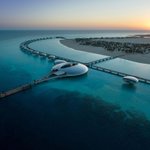
Sheybarah Island is an uninhabited island on the Kingdom of Saudi Arabia’s Red Sea coast, located between al-Wajh and Umluj in Tabuk Province. With a surface area of about 19.8 km², it is an irregularly shaped longitudinal island surrounded by four small atolls and low-lying sandbars. The island will include floating villas on water and on land with a dune-inspired design.
#Saudipedia
📷Red Sea Global
saudipedia.com/en/sheybarah-…
Hasawi Bisht is a loose traditional robe worn by men on public and private occasions in most provinces of the Kingdom of Saudi Arabia. Its weaving and embroidery are two famous traditional crafts in al-Ahsa Governorate, perfected and inherited by many of the province’s families. The manufacture of al-Mishlah goes through seven stages, takes between twelve and fifteen days, and may even reach six months.
#Saudipedia
saudipedia.com/en/hasawi-bis…
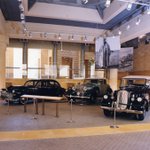
King Abdulaziz Bin Abdulrahman Al Saud owned several cars. Some of these cars were presented to King Abdulaziz as gifts from Arab and foreign leaders. Among these cars were Rolls-Royce, Cadillac, Mercedes, Dodge, Buick, Ford, Chevrolet, and Hudson.
#Saudipedia
📷King Abdulaziz Foundation
saudipedia.com/en/cars-of-ki…
The Arabian Leopard is carnivorous mammal belonging to the Felidea family, the Arabian Leopard lives in AlUla Province in the Kingdom of Saudi Arabia, and it was seen in the highlands of Asser Province. The Arabian Leopard is one of the rarest wild animals in Saudi Arabia and globally, and the total number of Arabian Leopards worldwide is estimated at two hundred, fifty are found in Saudi Arabia.
#Saudipedia
📷 King Abdulaziz Foundation(Darah)
saudipedia.com/en/arabian-le…
The Rababah is a primitive musical instrument historically known in the northern regions of the Kingdom of Saudi Arabia. It was a companion for nomads during gatherings and celebrations and remains part of folk music culture in festivals and national celebrations. Made from wood, goat skin, and horsehair strings, the Rababah carries melancholic tunes that convey poetry. Types include al-Masahub, al-Hilali, al-Hajini, and al-Sakhri, and it continues to appear as a cultural instrument in local festivals.
#Saudipedia
📷 SPA
saudipedia.com/en/the-rababa…
Saudi National Day commemorates the unification of the Kingdom of Saudi Arabia in 1932, observed annually on September 23. It marks an important historical day in the Saudi calendar and is an official holiday across Saudi Arabia, renewed through expressions of national pride—raising the Saudi flag and holding celebrations throughout the country's regions.
#Saudipedia
📷 King Abdulaziz Foundation (Darah)
saudipedia.com/en/saudi-nati…
Seven kings have ruled the Kingdom of Saudi Arabia, beginning with the Founding King, Abdulaziz Bin Abdulrahman Al Saud—the nation's first king and unifier. His efforts to reclaim and unite the country began in 1902 and led to the official adoption of the name "Kingdom of Saudi Arabia" in 1932, reigning until his passing in 1953.
#Saudipedia
saudipedia.com/en/list-of-ki…
Al-Masmak Palace is tied to the most pivotal event in the Kingdom of Saudi Arabia's history, serving as the gateway through which the Founding King, Abdulaziz Bin Abdulrahman Al Saud, entered during the recapture of Riyadh in 1902—paving the way for the nation's unification. Today, it has transformed from a historical fortress into a museum documenting the founding stages of Saudi Arabia in the heart of the capital, Riyadh.
#Saudipedia
📷 King Abdulaziz Foundation for Research and Archives (Darah)
saudipedia.com/en/al-masmak-…
The noble epithet "Ahl Al-Awja" stands as a symbol of pride, enthusiasm, and national allegiance, deeply tied to the Saudi state since its founding. "Al-Awja" originally referred to the city of Diriyah, before the term expanded to embrace the people of Diriyah, Al-Aarid, and ultimately the entire population of the Kingdom of Saudi Arabia. It remains an enduring hallmark of chivalry, courage, bravery, and pride.
#Saudipedia
📷 Ministry of Culture
saudipedia.com/en/ahl-al-awj…
King Abdulaziz prioritized education following the annexation of Hejaz and his entry into Makkah Al-Mukarramah in 1925. He convened an educational meeting with scholars and figures dedicated to knowledge and education in Makkah Al-Mukarramah. This resulted in the establishment of the Directorate of General Education in 1926, which officially launched modern education in the Kingdom of Saudi Arabia.
#Saudipedia
📷 King Abdulaziz Foundation for Research and Archives (Darah)
saudipedia.com/en/education-…
King Abdulaziz’s character embodied deep religious commitment, justice, and fairness. He balanced firmness with clemency when dealing with adversaries and raised his children to adhere to the Holy Qur’an, the Sunnah of the Prophet, and to treat people with kindness. He was also known for his concern for the poor and needy, his dedication to advocating for citizens' welfare, and his commitment to securing their rights and easing their burdens under all circumstances.
#Saudipedia
saudipedia.com/en/abdulaziz-…
The Founding King Abdulaziz Bin Abdulrahman Al Saud spent 32 years unifying Saudi Arabia—a journey that began with the recapture of Riyadh and culminated in the issuance of the Royal Decree declaring the nation's unification as the "Kingdom of Saudi Arabia" on September 23, 1932.
A fully sovereign Arab state: its religion is Islam, its language is Arabic, its capital is Riyadh, and its constitution is the Holy Qur'an and the Sunnah of the Prophet.
#Saudipedia
📷 King Abdulaziz Foundation for Research and Archives (Darah)
saudipedia.com/en/unificatio…
Prince Mohammed Bin Salman Stadium is located in the heart of the economically and touristically promising city of Qiddiya. The stadium features an exceptional design and modern technologies.
#Saudipedia
📷 Media Center for Qiddiya
saudipedia.com/en/prince-moh…