

Literature, with a focus on Jünger. https://teapaw.org/t.co/spbrcTzHkM Check out our books: https://teapaw.org/t.co/WgpwzWbLzw https://teapaw.org/t.co/nYb12Z1Tro
Joined March 2021
- Tweets17.4K
- Following1K
- Followers13.1K
- Likes23.2K


Pinned Tweet
Thread for translations.
The Boar Hunt - Ernst Jünger
Short Story
"Now everyone surrounded the prey in an oval, the marksmen with their rifles around their necks, the beaters with their axes shouldered."
shorturl.at/jnBM5


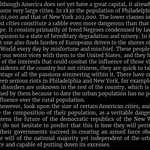
"I look upon the size of certain American cities, and even more the composition of their population, as a veritable danger that threatens the future of the democratic republics of the New World, and I do not hesitate to predict that this is how they will perish."
~ Tocqueville

Actaeon Press retweeted
"Night almost always falls first in the churches."
~ Jules Barbey d'Aurevilly

That is the point. Tocqueville is referring to the impulse, the will to power which corrupts and divides a people, between despotism and submission, patriotism and values, enlightenment and character. It is the general will which exists in all governments, not just democracy.


"The indirect (and therefore certain and deeper) influence of Kierkegaard on Léon Bloy, by way of Denmark, is similar to that of Bruno Bauer on Nietzsche."
~ Carl Schmitt, Glossarium

Schmitt saw in Nuremberg the return of Kaspar Hauser, a myth that 'the mythmakers and anti-mythmakers of the century could not give a second thought.' This figure of deprivation is contrasted with the subject of psychology, Oedipus; he is one to be further deprived by our clergy.


20
570


"My own view is that baseness will adhere to force and flattery to power in every government, regardless of its nature. And I know only one way of preventing men from debasing themselves: by not granting anyone omnipotence and, with it, the sovereign power to defile."
Tocqueville

"In absolute monarchies, the king often has great virtues, but the courtiers are always vile."
~ Alexis de Tocqueville

Actaeon Press retweeted

Los Großräume (grandes espacios) no pueden basarse en mapas de deseos ideológicos, son una realidad efectiva y concreta, la exclusión radical de toda potencia ajena al espacio.
Ahí radica también el concepto de Imperio que únicamente Estados Unidos ha tenido la capacidad de ejercer en un sentido histórico (Monroe).
Rusia es, con diferencia, la que más ha perdido estos años, no ha podido asegurar su flanco con Europa. China tiene grandes posibilidades, pero con un talón de Aquiles fundamental: el mar.


It is important to remember that Schmitt makes a distinction between polarity and duality. In this sense the world duality still reigns, and the "interested thirds" are shifting points of the great-spaces. A notable example would be Turkey, which can have as much effect as China

La derrota soviética estuvo a punto de consumar la unidad del mundo. Rusia dejó de ser actor central de la política mundial para convertirse en el heartland en disputa.
China irrumpió a tiempo para que la tierra retornara a alzarse contra el mar y para dar a la oposición entre Oriente y Occidente otro capítulo.
La «tercera fuerza» de Schmitt nunca se reveló; al contrario, retornó la bipolaridad. Todavía no hay Grandes Espacios. Estados Unidos posee el suyo, el hemisferio occidental, ensanchado hasta el atlantismo, pero lo traicionó al convertirlo en universalismo. China posee el poder para realizar su Gran Espacio, pero su idea imperial aún no se ha consolidado, y su prueba de fuego será Taiwán.

dissolution of the world duality than multipolarity or tripolarity. We are in the midst of the economic and attritional phase of a new world war, or simply the inability to conclude the last war.
(These are of course not great-spaces in Schmitt's sense but the original economic
1
8
220
For anyone interested in concepts of the enemy:

That would be this part at the end:
The Graduality of Enmity
From the existentially enriched Hegel, I propose a model of enmity built around the transmutation of quantity into quality, with the final quality being Schmitt’s existential, ungrounded decision. The levels are:
a) Pure difference. This is a group, such as a religious or ethnic group, that has its own laws and customs distinct from the state, but without the ability to threaten the Whole. The Quakers or Jews fall into this category (§270). Ideally, groups like these are self-maintaining while still contributing positively to the Whole. But, as Difference, the possibility of escalation still exists. Recognition of difference goes both ways. The state can recognise an element as part of itself and not receive recognition in return, such as France banning ethnic census and yet it is still the norm to see individuals of migrant origin only sport the flag of their home country in public or on the internet. Or it can recognise an element and successfully receive recognition in turn (Ferdinand Lassalle was a Jew who became a passionate Prussian patriot). Schmitt himself is sceptical even at this level and wants to minimise difference due to its potential to escalate.
b) Residue. This is the rabble. The rabble is outside the order of the state while being produced by its civil society. They are within the state but no longer reproduce themselves through civil society. This makes them indignant towards it, because they have expectations about what civil society is supposed to provide for them, but those expectations are not met (§§243–246).
c) Rival order, which is equivalent to early-stage cancer within an organism, an element within the order that becomes for itself. This is what §206 describes: an internal subjective element that fixes itself against the Whole. In short, it is a rival principle. A more explicit example would be the passage on the Antigone in the Phenomenology of Spirit, which concerns the conflict between divine law and state law. Another example would be the Italian mafia. According to Gans, Hegel mentioned the Neapolitan Lazzaroni as an example of the rabble in his lectures (Zusatz to §244). These would later organise themselves into the Camorra – an enemy, but not yet an existential one. This is also Hegel’s “sickness,” which he takes from the organism.
d) Existential enemy. This is the moment when quantity turns into quality. The enemy is now an existential threat to the state and threatens to cause its dissolution. This is the state of exception, when Concept and Objectivity are strained and could come apart. Here the state must suspend public order in order to save itself. Examples would include modern total wars, but also civil wars such as the Spanish or Russian Civil Wars. As an existential enemy can only be determined by another existence through decision, the final step from c) to d) cannot be derived, even if, in the Hegelian view, it is grounded in the life of the state. Sometimes, the final decision is wrong, and the rival order is imagined, like National Socialist Germany declaring the Jews its existential enemy, or Stalin starving millions in order to get rid of the kulaks. Sometimes, enemies are correctly identified, like the Union recognising the Confederacy (and vice versa) as an existential enemy. Determining how an existential enemy is declared and under which conditions it would be correct goes beyond the scope of this essay. This is the most Schmittian step, but it is also present in the young Hegel whom Schmitt cited, in the Phenomenology and in the paragraphs on War in the PR.

