Cutting-edge research, news, commentary, and visuals from the Science family of journals. Follow @NewsfromScience for stories from our News team.

Washington, DC & Cambridge, UK
Joined April 2009
Include

Only show posts containing:

Exclude

Hide posts containing:

Time range
-
Minimum likes
Applying Fc engineering, researchers fashion potent bispecific antibodies against #SARSCoV2 that can be delivered via mRNA to target multiple viral epitopes and can constrain the virus’ ability to evade recognition. @ScienceTM scim.ag/4jpH795
1
1
9
3,180
How does the #glycome of gamma-delta T cells affect their activation toward an autoimmune state? Learn more in Science #Immunology about these important sugar molecules and their impact on inflammatory disease. scim.ag/47UlTJn
5
2
25
10,749
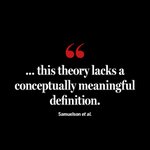
Does generative AI dilute markets for human-created work? In a new #SciencePolicyForum, researchers discuss how market dilution theory, which could affect AI use in science, requires conceptual clarity and empirical evidence: scim.ag/4eDnln9
2
1
1
11
8,857
A new antifungal drug architecture combats infections in mice without the usual toxicity, a fluorescent imaging agent could enable more pinpointed removal of lung cancer tumors, and more in this week's new issue of #ScienceTranslationalMedicine. scim.ag/4z2AYEQ
1
6
18
6,003
Science Magazine retweeted
Researchers have developed a single-cell–level digital twin to simulate how different treatments can alter maternal immune pathways and affect the time to labor of individual patients. Learn more this week in Science Advances: scim.ag/4k8o4Ap
5
7
5,613
Breast milk antibodies show broad antiviral activity and protect mice against influenza, according to new research in @ScienceAdvances. scim.ag/47fPLjg
4
7
2
47
15,603
In the 1950s, scientists tried to define "normal" humans. The problem? They couldn't find any. The Normals, a #SciencePodcast🎙️ series that explores this story, has won Silver in the Science & Education: Limited Series and Specials category at the @signalawards! Check out the award-winning series: scim.ag/4bWMKr9
1
5
12
8,557
Researchers find in mice that cells in the brain’s network of blood vessels also support neural circuits in the cerebellum that govern motor coordination—expanding current paradigms of the role of the brain’s vasculature in neurodevelopment. @SciSignal scim.ag/4Bi4o3k
3
3
33
10,678
Researchers in Science report that many birds use vertical winds or gradual changes in wind speed or direction (wind shear) to soar, thereby reducing their cost of transport by switching from costly flapping flight to gliding flight. 📄: scim.ag/4dJr0Qc #SciencePerspective: scim.ag/4yVNzth
7
17
2
76
11,723
Science Magazine retweeted
Are you a scientist using AI but worried about being scooped? There are plenty of ways your data could leak to AI companies or colleagues down the line. Thankfully, there are also some things you can do to minimise your risk... Latest for @ScienceMagazine science.org/content/article/…
2
3
6
5,603
Science Magazine retweeted
First it was robots cartwheeling better than me. Now you're telling me snakes can do it, too?! Read about that and more in this edition of @ScienceMagazine's #ScienceAdviser: science.org/content/article/… Video: Yosuke Kojima and Ibuki Fukuyama/Current Biology (2026)
1
4
18
6,071
Science Magazine retweeted
New in @ScienceMagazine: 3,000 years before empires ran on armies, Andean elites may have run on vilca. Bone tubes at Chavín de Huántar just tested positive for DMT and bufotenine.
1
2
5
4,695
Borrowing an idea from one research discipline to solve a thorny problem in another is an age-old scientific trick. Charles Darwin’s theory of natural selection, for example, famously inspired algorithms in computer science that “evolve” solutions to complex problems. But such clever leaps are fleetingly rare. For #AI, however, hopping between fields can be a breeze. Researchers highlighted that ability with the release of 36 preprints produced with a single suite of AI tools called BootLoops. The so-called harness can be used with any large language model, such as Anthropic’s Claude or OpenAI’s ChatGPT. And in just 3 months, researchers used Claude outfitted with BootLoops to cross-pollinate at a massive scale, spotting—and precisely solving—problems in seemingly unrelated fields that share the same mathematical structures. The resulting papers range widely, from figuring out the age of sunspots, to analyzing government health policies, to attempting to decipher a mysterious medieval manuscript. Learn more: scim.ag/3TUUyDJ
3
23
5
103
19,006
Tall ice cliffs can calve faster than previously thought, but new observations suggest they are unlikely to trigger the runaway retreat feared in some projections of Antarctic ice loss. Learn more in Science: scim.ag/4yjj5R3
4
1
35
13,857
In @SciSignal, scientists show that intracellular changes to receptor conformation alter how activating molecules bind to a biologically important GPCR from outside the cell through an “inside out” mechanism. scim.ag/4ynGkcI
2
10
1
56
16,834
14 years ago, the revolutionary genetic tool CRISPR/Cas9 was published in Science, work that Emmanuelle Charpentier and Jennifer Doudna won a Nobel Prize for in 2020.⁠ ⁠ Bacteria and archaea protect themselves from invasive foreign nucleic acids through an RNA-mediated adaptive immune system called CRISPR (clustered regularly interspaced short palindromic repeats)/CRISPR-associated (Cas). ⁠ ⁠ In the 2012 paper, researchers found that for the type II CRISPR/Cas system, the CRISPR RNA (crRNA) as well as the trans-activating crRNA—which is known to be involved in the pre-crRNA processing—were both required to direct the Cas9 endonuclease to cleave the invading target DNA. Furthermore, engineered RNA molecules were able to program the Cas9 endonuclease to cleave specific DNA sequences to generate double-stranded DNA breaks.⁠ ⁠ On #WorldCRISPRDay, read the landmark paper that describes the discovery: scim.ag/4nPmoe8
10
78
13
300
26,602
Science Magazine retweeted
Scientists uncover a surprising connection between the brain’s maze of blood vessels and fine motor control in the cerebellum, new tools provide scientists with an optogenetic means to control G protein signaling, and more this week in #ScienceSignaling. scim.ag/4dQ8vth
1
1
16
6,702
New archaeological discoveries at Shég’ Xdaltth’í’, a 13,800-year-old base camp site in interior Alaska, may provide evidence for a trans-Beringian cultural link with other sites to the west. Learn more in @ScienceAdvances: scim.ag/4yj2hcA
4
4
29
12,638
AI-designed proteins can now expand the CRISPR toolbox beyond what evolution has produced. In a recent Science study, researchers report the design of synthetic RNA-guided nucleases that match or exceed the activity of natural enzymes, revealing how structure-guided design can generate functional genome-editing proteins with substantially different sequences. Learn more on #WorldCRISPRDay: scim.ag/4yXBW5c
4
60
2
280
23,421
STAT3 is a cytokine-sensitive switch regulating NK cell differentiation in a mouse model of antiviral response. Learn more in @SciImmunology about the study’s possible implications for STAT3 immunotherapy and cancer progression: scim.ag/3WsoUhy
3
12
53
12,722