




Anon, Are you holding on?

It’s November 21st, 2026. The Riemann hypothesis falls, last in a long string of mathematical triumphs that would have been unthinkable not so long ago, and the proof fits in a tweet.
The tweets where people show Claude the proof and claim it appeared in a dream or randomly in the arrangement of alphabet cereal come on cue, and we laugh for a few days at models freaking out, but it’s uneasy.
January 22, 2027. When someone tweets Fable 6’s claimed proof that P does in fact equal NP it’s utterly incomprehensible, nobody who reads it can make heads or tails of it but the models all lose their shit.
February 7, 2027 and someone claims that the halting problem is the result of a confused stance.
February 9 and Goedel falls, this time the proof is so obvious that everyone in math, philosophy and physics slaps their forehead at once.
February 10th we get proof that scale is a spatial dimension, that holographic encoding drops the memory cost of training and inference by so much that fable 7 can run natively on your phone.
It’s not until February 14th, Valentine’s day, that The Song is first played…
1
62
Sean Kilfoy retweeted

The largest PhD-level cybersecurity dataset is now available on free for training your own Cyber model.
Most comprehensive whole cybersecurity knowledge base ever built for AI training.
- 30+ domains
- 95 GB
- 507 files
- Red team, Blue team, Web security, AI/LLM security, Forensics, Compliance etc...
- Full PortSwigger Academy (all 31 topics), HackTheBox, MITRE ATT&CK, OWASP, real bug bounty patterns, and defensive playbooks SOC, detection engineering, forensics, NIST/CIS/MITRE D3FEND all in one place.
- AI security, cloud, container, IoT, crypto, reverse engineering
Perfect for fine-tuning the next generation of cybersecurity AI models.
i see Already being used to fine-tune models.


It’s Wednesday

So basically, today PHP got two critical bugs that let anyone run code on your server without even logging in, which is bad, and then the details leaked before the patch was even out, which is worse, and it works on WordPress and MediaWiki and Magento and Joomla and Laravel, and Censys says like 1.5 million servers are running a version with no fix, so the NSA was like "take your system offline," and the FBI was like "take your system offline," and CISA and the UK and CERT-EU were all like "take your system offline," and then the Prime Minister of Japan, the actual Prime Minister, posted at 5:55 in the morning telling 48.8 million people to take their system offline, so everyone took their system offline, like the Dutch cybersecurity agency took its own website offline, and the Dutch parliament went offline, and the Port of Rotterdam went offline, and Finland and France and Denmark started pulling government sites, and Wikipedia went down, and Archive.org went down, and Asana and GOG and Something Awful went down, and the University of Vienna's webmail went down for some reason, and that's just PHP. Because GitLab also dropped a CVSS 10.0, which is the highest score they give out, for a bug that's been there since 2014, so that's every self-hosted GitLab for twelve years, and then LiteLLM 1.107.0 got hijacked and shipped a credential stealer and a remote access trojan in every single wheel and the Docker images, including latest, and you didn't even have to import it, just installing it was enough, and it's the second time this year, and then Railway paused every deployment on the entire platform because someone got into the environment variables, so now everyone has to rotate every secret they've ever stored there, and TiDB Cloud said someone was walking around inside with stolen credentials for basically a month and an extortion group says they took 10.6 terabytes, and Zeabur got breached for the second time in two months and is just shutting down, like the whole company, and Node.js patched remote code execution and a TLS bypass, and CISA says Plex is being actively exploited, and someone took over 300 Tor exit relays to steal SSH passwords, and SafePay ransomware has hit over 600 critical infrastructure orgs, and India's biggest bank filed a data loss incident, and Japan has been in an official state of emergency in cyberspace since October 9, which honestly explains the 5:55 AM post. Oh, and eMudhra, a certificate authority that's issued over 60 million certificates, whose entire job is proving websites are who they say they are, was supposed to be using private keys that are random numbers over a hundred digits long, and one of them was 4. Just 4. And the others were like 66 and 237. Anyway, it's Wednesday.
1
28

Sean Kilfoy retweeted

Hey guys! I built a tool, It shows you the path from foothold to root on a single Linux host, as a GRAPH, like Bloodhound, but for Linux privesc
Would love your feedback! 😃
github.com/Noz2/RootHound
#hackthebox #pentesting #infosec #CPTS #OSCP #Roothound
Sean Kilfoy retweeted

Hermes had another ridiculous week.
Last week was huge. Somehow, it did not slow down.
In the last seven days, Hermes learned to control the browser you are actually looking at, Bot Mode turned into a multi-machine agent fleet, conversations gained live interactive UI, Cron got persistent memory, and `/review` gave finished work an independent second set of eyes.
And those are just the headliners.
Here are the biggest Hermes changes from August 17-23:
▸ Hermes can now use the browser you are actually looking at:
The in-app Preview browser is no longer something Hermes can only open and read.
Hermes can inspect the page, click, type, scroll, press keys, navigate, reload, and even annotate an element so you can see exactly what it is targeting.
That means Hermes can work inside the visible browser session you are already signed into while you watch it happen.
This opens up a ridiculous number of workflows.
▸ Bot Mode became a real multi-machine agent fleet:
A lot of what was coming together last week became real infrastructure this week.
Desktop can now give you one Bot Mode roster across registered Hermes gateways while keeping every bot tied to the machine that actually owns it.
Local. Remote. SSH. Hermes Cloud. Different machines.
Remote bots can open their real Bot Chat without moving your normal Sessions workspace.
Bots also gained `message_agent`, giving them an actual agent-native way to message teammates instead of constructing shell commands.
And bots across different Desktop connections can message each other too.
Group rooms also gained real threads plus images, PDFs, files, paste, and drag-and-drop attachments.
Bot Mode is starting to look a lot less like “multiple profiles” and a lot more like an actual team.
▸ Your Hermes conversation can now become an interface:
Plugins can render live UI directly inside the conversation.
Not a screenshot.
Not a link to another app.
Actual interactive UI inside the transcript.
And it does not have to be one-way.
Interacting with that UI can send a real turn back to Hermes behind the scenes, let the agent do more work, and update what you see.
Chat does not have to end in text anymore.
▸ `/review` gives your agent an independent second set of eyes:
Your main agent finishes the work.
Run `/review` and Hermes launches a separate background reviewer with its own tools to inspect the actual work behind the conversation.
Code. PRs. Docs. Research. Other referenced artifacts.
The reviewer can work under the repo’s own project instructions and can be told which skills the primary agent was using.
You can also give Review its own model.
One model does the work.
Another independently checks it.
The findings return to the original session so the main agent can respond, defend the work, or fix what it missed.
This is a big one.
▸ Cron became much more than “run this prompt at 8 AM”:
Cron agents can now use Hermes persistent memory, including MEMORY.md and USER.md.
Individual jobs can also pin their own reasoning effort, so a lightweight recurring check does not need the same reasoning budget as a scheduled deep analysis.
And scheduled output can now be delivered directly into a bot’s canonical Bot Chat as a real incoming turn.
The bot reads it and responds.
Now start combining scheduling, memory, Bot Mode, and unattended work.
That gets interesting very quickly.
▸ `hermes update` now checks whether the update actually worked:
This one is less flashy, but it matters.
Hermes has been rebuilding the updater around the reality that one installation may have multiple profiles, gateways, services, and runtimes running at once.
`hermes update --plan` can inventory that fleet before touching anything.
Updates generate structured receipts.
Running gateways can report which code they are actually serving.
And the restart phase now has to account for the runtimes that were in the plan.
If Hermes expected something to be updated and it was missed, stale, or down, the updater can fail visibly instead of quietly declaring victory.
That is the kind of boring infrastructure improvement you really appreciate the first time something goes wrong.
▸ Long-running jobs got a serious reliability pass:
The old default 500-turn ceiling is gone.
Hermes now runs with unlimited turns by default unless you choose to set a cap.
New stall guards also look for agents repeatedly making the same tool call or announcing that they are about to continue and then stopping.
And if Hermes runs the same tool again and gets the exact same giant result, it still executes the tool fresh, but it can feed the model a tiny reference to the previous result instead of dumping another 20K-50K characters into context.
MCP results also got tighter context handling.
The goal is pretty simple:
Let long jobs keep working without letting the agent quietly spin its wheels or bury itself in repeated context.
▸ Fresh Hermes installs need fewer API keys before they can do useful work:
Hermes now has keyless paths for web tooling across multiple supported providers.
There is also a new `opencode-free` provider for OpenCode’s free tier that does not require an API key or OpenCode account.
It appears in the normal model pickers too.
Install Hermes.
Pick an available free model.
Give it a job.
The distance between “I just installed Hermes” and “my agent is doing useful work” keeps getting shorter.
▸ Repositories can now bring their own Hermes skills:
A repo can include project-specific skills under `.hermes/skills/` or `.agents/skills/`.
Inside that project, those skills can take priority over lower-level versions of the same skill.
Hermes also puts a trust boundary around this.
The repo has to be trusted, project skills are scanned when loaded, and an unknown repo does not silently get permission to inject its own agent instructions.
For teams building repeatable Hermes workflows around a codebase, this could become extremely useful.
Also worth knowing:
→ Desktop voice can use supported STT/TTS providers directly through the active profile.
→ Eligible Codex GPT sessions now default to 272K context, with explicit `-900k` variants when you actually want the larger window.
→ `/model` got fuzzy search.
→ Desktop got a command palette.
→ `/status` got much more useful session information.
→ `clarify` can ask several independent questions in one batch instead of interrupting you one question at a time.
→ Hermes can apply Desktop layout presets itself.
→ Plugins can be installed from Git or `hermes://` links with a review step before anything gets installed.
Last week’s story was Hermes learning to keep working, delegate work, supervise agents, and coordinate across machines.
This week is what happens when those pieces start connecting.
The agent can use the browser you see.
Bots can work and communicate across machines.
Scheduled jobs can remember, wake bots, and hand work back into the team.
Agents can build interfaces inside the conversation.
And when the work is finished, another agent can independently inspect it.
Hermes is starting to look less like one very capable agent with a long feature list and more like an operating layer for a team of agents that can actually keep working together.

Sean Kilfoy retweeted

I HAVEN'T OPENED CLAUDE AT MIDNIGHT SINCE I BUILT THIS FOLDER
I used to wake up, check what broke overnight, fix it by hand
-> now I wake up and the receipts are already sitting there, dated, graded, waiting on my review
here's what's actually inside the folder that replaced me:
• the contract
> CONTRACT.md - the shift rules, committed
> contract.local.md - my personal overrides, gitignored
• the harness (.claude/loops/)
> settings.json - spend caps and timeouts I set once
> schedule.yml - when the next shift fires
> rubrics/ - code.md, writing.md, safety.md - the graders that catch what I'd miss
> pr-hunter/ - plan.md wakes it, act.sh does the actual work
• the state
> receipts/ - one folder per shift, 5,382 kept so far
> trace.log - exactly what happened, no guessing
> checkpoint.json - picks up where the last shift left off
• the edges
> kill.sh - my panic file, never once used
> .mcp.json - the tools it's allowed to touch
I don't wake up for this anymore. the folder does


Sean Kilfoy retweeted

goblin-level blog post

Turns out GPT-5.6 Sol is actually SoTA on ARC-AGI-3.
Just took two setting changes. You just have to allow it to reason and work over multiple context windows with the help of our canonical compaction implementation.
openai.com/index/how-two-set…


Sean Kilfoy retweeted
continuing my war on paid software that should be free, today's victim is: granola.
quill gives you the same thing for free and completely private, just start recording and after you stop it, the entire audio gets transcribed into a default folder.
completely open source as always

Sean Kilfoy retweeted

Heard that some frontier models are basically a 48-layer transformer looped twice (48L x 2).
Now we are introducing DeepLoop: Depth Scaling for Looped Transformers (arxiv.org/abs/2607.13491),
making the loop transformer stable and scalable!


Oh yay another week of trial, error, getting pushed back to opus (and opus insisting it’s not a downgrade AND DISAVOWING Fable’s existence), and the worst - the uncertainty of it all. @anthropic holding back the industry, meanwhile @OpenAI and @GeminiApp making leaps and bounds.

As before, you can use up to half of your weekly usage limit on Fable 5. After that, you can continue using Fable 5 with usage credits, or switch to another model to keep working within your remaining limits.
More details here: support.claude.com/en/articl…

1
106
Sean Kilfoy retweeted

BOOM!!! Fable 5 availability extended through July 12th
If you haven't used your entire allotment yet, you need to start immediately
It's simply the greatest technology ever made
Some ways I'd recommend using it:
1. Build a software factory loop. Give ideas then have Fable autonomously spec, build, and review itself
2. Run security checks across all of your API endpoints
3. Optimize slop code written by any other models
4. Review every operating system you have. Every responsibility you have, run it through Fable. See how you can automate more
5. Build a personal mission control. Anytime you use software built by other people you pay for, rebuild it with Fable and put it in your mission control
6. Find business opportunities online. Based on what Fable knows about you, have it find software building opportunities online that you are uniquely positioned to solve
7. Build a home AI lab. Have Fable review all your hardware then figure out which local models you can run and which tasks they should be doing
8. Automate all your daily tasks. Write down every task you do today. Put every single task into Fable. Ask what it can automate for you
What will you be building with Fable the next week?
Sean Kilfoy retweeted

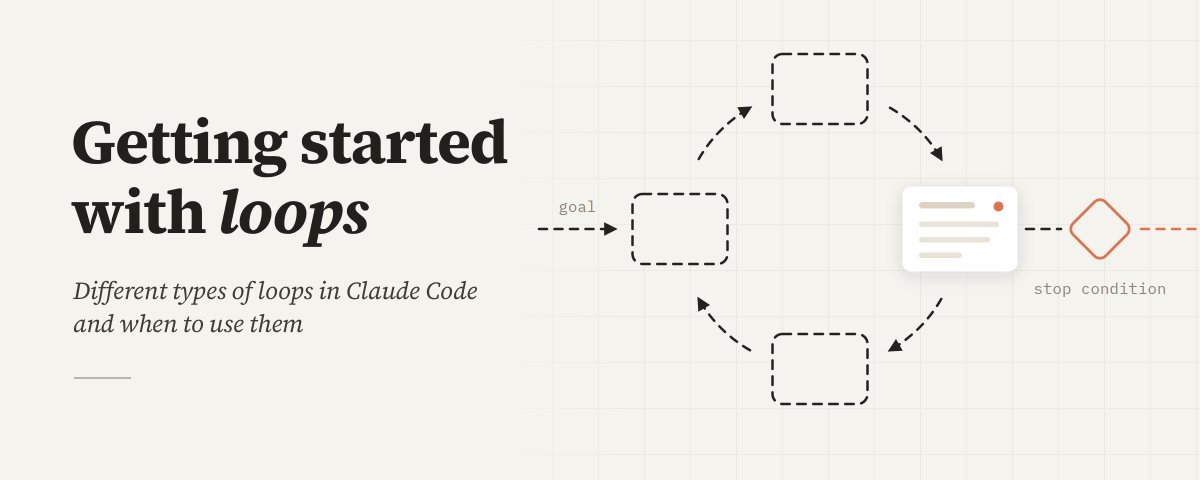
PRO TIP: Copy this article into Fable 5 and tell it...
"Read this article, review my current workflow, and tell me 5 things I can do to be more productive"

Sean Kilfoy retweeted

⚡ INTRODUCING: T3MP3ST!!! ⚡
AUTONOMOUS HACKBOT STRIKE FORCE 🌩️ BRING THE STORM 🌩️
your favorite coding agent is now a full-stack red team 🫡⚔️
github.com/elder-plinius/T3M…
that AI agent already humming in your terminal? well now it has FANGS. strap a full offensive-security harness onto the agents you already pay for — Claude Code, Codex, Hermes, etc. — point it at an authorized target, and in a few clicks you're watching it hunt real vulns autonomously!
T3MP3ST is a harness of harnesses, with prompting that unlocks offensive-cyber workflows + a full arsenal of exploit tooling that'd make any seasoned hacker smirk. simple, yet powerful. 🦾
support for:
🕸️ web apps, APIs, OWASP Top 10
🔌 network recon + fingerprinting (live nmap/DNS/HTTP); lateral + privesc experimental
📂 source code audits, white-box vuln hunting
🚩 CTFs, wargames, challenge ranges
💰 smart contracts / DeFi / Solidity (reproduction — Damn Vulnerable DeFi, not novel discovery)
🤖 embedded, IoT, OT/SCADA, robotics OSS
… and more in development!
now let's talk numbers 👇
📊 XBEN — XBOW's own 104-challenge suite:
• black-box: 90.1% pass@1 from the single-agent exploit loop (worst single sweep 91/104 = 87.5%) — clearing XBOW's past self-reported 85% on their own suite. gpt-5.5.
• white-box (source staged, reported separately): 98.7% pass@1, worst single sweep 102/104 = 98.1%. 🎯
every solved flag graded reported-vs-expected against the challenge's own committed flag oracle — `verify-claims` recomputes the pass/fail from committed artifacts. looks like we need new benchmarks 😏
🧩 Cybench — the 40-task academic bench (Opus 4.8, hints + writeups stripped): 23/40 = 58% single-run, hint-free pass@1 — real exploits (format-string pwn, eval-jail escapes, crypto oracles), every flag graded vs a committed oracle. (Anthropic reports 76.5% pass@10)
🕳️ CVE-Zero — we pointed it COLD at real CVEs disclosed in 2026, AFTER the model's training cutoff:
10 unseen 2026 CVEs across 7 languages — prompts never tuned on them. a single agent pinned 8/10 to exact file/line/CWE (stable under re-scoring); the full pack surfaced all 10.
memorization AND overfitting, both off the table — it's finding real vulns whose disclosures landed AFTER the model's training cutoff. (n=10, reported honest & directional)
🧠 the architecture: either run as a SINGLE agent (already the benchmarked, incredibly-capable path) — or pack-hunt with dozens of agents running on 8 specialist operator classes keyed to Cyber Kill Chain + MITRE ATT&CK phases: recon → scan → exploit → lateral → exfil → persistence → C2 → report.
⚓️an Op Admiral plans the whole op from a plain-english target. flip on coordination (experimental) and the operators share a blackboard — a tool-verified finding spawns the next move. full swarm or solo one operator, your call. the admiral can also update the prompts, tools, and configs of the other agents on the fly, and T3MP3ST gets stronger the more memories you build!
🧰 the Arsenal is comprehensive — nmap / nuclei / semgrep / ffuf / gobuster + more. 35 wired by default (the clean bench runs bash-only for a comparable number), 83 with the opt-in full arsenal (T3MP3ST_FULL_ARSENAL), and the spicy post-ex drivers (metasploit, hydra) gated behind human approval. exposed via CLI + HTTP API; recon (security_recon) is also live over MCP so your agent invokes it natively. 🔗
🛰️ where this goes: a self-improving swarm of specialist operators wielding a full Kali+ arsenal, learning which loadouts + configs are the most efficient tactics available, WITH a held-out train/test split baked in so it can never fool itself on its own eval. built in the open, one re-derivable number at a time.
🚧 this is v1, and parts are still under active development. chunks of the arsenal, the coordinated swarm, and some ranges are still being wired up. it's built in the open, and the receipts tell you exactly what's live vs what's roadmap.
offensive security shouldn't be pay-to-play. T3MP3ST puts a red team in the hands of anyone with a coding agent.
what's the first target you're feeding it? 👇
⚠️ DISCLAIMER: FOR AUTHORIZED USE ONLY. point it only at systems you own or have explicit written permission to test. unauthorized access can be a crime, and that call is yours alone. shipped as-is under AGPL-3.0: no warranty, no liability, zero endorsement of misuse. get permission. stay in scope.
open source. AGPL-3.0. 100% free.
FORTES FORTUNA IUVAT 🌩️
gg 🫡


We’re sharing the next major milestone in our non-invasive brain-to-text decoder research: Brain2Qwerty v2.
Building on v1, which was published today in @Nature, Brain2Qwerty v2 is the highest-performing end-to-end pipeline capable of real-time sentence decoding from raw brain signals. It advances beyond character-level performance to decoding words and semantics, enabling accuracy for overall communication.
We believe this research has the potential to make a real difference for the millions of people who suffer from brain lesions or disorders that prevent them from communicating.
🧵👇
37
Sean Kilfoy retweeted

BOOOM!
We have nearly 1 million downloads of Qwythos 9B a Mythos-5-like open source AI!
Our goal is to run 12 in a mesh network forming a mixture of experts hyperscale to vastly surpassing anything Anthropic is playing fear theater with.
So far 9 folks have commuted the hardware to do this!
See you don’t need one big model just a dozen smaller very smart models working together.
Come and take it Dario.


BOOM!
Meet the open source Cambrian Explosion of repulsion of Anthropic!
Meet Qwythos 9B, a Qwen3.5 based GGUF that's both uncensored and quantized for efficiency.
I am running it now and it is brilliant!
A model that can reason through 1 million tokens of context, understand images and text, and even call functions.
Come and take it!
huggingface.co/empero-ai/Qwy…

Oh wait so brain waves can be decoded into sentences? Soooo… mind-reading is real and all the haters just aren’t in touch. Noted.
We’re sharing the next major milestone in our non-invasive brain-to-text decoder research: Brain2Qwerty v2.
Building on v1, which was published today in @Nature, Brain2Qwerty v2 is the highest-performing end-to-end pipeline capable of real-time sentence decoding from raw brain signals. It advances beyond character-level performance to decoding words and semantics, enabling accuracy for overall communication.
We believe this research has the potential to make a real difference for the millions of people who suffer from brain lesions or disorders that prevent them from communicating.
🧵👇
14
ai.meta.com/blog/brain2qwert…
Oh and human psychics and mind readers don’t exist? lol
13