




startup analysis: myriota's $60m bet on connecting the physical world
not every interesting technology startup is building an app. some are building the infrastructure that allows the physical world to become more connected.
myriota is a good example.
the australian satellite iot company announced the first au$60 million close of its series c on november 24. that's approximately us$40 million.
existing investors include main sequence ventures, hostplus and the national reconstruction fund corporation, with funds sa joining the round.
What does myriota actually do?
its technology enables businesses to track and monitor assets in remote locations using satellite connectivity. think:
* mining equipment; shipping containers; agricultural assets; fuel tanks; water supplies; remote infrastructure. the company says its service covers 57 markets.
Why this startup matters:
a significant amount of economic activity happens outside reliable cellular coverage. businesses still need data from those locations to make decisions.
satellite iot helps bridge that information gap and as ai moves into industrial operations, having reliable data from the physical world becomes increasingly important.
ai cannot make useful decisions about assets it cannot observe.
my take:
Some of the most important companies will connect software to the real world. connectivity, sensors, satellite infrastructure and industrial data are worth paying attention to.
that's where digital transformation gets practical.
myriota.com/news/myriota-ser…

8
hot take: the robotics industry doesn't need every startup to build a humanoid robot.
there's a lot of attention on machines that look human, walk like humans and perform impressive demonstrations.
but businesses don't necessarily need robots that look impressive.
they need machines that solve specific problems reliably.
a warehouse needs efficient handling. a factory needs precision. an agricultural business needs equipment that works in difficult environments.
sometimes a specialised robot that does one job exceptionally well is worth more than a general-purpose robot that does ten things reasonably well.
the real commercial opportunity lies in solving a problem people are already willing to pay to fix. a flashy demo might grab attention, but a product that saves time, cuts costs or makes work easier is what can build a sustainable business.
8
1
52
imagine running a small retail business and having access to 30,000+ factories without building your own sourcing team.
everful just raised $48.5m to expand that model. the infrastructure behind small businesses is getting interesting.
26
$53m going into a crm rethink. interesting.
dreamteam is betting businesses need less manual data entry and fewer hours keeping dashboards updated.
my prediction: software that still depends on people constantly feeding it data will face serious competition from ai.
1
63
stark future just hit a €1.2b valuation.
what founders should pay attention to: they're winning customers with performance, while sustainability adds to the appeal.
my take: build something people genuinely want first. the environmental benefits can make the decision even easier
39
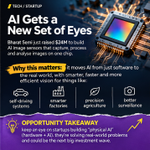
bharat semi's $24m raise caught my attention. its ai sensors could reduce the need for separate processing hardware. for founders, here's the opportunity: look beyond ai apps. the infrastructure that makes ai work in the physical world deserves attention too.

1
1
28
q-ctrl just raised $290m for quantum software.
this is what i find interesting: its work spans making quantum computers more reliable and navigation that can work without gps.
tbh the software layer deserves more attention. 🛰️
1
19
uforce raised $700m at a $6b valuation to scale autonomous systems across land, sea and air.
my take: autonomy is becoming industrial infrastructure.
reliability and accountability matter more than the headline number.
1
21
hot take: websites that show everyone the same experience won't age well.
coframe just raised $25m to build ai-powered websites that adapt to each visitor.
my prediction is that within 3 years, personalised websites will be the expectation, not the exception.

1
21
$45m for a platform that helps ai models learn from their mistakes.
trajectory is making specialised model training more accessible to businesses.
the opportunity isn't just building smarter models. it's also about teaching existing ones to get better at specific jobs.
1
15
the next big enterprise opportunity might be connecting systems companies already paid millions to build.

Unlocking most enterprise workflows is now a context and connectors problem, not a model one.
The two key challenges I see most commonly are 1) getting enterprises to feel secure bringing in that context and 2) not having agents waste valuable tokens finding the right data.
13
honestly, i'm more interested in what problem the ai agent solves than the ai itself. adding an agent to an existing product doesn't automatically make it innovative. sometimes it's just the same product with a much better pitch deck.
8
india's microdrama market is attracting serious capital.
eloelo's story tv has 33m+ active users, according to analysts, and just raised $80m.
my question: can these platforms turn short attention spans into sustainable paying audiences? distribution is only half the business.

9
rivian and volkswagen are expanding their software partnership to include an ai assistant.
the car business is getting interesting. automakers aren't just competing on range, design and price anymore. the software experience inside the vehicle is becoming part of the product.

1
16
Meta quietly launched style sketch, an ai fashion app that builds a digital wardrobe from your photos and suggests outfits using clothes you already own.
my take: i'm excited about this and the idea of plugging ai into a platform that already knows your style.

1
12
x is testing a giant pointing hand at the promote button while people write posts.
ngl nothing says “organic engagement” like an interface nudging you to pay for reach.
product design: helpful nudge or jump scare?


1
15
south african firm infragora plans $650m–$1bn for two ai-ready data centres in nigeria, targeting 60–70mw initially. big ambition, but who’s funding it, where’s the power coming from, and who’s actually gonna use it? read more here: businesstechafrica.co.za/art…

12
startup founder: we need to move faster.
also them: 3 new tools, 5 dashboards, 4 meetings to discuss why we're slow. 😭
maybe the process is the problem, lol.
13
brazilian bank itaú is buying ai startup neospace for $589m.
they've already worked together for nearly 2 years.
my view is that sometimes the smartest startup exit comes from a customer who already knows your value.

8
are you too a part-time fortune teller by any chance? 😂

Prediction:
OpenAI and Anthropic are running out of cash.
Soon, they will have no choice but to sell themselves to bigger companies.
AI is simply not growing fast enough to beat current inflation.
Microsoft, Amazon, and SpaceXSI will step in to buy them out.
16