


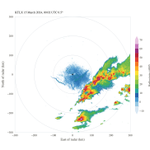


Last week we released radrs, our NEXRAD reader. Raystack is the layout it uses for ML: each radar variable becomes one time-ordered stream of rays, with sweep and volume info stored next to it.
BatchedRaystack appends volumes into the same arrays, so a training sample is just a range of rows.
To reconstruct a volume, we take its sweeps. To follow a storm, we take a window across volumes.
Raystack is already part of radrs (uv add radrs). We cover the format and batching in
silurian.ai/blog/finding-mod…

Introducing radrs: an open-source, Rust-powered NEXRAD radar reader for Python.
Built during our NOAA collaboration on compact radar representations, it loads radar observations into @xarray_dev or batches for machine learning.
silurian.ai/blog/introducing…


radrs is available under Apache 2.0 for Python 3.11+.
Install: `uv add radrs`
Thanks to our NOAA collaborators and the nexrad Rust contributors. We welcome reproducible benchmarks, compatibility reports and contributions.
github.com/silurian-ai/radrs

An overlooked aspect of forecasting: knowing when a storm will be a non-threat (like Henriette) is just as valuable as knowing when one will become a major hurricane (like Erin).
Predicting a dissipation saves resources and prevents false alarms. Predicting a major storm saves lives. A truly reliable model must excel at both.
We break down this dual challenge, demonstrating GFT-C's outperformance:


Silurian is excited to be exhibiting at @VivaTech 2025 as part of our participation in the @TotalEnergies' On Program. We will be hosted by TotalEnergies in Hall 1 Booth D40 from June 11th to June 14th.
🌍Aurora—now published in Nature—is the first AI to unify weather, air quality, wave & hurricane simulations, while outperforming the top numerical models. With Silurian’s founders playing a key role, this is just the start of our vision for planetary-scale AI. More below 👇

Nature article: nature.com/articles/s41586-0…


1/ @SilurianAI is launching GFT-US, our hourly-updating regional weather forecasting model for the United States. The model brings the first publicly available AI-based alternative to HRRR, NOAA’s widely used numerical weather model.

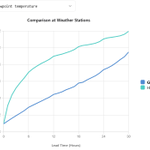
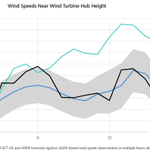
5/ 📊 Accuracy in Action: GFT-US outcompetes HRRR in forecast accuracy for the vast majority of lead times and variables when measured against weather stations.

6/ 💻 Try GFT-US : Our model is free-to-use and publicly available. Create an account for our API today, and get access to the world's leading weather model: earth.weather.silurian.ai/
Check out our full blog post at silurian.ai/blog/gft-us-anno…!