

Founded in 1934 by immigrant refugees. Carrying the torch of academic freedom and mapping the landscape of intellectual thought @nssrnews
New York, NY
Joined February 2011
- Tweets3.8K
- Following467
- Followers1.7K
- Likes830




Pinned Tweet
Fall 2026 issue of Social Research—“Disrupting Death,” guest edited by Joseph E. Davis, William Hasselberger, and Paul Scherz—is here! Check out the abstracts on socres.org and read the complete issue on @ProjectMUSE, muse.jhu.edu/issue/57550.
1/3

Friedrich Nietzsche & Michel Foucault shared more than a birthday (Oct. 15, 82 years apart). Another thing they had in common was a Socratic view of philosophy as a way of life. But they lived philosophy differently—one as a prophet, the other as a dandy.
jstor.org/stable/40971290

What is a good death—and how has transhumanism transformed our understanding of it? And what is transhumanism itself—a movement, a philosophy, a techno-religion, a secular theology?
Elizabeth Frazier looks into how transhumanism has “disrupted” death.
muse.jhu.edu/pub/1/article/1…

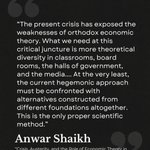
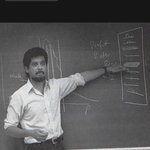
Economist Anwar Shaikh was #BOTD in 1945 in Karachi. He passed away earlier this month, a few days short of his 81st birthday. Shaikh joined the New School for Social Research in 1972 and stayed for his entire academic career.
1/3

A heterodox economist in the Marxian tradition, Shaikh was critical not only of capitalism but also of neoclassical economics that views capitalism as a system of perfect competition serving perfectly efficiently the interests of all of its participants.
2/3
His 2013 article “Crisis, Austerity, and the Role of Economic Theory in Policy” is an example of this dual critique.
muse.jhu.edu/pub/1/article/5…
3/3

Philosopher and public intellectual Yirmiyahu Yovel was #BOTD in 1935 in Haifa. Focusing on Spinoza and Kant, he was a key figure in modern philosophy. In addition to his position at Hebrew University, Yovel taught at the New School for Social Research from 1994 until 2010.
1/2

Yovel’s other legacy lies in illuminating the complex relationship between Jewish identity and experience and modern European thought. His 1988 article “Tolerance as Grace and as Rightful Recognition” exemplifies this legacy.
jstor.org/stable/40971291
2/2

For the World Food Day, which was marked earlier this week, we offer you food for thought from nearly 30 years ago. How did predictions and recommendations by the renown agricultural ecologist Gordon Conway pan out? What more can we do to feed the world?
jstor.org/stable/40971317

Adam Michnik was #BOTD in 1946 in Warsaw, Poland.
Michnik is a journalist, public intellectual, and pro-democracy activist, both during the communist period and since.
1/3

He was imprisoned twice for opposing the Soviet regime, eventually becoming a part of the Polish Round Table talks that ended the communist dictatorship in Poland in 1989.
2/3
An article Michnik wrote for our Winter 1991 issue on “Nationalism” in postcommunist Europe is full of hope and anxiety at once—and still relevant today.
jstor.org/stable/40970671
3/3

#BOTD 120 years ago in Hanover, Germany, was Hannah Arendt, a key political theorist of the last century, whose work remains highly relevant today. A refugee from Nazism, she found a home in NYC and at the New School, where she taught political philosophy in 1968–1975.
1/3

Arendt’s first publication in Social Research was “Thinking and Moral Considerations” in the fall of 1971.
jstor.org/stable/i40043605
2/3

After her death in 1975, we published not one, not two, but four issues devoted entirely to her scholarship. Read them online or buy our “Hannah Arendt bundle” for your library:
linktr.ee/socialresearch
3/3

In our world, which to many seems to be on the brink of a catastrophe, what can alleviate our despair? Some believe it's science & technology. But Jarrett Zigon, examining secular immortalists, contests their technoscientific pseudoconception of hope.
muse.jhu.edu/pub/1/article/1…

On the week of what would have been Vaclav Havel’s 90th birthday (born on Oct. 5, 1936, in Prague), we invite you to revisit his contribution to a discussion on the possibility and forms of independent society under totalitarianism.
1/2

What did this prominent political dissident & the future president of the newly democratic Czechia think was possible for his country & entire Central Europe in 1988, a year before the Velvet Revolution in Czechoslovakia & the fall of the Berlin Wall?
jstor.org/stable/40970497
2/2
As Japan faces rapid aging, low fertility, and a rise in solo living, traditional family-managed deathcare is collapsing.
1/2
Anne Allison explores the proliferation of shūkatsu (anticipatory end-of-life planning) and high-tech urban columbaria—and how a society without kin is radically redesigning death, mourning, and social bonds.
muse.jhu.edu/pub/1/article/1…
2/2

Ever wonder how America’s view on mortality has evolved?
This #TBT revisits “Death in American Experience” (from 1972), with essays by Talcott Parsons, Harold Bloom, Eric Cassell & others that explore the intersections of death, culture, medicine & more.
jstor.org/stable/i40043608
