

Founder & Admin of https://teapaw.org/t.co/1XIHA4Mor4. Building the ultimate home for Indian space nerds.
INDIA
Joined September 2025
- Tweets1.7K
- Following180
- Followers795
- Likes5.2K








SolidBoosters2 🇮🇳 retweeted

Turn up the Volume!
🚅 Bharat’s Bullet Train is taking shape.
#Bharat_BulletTrain
SolidBoosters2 🇮🇳 retweeted

GSLV-F18/NVS-03: our prediction vs the actual flight
We rebuilt the actual flight from ISRO's webcast: 1,330 telemetry samples (one every 0.5 s from T+104 s to separation) plus 14 event times from ISRO's on-screen FLIGHT EVENTS table. Then we compared it, event by event and second by second, with the trajectory we published before launch.
1 · Event table
Of 12 predicted events, 3 matched within 1 s, 7 within 1–3 s and 2 were off by more than 3 s.
• L40 shutoff: 149.0 s predicted, 149.5 s actual
• Payload fairing separation: 237.4 s vs 239.5 s
• GS2 shutoff: 291.2 s vs 292.9 s
• CUS shutoff: 1135.4 s vs ≈1106.8 s (28.6 s early)
• NVS-03 separation: 1150.4 s vs ≈1121.8 s (28.6 s early)
2 · Altitude profile
The shape matched: climb, dip, final rise. The actual flight peaked at 146.9 km (T+438 s) against our 155.3 km, and dipped to 131.9 km (T+745 s) against our 128.3 km. The first 104 s are estimated, as the broadcast showed no telemetry then.
3 · Ground track
The actual track ran up to 39 km north of ours and steadily pulled ahead: 10 km at T+300 s, 63 km at T+700 s, 196 km at T+1100 s. Separation happened 74 km short of our predicted point (≈5,996 km from the pad at separation vs 6,061 km predicted).
4 · Velocity and deviation
The CUS stage built speed faster than we predicted: +0.39 km/s at T+1000 s, +0.44 km/s at T+1100 s. By separation it was 21.6 s ahead along the track. It reached the same ≈9.7 km/s shutoff speed early, which is why shutoff came early.
5 · Mission summary
ISRO reports injection into a 170.3 × 38,080 km orbit, against 170 × 37,023 km planned: perigee on target, apogee 1,057 km (2.9%) higher. GS2 burned 140.4 s (141.6 s predicted). CUS ran ≈808.9 s from ignition command to shutoff (839.7 s predicted).
Our verdict: liftoff to CUS ignition was spot on, with every event within 2.9 s and altitude within 1.6 km. The CUS burn is where we missed. We saw the same ≈28 s gap on GSLV-F17, so it is a pattern in our model, not chance.
What this means for us
With two full actual flights now rebuilt (F17 and F18), both pointing to the same gap, we know exactly where our model needs work. That gives us real confidence to improve our predictions for future launches.
Thank you
A big thank you to everyone who watched GSLV-F18/NVS-03 with us on our Flight Profile dashboard. The page got 159 views, with 15 live viewers and a peak of 10 concurrent viewers. We know these aren't big numbers, but they mean a lot to a small team like ours and keep us motivated to keep building.
Replay the actual and predicted trajectories in 3D, second by second. After separation, the live orbit readout shows ISRO's 170.3 × 38,080 km:
indianspaceflight.in/flight-…
#GSLVF18 #NVS03 #ISRO #NavIC


Mission accomplished! Congratulations to ISRO and everyone behind GSLV-F18 / NVS-03 on successfully placing the satellite into its intended orbit! 🇮🇳
Thank you to everyone who followed the launch with us on our Flight Profile dashboard.
Tomorrow, we’ll share the actual trajectory data and compare it with our predictions to see how closely they matched.
indianspaceflight.in/flight-…
#ISRO #GSLVF18 #NVS03 #NavIC

SolidBoosters2 🇮🇳 retweeted
ISRO: NVS-03 satellite was successfully injected into 170.3 km x 38080 km orbit by GSLV Launch vehicle on October 30, 2026 at 23.51 hrs.
NVS-03 is the third satellite in next generation navigation satellite system envisaged for providing continuity of navigation services for IRNSS series. The satellite carries indigenous atomic clock along with the procured clocks. It also includes L1 signal in addition to L5 and S band signals with coverage over Indian land mass and a region extending 1500 km around Indian geopolitical boundary.
The planned first orbit manoeuvre, with a LAM engine burn duration of 2174.8 seconds, has been successfully completed on October 31, 2026 at 16:48 hrs. The estimated orbit subsequent to manoeuvre is 5477.6 km x 37833.4 km. The satellite health is normal.
Further, in the coming days, orbit manoeuvres are planned to eventually place NVS-03 in GSO (111.75o East orbital slot). #NVS03 #ISRO #GSLV #NavIC #OrbitRaising

I was watching the ISRO chairman's post-launch speech. The way he started it, boasting that they've completed the base layer of the satellite constellation again, whose first satellite was launched back in 2013, really pissed me off, so I just went to sleep. Congratulations ISRO on launching NVS-03 but boasting about completing the base layer is just pathetic. You stayed silent for years while satellites failed one by one and now you're boasting that you've completed the four-satellite base layer again. #ISRO #GSLVF18 #NVS03
SolidBoosters2 🇮🇳 retweeted
Mission accomplished! Congratulations to ISRO and everyone behind GSLV-F18 / NVS-03 on successfully placing the satellite into its intended orbit! 🇮🇳
Thank you to everyone who followed the launch with us on our Flight Profile dashboard.
Tomorrow, we’ll share the actual trajectory data and compare it with our predictions to see how closely they matched.
indianspaceflight.in/flight-…
#ISRO #GSLVF18 #NVS03 #NavIC
SolidBoosters2 🇮🇳 retweeted
LIFTOFF! GSLV-F18 rises from Sriharikota carrying NVS-03, on its way to help replenish the baseline NavIC constellation! 🇮🇳
Follow the mission with us:
indianspaceflight.in/flight-…
#ISRO #GSLVF18 #NVS03 #NavIC
SolidBoosters2 🇮🇳 retweeted

T–30 minutes to the scheduled lift-off of GSLV-F18/NVS-03 Mission.
Watch live: youtube.com/live/qIiYr3tRSqE
Mission details:
isro.gov.in/Mission_GSLVF18.…
#GSLVF18 #NVS03 #ISRO #NavIC

SolidBoosters2 🇮🇳 retweeted
We questioned what was actually aboard EOS-05. Then we took those questions to ISRO through RTI.
Our original article flagged that the widely repeated instrument specifications belonged to the lost EOS-03 / GISAT-1. Had the payload changed? We explicitly raised added thermal capability as one possibility.
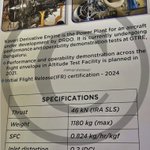
ISRO’s reply now confirms: EOS-05 carries a six-band long-wave infrared imager that EOS-03 did not have with 1,180 m resolution and a 378 km swath.
This establishes an important difference between the two spacecraft: EOS-05 has thermal imaging capability that extends observation beyond daylight.
It also corrects our earlier article’s statement that EOS-05 had no thermal band.
Beyond that confirmation, our RTI obtained detailed payload specifications, swath widths, propellant mass, design life and power figures. Some questions remain unanswered.
From the uncertainties we flagged to the answers ISRO provided read our full breakdown and the RTI reply:
indianspaceflight.in/latest/…
#ISRO #EOS05 #GISAT #GSLVF17 #EOS03

SolidBoosters2 🇮🇳 retweeted
SAC has put out an EOI asking Indian industry to take over full assembly, integration and testing (AIT) of its electro-optical imaging payloads. That's the whole job, from receiving bare mirrors to handing over a calibrated, TVAC-tested camera at URSC.
EOI no. SAC/EOI/03/D/2026-27, issued 30 Oct, responses due 30 Nov 2026 by 3 PM IST.
It covers 14 payloads across 5 types. SAC doesn't name the missions, but the optics specs give away quite a lot:
> Type-2, "Cartographic Imager" (4 units)
1.2 m Korsch telescope, ~16 m focal length, PAN/MX/MWIR/SWIR
→ Same 1.2 m optics class as Cartosat-3. A 16 m focal length works out neatly for its 0.25 m GSD from 509 km.
> Type-3, High Resolution Imager (3 units)
Two-mirror Ritchey-Chrétien, 600 mm primary, ~5.8 m focal length, PAN/MX + MWIR, LWIR and night-time light imaging, with an onboard blackbody for calibration
→ Basically the Cartosat-2 telescope layout (700 mm, 5.6 m). Closest published spec we could find is HRSAT (1 m PAN, 4 m MX, 20 m LWIR).
> Type-1, Wide Swath High Resolution Imager (3 units)
~1.13 m mirror but only ~3.5 m focal length, nine butted detectors plus four MWIR chains, ~700 kg optics module (roughly what an entire Cartosat-2 satellite weighed)
→ Big, fast optics built for swath and signal, not Cartosat-style narrow-strip imaging. We couldn't match it to any announced ISRO mission.
> Type-4, "Advanced Resource Monitoring Satellite" (2 units)
Two TMA telescopes, fore and aft, ~2 m focal length, fixed pitch bias
→ The Cartosat-1 stereo layout (two TMAs, 1.945 m, +26/-5 deg), which Resourcesat-3S/3SA carries forward.
> Type-5, "Advanced Resource Monitoring Satellite" (2 units)
VNIR+SWIR side modules, a central TMA module and three hyperspectral heads
→ Lines up with Resourcesat-3/3A: ALISS-3 at 20 m on the sides and 10 m in the centre, plus ATCOR.
The vendor's scope covers stress-free bonding of mirrors onto CFRP structures, interferometric telescope alignment, detector focusing, integrating the electronics, harness and thermal hardware, TVAC and vibration testing, and full calibration (MTF, SNR/NEDT, band-to-band registration, spectral, radiometric). Then delivery to URSC Bengaluru and support right through in-orbit testing.
How it works:
> Phase-1: training at SAC + building all the ground support equipment
> Phase-2: first unit of each type built at SAC, vendor team under SAC supervision
> Phase-3: remaining units at the vendor's own facility
→ At least ~16 months per payload, contract runs about five years.
The entry bar is high:
> Own ISRO-approved ISO 8 cleanroom, 30 m x 20 m per payload type, with an ISO 7 optical bay
> TVAC chamber with an optical window (shroud -100 to +70 C, 10^-6 torr)
> 1.5 m class collimator, reference flat, integrating sphere and blackbody
> Prior AIT experience on an EO imager above 200 mm aperture
> At least five years as a company, no consortiums
> If flight hardware gets damaged during AIT or transport, the vendor pays
This comes after SAC's 2025 EOIs for focal plane assemblies and MWIR detector-cooler assemblies. Bit by bit, the EO payload chain is moving to industry, while SAC keeps design authority and final acceptance.
(Mission matches are our reading of the optics specs and published mission data. The EOI itself doesn't name any.)
Archived: indianspaceflight.in/archive…
Source: isro.gov.in/media_isro/pdf/T…
#ISRO #Cartosat #Resourcesat #EarthObservation

The twist is right in front of you the whole time, yet you won't see it until they want you to. Check this out if you like exploring horror films from different parts of the world.

SolidBoosters2 🇮🇳 retweeted
We’ve rolled out a massive update to indianspaceflight.in: Platform v3 🚀
More of you are using the platform on mobile, so we’ve optimised the UI for smaller screens. Desktop will still give you the best experience.
What’s new:
🎨 Theme palette support, so you’re no longer limited to light and dark mode
🌑 Graphite Grey is the new default dark theme. The old dark theme stays as “ISF Retro”, so you can switch to whichever you like.
⚡ A smoother, faster platform overall
🧹 A simpler layout. We removed a few features that were rarely used, after feedback that v2 felt too cluttered.
Enjoy, and do share your feedback!


SolidBoosters2 🇮🇳 retweeted

Hello GSLV-F18,
I saw you from a few thousand feet above! (While on a flight along the Andhra coast)
Godspeed... As always, will be there at Sriharikota to watch you liftoff and light up the midnight skies... 🇮🇳❤️🚀🚀🚀


GSLV-F18/NVS-03 Mission is scheduled for launch on 30th October 2026, at 23:51 hours IST from Satish Dhawan Space Centre (SDSC-SHAR), Sriharikota.
NVS-03 is a navigation satellite in the second-generation NavIC series.
Watch live: youtube.com/live/qIiYr3tRSqE
Mission details: isro.gov.in/Mission_GSLVF18.…
#GSLVF18 #NVS03 #ISRO #NavIC

Get well soon, Captain. All of India is proud of you and we're praying you're back in the cockpit soon, doing what you love most: flying.

Is it just me, or is anyone else completely confused about the NVS-03 valve issue? 🤔 I'll be honest, I can't make sense of the media reports on this. Waiting for an official statement from ISRO.
SolidBoosters2 🇮🇳 retweeted

Astrophel has tested an actuator for its own reusable rockets, and it intends to vend it to others as well. They developed the actuator after realising that domestically developed components were much cheaper than imported ones. @AstrophelHQ indianspaceflight.in/forum/p…


SolidBoosters2 🇮🇳 retweeted

Some friendships survive the tests of time and distance rather effortlessly. ❤️
I’ve been a little quiet here lately, having taken a short break to visit one of the stalwarts of our Axiom-4 mission, Hungary’s very own Tibor Kapu!
During our training in the US, the crew developed a wonderful bond that showed up just as much outside the simulators as it did inside them. Somewhere between the long training days, shared experiences, and the occasional madness, we became much more than crewmates.
When I landed at the airport in Budapest, I found Tibi waiting for me in two forms — the real one and a rather hilarious life-size cutout! 😂 I’m still not entirely sure whether I should feel loved or slightly concerned for you see his love for me in subscript at the bottom of the poster.
The mission gave me an incredible experience, but one of its greatest gifts has been the friendships that came with it. The kind that make thousands of miles feel inconsequential and time apart seem like a mere pause in the conversation.
@AstroPeggy and @astro_slawosz , missed you guys so much! ❤️
P.S. If you have someone like this in your life, make them feel special. Go the extra mile, plan a surprise, show up at the airport… just perhaps choose a slightly better way than Tibi did! 😄
#shux #space #shubhanshushukla #india #friendship

SolidBoosters2 🇮🇳 retweeted
NOTAM Alert: A new NOTAM (A3241/26) has been filed for GSLV-F18/NVS-03 mission from SHAR Range, Sriharikota. The window runs October 30 to November 11, 2026, with a daily slot of 17:00 to 21:00 UTC (22:30 to 02:30 IST).
Mapped: indianspaceflight.in/notam?t…
#IndianSpace #GSLV #GSLVF18 #NVS03 #NavIC #ISRO #Sriharikota

SolidBoosters2 🇮🇳 retweeted
SDSC SHAR has floated a tender (SH202600128501, 23 Oct 2026) to manufacture, supply and erect the SC120 Retraction System Mast Structure at the Second Launch Pad, Sriharikota.
SC120 is the LOX + ISROSENE semi-cryo stage being developed for the upgraded LVM3.
📐 What's being built
• Two ~7.8 m tall steel masts on the Mobile Launch Pedestal (MLP), one on the LOX side and one on the ISROSENE side
• ~12 t of fabricated structure in total, mostly S690QL high-strength steel
⚙️ How it works (per drawings)
• Each mast holds an Umbilical Coupling Unit (UCU) mated to the vehicle at ~12.8 m elevation
• At retraction, a ~543 kg counterweight drops inside the mast and pulls wire ropes over a top pulley, swinging the UCU and hoses clear
• Shock absorbers at the base (235 kN, 150 mm stroke) arrest the counterweight
📅 Timeline
• Delivery to SHAR within 3 months of PO
• Erection on the MLP within 1 month of site clearance
• Bids due 12 Nov 2026, price bids open 23 Nov
💡 SC120 pad infrastructure at SLP is now moving into execution.
#ISRO #SC120 #LVM3 #Sriharikota #IndianSpace

SolidBoosters2 🇮🇳 retweeted
Department of Space / ISRO organised a Curtain Raiser at ISRO HQ, Bengaluru, for the Space Science & Technologies thematic session of #ESTIC2026. Dr V. Narayanan, Secretary, DOS/Chairman, ISRO, addressed the gathering. The thematic session will be held on Oct 29 at Bharat Mandapam, New Delhi.
For more Information: isro.gov.in/Curtain_Raiser_f…
#ISRO #ESTIC2026 #SpaceScience #SpaceTechnology #ViksitBharat2047
