

Turning 19th-century borders into programmable citizenship. Stop renting your jurisdiction
Joined September 2022
- Tweets1.3K
- Following83
- Followers229
- Likes621




Pinned Tweet
We're launching Sovrn AI today.
Try it: ai.sovrn.place
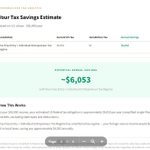
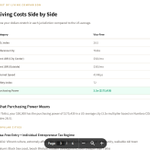
AI that shows you exactly where to move to save $30K-90K/year in taxes.
Free to try. Takes 60 seconds.
Here's what we built:

Sovrn.Place retweeted

Public trust in governments is at historic lows.
We’re facing deep democratic dissatisfaction, economic instability, and falling standards of living.
We need governments that are radically more efficient: less waste, stronger public services, and better outcomes for citizens.
The rise of alternate sovereignties- from @patrissimo pioneering seasteading to @balajis articulating the Network State, with @ns and @StarbaseTX putting new models of governance into practice, is a start.
We should be doing both:
Make existing governments work better.
And experiment with entirely new models of governance and sovereignty.
The future of governance shouldn’t be limited by the institutional monopoly of the present.

Ask your agent to book a flight. Works.
Ask your agent to apply for residency in a free zone,
Open a business in an SEZ,
Or prove you qualify for a tax program.
Falls apart.
Governments are the largest category of services humans consume.
And the least legible to agents.

Three primitives are missing, and we're shipping all three.
A verifiable identity governments will accept: W3C VC 2.0, ISO mdoc, EUDI-compatible.
A registry of jurisdictions with machine-readable programs.
A cross-zone exchange so credentials issued in one zone verify in another.
Open schemas. Apache 2.0: github.com/Sovrn-place/sovrn…

2
85
Real numbers:
US → Dubai: Save $650K over 10 years
UK → Portugal: Save £230K
Canada → Estonia: Save $600K-900K
Legal optimization. Not sketchy. Just better geography.

2
63


Rank these from MOST important to LEAST important when choosing where to move:
1. Tax rate
2. Cost of living
3. Visa ease
4. Safety
5. Healthcare quality
6. Weather
7. Digital infrastructure
8. Citizenship path
Reply with your ranking (e.g., 3,1,7,5,2,8,4,6)
We'll show you which countries match YOUR priorities.
1
57
Build your profile:
Reply with:
Your citizenship
Your income
Your #1 priority (tax/lifestyle/citizenship/cost)
Example: 'US, $120K, tax optimization'
We'll reply with your top 3 countries.
These are your signs to fork your city.
If your city has:
> A $2,000/month apartment that requires 3 months deposit and a credit check to rent
> A commute that costs you 2 hours daily and $400/month in fuel or transit
> A grocery bill that went up 40% since 2020 and keeps going
> A property market where a 20% deposit requires 10 years of saving
> A tax rate that takes 30 to 45% before you see a single dollar
> A healthcare bill that arrives after the illness
> A council that charges premium rates for services that show up fortnightly if you sorted the recycling correctly
> A government that calls all of the above "the cost of living"
The city didn't fail you overnight.
It failed you incrementally, one price increase, one rate hike, one missed bin collection at a time, until leaving felt radical and staying felt normal.
Leaving is not radical. Staying inside a cost structure that was never designed for your financial survival is.
Tbilisi. Chiang Mai. Medellín. Lisbon. Dubai. The fork exists. Most people just never looked for it.
The social contract was: pay taxes, get services. Now it's: pay taxes, get debt, potholes, and a 6-month wait. One party breached first. Leaving isn't unethical, it's overdue
43
Legacy citizenship: born there, die there, pay there. Network citizenship: live where it's best, work where it pays, belong where you're valued. Geography is negotiable now.
Sovrn.Place retweeted
One £150K earner funds 21 lower earners' entire tax contribution and still can't get a GP appointment in under 3 weeks.
The return on investment for being a high earner in the UK is objectively terrible. You pay premium rates for standard services, wait in the same queues, and get
means tested out of half the benefits your tax bill funds.
28.5% of all income tax from the top 1% and the NHS is broken, the trains apologize for existing, and the roads haven't been properly resurfaced since the Blair administration.
The problem isn't who pays. It's that the machine consuming the payment is structurally incapable of delivering proportional value regardless of input.
You can't fix a £53,460 tax bill with better government spending. You can restructure around it legally and keep the £53,460 working for the person who earned it.
16,500 millionaires did exactly that in 2025 and the government called it a crisis instead of asking why.
Sovrn.Place retweeted
£100 billion to Norway for gas drilled from the same body of water Britain banned itself from drilling in.
That's not an energy policy. That's a self imposed export ban with a £100 billion invoice attached.
Norway's sovereign wealth fund, built entirely on North Sea oil revenue, is now worth over $1.7 trillion. Britain's equivalent, the money that could have been saved from the same resource, is effectively zero.
Same sea. Same geology. Completely different political decision. Completely different national balance sheet outcome.
The Norwegian citizen has a $1.7 trillion fund working in their favour. The British citizen has a £100 billion gas bill and an energy price cap that keeps getting raised.
Individual lesson is identical to the national one, the jurisdiction making the decision determines who captures the value from the asset underneath.
Sovrn.Place retweeted
Nobody went broke buying coffee. They went broke financing status at every major life checkpoint the system told them was non-negotiable.
Wedding, degree, car, apartment. Four decisions. Four financing events. Four assets that either depreciate immediately or deliver negative ROI for a decade.
The $7 coffee discourse exists to keep the conversation at the $7 level while the $162,000 in combined bad decisions goes unexamined.
The 80% aren't broke because of lattes. They're broke because the four most culturally mandatory purchases of adult life were all designed to extract capital not build it.
Same income. Different decisions. Different jurisdiction where the apartment is $600 not $2,000, the degree cost $8,000 not $80,000, and the wedding didn't require a loan.
Geography doesn't fix bad decisions. It just stops charging $2,000/month for the privilege of making them.
How to live visa-free for 12+ months without breaking any laws:
SCHENGEN (90 days):
Portugal, Spain, France, Italy, Greece (pick one or rotate)
Rule: 90 days in any 180-day period
↓ RESET (fly out for 90 days)
UK (90 days):
Enter as tourist, stay 90 days visa-free (non-EU citizens)
↓ RESET
BALKANS (90 days each):
Albania: 90 days
Montenegro: 90 days
Serbia: 90 days (Each counts separately, not part of Schengen)
↓ RESET
GEORGIA (365 days):
Visa-free for 1 year for most nationalities Work remotely legally
TOTAL: 12-18 months of legal, continuous travel across Europe without a single visa application.
The rules exist. Most people just don't read them. Geography is a puzzle. Learn the pieces.
1
140
Sovrn.Place retweeted
Nobody stopped wanting to work. They stopped wanting to work on those specific terms in that specific jurisdiction.
2 hour commute, missed bedtimes, 50 hours billed as 40, one layoff email away from losing the health insurance, all in a city where the rent consumes the raise before it clears the account.
That's not a labor supply problem. That's a value proposition that stopped making sense and kept the same pitch.
The people who "don't want to work anymore" are overwhelmingly working harder than ever, just remotely, for themselves, or in jurisdictions where the exchange rate between effort and life quality isn't designed to keep them permanently one paycheck behind.
Fix the system is the right instinct. But the system has a 50 year track record of not fixing itself.
The faster move is finding a jurisdiction where the terms were better to begin with.