

Space economy, capital & companies. Startups → primes → public markets. May own companies mentioned - never financial advice.
Space
Joined September 2026
- Tweets262
- Following116
- Followers33
- Likes247



Pinned Tweet
Space is now a $686 billion economy, and most of the money isn't in rockets. Starlink made $11.4B last year, $RKLB is buying Iridium for its subscribers and space VC hit $23B in 12 months. Where the money is, who's making it and the risks, in one read:
I think this is going to be huge news. You don't have someone of Pushmeet calibre tweet this without something truly groundbreaking being released in the next few weeks. Fingers crossed for a medical breakthrough to push the narrative towards the potential huge benefits this technology can bring.

Across our projects @GoogleDeepMind, we are witnessing a genuine phase transition in the pace of scientific discovery. You will see a glimpse of this in our releases in the next few weeks.
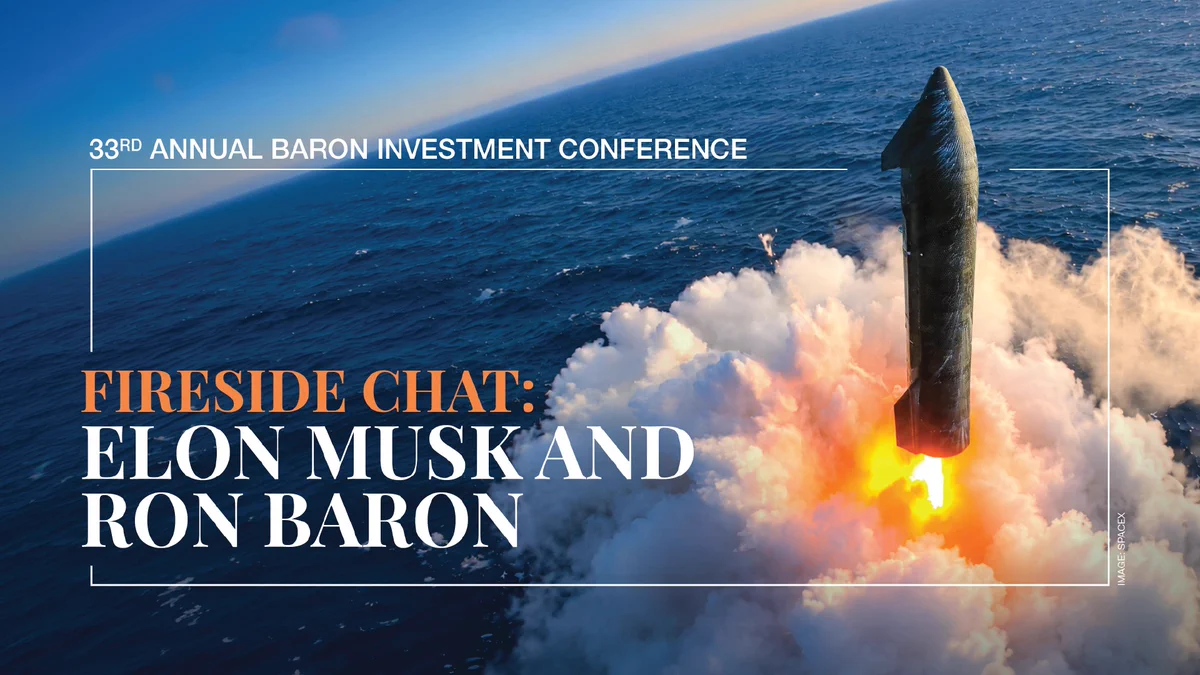
Elon spoke with Ron Baron by video link at yesterday's Baron Investment Conference. There was a lot in there for anyone following $SPCX, especially on revenue, orbital computing and Starship.
These are the numbers I picked out.
SpaceX revenue:
- Elon expects Q4 revenue to grow “something like 70%” from Q3
- Against Q3's reported $14.575B, that would mean about $24.8B for Q4
- He expects an annualised revenue run rate above $100B by December
- He still sees about $500B annualised by December 2027
That last figure is a run rate at the end of 2027, not $500B of revenue collected during the year. He called it his “best guess”, not a promise. These numbers cover the wider SpaceX business, including AI.
He also expects government revenue to fall below 10% of the total this quarter and below 5% a year from now. I think much of his government ties is overblown and incoming Dems are likely more moderate and understand the importance of AI.
Computing in orbit:
- Elon says satellites carrying an Nvidia GPU and a Google TPU are already working in orbit
- The first StarMind computers, co-designed with $NVDA, could launch around Q3 2027
- Larger volumes would follow in 2028–29
Those are his timelines. A working computer in orbit is an early step; deploying and operating large amounts of computing capacity will take much more hardware and launch capacity.
Starship and Starlink:
- He spoke about catching Ship 42 with the tower in “about a week”
- Said the reusable heat shield has taken about a decade of work
- His target is below $100 per kg to orbit with full reusability
- He expects Starlink V3's capacity and a higher satellite launch rate to produce about 100 times the bandwidth within 2–3 years
- He also floated buying a legacy telecom operator for its spectrum, without naming one
On $TSLA and Terafab:
- The ambition is to produce a terawatt of AI chips a year
- A research fab at Giga Texas could shorten chip iteration from about a year to about a month
- Renting Optimus robots out is the business model he expects
Full conversation:
teapaw.org/i/broadcasts/2YRYWgMNj…
I had a bunch of LLM's map the newly elected democrats across the midterm results on their views on data centers and AI:
tldr: not anti data center or AI apart from one candidate, largely just want them to pay their own way via energy costs.
They fall into three camps:
🔵 Build, if they pay (6): Talarico, Cooper, Brown, Hamilton, Sand, Ford. No subsidies, data centers cover their own power and grid costs, and communities get a say. Sand put it bluntly: if they pay “full freight”, Iowa should want them.
🟠 Pause first, rules after (7): Hinojosa, Acton, Bottoms, Crowley, Andrews, Jackson, Rutinel. Temporary moratoriums while guardrails get written. Some add conditions beyond energy, like union labour.
⚫ Skeptical of AI itself (1): El-Sayed, who called for a ban on superintelligent AI.
The common thread is “pay your own way and lose the tax breaks”, not “stop AI”. Fewer than 1 in 4 newly elected Democrats in Congress back a ban or moratorium. Most want rules, not a stop.
But the pauses come mostly from new governors, and governors control permits and siting. That’s where the buildout actually gets decided.
What does that mean in practice?
→ What’s already permitted and under construction will mostly go ahead. Moratoriums usually target new approvals and tend to grandfather work underway. Maine’s governor vetoed a pause partly because it had no exception for a $550M project already being built.
→ Nothing changes overnight. New governors take office in January, and most moratoriums need legislation, so 2027 sessions are the real starting gun.
→ The exposure is the pipeline. Announced isn’t permitted. Projects still waiting on rezoning, grid hookups or later-phase approvals, roughly 2028 onwards, are the ones at risk of delay. Morgan Stanley flagged Ohio specifically.
→ Costs can still change for existing sites. New large-load power rates and the loss of tax exemptions hit ongoing server and equipment spend, not just new builds.
@GavinSBaker @altcap @DaveBlundin @wintonARK

4/ 🇬🇧🇩🇪 @HypersonicaGmbH closed a €100M Series B:
- British-German hypersonic deep-strike missiles
- Co-led by Lightspeed and General Catalyst
- HS-1 above Mach 6, past 300 km from Andøya in Feb
- Targeting 2029
UK put an initial £770M into the Trinity House programme.
5/ What I'm watching next:
- $RKLB and $ASTS both report after the close on 9 Nov
- Starship Flight 15 still needs the FAA licence; SpaceX is pointing at mid-November
- @elonmusk and @RonBaronAnalyst conference today
- General data center commentary and build out
Watch for any more clues here from Elon on progress with $SPCX today

Tomorrow, Friday, November 6, @RonBaronAnalyst will sit down with @ElonMusk for a virtual fireside chat at the 33rd Annual Baron Investment Conference.
The conversation will stream live here on the @BaronCapital X account beginning at 1:10 p.m. ET.
--
Information and services provided on independent websites are not reviewed, guaranteed by or endorsed by Baron Capital or its affiliates. Please be aware that this independent website’s terms and conditions and other legal information may be different than those of Baron Capital’s website. Baron Capital is not liable for the content appearing on it, or for technical or systems issues arising from the use of this independent website.
The discussion of market trends is not intended as advice to any person regarding the advisability of investing in any particular security. The views expressed in this post reflect those of the respective writer. Some of our comments are based on management expectations and are considered “forward-looking statements.” Actual future results, however, may prove to be different from our expectations. Our views reflect our best judgment at the time and are subject to change at any time based on market and other conditions and Baron Capital has no obligation to update them.
Entertainment is provided at this event. Please confirm this event complies with your firm's policies on the receipt of gifts and entertainment. All expenses associated with this conference are paid by BAMCO, Inc. No conference expenses are paid by Baron Funds’ shareholders or Baron Capital clients.
BAMCO, Inc. is an investment adviser registered with the U.S. Securities and Exchange Commission (SEC). Baron Capital, Inc. is a broker-dealer registered with the SEC and member of the Financial Industry Regulatory Authority, Inc. (FINRA).
© 2026 Baron Capital. All rights reserved.

If the nasdaq closes down 6.3% it would be the worst down day since COVID on 16 March 2020, which fell 12.3%!
Good piece by @MikeZaccardi on $SPCX generally in line with my thoughts posted over the last few days

SpaceX: Don't Dump Shares After The Midterm Meltdown And AI Backlash $SPCX #business #trading #economy seekingalpha.com/article/496…

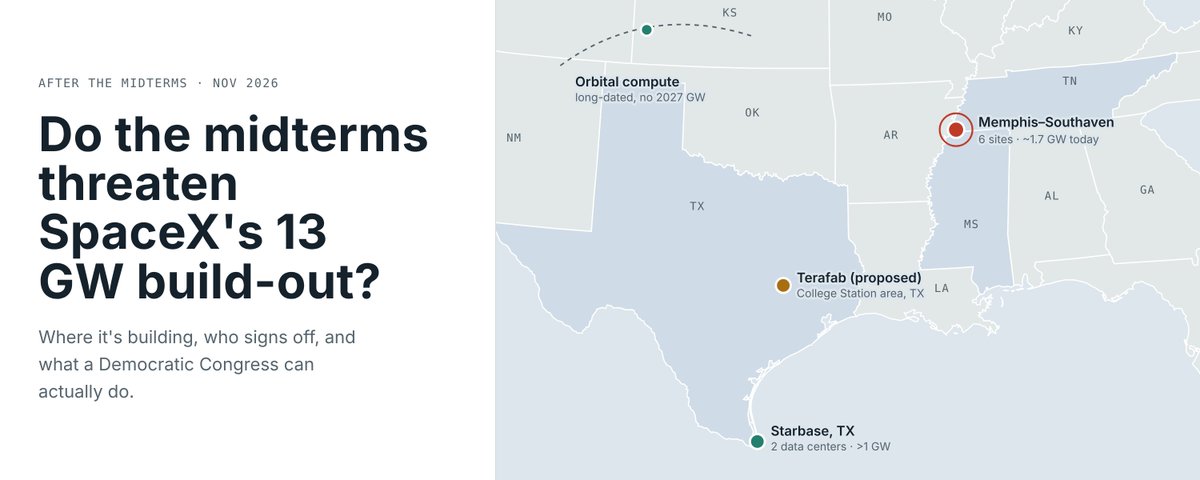
Democrats swept Congress. Does that threaten SpaceX's 13 GW AI compute build-out?
$SPCX
Some good news overnight for $VOYG
It just printed its biggest quarter yet:
- Q3 revenue $89M (+124% YoY)
- Bookings $116M, 1.3x book-to-bill
- Backlog $742M ($347M from Astrobotic)
- 2026 guide raised to $285-305M
- Net loss $55.7M
Stock largely unchanged in post market.

While wall street is panicking over hyperscaler capex, I think we are just getting started.
- $GOOGL API: 7B to nearly 32B tokens/min in a year
- Agents use 4x a chat's tokens, multi-agent 15x
- $MSFT: 50M+ agents registered, up 30%+ QoQ
- OpenAI Codex: 1.6M weekly users in Mar, 20M active by Aug
- Only 26% of developers use agents at work (Stack Overflow)
- Only 2 in 10 organisations are scaling agents (McKinsey)
- 25% of large US firms building multi-agent systems, up from 6% (KPMG)
- $AMZN $GOOGL $MSFT $META capex: $720B+ in 2026


I like the exponential example of explaining how Optimuses are going to build themselves and data centres is analogous to recursive self-improvement in AI

1/ Is this a bottom? I pulled every sentiment and positioning gauge I could source as of late Oct.
Fund managers hedged hard but stayed invested, and retail bought record leveraged ETFs. Are the pros right or is retail buying the dip at the right time?
🧵